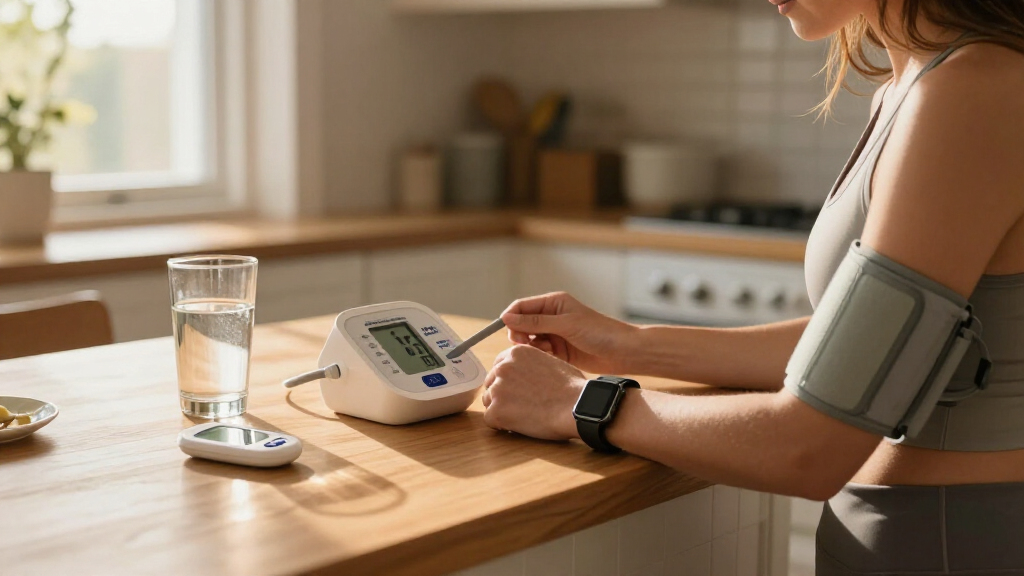

This checklist is for people choosing at-home wellness monitors for themselves or their household. It covers several kinds of measurements, so start with the device that matches your intended use and any guidance you already have from a healthcare professional.

Get health and wellness essentials delivered free with Prime
- Fast, free delivery on millions of items
- Prime Video, Amazon Music and more included
- Member-only deals all year
The sections are organized by device: thermometer, upper arm blood pressure monitor, finger pulse oximeter, body weight scale, blood glucose meter, and peak flow meter. Each product pick is paired with practical points to review, while the peak flow section offers selection advice without naming a product.
Before buying, check the product listing and instructions for the exact measurement method, included accessories, supported users, and any app or phone requirements. Confirm that the device can be used as directed and that its fit and compatibility suit the person who will use it.
Digital Thermometer
A thermometer is useful when you need to take and track a temperature at home. The listed pick is called “Digital Refrigerator Thermometers, 2 Pack, Waterproof with Large LCD,” so its name describes refrigerator use; it does not establish that it is intended for taking a person’s temperature. Confirm the intended use in the product details before considering it for wellness monitoring.
A common buying mistake is relying on a product title without checking the measurement method and instructions. Look for explicit guidance on whether a thermometer is designed for human use, where it measures, how to position it, and how to clean it. Also check what the display communicates and whether the product is suitable for the age group that will use it. Do not assume compatibility between a refrigerator thermometer and a clinical measurement task.
For a household device, consider who will take readings and whether that person can follow the instructions consistently. Check the package contents and care directions for both units in the two-pack, and make sure the display and controls are practical for the intended user. If the listing does not clearly describe a human temperature use, choose a device whose labeling and instructions do. Match the device to the task before relying on any reading.
What to look for:
- Explicit labeling and instructions for human temperature measurement
- A clearly described measurement method and placement
- Cleaning and care guidance for the intended use
- Instructions that address the user’s age group
- Package details and operation for both thermometers
Digital Refrigerator Thermometers, 2 Pack, Waterproof with Large LCD, Stand and

This two-pack of digital thermometers measures temperatures from -20°C to 50°C and records maximum and minimum readings. Each compact thermometer has a large LCD screen, an IPX3 water-resistant construction, and a magnetic back with a stand for flexible placement in refrigerators, freezers, and other settings.
Pros:
- Records maximum and minimum temperatures
- Large screen with clear readings
- Magnetic back and stand allow flexible placement
- Compact design is suitable for refrigerators and freezers
Cons:
- Accuracy is specified as ±1°C
- IPX3 water resistance does not indicate suitability for immersion
Best for: People seeking refrigerator temperature monitoring, if confirmed by the listing
Not ideal for: Anyone seeking a human thermometer without explicit human-use instructions
Bottom line: Verify that this product is intended for human temperature measurement before choosing it for personal wellness monitoring.
Upper Arm Blood Pressure Monitor
An upper arm blood pressure monitor is a home device for taking blood pressure readings, and the Beown pick is identified as an automatic upper arm monitor. The cuff is central to choosing a usable device: a monitor that cannot be fitted as directed may be difficult to use consistently. Start with cuff fit and check the product instructions for the arm measurement range it supports.
A frequent mistake is assuming that any upper arm cuff will fit any user, or that an automatic device removes the need to follow positioning instructions. Review how the cuff should be placed, how the arm should be supported, and what steps the instructions specify before taking a reading. Check what is included in the package and whether its display and controls are understandable for the person who will operate it. Read the full instructions rather than choosing by the product title alone.
Consider who will use the monitor and whether they can apply the cuff and operate the device without help. If several people plan to use it, check the listing for user or memory features instead of assuming they are present. Follow the device directions and any advice from a healthcare professional about taking or recording readings. For a person whose arm measurement falls outside the stated range, look for a monitor with a compatible cuff. Fit and repeatable use matter more than extra features.
What to look for:
- A cuff range that matches the user’s arm measurement
- Clear cuff placement and measurement instructions
- Readable display and manageable controls
- Included cuff and accessories listed in the package details
- User or memory features, if multiple people will use it
Beown Automatic Upper Arm Blood Pressure Monitor

This rechargeable upper-arm blood pressure monitor provides systolic, diastolic, and pulse readings on a large, color-backlit LCD. It has a one-button operation, an emergency stop button, an adjustable cuff, and memory for two users with 99 readings each.
Pros:
- Simple one-button operation with emergency stop
- Large, color-backlit display
- Stores readings for two users
- Rechargeable battery and included USB-C cable
Cons:
- Requires correct seated posture and arm positioning for optimal readings
Best for: People looking for an automatic upper arm monitor with a compatible cuff
Not ideal for: Users whose arm measurement falls outside the cuff’s stated range
Bottom line: Check cuff sizing and instructions before choosing the Beown automatic upper arm monitor.
Finger Pulse Oximeter
The listed product is a fingertip pulse oximeter described as having a Bluetooth app and being for infants from 0 to 36 months. That age-specific wording makes intended user and fit especially important. Check infant suitability in the complete instructions, including how the device is worn and whether the product specifies which infants it supports.
Do not assume that a standard fingertip clip is appropriate for an infant simply because the product title mentions infants. Review the manufacturer’s directions for placement, fit, use conditions, and reading interpretation, and consult a healthcare professional about whether this type of device is appropriate for your needs. Check the app requirements and supported phone compatibility if you plan to use Bluetooth; the product name alone does not establish which devices or operating systems work. Verify app compatibility before purchase.
Consider whether the caregiver can follow the instructions and keep the sensor positioned as directed. Look for details about cleaning, care, and what to do if the device does not provide a reading. Understand how the instructions describe the measurements and when they advise contacting a clinician; do not use an app or device reading as a substitute for professional guidance. For an infant, selection should be guided by the product’s stated use and appropriate clinical advice. Age, fit, and instructions should drive the decision.
What to look for:
- Explicit instructions for the intended infant age range
- Sensor placement and fit guidance for infants
- Supported phones and app requirements for Bluetooth use
- Cleaning, care, and troubleshooting instructions
- Directions for interpreting readings and seeking clinical advice
Fingertip Pulse Oximeter with Bluetooth App for Infants 0-36 Months

This non-medical fingertip pulse oximeter tracks a baby’s heart rate, oxygen levels, and movement overnight. It features built-in memory to store data, Bluetooth connectivity with a mobile app, and alarms for abnormal readings, making it useful for wellness and daily care of infants.
Pros:
- Tracks baby’s heart rate and oxygen levels overnight for peace of mind
- Stores multiple sessions with Bluetooth app for easy data review
- Includes alarms for abnormal readings to alert caregivers
Cons:
- Non-medical device, not suitable for diagnosis or treatment
- Limited to infants aged 0-36 months
- Requires Bluetooth connection and app for full functionality
Best for: Caregivers considering an infant-focused device with app connectivity
Not ideal for: People unable to confirm infant fit or supported phone compatibility
Bottom line: Confirm the infant use instructions and Bluetooth requirements before selecting this pulse oximeter.
Body Weight Scale
The GE pick is described as a smart scale for body weight with full-body composition analysis. Before buying, decide which measurements you want to use and check the product details for how the scale obtains and displays them. Separate core needs such as weight tracking from optional composition features so the device matches your routine.
A common mistake is assuming every household member can use a smart scale in the same way or that app features work with every phone. Review the stated user setup, any app or account requirements, and the phone compatibility information. Check the scale’s operating instructions for placement, weighing conditions, and how readings are recorded. If more than one person will use it, confirm how the product handles multiple users rather than assuming it identifies them automatically. Check the setup details before relying on connected features.
Consider whether the intended users can step onto the scale safely and follow its instructions consistently. Look at the product guidance for body composition readings and how those measurements should be interpreted; do not treat a feature name as a promise of a particular health outcome. Confirm the supported user requirements and any stated limitations in the listing. If you only need body weight, decide whether the connected setup and additional measurements fit your preferences. Choose for your routine, and consult a healthcare professional about interpreting health measurements.
What to look for:
- Supported phone and app requirements
- How the scale sets up or distinguishes multiple users
- Instructions for placement and taking readings
- Details on how body composition measurements are described
- Stated user requirements and limitations
GE Smart Scale for Body Weight: Full-Body Composition Analysis, Black 11"

The GE smart scale uses advanced bioelectrical impedance technology to analyze five body segments and provides seven key metrics, including weight, BMI, body fat, and muscle mass. It supports multiple user profiles and syncs with popular health apps, making it suitable for family and fitness tracking.
Pros:
- Accurately analyzes multiple body segments and metrics
- Supports multiple user profiles with automatic recognition
- Syncs seamlessly with popular health apps for comprehensive tracking
- Provides detailed body composition reports for long-term wellness
Cons:
- Data accuracy may vary and is not a substitute for professional medical analysis
- Not suitable for individuals with implanted medical devices or pregnant women
- Requires app setup and Bluetooth connection for full functionality
Best for: People who want weight tracking and are prepared to check app setup
Not ideal for: Users who want a scale without connected features or extra measurements
Bottom line: Review app compatibility, user setup, and measurement instructions before choosing this GE scale.
Blood Glucose Meter
The Accu-Chek Guide Me pick is described as a blood glucose monitor kit with a Softclix lancing device. A glucose meter is most useful when its instructions and supplies fit the user’s established monitoring routine. Check the kit contents carefully: the product name does not specify every included item or how many consumables are provided.
A common buying mistake is choosing a meter without confirming which test strips and other supplies it uses, how those supplies are obtained, and whether they suit the user’s care plan. Review the complete product details and instructions for the required supplies, sample collection steps, storage, and meter setup. Check whether the kit includes the components you expect instead of assuming from the word “kit.” Confirm supply compatibility before purchasing or switching devices.
Consider the person who will use the lancing device and whether the instructions are clear and manageable for them. Check the meter’s display, controls, and any stated data features against the user’s needs; do not assume connectivity or a particular recordkeeping function unless the listing confirms it. Follow the care plan and manufacturer directions for taking and interpreting readings. Anyone considering a change in monitoring equipment should discuss it with their healthcare professional. Instructions and ongoing supplies are essential parts of the choice.
What to look for:
- Exact kit contents, including strips and lancets if supplied
- Compatible test strip details and availability
- Clear setup, sample collection, and storage instructions
- Lancing device instructions suited to the intended user
- Confirmed data or recordkeeping features, if needed
Accu-Chek Guide Me Blood Glucose Monitor Kit with Softclix Lancing Device

This kit includes a Bluetooth-enabled Guide Me meter, Softclix lancing device, 110 lancets, 100 test strips, control solution, and a carrying case. The meter stores up to 720 test results and syncs with the mySugr app, while the lancing device offers 11 adjustable depth settings.
Pros:
- Includes meter, lancing device, lancets, test strips, control solution, and carrying case
- Bluetooth syncs results with the mySugr app
- Stores up to 720 test results
- Lancing device has 11 customizable depth settings
Cons:
- Requires compatible test strips and lancets for continued use
- Packaging may vary
Best for: People whose monitoring routine matches the meter’s supported supplies
Not ideal for: Anyone unable to confirm compatible strips or required kit components
Bottom line: Check the included supplies and strip compatibility with your care plan before choosing this kit.
Peak Flow Meter
A peak flow meter is a measurement device to consider when a healthcare professional has advised tracking peak flow or when it is part of an established respiratory care plan. Since no product is specified for this slot, compare devices by their instructions, measurement range, and fit with the user’s plan. Start with clinical guidance about whether and how peak flow should be monitored.
One common mistake is buying a device without checking that its scale and instructions suit the person who will use it. Review how the meter is held and used, how readings are recorded, and what maintenance or cleaning the manufacturer specifies. If the device is for a child or someone who may need assistance, make sure its instructions and mouthpiece arrangement fit that user. Check age and handling details in the product information.
Before selecting a model, ask the clinician who recommended monitoring whether there are particular requirements for the device or a preferred way to record readings. Check that the user can understand the steps and repeat them as directed. The meter’s instructions should explain how to use it and what to do with a reading within the user’s care plan. Do not infer a diagnosis or change treatment from a device alone. Use the care plan to guide both selection and interpretation.
What to look for:
- A measurement range suitable for the user and care plan
- Clear instructions for taking and recording readings
- Age-appropriate handling and mouthpiece details
- Manufacturer guidance for cleaning and maintenance
- Clinician advice on device requirements and interpreting readings
Build your checklist around the measurements you actually need. First confirm the intended use, fit, and required supplies for each device; then review app or phone requirements and optional features. Prioritize reliable setup and compatibility before adding devices that do not match your routine.
You can make a thoughtful choice one device at a time. Read the instructions before purchase, follow them when taking readings, and ask a healthcare professional how to use or interpret measurements when needed. A clear plan makes monitoring easier to fit into everyday life.