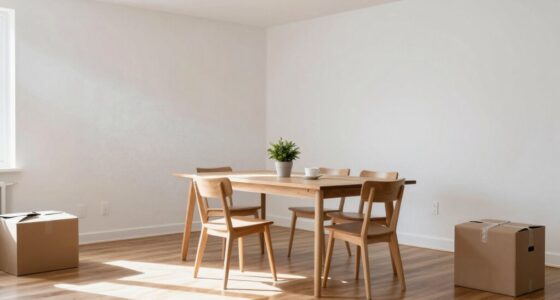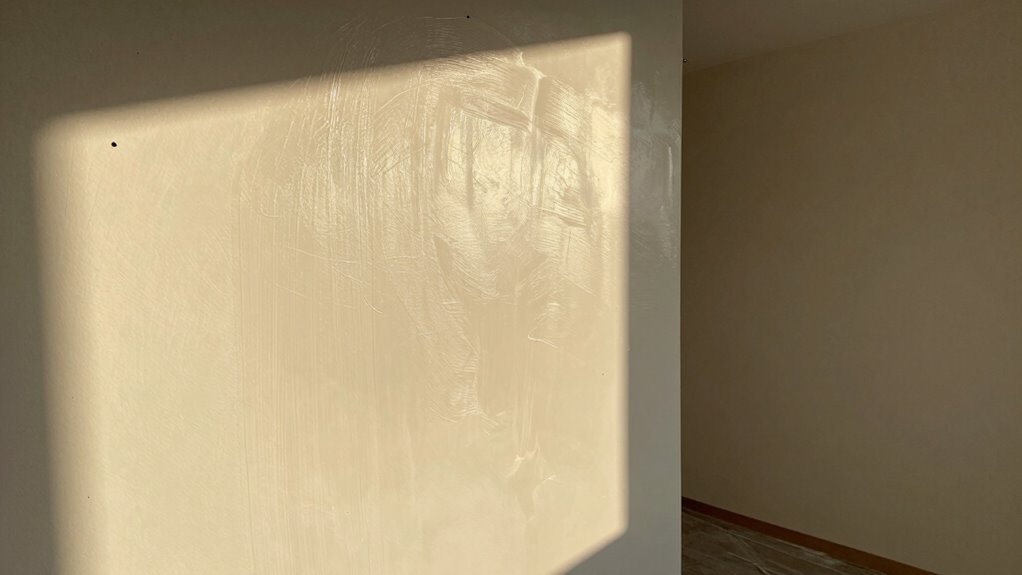

You’ll find that paint smell behaves differently from room to room because factors like ventilation, surface materials, and room size play a big role. Well-ventilated spaces with hard surfaces tend to clear odors faster, while small, enclosed, or fabric-heavy rooms trap fumes and make odors linger longer. Environmental conditions, such as temperature and humidity, also influence how fumes disperse and persist. Keep exploring to discover how adjusting these factors can help control the paint smell more effectively.
Listen free for 30 days with Audible
Thousands of audiobooks and originals — cancel anytime.
As an affiliate, we earn on qualifying purchases.
Key Takeaways
- Ventilation efficiency varies, affecting how quickly fumes are expelled and odors diminish.
- Porous furnishings trap odors, causing smells to linger longer in some rooms.
- Room size and shape influence fume concentration and dispersion of paint odors.
- Environmental factors like temperature and humidity alter the volatility and persistence of paint fumes.
- Air circulation and insulation determine how fumes escape or remain trapped, impacting odor behavior.
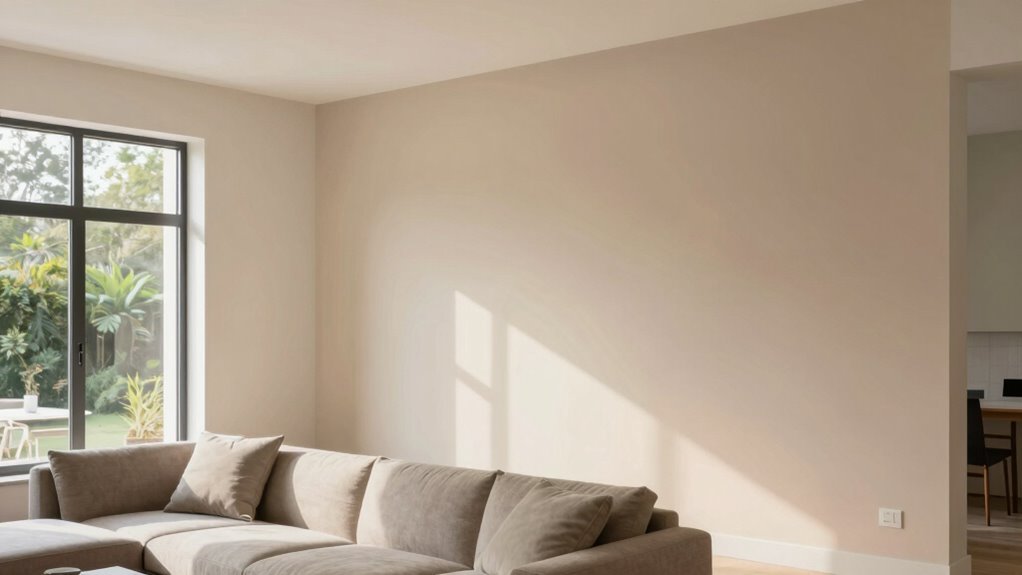
When you paint a room, you might notice that the smell varies depending on the space. That’s because several factors influence how your nose perceives paint fumes, and understanding these can help you manage the odor better. One key element is ventilation strategies. If the room has good airflow—like open windows, exhaust fans, or air purifiers—the smell will dissipate faster. Proper ventilation pulls fresh air in and pushes stale, paint-laden air out, reducing the concentration of fumes and making the space more comfortable. Conversely, a poorly ventilated room traps the odor, making it linger longer and seem more intense.
Another factor that affects the smell is odor absorption, which is how different materials in your room soak up or repel paint fumes. Hard surfaces like tiles, glass, and metal don’t absorb much, allowing fumes to escape easily. Soft, porous surfaces such as carpets, curtains, and upholstery, however, can trap odor molecules. This means that in rooms with extensive fabric or plush furnishings, the paint smell might seem stronger or last longer because these materials hold onto the fumes. You might notice that a bedroom with thick curtains and a plush rug retains the odor longer than a kitchen with tile floors and minimal soft furnishings. Additionally, material properties can influence how much odor is retained or released over time. The presence of air filtration systems can also play a role in reducing lingering odors by actively removing fumes from the air.
Soft furnishings like carpets and curtains trap paint fumes, making odors linger longer in plush, fabric-filled rooms.
The size and shape of the room also play a role. Smaller, enclosed spaces tend to concentrate fumes more than larger, open areas. If you’re painting in a tiny room with little ventilation, the smell can quickly become overwhelming. Larger rooms with high ceilings allow fumes to disperse more widely, reducing the concentration of odor and making the smell less noticeable. Additionally, room insulation can also affect how fumes accumulate or escape, impacting overall odor perception. Proper insulation can either trap fumes inside or help keep them out, depending on its properties. Well-insulated rooms might require additional ventilation measures to effectively clear the fumes.
Temperature and humidity levels further influence odor behavior. Warm temperatures increase the volatility of paint fumes, making them more noticeable and causing them to spread faster. Humidity, on the other hand, can either trap or help disperse fumes depending on the circumstances. High humidity may cause the odor to cling to the air longer, while drier conditions allow fumes to evaporate more quickly. Moreover, air circulation can significantly impact how quickly odors dissipate, especially in rooms with limited natural airflow. Ensuring consistent airflow can help manage odor persistence and improve overall comfort during painting projects. Properly managing these environmental factors can help control the persistence and intensity of paint smells in different spaces.
As an affiliate, we earn on qualifying purchases.
Frequently Asked Questions
How Long Does Paint Smell Typically Last in Each Room?
The paint odor usually lasts anywhere from a few hours to several days, depending on the room and ventilation. Generally, the smell duration is shorter in well-ventilated spaces, possibly fading within 2-3 days. In poorly ventilated rooms, the smell may linger for up to a week or more. To speed up the process, open windows, use fans, and keep the area well-ventilated to help reduce the paint odor quickly.
Do Different Paint Colors Influence the Smell’s Intensity?
Different paint colors can influence the smell’s intensity due to color perception and scent masking. Lighter colors often reflect more light, making the scent seem less intense, while darker shades might absorb light and seem stronger. Additionally, some paints with specific pigments or scent-masking agents can reduce or enhance odor perception. So, your choice of color can subtly affect how strong or lingering the paint smell feels in a room.
Can Room Size Affect How Quickly the Smell Dissipates?
Room size definitely impacts how quickly paint smell dissipates. Larger rooms have more space for odor dispersion and typically experience lower odor concentration, which speeds up absorption and reduces lingering scent. Smaller rooms trap the smell more, making it seem stronger and last longer. So, when painting, consider room size—bainter paint absorption and odor concentration play key roles in how long the smell sticks around.
Are Certain Paint Brands Known for Stronger or Weaker Odors?
Some paint brands are known for stronger odors due to higher levels of paint chemicals, while others use low-odor or odorless formulas. You should look for paints labeled “low-VOC” or “zero-VOC,” as they tend to emit fewer harmful chemicals and have less intense odors. Odor absorption varies based on the paint’s chemical composition, so choosing the right brand can help reduce the smell and improve indoor air quality.
Does Ventilation Method Impact Smell Duration Differently Across Rooms?
Ventilation definitely impacts how long paint smells linger, and airflow patterns play a key role. Proper cross-ventilation helps carry away volatile paint chemicals faster, reducing odor duration. Rooms with better airflow, like open windows or fans, see quicker dissipation. Conversely, poor ventilation traps fumes, making the smell last longer. The paint’s chemical composition also affects odor strength, but effective ventilation is essential to minimize lingering smells across different rooms.
ventilation fans for painting rooms
As an affiliate, we earn on qualifying purchases.
As an affiliate, we earn on qualifying purchases.
Conclusion
Remember, every room is like a unique personality—what works in one might not in another. Factors like ventilation, temperature, and the paint itself influence how the smell behaves. So, don’t be discouraged if some rooms hold onto the scent longer. As the saying goes, “A chain is only as strong as its weakest link.” By adjusting your approach for each space, you’ll guarantee fresher air and a more comfortable home.
As an affiliate, we earn on qualifying purchases.
dehumidifiers for paint smell removal
As an affiliate, we earn on qualifying purchases.
As an affiliate, we earn on qualifying purchases.
Flea & tick season Picks
flea and tick prevention
As an affiliate, we earn on qualifying purchases.