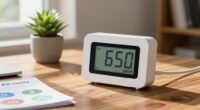
Your indoor PM levels can jump suddenly due to various factors you might not notice. Actions like cooking, cleaning, or opening windows can introduce external pollution or stir up indoor particles. Faulty HVAC components or poorly placed sensors can also cause inconsistent measurements. Environmental conditions like humidity and outdoor air quality influence particle behavior and infiltration. To understand these fluctuations better, keep exploring how these factors interact and affect your indoor air quality.
Open a free Amazon Business account
Business pricing, bulk buying and tax-exempt orders.
As an affiliate, we earn on qualifying purchases.
Key Takeaways
- External pollution sources like outdoor air, cooking, or cleaning can cause sudden spikes in PM levels.
- Indoor activities such as burning candles or incense temporarily increase particulate matter.
- Sensor placement near pollution sources or vents can lead to higher or fluctuating readings.
- HVAC system issues, including clogged filters or malfunctioning components, cause inconsistent PM measurements.
- Environmental factors like humidity, temperature, and open windows influence particle behavior and indoor air quality fluctuations.
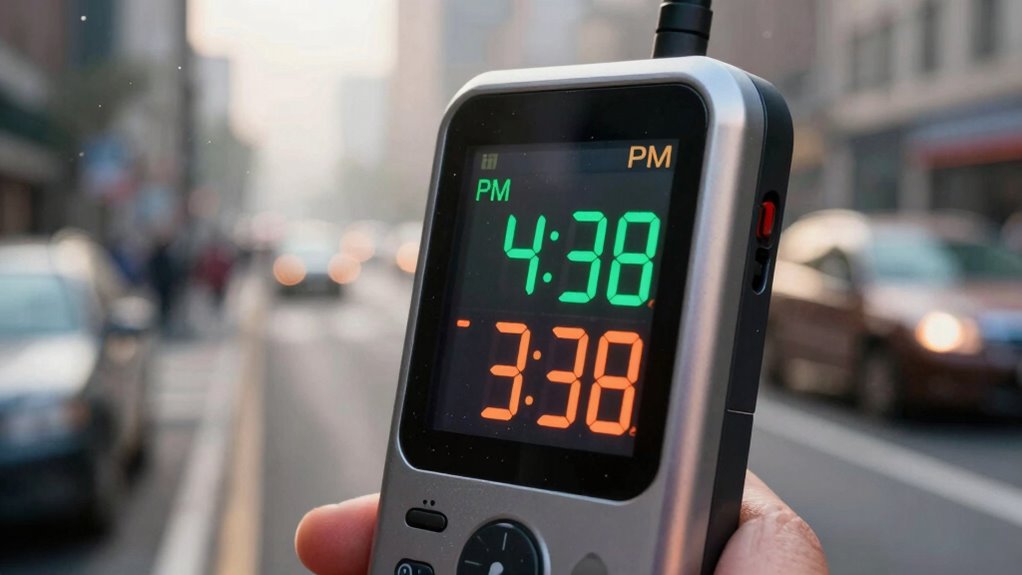
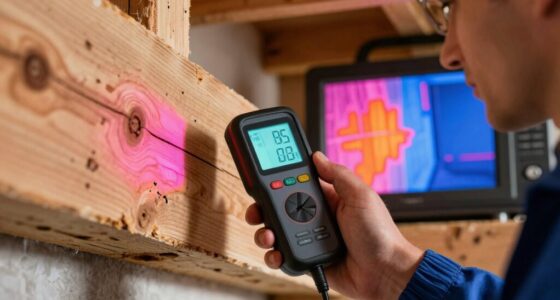
Have you noticed your PM air quality readings fluctuating unexpectedly? If so, you’re not alone. Many people find it puzzling when their particulate matter (PM) levels jump around without a clear reason. These fluctuations can be caused by a variety of factors, and understanding them can help you better maintain your indoor air quality. One key aspect to consider is how your HVAC system performance influences the readings. Your HVAC system plays a vital role in filtering and circulating air, and if it’s not functioning properly, it can lead to inconsistent PM measurements. Dirty filters, clogged vents, or malfunctioning components can all cause the system to perform unevenly, trapping some particles while letting others pass through. As a result, your air quality readings might spike or drop unexpectedly.
HVAC system issues can cause unexpected fluctuations in your PM air quality readings.
Another factor that causes PM readings to jump is the presence of external sources. Activities like cooking, cleaning, or even someone entering the home with outdoor pollutants on their clothing can introduce sudden increases in particulate matter. Additionally, environmental conditions such as wind or nearby construction can cause outdoor pollutants to infiltrate your space, especially if your windows or doors are open. These external influences can cause rapid changes in indoor air quality, reflected immediately in your PM levels. External air quality variations are also influenced by environmental factors, which can fluctuate throughout the day and impact your indoor measurements. External influences can be particularly significant if your ventilation or air exchange rates are high, allowing pollutants to move freely between indoors and outdoors.
Indoor air quality itself isn’t static; it fluctuates based on ongoing activities and environmental factors. For example, burning candles or using incense temporarily elevates particulate levels, leading to short-term spikes. Conversely, opening windows to ventilate can sometimes decrease indoor PM if the outdoor air quality is better, but it can also introduce new particles if the outside air is polluted. The timing and frequency of these activities contribute to the unpredictability of your readings. Furthermore, the sensor placement within your home can greatly influence how your PM levels are recorded, as proximity to pollution sources impacts readings. If your detector is near a source of pollution—like a kitchen or smoking area—it might register higher levels than in other parts of your home. Similarly, the sensitivity and calibration of your sensor can cause readings to vary. An improperly calibrated sensor might give inconsistent data, making it seem like the air quality is fluctuating more than it truly is. Regular maintenance and understanding sensor calibration can help improve the accuracy of your PM readings. Proper placement and calibration are crucial for obtaining reliable and representative data.
In addition, natural environmental factors such as humidity and temperature can affect sensor performance and particle behavior, contributing further to fluctuations. In essence, fluctuations in PM readings stem from a mix of internal and external factors, system performance, and sensor accuracy. Recognizing these influences can help you interpret your air quality data more accurately and take targeted actions to improve your indoor air quality. Whether it’s maintaining your HVAC system, managing indoor activities, or ensuring proper sensor placement, understanding why your PM levels jump around is the first step toward creating a healthier indoor environment.
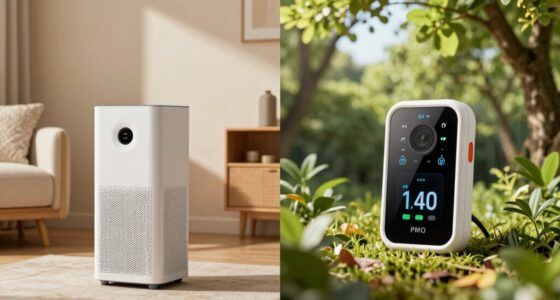
HEPA air purifier for indoor air quality
As an affiliate, we earn on qualifying purchases.
As an affiliate, we earn on qualifying purchases.
Frequently Asked Questions
Can Environmental Factors Affect PM Reading Accuracy?
Yes, environmental factors can affect PM reading accuracy. Indoor pollution sources, like cooking or smoking, can cause fluctuations, making readings seem higher than they are. Sensor placement also matters—placing sensors near windows, vents, or pollution sources can lead to inaccurate results. To get reliable readings, position sensors in stable, central locations away from immediate pollution sources, and consider indoor pollution levels when interpreting data.
How Often Should PM Sensors Be Calibrated?
Like tuning a finely crafted instrument, your PM sensor needs regular calibration to stay accurate. You should calibrate it at least once every six months, but more frequent calibration might be necessary if you notice inconsistent readings. Proper sensor placement also plays a role in stability. Keep the sensor away from direct airflow or pollution sources, and verify calibration frequency aligns with manufacturer recommendations for precise, reliable PM measurements.
Do Different PM Sensors Have Varying Sensitivities?
Yes, different PM sensors have varying sensitivities due to differences in sensor technology. Some sensors are more precise, providing highly accurate measurements, while others may be less sensitive, leading to fluctuating readings. Your choice of sensor affects measurement precision, so it’s important to select one suited to your environment. Understanding these differences helps you interpret PM data correctly and maintain reliable air quality monitoring.
Can Personal Activities Influence PM Level Readings?
Imagine you’re stirring a pot—personal activities like cooking, smoking, or cleaning can spike PM levels, just like bubbles rising. Yes, your actions influence indoor pollutants and can cause measurement biases in PM readings. For example, vacuuming can temporarily elevate PM levels, making readings fluctuate. These activities introduce variability, so your personal activities directly impact PM levels, causing readings to jump around even if the air quality remains stable.
What Role Does Humidity Play in PM Measurements?
Humidity fluctuations impact PM measurements because higher humidity can cause particles to absorb moisture, increasing their size and making readings appear higher. Additionally, sensor sensitivity can be affected by changes in humidity, leading to inconsistent results. When humidity levels rise or fall quickly, your PM readings may jump around more than usual. To get accurate measurements, be aware of these humidity effects and consider using sensors that are less sensitive to moisture variations.
As an affiliate, we earn on qualifying purchases.
Conclusion
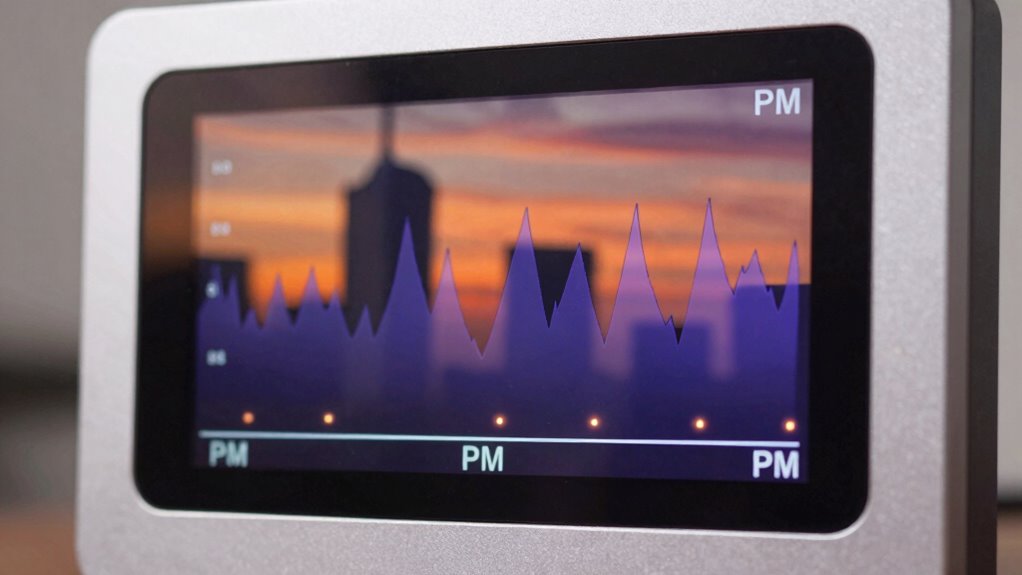
So, next time your PM readings spike unexpectedly, remember it’s often due to sudden changes in your environment or sensor interference. Did you know that in urban areas, PM levels can vary by up to 50% within just a few hours? This fluctuation shows how dynamic air quality can be, emphasizing the importance of continuous monitoring. Staying aware of these shifts helps you better understand your air and take action when needed.
indoor air quality monitor with PM sensor
As an affiliate, we earn on qualifying purchases.
As an affiliate, we earn on qualifying purchases.
sensor placement for air quality monitor
As an affiliate, we earn on qualifying purchases.
As an affiliate, we earn on qualifying purchases.
NFL season / tailgating Picks
team gear
As an affiliate, we earn on qualifying purchases.