Better air quality helps you sleep more deeply and without interruptions by reducing irritants like dust, allergens, and pollutants that disturb your sleep cycles. As your respiratory system works less hard, your body can focus on achieving restorative sleep stages, giving you more energy during the day. Even small improvements in air quality can have a surprisingly large impact on how well you sleep. Keep exploring to discover how simple changes can transform your rest considerably.

Get health and wellness essentials delivered free with Prime
- Fast, free delivery on millions of items
- Prime Video, Amazon Music and more included
- Member-only deals all year
Key Takeaways
- Improved air quality reduces respiratory irritation, allowing easier and more restful breathing throughout the night.
- Cleaner air minimizes allergens and pollutants that activate stress responses, promoting stable sleep cycles.
- Better ventilation and humidity control prevent mold and dust mite growth, decreasing allergic reactions during sleep.
- Enhanced air quality supports longer deep sleep stages essential for tissue repair and memory consolidation.
- A healthier sleep environment boosts overall health, energy, and focus, amplifying sleep benefits beyond expectations.
Have you ever wondered why some nights you sleep soundly while others leave you feeling tired and unrested? The answer might lie in your sleep environment, specifically the air quality around you. Your sleeping space isn’t just about comfort or darkness; it’s also about the quality of air you breathe in. Poor air quality can subtly sabotage your sleep, making it harder to fall asleep, stay asleep, or reach that deep, restorative rest you need. When your air is filled with pollutants, allergens, or even dry air, it can cause disruptions that you might not immediately notice but feel the next day as fatigue or brain fog.
Poor air quality can disrupt sleep and cause fatigue and brain fog the next day.
Think about your sleep environment as a carefully balanced system. Clean, fresh air creates a *essential* foundation for sleep, while compromised air quality introduces irritants that can activate your body’s stress responses. For example, allergens like dust mites, pet dander, or mold spores can trigger allergic reactions or respiratory discomfort, leading to frequent awakenings or difficulty breathing while you sleep. Even dry or overly humid air can disturb your comfort, making your airways less relaxed and increasing the chances of snoring or sleep apnea symptoms. In contrast, a well-ventilated room with good air quality keeps your respiratory system calm, helping you breathe more easily and peacefully through the night. Improving air quality can also reduce inflammation and support your immune system, further enhancing your sleep quality. Additionally, maintaining proper humidity levels can prevent the growth of mold and dust mites, which are common indoor pollutants. Using air purifiers equipped with HEPA filters can effectively trap many airborne irritants, contributing further to a healthier sleep environment.
You might not realize it, but your sleep environment’s air quality influences more than just how easily you fall asleep. It can affect the duration and depth of your sleep cycles. Better air quality reduces inflammation and irritation, supporting your body’s natural processes for staying in deep sleep longer. This type of sleep is *crucial* because it’s when your body repairs tissues, consolidates memories, and restores energy. When the air around you is polluted or stale, your body has to work harder to breathe and regulate itself, which can fragment your sleep and prevent you from reaching those *necessary* restorative stages.
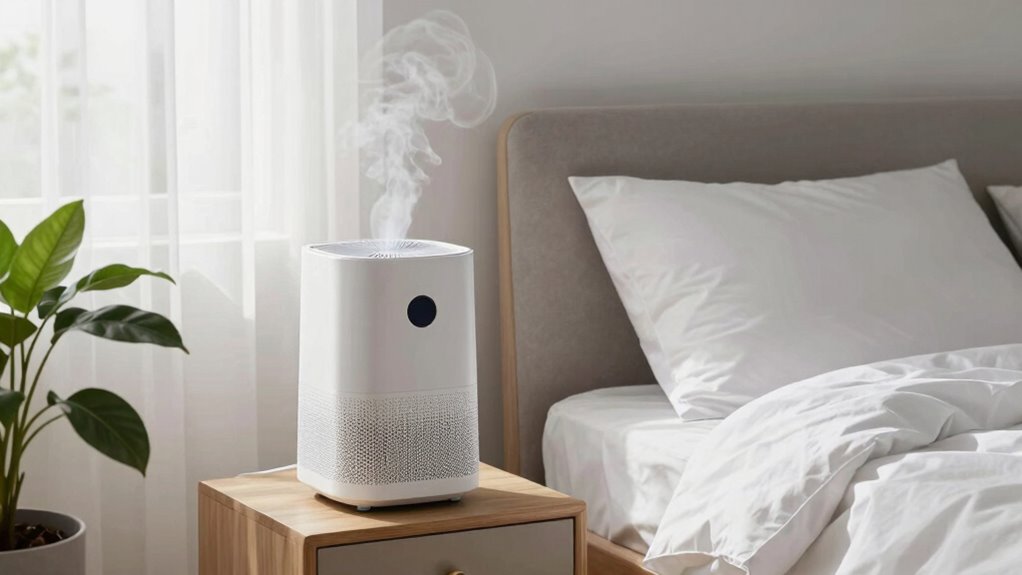
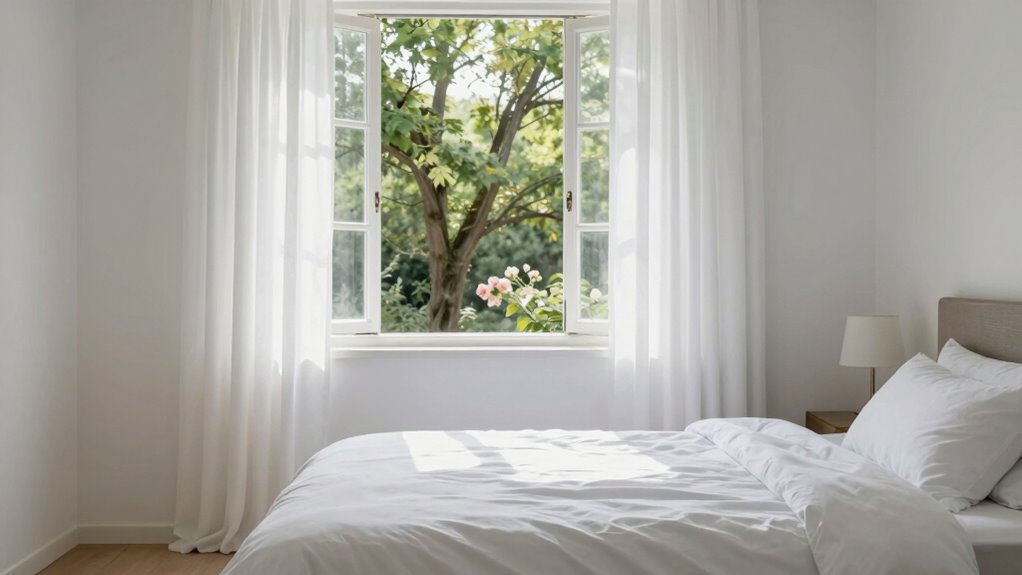
Improving your air quality doesn’t mean overhauling your entire space. Simple steps, like opening windows regularly, using air purifiers, or maintaining clean bedding, can make a significant difference. Ensuring your sleep environment is free from pollutants and allergens helps to create a haven where your body can relax and recover fully. When you prioritize the quality of the air you breathe during sleep, you’re not just enhancing your nights—you’re setting the stage for better health, sharper focus, and more energy during the day. Better air truly has the power to transform your sleep more than you might expect.
As an affiliate, we earn on qualifying purchases.
Frequently Asked Questions
Can Air Quality Affect Sleep Quality Even if I Don’t Have Allergies?
Yes, air quality can affect your sleep even if you don’t have allergies. Poor air pollution can lead to respiratory issues, disrupt your breathing, and make it harder to fall asleep or stay asleep. Your sleep environment plays an essential role; clean, fresh air promotes better oxygen flow and reduces irritants. Improving your air quality creates a healthier sleep environment, helping you rest more deeply and wake up feeling refreshed.
How Quickly Can Improved Air Quality Impact Sleep?
Improved air quality can impact your sleep within days, sometimes even overnight. When you enhance air quality, you reduce pollutants and irritants that disrupt sleep, leading to quicker sleep improvement. You might notice better sleep quality, fewer awakenings, and deeper rest sooner than you expect. Don’t underestimate how rapidly cleaner air can positively affect your sleep, proving that small changes in air quality can make a big difference quickly.
Are Air Purifiers Effective for All Types of Sleep Disturbances?
Air purifiers can be effective for many sleep disturbances, but their effectiveness depends on proper maintenance and noise levels. If you regularly clean and replace filters, you guarantee ideal performance. Choose a purifier with low noise levels so it doesn’t disrupt your sleep. While they help with allergens and pollutants, they might not address all issues like anxiety or sleep disorders, so consider an all-encompassing approach for persistent problems.
What Specific Pollutants Are Most Harmful to Sleep?
Indoor pollutants like dust, pet dander, mold spores, and volatile organic compounds (VOCs) are the most harmful to your sleep. These pollutants can cause sleep disruption by irritating your respiratory system or triggering allergies. When you breathe in cleaner air, your body relaxes more easily, reducing interruptions and helping you fall asleep faster. Improving air quality with purifiers can considerably enhance your sleep quality and overall restfulness.
Does Temperature Control Influence the Benefits of Better Air Quality?
Did you know that proper temperature control can boost sleep quality by up to 30%? Yes, air circulation and humidity control play key roles in enhancing sleep benefits from better air quality. When your room stays well-ventilated and humidity is balanced, it prevents stuffiness and reduces allergens, helping you breathe easier. This creates a ideal environment, making the benefits of cleaner air even more effective for restful, uninterrupted sleep.
humidifier with adjustable humidity control
As an affiliate, we earn on qualifying purchases.
As an affiliate, we earn on qualifying purchases.
Conclusion
When you breathe cleaner air, it’s like opening a window to a fresh, calming breeze—your sleep naturally improves. Better air clears out pollutants and boosts oxygen flow, helping your body relax and recharge more deeply. Just as a gentle wind can soothe a restless mind, improved air quality can transform your nights into peaceful, restorative escapes. Embrace the change, and watch how your sleep becomes more restful and invigorating than you ever expected.
dust mite and allergen-proof bedding covers
As an affiliate, we earn on qualifying purchases.
As an affiliate, we earn on qualifying purchases.
air quality monitor for indoor air
As an affiliate, we earn on qualifying purchases.
As an affiliate, we earn on qualifying purchases.
Columbus Day / Indigenous Peoples' Day Picks
long weekend sales
As an affiliate, we earn on qualifying purchases.