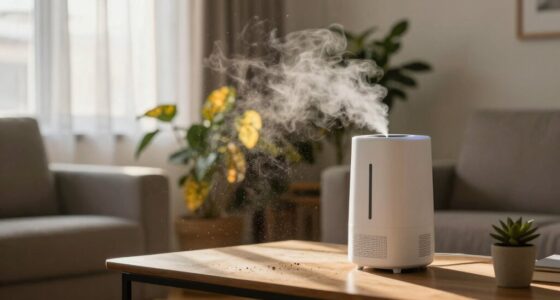
As a sensitive sleeper, you notice air quality first because your body reacts quickly to airborne irritants like dust, pollen, or pet dander. These tiny particles can cause breathing difficulties, sneezing, or congestion, making you more aware of your environment. Because your sleep is more easily disturbed by these irritants, even subtle changes stand out. Keep going, and you’ll discover how improving air quality can help you enjoy more restful, uninterrupted sleep.
Key Takeaways
- Sensitive sleepers are more aware of airborne irritants that disrupt breathing and cause frequent awakenings.
- They have heightened sensitivity to allergens like dust, pollen, and pet dander, which affect sleep quality.
- Poor indoor air quality can trigger allergy symptoms, making them more noticeable during rest.
- Subtle changes in air quality directly impact their ability to fall asleep and stay asleep peacefully.
- Clean, filtered air provides a noticeable improvement in comfort and reduces respiratory discomfort for sensitive sleepers.
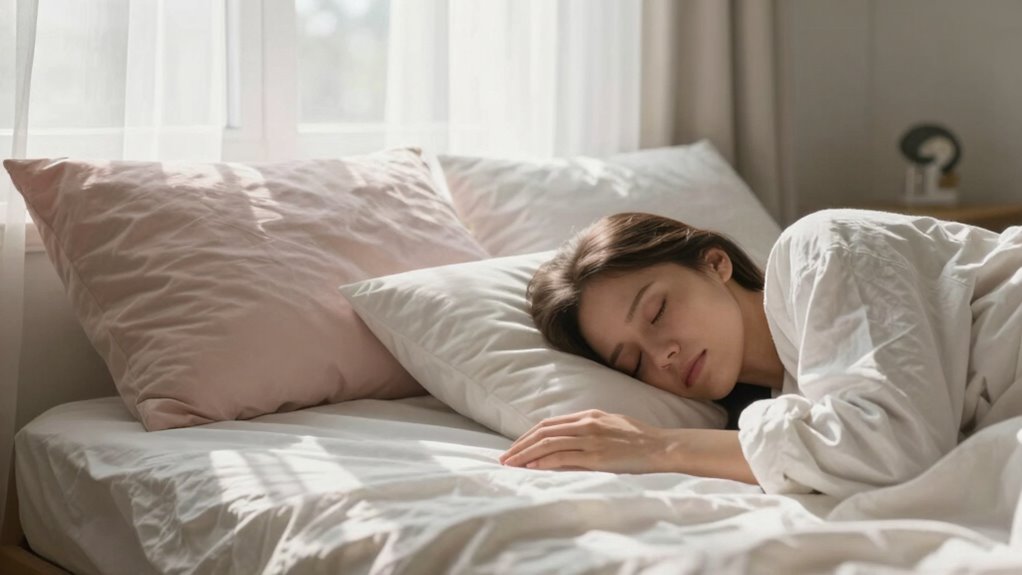
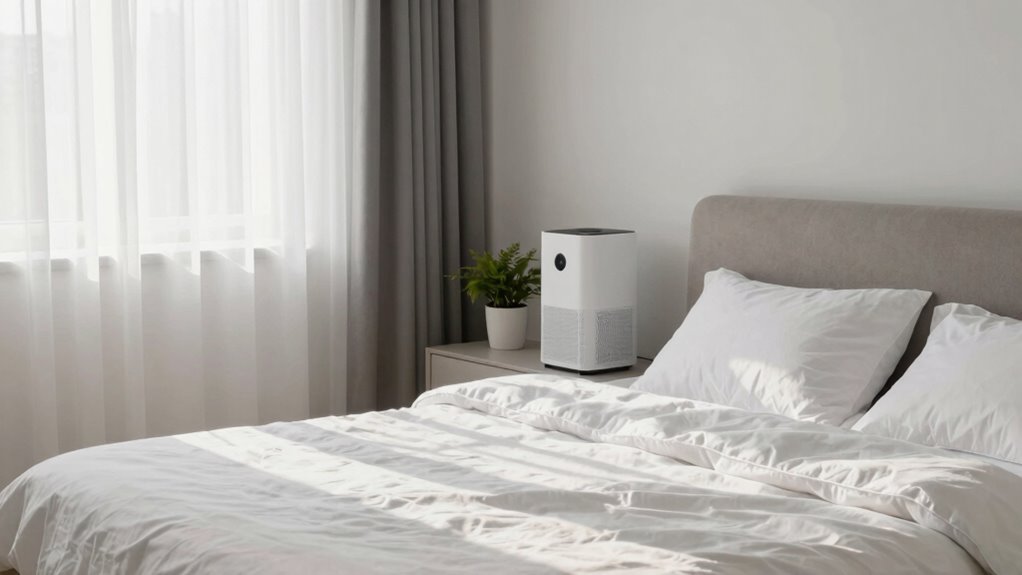
If you’re a sensitive sleeper, the quality of the air in your bedroom can considerably impact your rest. You might notice subtle changes in how you breathe, how often you wake up during the night, or how refreshed you feel in the morning. These signs aren’t just coincidence; they’re often connected to the air you breathe while sleeping. Sensitive sleepers tend to be more aware of airborne irritants, which makes allergen reduction crucial. Using an air purifier can bring many air purifier benefits that directly improve your sleep quality. These devices help filter out dust, pet dander, pollen, mold spores, and other airborne particles that can trigger allergies or respiratory issues. When these irritants are removed from your environment, you breathe easier, and your body doesn’t have to work as hard to clear your airways during the night.
Using an air purifier can significantly improve sleep quality for sensitive sleepers by reducing airborne irritants.
You’ll likely notice that, with cleaner air, your allergy symptoms diminish. Less sneezing, itching, or congestion means fewer disruptions during your sleep cycle. When allergens are reduced, you also experience fewer awakenings caused by irritation, leading to more continuous and restful sleep. The benefits extend beyond allergy relief; cleaner air can help reduce asthma flare-ups or other respiratory conditions that might interfere with your rest. As a sensitive sleeper, you might find that even small improvements in air quality boost your overall sleep comfort, making it easier to fall asleep and stay asleep throughout the night. Additionally, maintaining good indoor air quality can help reduce airborne pollutants, which can contribute to discomfort or health issues over time. Furthermore, air quality monitoring can help you identify specific issues affecting your sleep environment, allowing for targeted improvements.
The presence of airborne pollutants can also increase anxiety or discomfort, especially if you’re prone to respiratory sensitivities. An air purifier provides a consistent barrier against these irritants, creating a healthier sleep environment. Its benefits aren’t limited to just removing allergens; many models also filter out bacteria, viruses, and volatile organic compounds, further improving the air you breathe. By reducing these particles, you lower your risk of respiratory infections and exposure to harmful chemicals, which can disturb sleep or impact your health long-term. Furthermore, understanding the importance of biodiversity in our environment highlights how natural ecosystems help regulate air quality, making it even more vital to maintain clean indoor air for sensitive sleepers.
Research shows that indoor plants can also help improve air quality, complementing the use of air purifiers for a more comprehensive approach. Ultimately, as a sensitive sleeper, you’re more likely to notice the difference an air purifier makes. The improved air quality decreases irritation, eases breathing, and fosters a peaceful, uninterrupted night’s sleep. When you prioritize allergen reduction and harness the benefits of cleaner air, you’re investing in better rest and overall well-being. Regularly ventilating your sleeping space with fresh outdoor air can also help dilute indoor pollutants and improve overall air quality. This simple addition to your bedroom can transform your sleeping environment, making it more comfortable and health-supportive for years to come.
air purifier for allergy sufferers
As an affiliate, we earn on qualifying purchases.
As an affiliate, we earn on qualifying purchases.
Frequently Asked Questions
How Can I Test My Home’s Air Quality Effectively?
To test your home’s air quality effectively, start with DIY testing kits that detect common pollutants like VOCs and mold. You can also use air quality sensors to monitor real-time levels of pollutants and allergens. Place sensors in different rooms to get accurate readings. Regularly check and interpret the sensor data to identify issues early. Combining DIY testing with sensors gives you an extensive view of your home’s air quality, ensuring a healthier environment.
Are There Specific Allergens That Affect Sensitive Sleepers Most?
Yes, dust mites and pet dander are the most common allergens that affect sensitive sleepers. Dust mites thrive in bedding and upholstery, causing allergic reactions. Pet dander from cats and dogs can linger in the air and on surfaces, triggering symptoms. To reduce their impact, you should regularly clean bedding, use allergen-proof covers, and keep pets out of bedrooms. These steps help improve your sleep quality and reduce allergy symptoms.
Can Air Purifiers Completely Eliminate Indoor Air Pollutants?
Air purifiers can’t completely eliminate indoor air pollutants due to some limitations. While they considerably improve allergen removal efficiency, they may not catch all tiny particles or gases, especially if the device isn’t properly maintained or sized for your space. You should combine air purifiers with good ventilation and regular cleaning to reduce pollutants effectively. Remember, they’re helpful but not a total solution for all indoor air quality issues.
What Are Hidden Sources of Indoor Air Pollution?
Hidden hazards like mold and indoor VOCs often escape your notice, lurking in overlooked locations. Mold can grow behind wallpaper or under carpets, while VOCs are released from everyday items like paints, cleaning supplies, and furniture. These silent sources subtly contribute to indoor air pollution, impacting your health. Staying vigilant, ventilating well, and regularly checking for hidden mold and VOC emissions can help create a cleaner, healthier indoor environment.
How Often Should I Replace Air Filters for Optimal Air Quality?
You should replace your air filter every 30 to 60 days for maximum replacement, especially if you have sensitivities or allergies. Regular air filter maintenance ensures your indoor air stays clean and free of pollutants. During high pollen seasons or if you have pets, consider replacing filters more frequently. This routine helps improve air quality, keeps your HVAC system running efficiently, and creates a healthier environment for sensitive sleepers.
As an affiliate, we earn on qualifying purchases.
Conclusion
Think of your sleep environment as a delicate garden. Sensitive sleepers are like vigilant gardeners, noticing every change in air quality—the slightest breeze or hint of pollen. Just as a gardener tends to their plants, you become aware of your surroundings, ensuring your sleep sanctuary stays pure and restful. Your heightened awareness acts as a safeguard, helping you breathe easier and sleep better. Embrace this gift; it’s your personal alarm for a healthier, more peaceful night.
HEPA air purifier for dust and pet dander
As an affiliate, we earn on qualifying purchases.
As an affiliate, we earn on qualifying purchases.
As an affiliate, we earn on qualifying purchases.