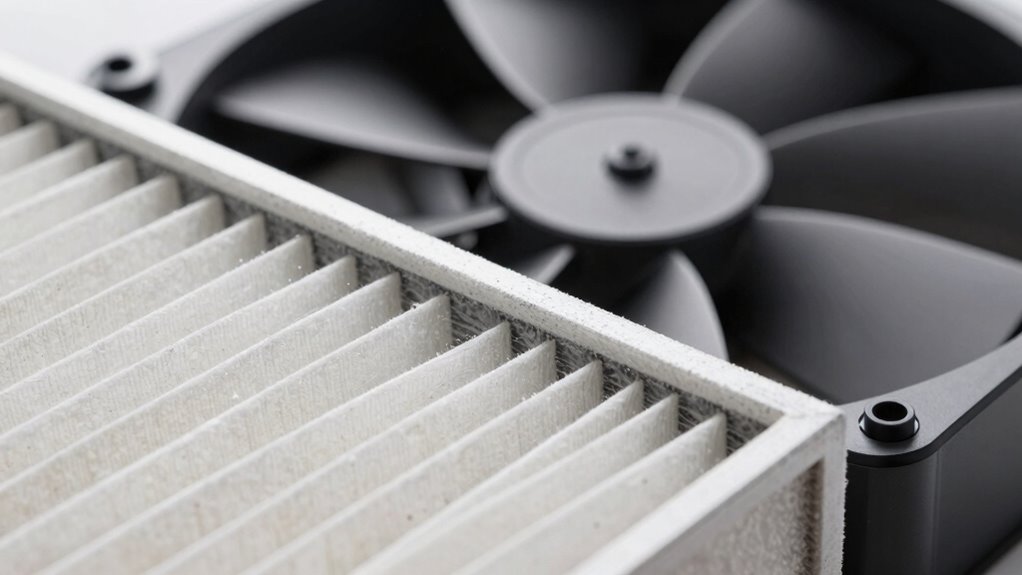
Airflow restrictions can greatly reduce your ventilation efficiency and weaken filtration, leading to poor air quality and higher energy bills. Dense filters, ducts with obstructions, or sharp bends make it harder for air to circulate smoothly, causing strain on your system. To improve performance, choose filters with the right MERV rating, keep filters clean, and make sure ducts are clear and well-designed. Want to find out how to optimize your system further? Keep exploring, and you’ll discover more helpful tips.
Key Takeaways
- Higher MERV filters improve filtration but can increase airflow resistance, requiring balanced selection for optimal system performance.
- Obstructions and duct bends cause airflow restrictions, reducing efficiency and increasing energy consumption.
- Regular maintenance and filter replacement prevent clogging, ensuring consistent airflow and filtration effectiveness.
- Smoothing duct bends and increasing duct diameter can significantly improve airflow and system efficiency.
- Proper airflow management enhances indoor air quality, reduces energy costs, and prolongs HVAC system lifespan.
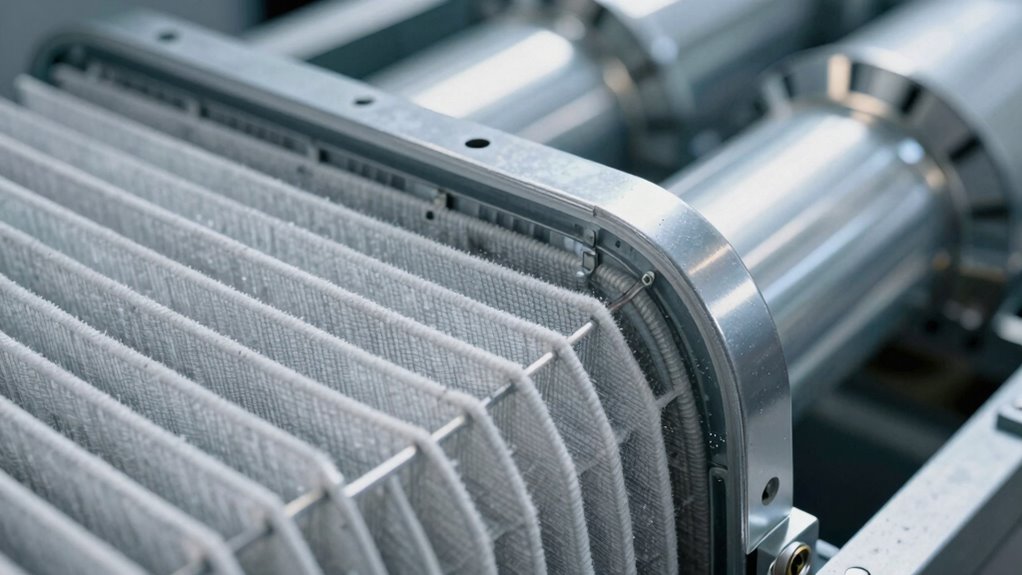
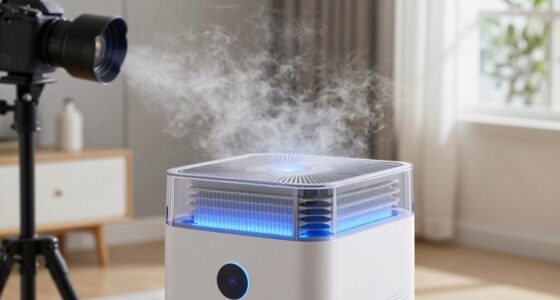
Airflow restrictions can considerably impact the efficiency of your ventilation system, making it harder for air to circulate properly. When airflow is impeded, your system has to work harder to move air through ducts and filters, which can lead to increased energy consumption and reduced overall performance. To understand how airflow restrictions affect your setup, it’s essential to grasp the basics of airflow dynamics. These involve how air moves through your ducts, filters, and vents, influenced by factors like duct size, bends, and obstructions. When airflow is restricted, it creates pressure drops that force your system to exert more effort, often resulting in uneven air distribution and hotspots in your space.
Restricted airflow challenges your system’s efficiency, causing uneven distribution and increased energy use.
One common cause of airflow restrictions lies in the filtration materials you use. While high-quality filters are crucial for capturing dust, allergens, and other contaminants, not all filters allow air to pass freely. Some filtration materials, especially those with dense fibers or multiple layers, can greatly hinder airflow. If your filters are too restrictive, they act like a dam, preventing air from flowing smoothly. This can cause your system to strain, reducing efficiency and potentially shortening its lifespan. Choosing the right filtration materials means balancing filtration effectiveness with minimal airflow resistance. Look for filters designed with enhanced airflow dynamics, which provide effective filtration without creating excessive pressure drops.
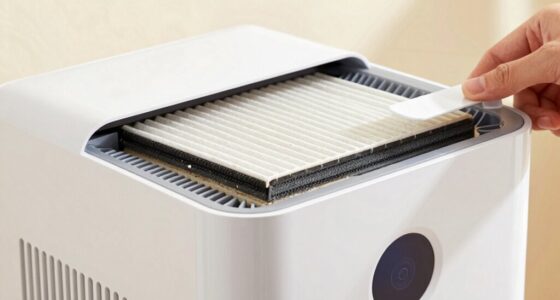
To improve airflow and filtration, start by selecting filters with the appropriate MERV rating for your needs. Higher ratings often mean better filtration but can also increase airflow resistance. It’s crucial to find a filter that offers the best balance between particle capture and airflow. Regular maintenance is equally critical; clogged or dirty filters are a primary cause of airflow restrictions. Changing filters on schedule ensures your system can operate unimpeded, maintaining ideal airflow dynamics. Additionally, inspecting your ducts for obstructions or buildup can help prevent unnecessary restrictions. Sometimes, small changes like smoothing duct bends or increasing duct diameter can greatly improve airflow. Understanding airflow dynamics is essential for optimizing your ventilation system’s performance and longevity. Moreover, understanding how filtration materials impact airflow can help you select the most suitable options for your setup. Additionally, implementing proper airflow management techniques can further optimize system performance and energy efficiency.
Ultimately, understanding airflow dynamics and choosing suitable filtration materials can make a noticeable difference in your ventilation system’s performance. When you pay attention to these factors, you’ll notice better air circulation, lower energy costs, and a healthier indoor environment. You don’t need to sacrifice filtration quality for efficiency—by selecting the right filters and maintaining your system, you can achieve both. Remember, a well-optimized airflow not only keeps your system running smoothly but also ensures the air you breathe is cleaner and healthier.
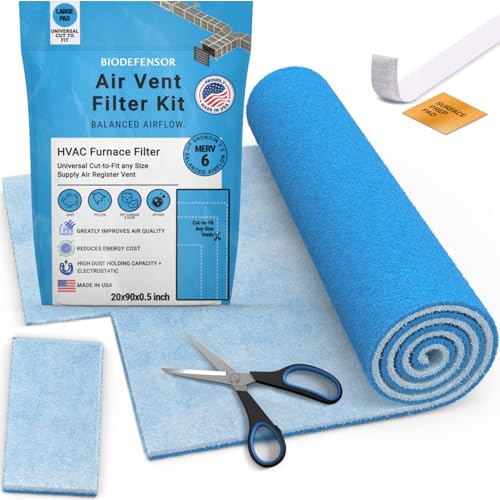
Biodefensor 20"x90" Air Vent Filters, Made in USA, MERV 6 High-Airflow, Cut to Size Material for Home Floor, Grilles, Ceiling, Wall HVAC Furnace Vents, Includes Adhesive Hook Tape, Prep Pad
Cleaner, Safer Indoor Air – Breathe easy with our made in the USA, MERV 6 rated air filter…
As an affiliate, we earn on qualifying purchases.
As an affiliate, we earn on qualifying purchases.
Frequently Asked Questions
How Do Airflow Restrictions Impact Energy Efficiency?
Airflow restrictions reduce energy efficiency by slowing down airflow and forcing your system to work harder. When airflow dynamics are compromised, your equipment uses more energy to maintain proper circulation. Poor filter performance adds to this problem, creating more resistance and increasing energy consumption. To optimize efficiency, make certain filters are clean and well-maintained, and choose filters that balance filtration quality with minimal airflow restriction, keeping your system running smoothly and efficiently.
Can Better Filtration Reduce Overall System Lifespan?
Better filtration can drastically reduce your system’s lifespan if you’re not careful. Using the wrong filter material or ignoring system compatibility causes excessive strain, leading to faster wear and tear. You might think you’re protecting your system, but improper filters can cause clogging, overworking components, and ultimately, costly replacements. Always choose filters suited for your system to balance filtration quality with longevity, avoiding unnecessary damage.
Are There Specific Filters Best for High Airflow Systems?
For high airflow systems, look for filters with materials designed to minimize airflow resistance, such as synthetic fibers or pleated designs. These filters maintain strong airflow while trapping particles effectively. Avoid dense materials that increase airflow resistance, which can strain your system. Choosing filters specifically rated for high airflow guarantees maximum performance, prolongs system lifespan, and maintains good indoor air quality without sacrificing efficiency.
How Often Should Filters Be Replaced to Optimize Airflow?
You should replace your filters every 1 to 3 months, depending on usage and filter type. Regular filter maintenance guarantees ideal airflow, preventing restrictions that can strain your system. Check your filters monthly, especially during high use or in dusty environments. For the best performance, follow the manufacturer’s recommended replacement frequency, and upgrade to higher-quality filters if necessary. Consistent replacements keep your system running smoothly and improve indoor air quality.
Do Airflow Restrictions Vary by Climate or Environment?
Airflow restrictions definitely vary by climate and environmental factors. You might think filters stay consistent regardless of where you live, but higher humidity, dust, or pollution levels can clog filters faster, reducing airflow. In dry or dusty environments, restrictions increase more quickly, impacting system efficiency. So, adapting your filter maintenance to your climate guarantees peak airflow, prevents system strain, and keeps your indoor air quality high, no matter where you are.
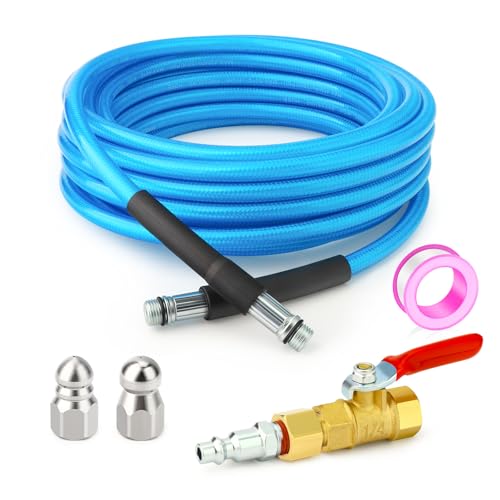
GASHER 23feet Home Dryer Vent Duct Cleaning Kit, 2 Jetter Nozzle, 1/4" NPT Ball Valve, 1/4" NPT Air Plug, 1/4"NPT Reducer Adapter
Essential Dryer Vent Cleaning Tool: Effectively reduce fire hazards by removing built-up lint inside your dryer duct. Regular…
As an affiliate, we earn on qualifying purchases.
As an affiliate, we earn on qualifying purchases.
Conclusion
Now that you understand how airflow restrictions can silently choke your filtration system, imagine it as a river trying to carve its path. When restrictions clog the flow, everything slows, and the system struggles to do its job. But with clear pathways and better filters, you’re opening a floodgate of clean, fresh air—like a breeze sweeping through open plains. Keep your airflow smooth, and breathe in the clarity of truly effective filtration.
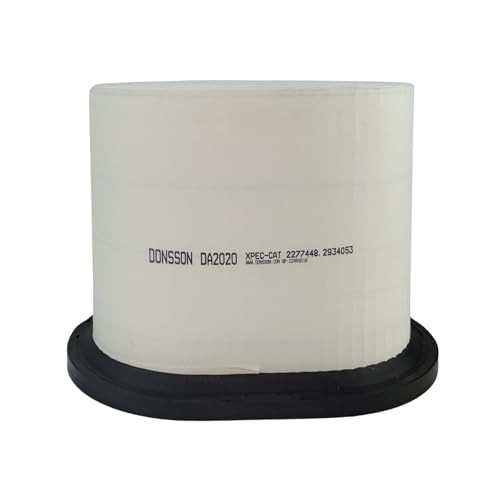
Donsson Air Filter DA2020| Optimized Airflow with Minimal Space Usage | Replacement for: 2277448 2934053 49108 549108 83108 9108 ACH10722 AF26247 AF27827 CA4996 CFS004 CP23210 LAF3236 P608766
Donsson Air Filter DA2020| Optimized Airflow with Minimal Space Usage | Replacement for: 2277448 227-7448 2934053 293-4053 49108…
As an affiliate, we earn on qualifying purchases.
As an affiliate, we earn on qualifying purchases.

Dryer Vent Hose, 6" Insulated Flexible Duct 8FT with 2 Duct Clamps, Heavy-Duty Three Layer Protection for HVAC Ventilation, Duct Fan Systems
Low Noise Silencer: Designed for reducing noise from fans and carbon filter systems, can decrease the noise by…
As an affiliate, we earn on qualifying purchases.
As an affiliate, we earn on qualifying purchases.