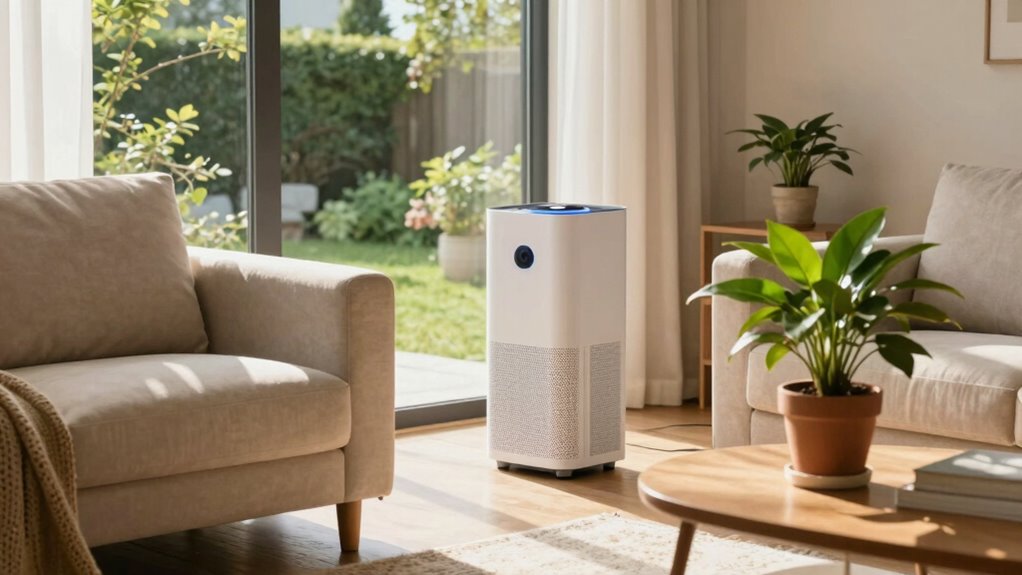

Your allergy symptoms can vary from room to room because airborne allergens like dust, mold spores, pet dander, and pollen differ based on factors like cleanliness, clutter, and ventilation. Humidity levels also play a role by affecting mold growth and dust mites. Better airflow and proper humidity control can reduce these irritants. If you’re curious about how to manage these differences and improve your comfort, keep exploring for helpful tips.
Listen free for 30 days with Audible
Thousands of audiobooks and originals — cancel anytime.
As an affiliate, we earn on qualifying purchases.
Key Takeaways
- Airborne allergen levels vary based on room cleanliness, clutter, and ventilation, affecting allergy severity.
- Humidity fluctuations influence mold growth and dust mite populations, impacting allergy symptoms differently.
- Proper air circulation and filtration reduce allergen concentration, improving comfort in specific rooms.
- Rooms with higher dust, pet dander, or mold presence cause more intense allergy reactions.
- Environmental adjustments, like humidity control and cleaning, can lessen allergy symptoms in certain spaces.

Have you ever noticed that your allergy symptoms seem worse in one room and almost nonexistent in another? It might seem puzzling at first, but the difference often comes down to factors like airborne particles and room humidity. When you step into a room, the amount of airborne particles floating around can vary greatly, affecting how much allergy trigger you’re exposed to. Dust mites, pet dander, mold spores, and pollen all become airborne to different degrees depending on the space and how it’s maintained. For example, a cluttered or dusty room will have more airborne particles, which can irritate your respiratory system, making your allergies worse. Conversely, a clean, well-ventilated room with minimal dust collection tends to have fewer airborne allergens, easing your symptoms.
Room humidity plays a vital role in this variation too. If the air is too dry, it can dry out your nasal passages and throat, making you more sensitive to airborne particles. On the other hand, if the humidity is too high, it creates a perfect environment for mold growth and dust mites, which thrive in moist conditions. Mold spores become airborne when mold is disturbed or when humidity levels fluctuate, triggering allergy symptoms. Maintaining an ideal humidity level—generally between 30% and 50%—can help control mold and dust mites, reducing the number of airborne allergens in the room. Using a dehumidifier or humidifier can help you regulate this balance, especially in different seasons or climate zones. Proper air circulation can also prevent the buildup of airborne particles that cause allergic reactions. Additionally, optimizing indoor air quality through ventilation and filtration can further reduce allergen levels and improve comfort. Good ventilation can also help prevent the stagnation of airborne particles and control excess moisture, which is essential for allergy management. Proper air filtration systems equipped with HEPA filters can significantly reduce airborne allergen levels and improve overall indoor air quality.
In essence, understanding how airborne particles and room humidity differ from space to space can help you control your environment better. Adjusting humidity levels, improving ventilation, and keeping your living areas clean can make a significant difference in how your allergies manifest. The next time you notice your symptoms flaring up in a specific room, consider these factors—they might be the key to finding relief. Being aware of airborne allergen sources can also guide you in making more targeted adjustments to your environment.
As an affiliate, we earn on qualifying purchases.
Frequently Asked Questions
Can Cleaning Methods Influence Allergy Symptoms in Specific Rooms?
Yes, cleaning methods can influence your allergy symptoms in specific rooms. Using air purifiers effectively can reduce airborne allergens, making a noticeable difference. Regular cleaning frequency, like dusting and vacuuming with a HEPA filter, helps eliminate dust mites, pet dander, and mold. By consistently maintaining these cleaning habits and choosing effective air purifier options, you can create a healthier environment and lessen allergy symptoms in each room.
Do Humidity Levels Affect Allergy Severity Differently Across Rooms?
Yes, humidity levels can affect allergy severity differently across rooms. Humidity fluctuations influence allergy triggers like mold, dust mites, and pet dander. In humid rooms, these triggers thrive, worsening your symptoms. In drier spaces, triggers may diminish, easing your allergies. You should monitor and control humidity levels in each room to reduce allergy triggers, helping you breathe easier and minimize discomfort caused by fluctuating humidity.
How Do Pets Impact Allergies in Various Parts of a Home?
Imagine pet dander floating through your home, settling into nooks and crannies. You’ll notice more allergy symptoms in rooms where your pet spends the most time or where allergen distribution is highest. Pets impact allergies differently across rooms—living spaces with carpets or upholstery trap more dander, while bedrooms may be less affected if you keep pets away. Regular cleaning and pet-free zones help minimize allergy flare-ups.
Are Certain Furniture Materials More Allergenic in Different Rooms?
Certain furniture materials can be more allergenic in different rooms due to allergen accumulation. For example, upholstered furniture with fabric or foam cushions tends to trap dust mites, pet dander, and mold, making allergies worse. On the other hand, wooden or plastic furniture accumulates fewer allergens and is easier to clean. You should choose furniture materials carefully, especially in bedrooms and living areas, to reduce allergen buildup and ease allergy symptoms.
Do Outdoor Allergens Contribute to Indoor Allergy Differences?
They say, “You are what you breathe,” and outdoor pollen definitely impacts your indoor allergies. When you go outside, airborne allergens like pollen settle on clothes and shoes, bringing outdoor allergens into your home. These airborne allergens can trigger allergy symptoms indoors, especially if ventilation brings in fresh air. So, outdoor allergens do contribute to indoor allergy differences, making it essential to manage airflow and clean regularly to limit exposure.
As an affiliate, we earn on qualifying purchases.
Conclusion
So, next time allergies hit you differently in various rooms, remember it’s often due to varying levels of indoor allergens like dust, mold, and pet dander. Surprisingly, a study shows that dust mites thrive more in bedrooms, affecting sleep quality. By understanding these differences, you can better manage your environment and reduce allergy symptoms. Small changes, like air purifiers or regular cleaning, can make a big difference in how you feel across different spaces.
dehumidifier for mold and dust mites
As an affiliate, we earn on qualifying purchases.
As an affiliate, we earn on qualifying purchases.
air ventilation fan for allergy relief
As an affiliate, we earn on qualifying purchases.
As an affiliate, we earn on qualifying purchases.
Fall Picks
fall essentials
As an affiliate, we earn on qualifying purchases.