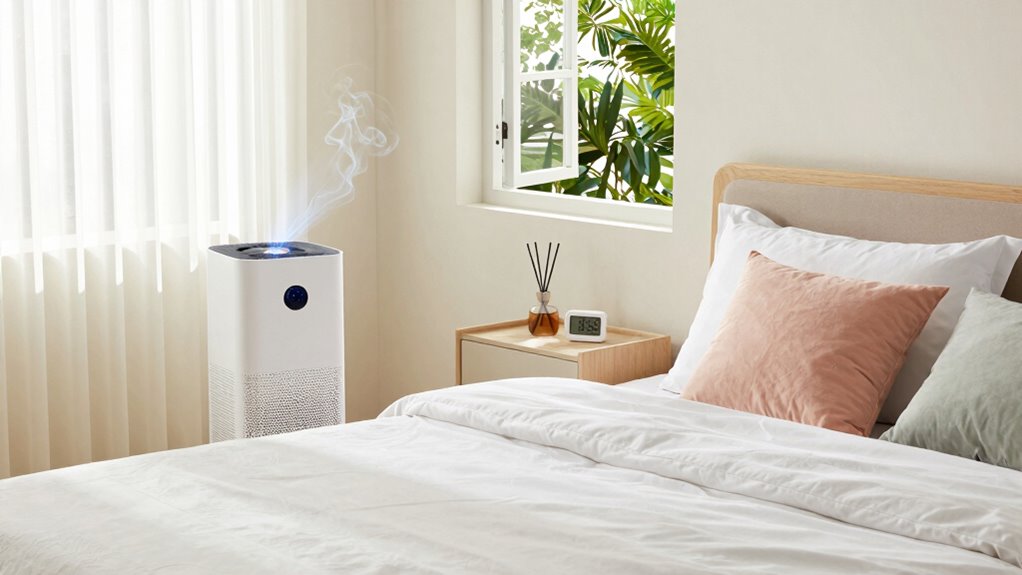

Poor air quality in your bedroom can quietly disrupt your sleep by exposing you to allergens like dust mites, pet dander, and mold spores. Excess humidity or dryness can cause congestion, sore throats, or dry skin. Lack of proper ventilation and stale air might worsen respiratory issues and make it harder to relax. Managing airflow, humidity, and keeping your space clean are essential for better rest. Keep exploring to discover simple ways to improve your sleep environment.

Get health and wellness essentials delivered free with Prime
- Fast, free delivery on millions of items
- Prime Video, Amazon Music and more included
- Member-only deals all year
Key Takeaways
- Poor ventilation and stagnant air can increase indoor pollutants, disrupting sleep quality.
- Elevated humidity promotes mold and dust mites, leading to respiratory issues that hinder restful sleep.
- Allergens like dust, pet dander, and pollen in bedding can trigger allergies and cause sleep disturbances.
- Unclean household items and bedding accumulate irritants that impair air quality and sleep comfort.
- Inadequate air circulation can cause stale air and respiratory discomfort, affecting sleep depth and duration.
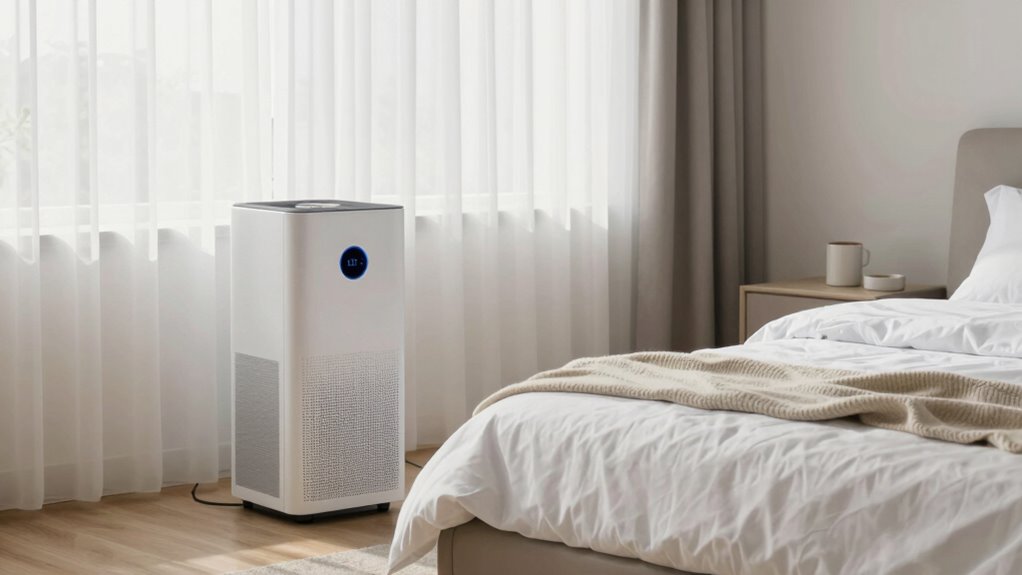
While many people focus on the comfort of their mattress or the darkness of their room, they often overlook how air quality and airflow subtly influence sleep quality. These factors can profoundly impact how well you rest without you even realizing it. One key element is airborne allergens, tiny particles like dust mites, pet dander, mold spores, and pollen that float through the air. If your bedroom isn’t well-ventilated or if your bedding isn’t regularly cleaned, these allergens can accumulate, triggering allergies or asthma symptoms that disrupt your sleep. You might wake up feeling congested, itchy, or breathe heavily during the night, all of which impair restorative sleep. To combat this, consider using air purifiers equipped with HEPA filters to trap airborne allergens effectively. Regularly washing bedding, curtains, and stuffed animals also helps reduce the presence of these irritants.
Air quality and airflow subtly impact sleep; clean bedding and HEPA filters help reduce allergens and improve rest.
Another subtle, yet powerful, factor is humidity levels. Too much moisture in the air creates an environment where mold and dust mites thrive, both of which can worsen allergies and respiratory issues. Conversely, overly dry air can cause nasal congestion, sore throats, and dry skin, making it difficult to stay comfortable and fall asleep. Ideally, your bedroom humidity should stay between 40% and 60%. You can monitor humidity levels with a hygrometer and adjust accordingly with humidifiers or dehumidifiers. Maintaining ideal humidity not only reduces airborne allergens but also promotes better mucus membrane function, helping you breathe easier throughout the night. Additionally, incorporating proper ventilation helps prevent the buildup of indoor pollutants and stale air, further supporting a healthy sleep environment. Ensuring good air circulation can also help prevent the growth of mold and the accumulation of dust, which are common causes of sleep disruption. Proper air quality management and ventilation are essential for creating a safe and restful sleeping space.
As an affiliate, we earn on qualifying purchases.
Frequently Asked Questions
How Does Indoor Humidity Impact Sleep Quality?
Indoor humidity directly impacts your sleep quality by influencing mold growth and dust mites. When humidity levels are too high, mold can develop, causing allergies and respiratory issues that disturb your rest. Conversely, low humidity allows dust mites to thrive, which can trigger asthma and allergies. Maintaining ideal humidity—around 40-60%—helps prevent mold and dust mite proliferation, ensuring a healthier, more comfortable environment for restful sleep.
Can Air Purifier Noise Disturb Sleep?
Yes, air purifier noise can disturb your sleep if it’s loud or inconsistent. To minimize disruption, focus on proper air purifier maintenance to keep noise levels low and use noise reduction techniques like placing the device further away or choosing models with quiet modes. Regular maintenance ensures ideal operation, reducing unnecessary noise, so you can enjoy peaceful, uninterrupted sleep.
What Role Does Bedroom Temperature Play in Rest?
Your bedroom temperature plays a vital role in your rest because it directly impacts your thermal comfort. When the room is too hot or cold, it can disrupt your sleep cycles, causing frequent awakenings. Proper bedroom insulation helps maintain a consistent temperature, preventing drafts or heat loss. By keeping your room ideally cooled or warmed, you guarantee a more restful sleep, enhancing overall well-being and waking up refreshed.
Are Houseplants Beneficial or Harmful for Sleep?
Houseplants can be beneficial for sleep, but you should be cautious of plant toxins that might cause allergies or respiratory issues. While they naturally purify air and reduce pollution, some plants may release compounds that worsen air pollution or trigger sensitivities. If you choose to have plants in your bedroom, opt for non-toxic, air-purifying varieties like snake plants or pothos, and keep them well-maintained to avoid mold or dust buildup.
How Often Should I Change My Air Filters?
Back in the day, folks changed their filters more often, and you should too. For maximum air filter maintenance, replace filters every 30 to 60 days, especially if you have pets or allergies. When selecting a filter, opt for high-efficiency options with the right MERV rating. Regular changes improve air quality and help your HVAC system run smoothly. Set a reminder—sticking to a schedule guarantees better sleep and healthier breathing.
bedroom dehumidifier with humidistat
As an affiliate, we earn on qualifying purchases.
As an affiliate, we earn on qualifying purchases.
Conclusion
Remember, the air in your bedroom isn’t just background noise—it’s the invisible puppeteer pulling your sleep strings. A tiny flicker of dust or a whisper of dry air can turn your peaceful night into a restless battle zone. By paying close attention to these subtle air factors, you hold the power to transform your sleep sanctuary into a blissful haven where dreams flourish and fatigue is banished. Don’t underestimate the mighty influence of your bedroom’s invisible air forces!
As an affiliate, we earn on qualifying purchases.
mold and dust mite resistant bedding
As an affiliate, we earn on qualifying purchases.
As an affiliate, we earn on qualifying purchases.
Halloween Picks
halloween
As an affiliate, we earn on qualifying purchases.