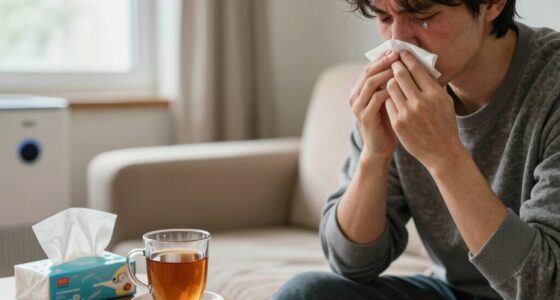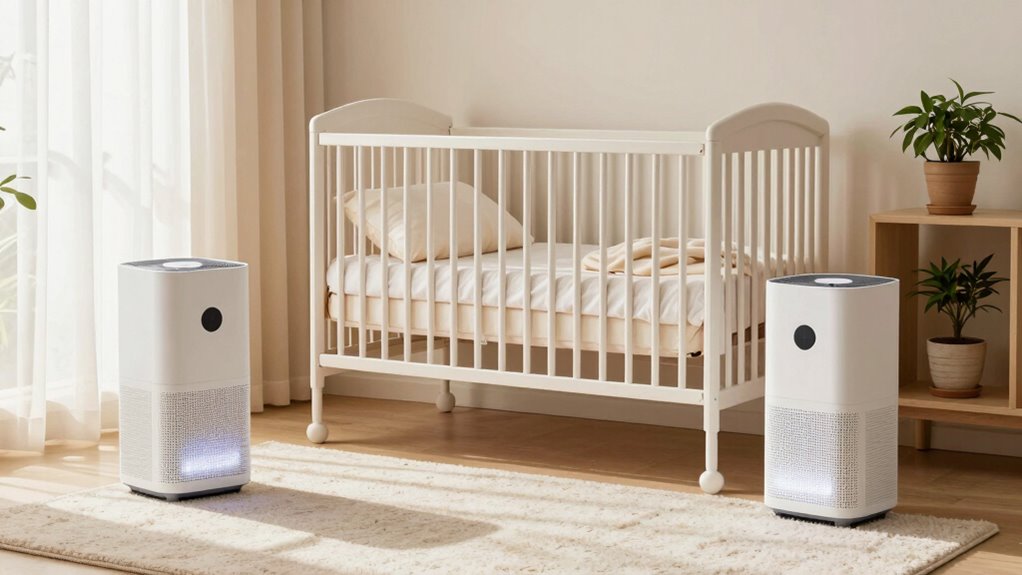

To create a low-irritant indoor environment for your baby, prioritize proper ventilation by opening windows and using exhaust fans, and invest in HEPA air purifiers to trap allergens. Choose fragrance-free, non-toxic cleaning products and avoid air fresheners or scented candles. Keep humidity levels between 30-50% to prevent mold growth, and regularly clean to reduce dust and pet dander. Limiting tobacco smoke and outdoor pollutants also helps. Discover more tips to make a safer space for your little one.
Key Takeaways
- Ensure proper ventilation by opening windows and using exhaust fans to dilute indoor pollutants.
- Choose fragrance-free, non-toxic cleaning products and avoid air fresheners or scented candles.
- Maintain indoor humidity levels between 30-50% to prevent mold growth and reduce dust mites.
- Use HEPA-filter air purifiers to trap allergens, dust, and fine particles in the baby’s environment.
- Keep the home clean and clutter-free, regularly vacuum with HEPA filters to minimize dust and allergen buildup.

Indoor air quality is especially important for babies, whose developing lungs and immune systems are more vulnerable to pollutants. As a parent or caregiver, you want to create a safe environment where your little one can breathe easily and stay healthy. The key to achieving this is reducing exposure to irritants and airborne toxins that can cause respiratory problems or other health issues. Implementing a low-irritant checklist can help you minimize these risks and promote a healthier indoor space for your baby.
Protect your baby’s health by reducing indoor pollutants and creating a safe, breathable environment.
Start by guaranteeing proper ventilation. Fresh air dilutes indoor pollutants and helps maintain better air quality. Open windows when weather permits, and use exhaust fans in kitchens and bathrooms to remove moisture and airborne chemicals. If possible, consider installing an air purifier with a HEPA filter designed to trap allergens, dust, and other fine particles. These devices can considerably reduce indoor airborne irritants, especially in spaces that lack sufficient natural ventilation.
Next, pay close attention to the products you use around your baby. Choose fragrance-free, non-toxic cleaning supplies and avoid air fresheners, scented candles, or aerosols that release volatile organic compounds (VOCs). Many household items emit chemicals that can irritate sensitive lungs or trigger allergies. Opt for natural, unscented alternatives and always read labels to guarantee products are free from harmful chemicals.
Be mindful of the materials in your home, especially furniture, carpeting, and bedding. Select low-VOC paints and finishes when renovating or decorating. Regularly vacuum and dust using a HEPA-filter vacuum cleaner to reduce dust mites, pet dander, and other allergens that can linger in carpets and upholstery. When possible, keep your baby’s sleeping area free of rugs or soft furnishings that trap dust and particles. Maintaining a clean, clutter-free environment also helps prevent the buildup of irritants.
Control indoor humidity levels to prevent mold growth, which can worsen respiratory issues. Aim for humidity levels between 30-50%, using a dehumidifier if necessary. Fix leaks promptly and clean any visible mold with appropriate, non-toxic solutions. Keep your home dry and well-ventilated to discourage mold spores from becoming airborne. Additionally, using indoor air quality monitors can help you track and maintain optimal conditions within your home.
Finally, limit exposure to tobacco smoke and other pollutants. Never smoke indoors around your baby. Keep windows open during outdoor activities to reduce the ingress of pollen and vehicle exhaust. These simple steps can make a substantial difference in maintaining cleaner, safer indoor air. By following this low-irritant checklist, you help guarantee that your baby breathes in the healthiest indoor air possible, supporting their growth and resilience during those vital early years.
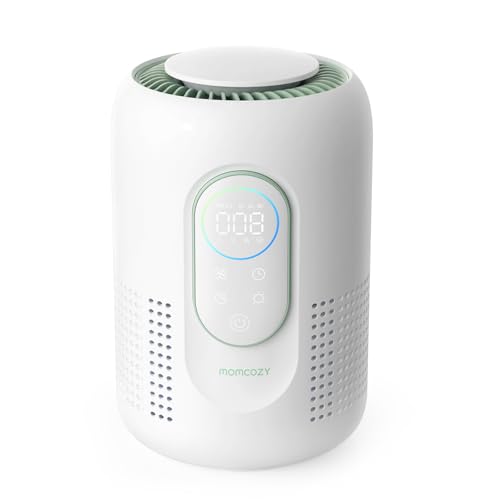
Momcozy Air Purifier for Home Bedroom Nursery, 4-in-1 Filter Baby Purifier with H13 HEPA & Carbon, Real-time PM2.5 Air Monitor, 4 Fan Speeds, 21dB Sleep Mode & Dimmable Night Light, for Home Pets Baby
【Quad-Layer Filtration System】- Outperforms standard 3-layer designs: these air purifiers for home pets feature a 4-stage system. The…
As an affiliate, we earn on qualifying purchases.
As an affiliate, we earn on qualifying purchases.
Frequently Asked Questions
How Often Should I Test My Home’s Indoor Air Quality?
You should test your home’s indoor air quality at least once every three to six months. Regular testing helps you identify potential pollutants like dust, mold, or VOCs before they become a problem for your baby. If anyone in your home has allergies or respiratory issues, consider testing more frequently. Keep an eye on air quality reports and use home testing kits to stay proactive about creating a safe environment.
Are Air Purifiers Safe for Use Around Babies?
Air purifiers are generally safe around babies if you choose the right one. Look for models with HEPA filters and avoid those with ozone generators, which can irritate delicate lungs. Always follow the manufacturer’s instructions and keep the purifier clean. While they can help reduce airborne irritants, never rely solely on them. Combine their use with good ventilation and regular cleaning to ensure your baby’s indoor air stays safe and healthy.
What Natural Remedies Can Improve Indoor Air Quality?
You can improve indoor air quality naturally by opening windows daily to increase ventilation and reduce indoor pollutants. Adding houseplants like snake plants or peace lilies can also help filter toxins without introducing chemicals. Using beeswax candles instead of synthetic air fresheners minimizes indoor pollutants. Regularly dust and vacuum to remove allergens, and avoid smoking indoors. These simple steps create a cleaner, healthier environment for your baby naturally and effectively.
Can Houseplants Help Reduce Indoor Air Irritants?
You might think houseplants are the magic fix for indoor irritants, but don’t count on them alone. While they can absorb some toxins and boost humidity, they won’t eliminate all pollutants. Think of them as cute decor with limited power—nice to have, but you’ll still need proper ventilation and air purifiers. Keep realistic expectations, and your home will be healthier for your little one.
How Do I Identify Hidden Sources of Indoor Air Pollution?
You can identify hidden sources of indoor air pollution by inspecting your home thoroughly. Look for things like old paint, mold, dusty vents, and cleaning product containers. Use air quality monitors to detect pollutants and check for unusual odors or visible dust buildup. Regularly clean and ventilate your space, and consider testing for allergens or chemicals. Staying vigilant helps you spot and reduce hidden air irritants effectively.

Dapple Baby All Purpose Cleaning Spray and All Purpose Wipes – (2 Pack) 16.9 fl oz Bottle – 30 Cleaning Wipes Total – Fragrance-Free, Hypoallergenic & Plant-Powered – Baby Essentials
EFFECTIVE ALL PURPOSE CLEANER: Spray and wipe away gunk, grime, and sticky fingerprints from the surfaces your baby…
As an affiliate, we earn on qualifying purchases.
As an affiliate, we earn on qualifying purchases.
Conclusion
By choosing low-irritant indoor air for your baby, you’re giving them a foundation of health that lasts a lifetime. Think of your home as a gentle sanctuary—each small step you take creates a safer, more nurturing environment. Remember, nurturing your baby’s well-being today is like planting seeds for a brighter tomorrow. Your mindful choices aren’t just about air—they’re about shaping a future where your little one can truly thrive.

16 in 1 Air Quality Monitor Indoor 7" Large Display 9 AQI+7 Alerts, Wildfire CO2 Monitor Air Quality Tester for CO2, TVOC, PM2.5 PM1.0 PM10, HCHO Temperature Humidity AQI & Time Air Meter for Home
【16-in-1 Air Quality Monitor Indoor— Wildfire Season Ready】Experience the ultimate indoor air quality monitoring with our 16-in-1 Air…
As an affiliate, we earn on qualifying purchases.
As an affiliate, we earn on qualifying purchases.

ATKMAYI Rechargeable Small Dehumidifier for Bathroom, Detachable Hanging Dehumidifier for Bedroom, Gun Safe, Closet, Portable Moisture Absorbers with Dual-Sided Suction, Visual Color Indicator Window
Dual-Sided Absorption – Twice the Surface, Twice the Speed – While most mini dehumidifiers only drawmoisture from one…
As an affiliate, we earn on qualifying purchases.
As an affiliate, we earn on qualifying purchases.