
TL;DR

Get health and wellness essentials delivered free with Prime
- Fast, free delivery on millions of items
- Prime Video, Amazon Music and more included
- Member-only deals all year
A Sixty and Me report presents a three-part exercise plan for midlife women: strength training, endurance work and impact exercise. Its weekly schedule and health explanations are recommendations from the report, not a clinical guideline, and the supplied material does not establish that the exact plan suits everyone.
Sixty and Me has published “Train Smart: A Menopause Playbook,” an exercise guide that recommends combining strength, endurance and impact training for women in midlife. The report offers a specific weekly routine and exercise examples, but its schedule is the author’s recommendation rather than a formally identified medical or public-health guideline.
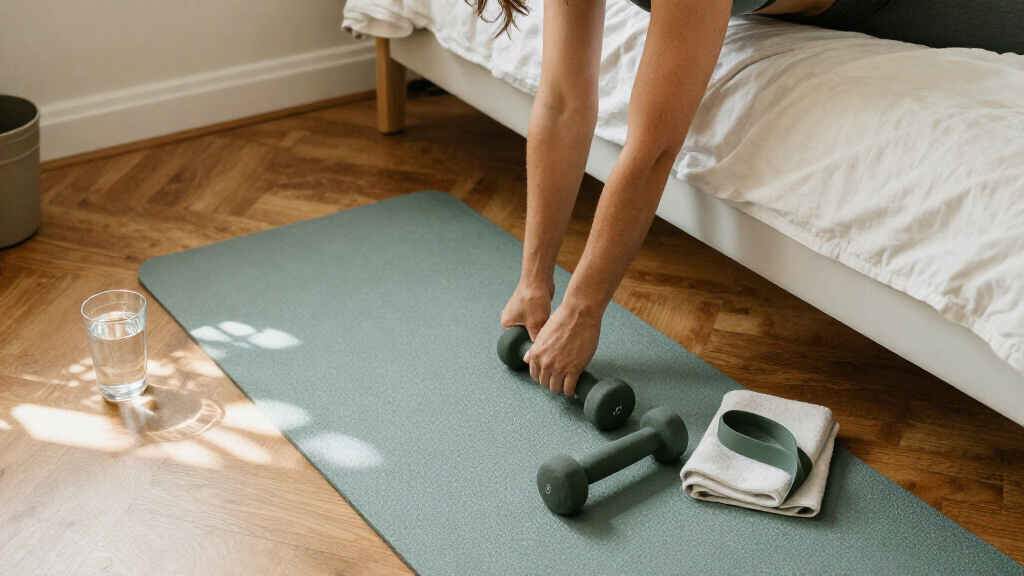
The guide proposes three strength sessions each week, using progressive overload: gradually increasing repetitions, sets or resistance, or changing the pace of a movement. It suggests dividing sessions between upper- and lower-body exercises and including core work. Dumbbells and resistance bands are given as home-training options, so the plan does not require a gym. For people beginning a muscle-building program, the report recommends a load that makes roughly 8–12 repetitions challenging, with the final repetitions particularly difficult.
For endurance, the author recommends three sessions a week: two at a conversational pace, described as Zone 2, and one interval session, with a second interval session presented as a possible maximum. The suggested duration is 35–45 minutes for Zone 2; interval sessions are described as a similar total length including warm-up and cool-down. The report argues that easier aerobic work can build a base before harder intervals, but it does not supply individualized intensity targets or a testing method for determining training zones.
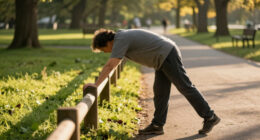
The third pillar is impact exercise, which the guide says can include brisk walking, heel drops, running or jumping. It recommends three impact sessions weekly, which may be attached to strength or endurance workouts. For people over 60 or new to impact, it advises beginning with heel drops and brisk walking, adding jumping only when those activities feel easy. The report also cautions that a weighted vest by itself should not be treated as proven bone-building exercise; it distinguishes vest use from exercise that includes impact.
A Three-Part Midlife Training Plan
The report gives readers a practical structure amid conflicting exercise messages: it does not frame midlife training as a choice between lifting and cardio, but combines muscle work, aerobic capacity and impact. That can help readers identify the components its author considers relevant and see how they might fit across a week.
Its advice also touches on health concerns that matter beyond appearance or weight. The source connects midlife exercise with muscle, cardiovascular and bone health, and cites research on fitness, mortality and bone outcomes. Those references provide context for the article’s rationale, but they do not by themselves prove that every element of this particular three-pillar schedule will produce the same results for every reader. The suggested frequency and intensity may not be appropriate for all health histories, fitness levels or injuries.
adjustable dumbbells for home strength training
As an affiliate, we earn on qualifying purchases.
As an affiliate, we earn on qualifying purchases.
Evidence Behind the Exercise Advice
The report attributes changes in muscle mass, cardiovascular health, recovery, insulin resistance and body composition to estrogen fluctuation and decline. It presents structured training as a way to address some of these concerns. These are broad health claims in the source article; readers should not interpret them as a guarantee that exercise will prevent or reverse a particular condition.
The reference list includes an American Heart Association page about cardiovascular disease as a major health threat for women, studies examining cardiorespiratory fitness and mortality, and research on exercise intensity and bone. It also cites a 2025 randomized clinical trial on weighted vests or resistance exercise and bone loss during weight loss in older adults, alongside a 2000 study of long-term weighted-vest exercise in postmenopausal women. The supplied material does not include the full results of those studies, so it cannot establish how their findings apply to the guide’s exact recommendations.
The article’s exercise examples include squats, hinges such as deadlifts or kettlebell swings, rows and presses. Its central message is that training can be performed with basic home equipment, while progression and a mix of exercise types matter more than access to a gym. The routine should be understood as the author’s playbook, not as a program tested as a whole in the studies listed.
resistance bands set for strength training
As an affiliate, we earn on qualifying purchases.
As an affiliate, we earn on qualifying purchases.
Who Should Adapt the Routine
The supplied report does not identify the author’s qualifications, provide a publication date, or explain whether the weekly plan was evaluated in a clinical trial. It also does not set out adaptations for readers with osteoporosis, joint or heart conditions, balance concerns, or limited exercise experience beyond its brief caution about starting impact work slowly.
The source lists relevant studies, but the provided material does not include their detailed methods, participant profiles or results. It is therefore unclear how directly each study supports the specific prescriptions of three strength sessions, three endurance sessions and three impact sessions per week. The article does not establish that the routine prevents disease or is suitable for every woman in menopause.
low impact aerobic step platform for home workouts
As an affiliate, we earn on qualifying purchases.
As an affiliate, we earn on qualifying purchases.
Personalizing Training Safely
The source material announces no follow-up research, official endorsement or planned revision of the guide. Readers considering its routine can use it as a starting point for questions about exercise frequency, resistance, impact and progression, rather than assuming the full schedule is a universal prescription. People making decisions based on a health condition, pain, medication or prior injury should consult a qualified health professional or exercise specialist about suitable activity.
Further reporting would need to establish the guide author’s credentials, clarify how the cited studies support each recommendation and identify practical modifications for different health and fitness levels. Until then, the confirmed development is the publication of an exercise playbook and its recommendations; the evidence for the exact combined plan remains unestablished in the supplied source.
fitness heart rate monitor for zone 2 training
As an affiliate, we earn on qualifying purchases.
As an affiliate, we earn on qualifying purchases.
Key Questions
What does the menopause playbook recommend?
It recommends three weekly strength sessions, two conversational-pace endurance sessions and one interval session, plus three sessions involving impact exercise. Some activities can be combined, according to the guide.
Does the plan require a gym?
No. The report says strength exercises can be done at home with dumbbells or resistance bands, and it lists body movements such as squats and heel drops.
Does the guide say a weighted vest builds bone by itself?
No. The author says a weighted vest alone has not been shown to increase bone mineral density and emphasizes impact activity. The supplied material does not include the full study results behind that statement.
Is the weekly routine an official medical guideline?
The source presents it as the author’s recommended playbook. The supplied material does not identify it as an official guideline or show that the full schedule was tested as a single program.
Source: rss
Halloween Picks
halloween
As an affiliate, we earn on qualifying purchases.