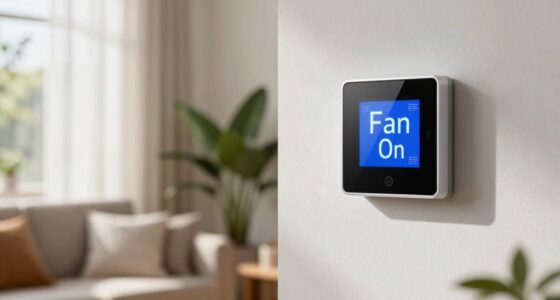
To make your whole-home air feel better without overdoing it, focus on balancing air quality, humidity, and temperature carefully. Place air purifiers where they can circulate air effectively and near pollution sources. Use a hygrometer to maintain humidity between 40-50%, adjusting with dehumidifiers or humidifiers as needed. Keep vents clear and improve insulation for consistent comfort. Small, targeted changes can make a big difference—discover more tips that help you create a perfectly balanced environment.
Key Takeaways
- Use air quality monitors to maintain optimal levels of pollutants, humidity, and temperature without over-adjusting.
- Strategically place air purifiers at chest level near pollutant sources for efficient air circulation.
- Keep humidity within 40-50% using dehumidifiers or humidifiers to promote comfort without excess moisture.
- Make small, targeted adjustments to environmental controls rather than frequent, drastic changes.
- Ensure proper ventilation and air exchange to refresh indoor air naturally and prevent stagnation.
Achieving whole-home air comfort means guaranteeing the air quality and temperature are balanced throughout your entire living space. When your home’s air feels just right—not too dry, too humid, or filled with pollutants—you’ll notice a significant boost in comfort and overall well-being. The key is to find that sweet spot where fresh air, proper humidity, and temperature work together seamlessly. The use of air quality monitors can help you keep track of these elements more effectively. You don’t need to overdo it with gadgets or constant adjustments; instead, focus on strategic placement and subtle techniques that make a real difference.
Achieve balanced home comfort with strategic air quality and humidity control for a healthier, more relaxing space.
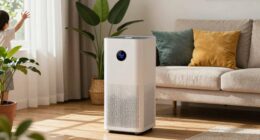
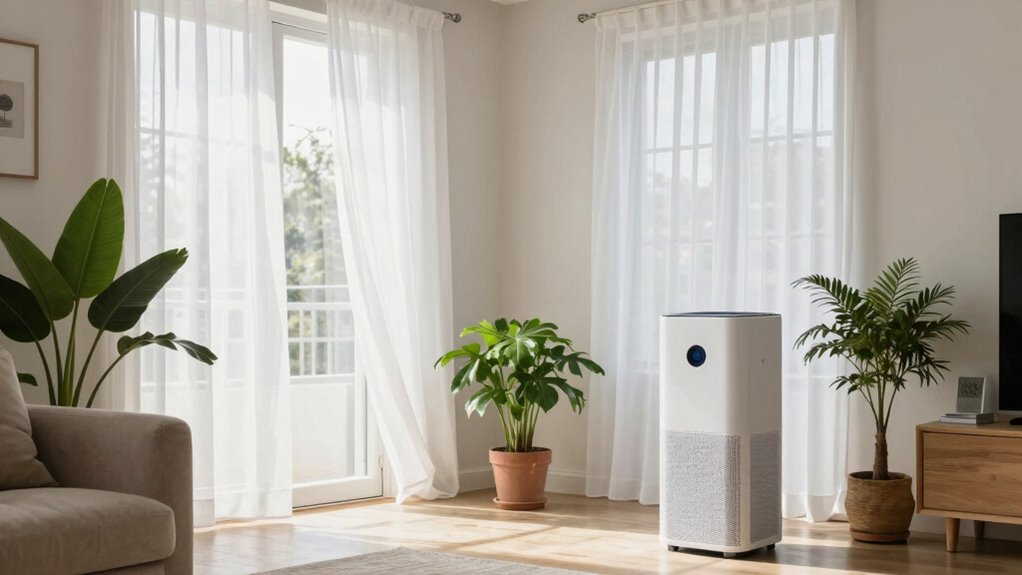
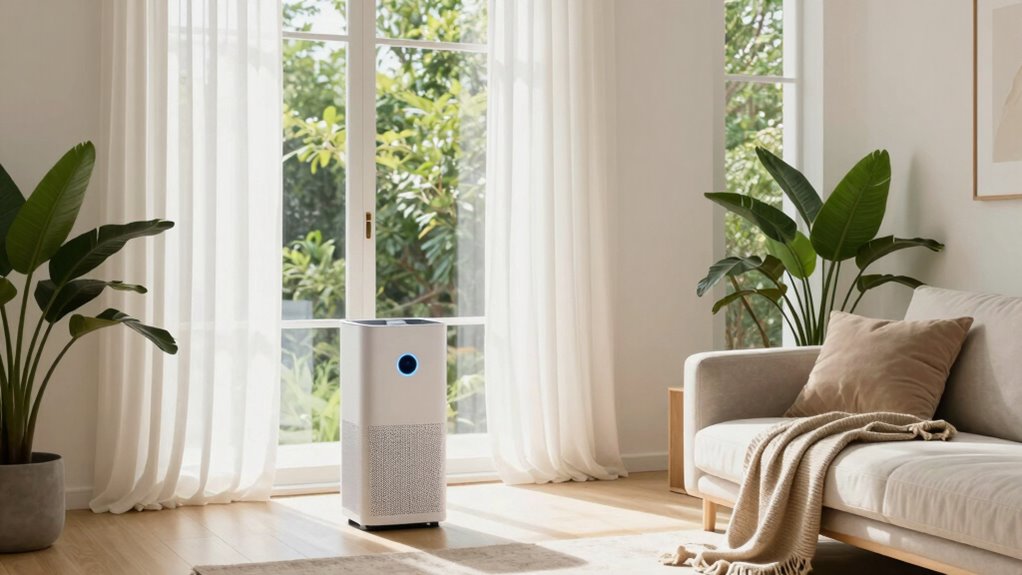
One of the most effective ways to improve your indoor air quality is through proper air purifier placement. Instead of hiding your purifier in a corner or closet, position it where it can circulate air efficiently. Placing it near sources of pollutants—like your kitchen or pet areas—helps capture airborne particles more effectively. Keep it at a comfortable height, usually around chest level, to optimize airflow and filtration. Also, avoid blocking vents or airflow pathways; this ensures the purifier can do its job without restrictions. When set up correctly, your air purifier continuously removes dust, allergens, and pollutants, creating a healthier environment without being intrusive. Incorporating air circulation techniques can further enhance overall air quality in your home. Additionally, maintaining proper ventilation can help prevent the buildup of indoor pollutants and humidity imbalances.
Humidity control techniques are equally crucial. Too much moisture can lead to mold growth and a clammy feeling, while too little makes the air dry and uncomfortable. To strike the right balance, consider using a hygrometer to monitor your home’s humidity levels, aiming for around 40-50%. When it’s too humid, run a dehumidifier or increase ventilation by opening windows or using exhaust fans. If the air is too dry, a humidifier can add moisture, making the air feel warmer and more comfortable. Simple actions like fixing leaks, sealing drafts, and improving insulation also help maintain consistent humidity. Incorporating proper ventilation can further enhance air quality and humidity balance. Additionally, ensuring adequate air exchange helps remove stale air and introduces fresh outdoor air, further supporting a healthy indoor environment. Regularly monitoring these elements ensures your adjustments stay effective over time.
Balancing air quality and humidity isn’t about constant tinkering; it’s about applying small, targeted adjustments that work together. Proper air purifier placement keeps pollutants in check, while humidity control techniques maintain a comfortable moisture level. When both elements are addressed thoughtfully, your entire home feels better—fresh, clean, and perfectly conditioned. The right combination of these strategies can significantly improve your overall indoor environment and promote well-being. The result is a living space where you can breathe easily, sleep soundly, and enjoy the environment you’ve created without the discomfort of overdoing it. This balanced approach ensures your home remains a sanctuary of comfort, all without needing to constantly fuss or overcompensate.

16 in 1 Air Quality Monitor Indoor 7" Large Display 9 AQI+7 Alerts, CO2 Monitor Air Quality Tester for CO2, TVOC, PM2.5 PM1.0 PM10, HCHO Temperature Humidity AQI & Time Air Quality Meter for Home
【16-in-1 Air Quality Monitor Indoor】Experience the ultimate indoor air quality monitoring with our 16-in-1 Air Quality Monitor, offering…
As an affiliate, we earn on qualifying purchases.
As an affiliate, we earn on qualifying purchases.
Frequently Asked Questions
How Often Should I Replace My HVAC Filters?
You should replace your HVAC filters every 1 to 3 months for ideal filter maintenance and airflow optimization. Regularly changing filters keeps air circulating efficiently, reducing allergens and dust. If you have pets, allergies, or live in a dusty area, consider replacing filters more frequently. Proper filter maintenance not only improves air quality but also extends your system’s lifespan, ensuring your whole-home air feels fresher and healthier.
Can Plants Improve Indoor Air Quality?
Think of indoor greenery as tiny air purifiers, symbolizing fresh life within your home. Plants improve indoor air quality by absorbing toxins and releasing oxygen, creating a cleaner, healthier environment. Their benefits extend beyond air purification—they boost mood and reduce stress. Incorporate houseplants for a natural, vibrant touch, and you’ll notice a revitalizing difference in your home’s atmosphere, making it feel more inviting and alive without needing extra tech or chemicals.
What’s the Best Humidity Level for Comfort?
The best humidity level for comfort is between 30% and 50%. Maintaining proper humidity control keeps your indoor air feeling just right, preventing dryness or excessive moisture. When humidity levels are within this range, you’ll feel more comfortable, and it also helps reduce allergens and mold growth. Use a humidifier or dehumidifier to fine-tune comfort levels, ensuring your whole-home air remains balanced and pleasant.
Do Air Purifiers Really Make a Difference?
Yes, air purifiers really make a difference. They effectively remove pollutants, allergens, and odors, improving your indoor air quality. But don’t fall for air quality myths—purifiers need regular maintenance, like changing filters, to stay effective. When properly maintained, they can considerably enhance your home’s air, making it feel fresher and healthier. So, investing in a quality purifier and keeping up with maintenance pays off in cleaner, better air.
How Can I Reduce Indoor Allergens Naturally?
Like a wise old herbalist from a fairy tale, you can naturally reduce indoor allergens by trying simple remedies like honey or herbal teas. Practice allergen avoidance by regularly dusting, vacuuming with a HEPA filter, and maintaining low humidity. Incorporate air plants or houseplants that naturally filter air. These natural remedies and avoidance strategies help improve your air quality without overdoing it, creating a healthier, more comfortable home environment.

DREO Humidifiers for Bedroom, 3L Top Fill 30H & 26dB Quiet Runtime for Large Room, Cool Mist Ultrasonic Humidifier with Humidity Sensor, Night Light for Home, Baby, Nursery, Plants, New Edition
𝐅𝐨𝐫𝐠𝐞𝐭 𝐚𝐛𝐨𝐮𝐭 𝐜𝐨𝐧𝐬𝐭𝐚𝐧𝐭 𝐫𝐞𝐟𝐢𝐥𝐥𝐬: With a 3L tank and convenient top-fill design, this humidifier large room for baby…
As an affiliate, we earn on qualifying purchases.
As an affiliate, we earn on qualifying purchases.
Conclusion
So, next time you notice that your home’s air feels just right, remember it might be a happy coincidence of good ventilation, the right humidity, and a clean filter working together. Sometimes, the simplest tweaks—like opening a window or adjusting your thermostat—can make a big difference. It’s funny how small adjustments, much like finding that perfect song, can unexpectedly turn your space into a cozy, breathe-easy haven.

LEVOIT Air Purifier for Home Bedroom Dorm Room, Smart & Voice Control, AHAM Verifide, 3-in-1 Filter With HEPA Sleep Mode, for Pollen, Pollutants, Smoke, Dander, Dust, Core 200S-P, White
𝐖𝐇𝐘 𝐂𝐇𝐎𝐎𝐒𝐄 𝐀𝐇𝐀𝐌 𝐕𝐄𝐑𝐈𝐅𝐈𝐃𝐄 𝐀𝐈𝐑 𝐏𝐔𝐑𝐈𝐅𝐈𝐄𝐑𝐒: AHAM (Association of Home Appliance Manufacturers) is an ANSI-accredited organization that sets…
As an affiliate, we earn on qualifying purchases.
As an affiliate, we earn on qualifying purchases.

Dehumidifier, 95OZ Dehumidifier for Home 1000 Sq.Ft – Quiet with Auto Shut Off & Relaxing 7 Color Ambient Light,Ideal for Livingroom, Bedroom, Basement(Black)
Semiconductor dehumidifiers use thermoelectric cooling to remove moisture from the air. They create a drier, more comfortable environment…
As an affiliate, we earn on qualifying purchases.
As an affiliate, we earn on qualifying purchases.