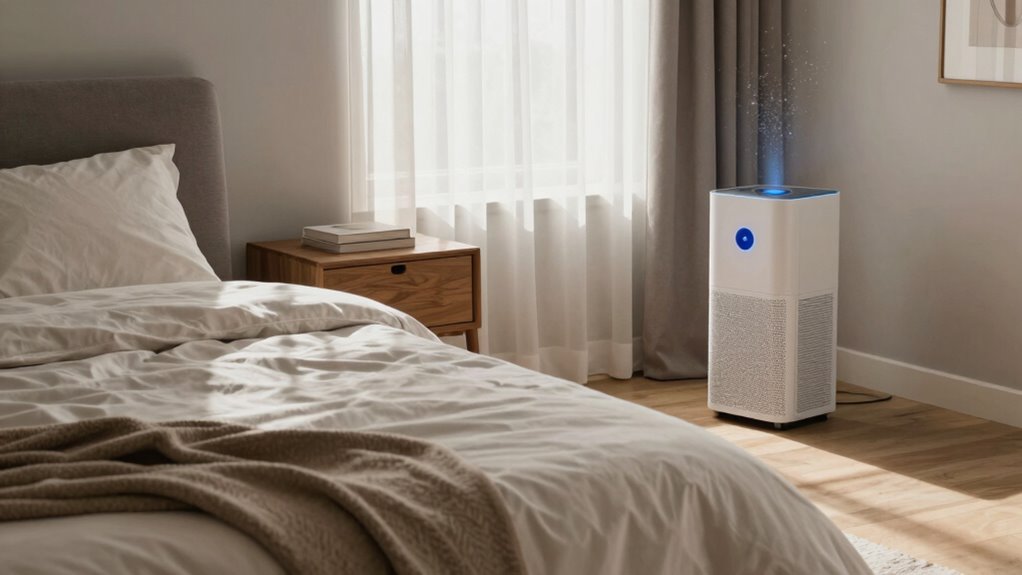

Your bedroom needs a different air quality plan because it’s designed for restful sleep and relaxation. You should prioritize quiet operation, accurate humidity levels, and allergen removal to avoid waking up dry, stuffy, or with allergies. Proper air sterilization and ventilation help create a peaceful environment, ensuring better sleep and health. Understanding these specific needs can make your space more comfortable—stick around to discover how to optimize your bedroom’s air for better rest and well-being.
Key Takeaways
- Bedrooms require quiet, continuous air purification to promote restful sleep and reduce allergens without disturbance.
- Humidity levels in bedrooms need to be precisely maintained to prevent dryness or mold growth affecting health.
- Air sterilization and allergen removal in bedrooms enhance sleep quality and reduce airborne pathogens.
- Ventilation in bedrooms should focus on fresh airflow to prevent stale air buildup during rest.
- Living rooms prioritize air circulation and odor control, with less emphasis on quiet operation or strict humidity control.
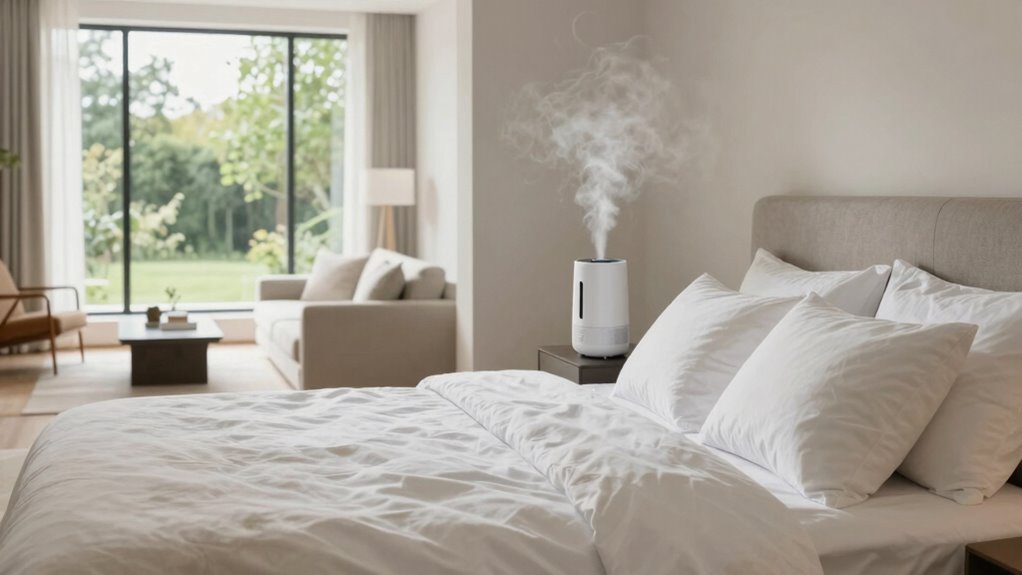
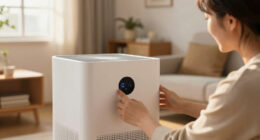
Have you ever wondered why the air in your bedroom might need a different approach than the air in your living room? While both rooms share the same house, their purposes and your needs during use are quite different. Your bedroom is where you rest, recharge, and often breathe more slowly, so it calls for specific air quality solutions. An air purifier can considerably improve the quality of your sleep by removing dust, pollen, pet dander, and other airborne allergens that tend to settle overnight. Unlike the more social and active environment of your living room, your bedroom benefits from an air purifier that runs quietly and continuously, creating a clean, calming atmosphere conducive to relaxation.
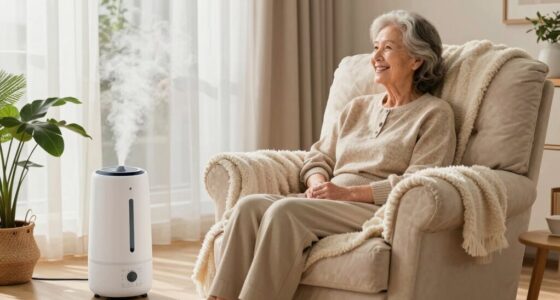
Humidity control is another key factor that distinguishes your bedroom environment. During sleep, your body’s moisture levels fluctuate, and the air quality can impact your breathing comfort. If the air is too dry, you might wake up with a sore throat or dry skin; if it’s too humid, mold and dust mites can thrive, aggravating allergies or asthma. By managing humidity levels with a humidifier or dehumidifier, you guarantee that your bedroom remains within an ideal range—around 40-60%. This balance not only makes breathing easier but also prevents the growth of mold and reduces static electricity, which can disturb your sleep. Proper air quality management plays a crucial role in maintaining a healthy sleep environment. Additionally, incorporating air sterilization techniques can further reduce airborne pathogens, enhancing overall sleep safety. To support these efforts, using air quality monitors can help you keep track of environmental conditions and make adjustments as needed. Ensuring proper ventilation is also vital to prevent stale air buildup and maintain fresh airflow in your sleeping space.
In your living room, the priorities shift. Here, the focus might be on maintaining a fresh environment for socializing, watching TV, or relaxing with family. An air purifier in this space can still play a role but might not need to run as constantly or be as silent as in the bedroom. Humidity control remains important but is often less critical unless you live in a particularly damp or dry climate. Instead, you might prioritize air circulation and air fresheners that keep the space smelling inviting.
Your sleep environment demands a tailored approach because of the intimate connection between air quality and rest quality. The quiet operation of your air purifier and precise humidity control can greatly improve your sleep quality, reduce allergy symptoms, and create a peaceful sanctuary. Meanwhile, your living room’s air system can focus on maintaining freshness and comfort for your daytime activities. Recognizing these differences ensures you maximize each space’s air quality, making every room serve its purpose better and supporting your overall well-being.

LEVOIT Air Purifiers for Bedroom Home Dorm, AHAM VERIFIED, 3-in-1 Filter Cleaner With Aroma Pad, Filters Smoke, Allergens, Pet Dander, Odor, Dust, Office, Desktop, Core Mini-P, White
𝗥𝗘𝗠𝗢𝗩𝗘 𝗣𝗢𝗟𝗟𝗨𝗧𝗔𝗡𝗧𝗦 𝗘𝗩𝗘𝗥𝗬𝗪𝗛𝗘𝗥𝗘: Our Pre-Filter and Main Filter capture allergens as lint, hair, pet dander, pet hair, fine…
As an affiliate, we earn on qualifying purchases.
As an affiliate, we earn on qualifying purchases.
Frequently Asked Questions
How Do Allergens Differ Between Bedrooms and Living Rooms?
You’ll notice allergens differ between bedrooms and living rooms due to airborne particles and humidity levels. In bedrooms, dust mites and pet dander thrive in humid conditions, making humidity control essential. Living rooms often have more airborne particles from outdoor pollution or dust, requiring better air filtration. By managing humidity and filtering airborne particles in each space, you can reduce allergens effectively and create healthier environments tailored to each room’s needs.
What Specific Air Quality Concerns Are Unique to Bedrooms?
Think of your bedroom as a sanctuary where peaceful breaths matter most. Here, airborne mold and dust mite buildup pose unique concerns because you spend hours resting, making you more vulnerable to allergens. Poor ventilation or high humidity can worsen these issues, leading to allergies or respiratory problems. To keep your sanctuary safe, focus on controlling moisture, regularly cleaning bedding, and improving air circulation for fresh, healthy sleep.
Do Different Room Sizes Require Different Air Filtration Systems?
Yes, different room sizes do require different air filtration systems. Larger rooms need systems with higher capacity to guarantee proper air circulation, while smaller spaces benefit from more compact units. Additionally, humidity control is essential in both, but larger rooms may need more robust humidity management. Tailoring the filtration system to room size helps improve overall air quality, reduces allergens, and maintains a comfortable environment effectively.
How Does Sleep Quality Impact Air Quality Needs?
Ever wonder how your sleep quality affects air quality needs? In your sleep environment, good air quality is essential for restful sleep and overall health. When you sleep well, your body maintains a healthy air quality balance, reducing allergens and pollutants. Poor sleep, however, can lead to increased sensitivity to airborne irritants. To guarantee ideal rest, you should tailor your air filtration system to support your sleep environment’s unique requirements.
Are There Specific Pollutants More Common in Bedrooms Than Living Rooms?
Yes, bedrooms often have more allergens and dust mites due to bedding and limited ventilation. Pollutant sources like mold, pet dander, and indoor chemicals can accumulate more quietly overnight. You should use targeted ventilation strategies such as air purifiers and proper airflow management to reduce these pollutants. Regular cleaning and maintaining humidity levels also help control specific pollutants common in bedrooms, ensuring a healthier sleep environment.

DREO Humidifiers for Bedroom, 3L Top Fill 30H & 26dB Quiet Runtime for Large Room, Cool Mist Ultrasonic Humidifier with Humidity Sensor, Night Light for Home, Baby, Nursery, Plants, New Edition
𝐅𝐨𝐫𝐠𝐞𝐭 𝐚𝐛𝐨𝐮𝐭 𝐜𝐨𝐧𝐬𝐭𝐚𝐧𝐭 𝐫𝐞𝐟𝐢𝐥𝐥𝐬: With a 3L tank and convenient top-fill design, this humidifier large room for baby…
As an affiliate, we earn on qualifying purchases.
As an affiliate, we earn on qualifying purchases.
Conclusion
Did you know that your bedroom’s air quality can impact your sleep quality and overall health? Because you spend about a third of your day sleeping, it’s essential to treat your bedroom air differently than your living room air. By focusing on proper ventilation, humidity control, and air purification in your bedroom, you create a healthier environment that promotes better rest. Remember, investing in your sleep environment truly pays off for your well-being.
LEVOIT Air Purifiers for Bedroom Home Dorm, AHAM VERIFIED, 3-in-1 Filter Cleaner With Aroma Pad, Filters Smoke, Allergens, Pet Dander, Odor, Dust, Office, Desktop, Core Mini-P, White
𝗥𝗘𝗠𝗢𝗩𝗘 𝗣𝗢𝗟𝗟𝗨𝗧𝗔𝗡𝗧𝗦 𝗘𝗩𝗘𝗥𝗬𝗪𝗛𝗘𝗥𝗘: Our Pre-Filter and Main Filter capture allergens as lint, hair, pet dander, pet hair, fine…
As an affiliate, we earn on qualifying purchases.
As an affiliate, we earn on qualifying purchases.
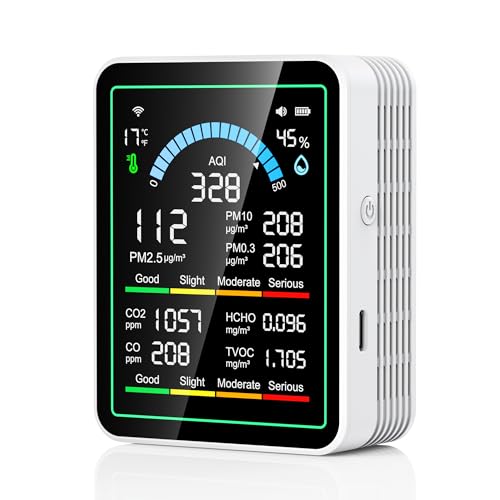
Air Quality Monitor Indoor, 10 in 1 Portable Smartair Quality Tester for CO2 | CO | TVOC | HCHO | Temp | AQI | PM0.3-1 Detection Hum for Home Cars Plants, Pets, Car, Hotel
【10-in-1 Smart Air Quality Monitor: Your All-Round Environmental Guardian】 This portable intelligent air quality tester delivers ultra-precise multi-gas…
As an affiliate, we earn on qualifying purchases.
As an affiliate, we earn on qualifying purchases.