
To fix afternoon fog in your home office, start by optimizing natural light. Open blinds or curtains in the morning to maximize sunlight and reduce reliance on artificial lighting later in the day. Use energy-efficient LED bulbs when needed and adjust your thermostat gradually to avoid unnecessary heating or cooling. Turning off devices when not in use and employing programmable thermostats can also cut energy waste. Keep explore more tips to lower your carbon footprint effectively.
Key Takeaways
- Use blinds or curtains to maximize natural sunlight and reduce reliance on artificial lighting during cloudy afternoons.
- Adjust indoor temperatures gradually with fans or layered clothing instead of overusing heating or cooling systems.
- Incorporate daylight sensors or timers to optimize lighting and reduce unnecessary energy consumption.
- Enable energy-saving modes on devices and turn off electronics when not in use to minimize energy waste.
- Improve home insulation to maintain consistent indoor temperatures, decreasing the need for energy-intensive climate control.

Have you ever wondered how your home office impacts your carbon footprint? It’s easy to overlook the environmental effects of working from home, especially when you’re focused on productivity and comfort. But your home workspace, like any other, consumes energy and resources, which contribute to greenhouse gas emissions. Understanding this influence is the first step toward making smarter, greener choices that reduce your overall carbon impact. One common issue many remote workers face is the afternoon fog—those sluggish, cloudy feelings that make it hard to stay alert and productive. Interestingly, this fog isn’t just a mental state; it’s connected to your environment and habits, which also influence your carbon footprint.
Your home office’s energy habits influence both your productivity and the planet’s health.
First, think about the lighting in your home office. If you rely heavily on artificial lighting, especially during cloudy days or late afternoons, you’re using electricity that may come from fossil fuels. Switching to natural light whenever possible can cut down your energy use considerably. Opening blinds or curtains in the morning lets sunlight boost your mood and energy, reducing the need for additional lighting and energy consumption. If natural light isn’t enough, opt for energy-efficient LED bulbs that consume less power and last longer. This small change can make a real difference in your energy footprint, especially if you work long hours or have multiple light sources in your workspace.
Next, consider your heating and cooling habits. Maintaining a comfortable temperature involves energy use, which impacts your carbon emissions. During the afternoon fog, you might be tempted to crank up the heater or air conditioner to stay alert. Instead, try adjusting your environment gradually—using fans, opening windows, or dressing in layers to stay comfortable without excessive energy use. Investing in a programmable thermostat helps you optimize heating and cooling times, avoiding unnecessary energy waste. These adjustments not only reduce your carbon footprint but also save you money on energy bills.
Another factor to examine is the equipment you use. Computers, printers, and other devices consume energy, especially when left on unnecessarily. Turning off devices when not in use, using power strips to switch everything off at once, or enabling sleep modes can considerably cut energy consumption. Additionally, choosing energy-efficient appliances and electronics reduces your overall environmental impact. Over time, these small actions add up, helping you shrink your home office’s carbon footprint and combat the afternoon fog’s sluggish effects.
Finally, your daily habits outside of work influence your environmental impact. Walking or biking for errands, using public transportation, or consolidating trips can cut your overall emissions. By being mindful of how your routines affect the environment, you contribute to a healthier planet and create a more energized, focused work period—especially during those sluggish afternoon hours. Addressing your home office’s energy use, lighting, temperature, and habits creates a more sustainable workspace and clears the fog both mentally and environmentally.
Additionally, incorporating energy-efficient home theater projectors or screens into your workspace setup can further reduce your energy consumption and improve visual comfort during work or leisure time.
Frequently Asked Questions
How Does Indoor Co₂ Affect Productivity?
Indoor CO₂ levels directly impact your productivity by affecting your concentration and mental clarity. When CO₂ builds up, you may feel sluggish, distracted, or fatigued, making it harder to focus on tasks. To stay productive, guarantee good ventilation and fresh air circulation. Regularly opening windows or using air purifiers can help maintain ideal CO₂ levels, keeping your mind alert and your work efficient throughout the day.
What Are the Best Plants for Co₂ Reduction?
Back in the day, folks knew that certain plants can help reduce CO₂ levels indoors. You should consider peace lilies, snake plants, and pothos—they’re easy to care for and efficient at air purification. These green companions actively absorb CO₂ and release oxygen, making your workspace fresher. Keep them in well-lit spots, water them regularly, and watch your indoor air quality improve, boosting your productivity naturally.
Can Ventilation Alone Eliminate Afternoon Fog?
Ventilation alone can’t eliminate afternoon fog effectively. While it helps improve air circulation and reduce CO₂ buildup indoors, fog is caused by outdoor humidity and temperature differences. To really fix afternoon fog, you need to address outdoor weather conditions or use fog mitigation techniques like barriers or air circulation systems designed to disrupt fog formation. Relying solely on ventilation won’t substantially impact outdoor fog presence.
Are There Health Risks From High Indoor Co₂ Levels?
Yes, high indoor CO₂ levels can pose health risks. When CO₂ concentrations rise, you might experience headaches, dizziness, or fatigue. Prolonged exposure could impair concentration and decision-making, and in extreme cases, lead to more serious health issues. To stay safe, guarantee proper ventilation, take breaks, and monitor indoor air quality regularly. Keeping CO₂ levels low helps maintain a healthier, more comfortable environment for you.
How Often Should I Measure Indoor Co₂?
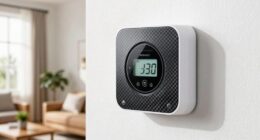
Think of your indoor air as a garden that needs regular tending. You should measure your indoor CO₂ levels at least once a month, especially during peak hours when ventilation is limited. If you notice high readings, it’s a sign to open windows or improve ventilation. Regular checks help you keep the air fresh and safe, ensuring your workspace remains a healthy environment for you and others.
Conclusion
Just like a lighthouse guiding ships through foggy waters, addressing your home office CO₂ emissions clears the haze of uncertainty. By making simple changes, you steer towards a clearer, greener future, illuminating the path for others to follow. Remember, every small step you take acts as a beacon, dispelling the afternoon fog of pollution and guiding us all toward a more sustainable horizon. Your actions can brighten the way for a cleaner, healthier planet.