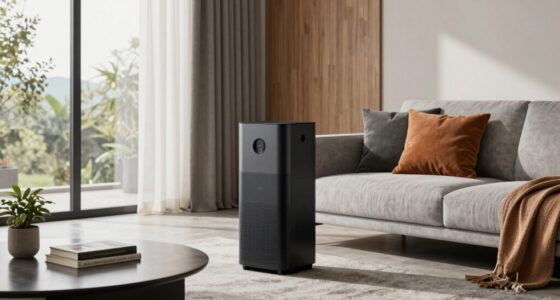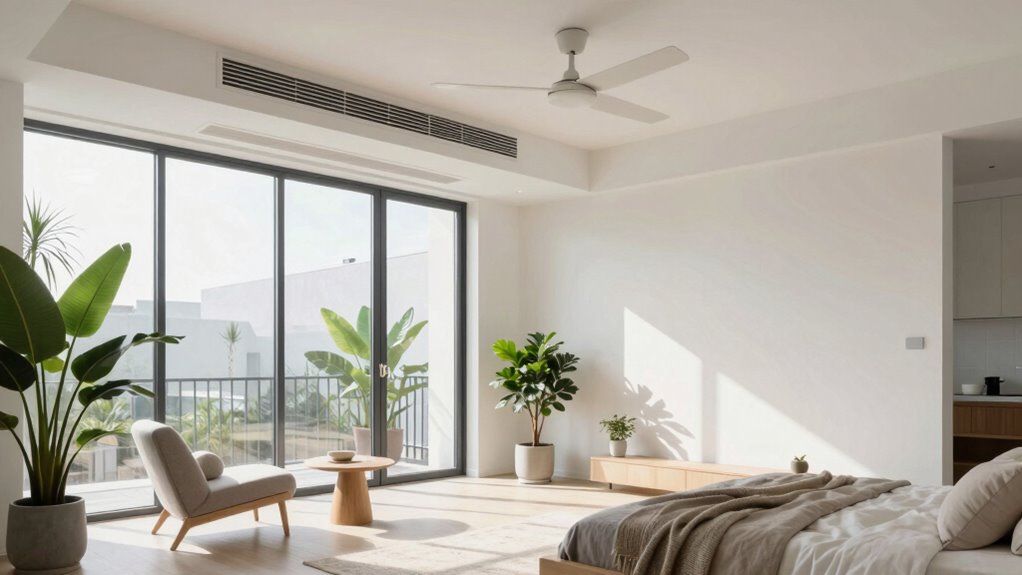

To improve air quality in your studio apartment, use a mix of natural and mechanical ventilation. Open windows across the room to encourage cross-ventilation, and place fans near windows to boost airflow. Install exhaust fans in the kitchen and bathroom, and consider air purifiers with HEPA filters to remove allergens. Keep clutter minimal and regularly clean surfaces. Combining these strategies can create a healthier, fresher living space—learn more tips and tricks to optimize your airflow.
Key Takeaways
- Maximize cross-ventilation by opening windows on opposite sides of the room to promote airflow.
- Use exhaust fans in kitchen and bathroom to remove moisture, odors, and indoor pollutants effectively.
- Incorporate air purifiers with HEPA filters to enhance air quality and reduce allergens.
- Add indoor plants that absorb pollutants and boost oxygen levels, ensuring not to overwater.
- Keep clutter minimal and clean surfaces regularly to prevent dust buildup and improve airflow.
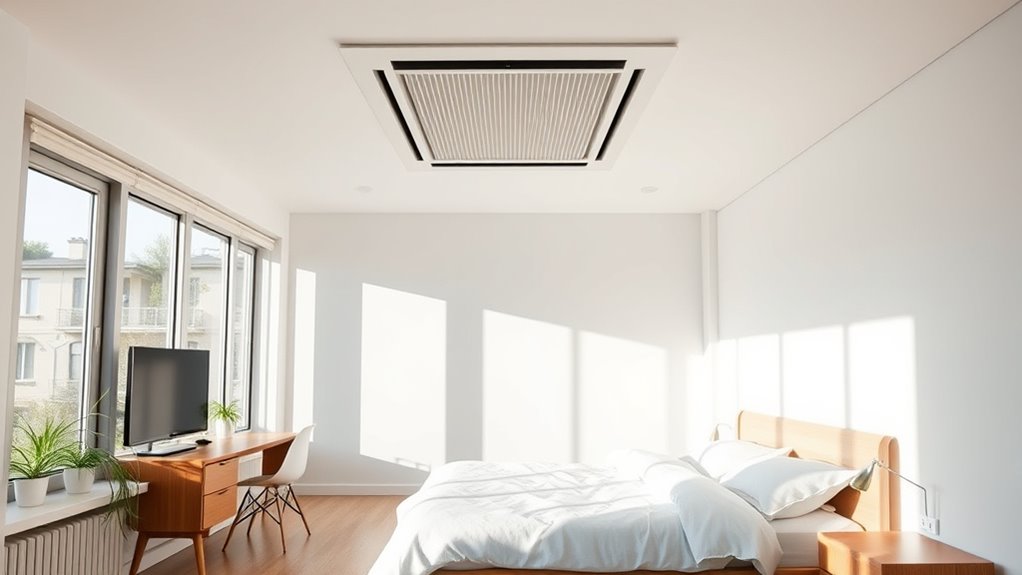
Have you ever wondered how the air quality in a studio apartment impacts your daily comfort and health? Living in a compact space means that the air you breathe is constantly circulating in a confined environment. Poor ventilation can lead to stuffiness, lingering odors, and even health issues like headaches, fatigue, or respiratory problems. That’s why developing an effective one-room ventilation strategy is vital to maintaining a fresh, healthy atmosphere.
Proper ventilation in a studio apartment keeps the air fresh, healthy, and free from odors and pollutants.
In a studio apartment, ventilation isn’t just about opening a window; it’s about creating a consistent airflow that replaces stale air with fresh outdoor air. You can start by identifying the best spots for cross-ventilation. Placing a fan near one window and opening another across the room encourages air to flow through, pulling in fresh air and pushing out indoor pollutants. Keep in mind that the direction of the wind and the placement of your windows influence how effectively air moves through your space. If your apartment faces busy streets or has limited windows, consider using exhaust fans in the kitchen and bathroom to remove humidity, odors, and airborne contaminants generated during cooking or showering.
Another key aspect is controlling humidity. Excess moisture promotes mold growth and exacerbates allergies. Using a dehumidifier or air conditioner can help maintain ideal humidity levels, especially in humid climates. When you set your air conditioning to circulate air, it also helps filter out dust, pollen, and other airborne particles, improving overall air quality. Remember, regular maintenance of filters is vital for ensuring these devices work efficiently. Additionally, choosing high-quality air purifiers with HEPA filters can significantly reduce allergens and fine particles in your living space.
Indoor plants can be a natural addition to your ventilation strategy—they absorb certain pollutants and release oxygen. However, don’t rely solely on them. Proper mechanical and natural ventilation should be your primary focus, especially since plants can sometimes contribute to humidity if overwatered. Also, avoid overcrowding your space with furniture or clutter, as this can trap dust and restrict airflow. Cleaning surfaces frequently and using air purifiers with HEPA filters can further enhance air quality by trapping allergens and fine particles.
Ultimately, a good ventilation strategy in your studio apartment involves a combination of natural airflow, mechanical aids, and regular upkeep. By actively managing these elements, you guarantee that the air remains fresh and your living environment supports your health and comfort. It’s about making small, consistent adjustments that have a big impact on how you breathe and feel every day.

LEVOIT Air Purifier for Home Allergies and Pets Hair Smokers in Bedroom, H13 True HEPA Filter, 24db Filtration System Cleaner Odor Eliminators, Remove 99.97% Dust Smoke Mold Pollen, Core 300, White
- AHAM Verified for Performance: Independently tested for air quality and efficiency
- Powerful Filtration System: 56W motor with 143 CFM CADR
- Effective for Large Rooms: Cleans 222 sq ft 4.8 times/hour
As an affiliate, we earn on qualifying purchases.
Frequently Asked Questions
How Can I Improve Air Quality in a Small Studio Apartment?
To improve air quality in your small studio, regularly open windows to let fresh air in and circulate. Use an air purifier with a HEPA filter to remove dust, allergens, and pollutants. Keep your space clean by vacuuming frequently and avoiding smoking indoors. Incorporate plants that filter air naturally, and avoid using harsh chemicals or aerosols. These steps help create a healthier, more comfortable environment in your studio apartment.
What Are the Best Ventilation Systems for One-Room Spaces?
Imagine your space as a living breath—ventilation systems breathe new life into it. To achieve this, you should consider a combination of exhaust fans and mechanical air purifiers with HEPA filters. Open windows regularly to create a cross-breeze, and use a ceiling fan to circulate air efficiently. These methods work together to reduce pollutants, humidity, and odors, ensuring your studio stays fresh and healthy.
How Often Should I Air Out My Studio Apartment?
You should air out your studio apartment at least once a day, ideally for 10-15 minutes. Opening windows or using exhaust fans helps refresh the air, remove odors, and reduce humidity. If the weather’s nice, do it more often or keep windows slightly open throughout the day. Consistent ventilation improves indoor air quality, making your space healthier and more comfortable. Regular airing is key to maintaining a fresh environment.
Can Plants Effectively Purify Air in a Studio?
Plants can help improve your studio’s air quality, but they shouldn’t be your only solution. They absorb some toxins and add humidity, which benefits indoor air. However, their effect is limited compared to proper ventilation. To truly purify your air, incorporate regular fresh air exchanges through opening windows or using a fan. Rely on plants as a complement, not a substitute, for good ventilation practices.
What Are Common Mistakes in Ventilating Small Apartments?
You often forget to open windows regularly, trapping stale air inside and reducing freshness. Over-relying on fans without cross-ventilation can create stagnant spots, while closing vents during cold weather limits airflow. You might also block vents or keep windows shut during high pollution times, worsening air quality. To improve, open windows on opposite sides, use exhaust fans properly, and avoid sealing your space completely. These small tweaks boost fresh air and prevent indoor air from becoming stale.

MOOKA Air Purifier for Bedroom Home Dorm 430 Ft², Compact HEPA Air Cleaner
- True HEPA Filter with 360° Air Intake: Removes dust, smoke, pollen, pet dander
- Compact & Portable Design: Powered via USB for versatile use
- Universal Voltage Compatibility: Works with 110-240V power sources
As an affiliate, we earn on qualifying purchases.
Conclusion
Now that you understand the essentials of ventilating your studio apartment, you’re ready to take control of your air quality. But don’t assume you’ve covered everything—there’s always a new trick or subtle detail that could make all the difference. Will you discover the perfect balance that keeps your space fresh and inviting? Keep experimenting, stay curious, and your ideal ventilation strategy might just be around the corner—waiting to surprise you when you least expect it.

Purivortex HEPA Air Purifier for Bedroom, AC300 Pro White
- Coverage Area: Purifies rooms up to 540 ft² in one hour
- Fast Purification: Fresher air in about 15 minutes for 135 ft²
- High-Efficiency Filtration: Filters 99.97% of pollutants including dust and pollen
As an affiliate, we earn on qualifying purchases.
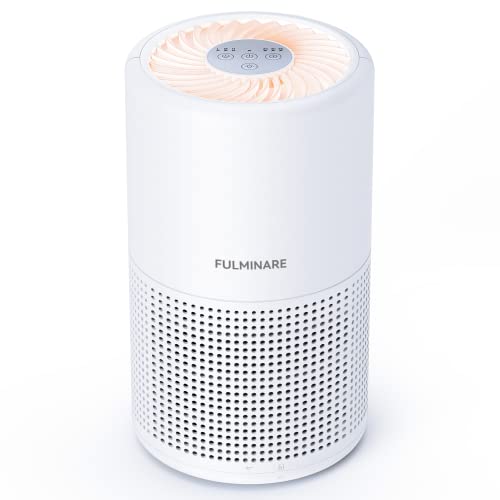
Air Purifiers for Bedroom, FULMINARE H13 True HEPA Filter
- Efficient Particle Filtration: H13 HEPA filter for clean air
- High Circulation Rate: 360° air outlet, refreshes 5x/hour
- Suitable for 215 sq ft rooms: Effective in small to medium rooms
As an affiliate, we earn on qualifying purchases.