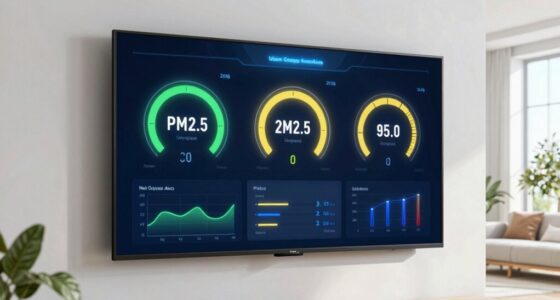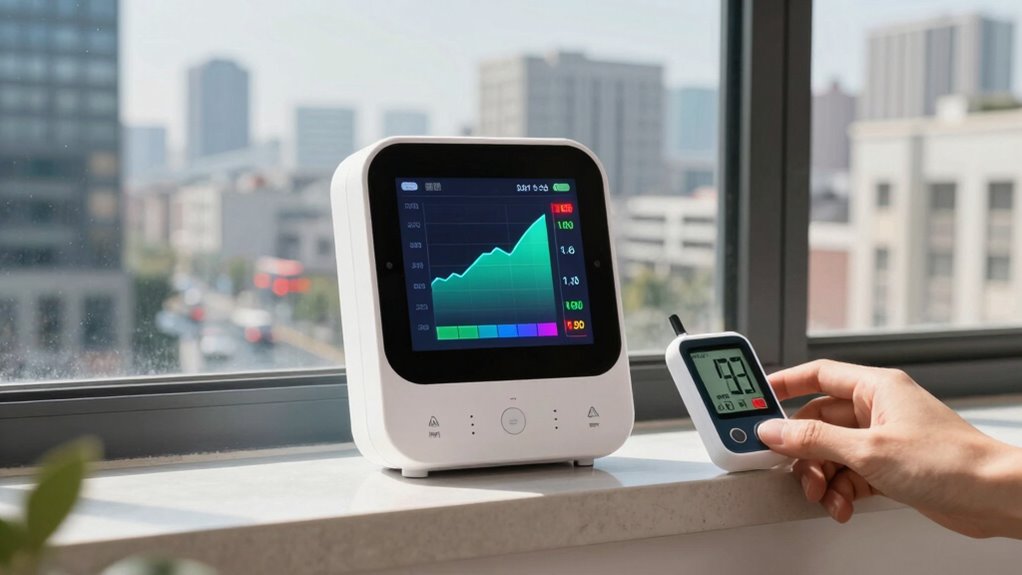

Data logging makes your air quality monitor more valuable by giving you continuous, reliable data to understand long-term trends and identify pollution sources. It helps you track the effectiveness of your actions and guarantees your measurements stay accurate through regular calibration. Plus, logged data reveals issues and supports compliance with safety regulations. By collecting and analyzing data over time, your monitor becomes a powerful tool for building healthier environments—if you stick with it, you’ll find even more ways to optimize its benefits.

Get health and wellness essentials delivered free — and shop member deals
- Fast, free delivery on millions of items
- Access to Prime Big Deal Days deals on October 6–7
- Prime Video, Amazon Music and more included
Key Takeaways
- Data logging enables long-term trend analysis, helping identify pollution sources and evaluate mitigation effectiveness.
- Regular logs improve measurement accuracy by detecting sensor drift and informing calibration needs.
- Logged data reveals anomalies, guiding maintenance, recalibration, or replacement of sensors.
- Automated records facilitate compliance, reporting, and real-time alerts for timely health interventions.
- Combining data logging with calibration transforms monitors into comprehensive systems for environmental insights.
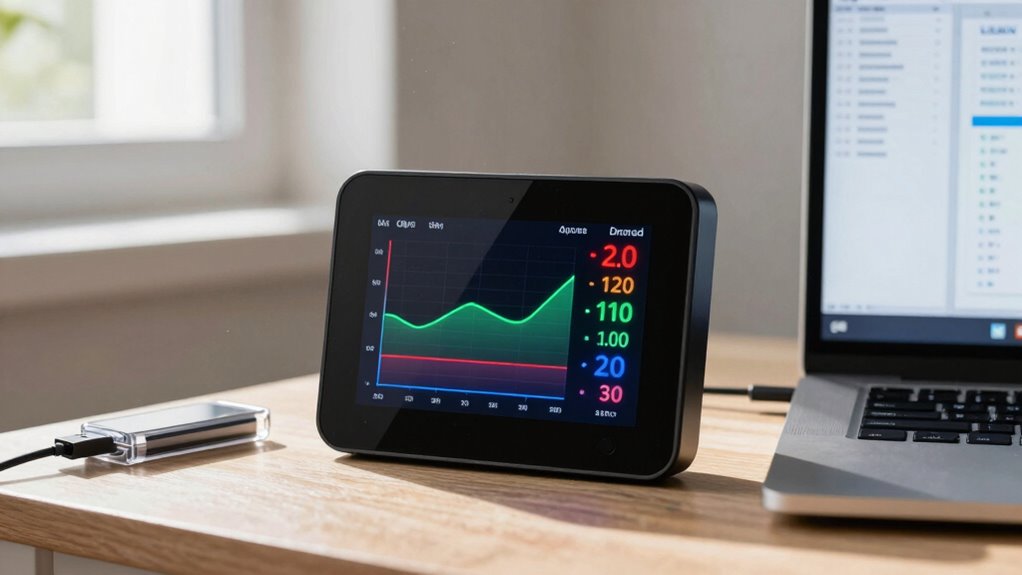
Air quality monitors have become vital tools for tracking pollution levels and guaranteeing healthier environments. These devices give you real-time insights into airborne pollutants, but their true value increases when paired with effective data logging. By continuously recording measurements over time, data logging transforms a simple device into a powerful resource for understanding long-term air quality trends. When you log data consistently, you can identify patterns, pinpoint pollution sources, and assess the effectiveness of mitigation efforts. This historical record becomes indispensable for making informed decisions about health and safety in homes, workplaces, or outdoor spaces.
Effective data logging transforms air quality monitors into essential tools for long-term environmental health insights.
One key aspect of maintaining accurate data is sensor calibration. Over time, sensors can drift or become less sensitive, which might lead to inaccurate readings. Regular sensor calibration ensures your air quality monitor remains precise, giving you confidence in the data it records. When combined with data analysis, calibrated sensors provide reliable information that helps you distinguish between normal fluctuations and genuine pollution events. Proper calibration and meticulous data analysis enable you to extract meaningful insights, allowing you to respond quickly to air quality issues before they escalate. Additionally, understanding the sensor lifespan can help you plan timely replacements to maintain data accuracy. Incorporating data management best practices can further enhance the reliability and usefulness of your logged data.
Data logging also enhances your ability to troubleshoot and improve your monitoring setup. When you review logged data, you can identify inconsistencies or anomalies that suggest sensor issues or environmental changes. This insight helps you decide whether a sensor needs recalibration or replacement. Additionally, by analyzing long-term data, you can evaluate the impact of specific actions, such as installing air purifiers or adjusting ventilation systems. The detailed logs serve as evidence of whether your interventions are making a tangible difference, guiding future decisions to create healthier indoor or outdoor environments. Incorporating biodiversity and conservation principles into your monitoring can also promote a more sustainable approach to managing air quality and supporting healthier ecosystems.
Another advantage of data logging is its ability to support compliance with health and safety regulations. Many industries require documented air quality records to meet legal standards or certification processes. Having a thorough log simplifies reporting and demonstrates your commitment to maintaining safe conditions. Plus, with digital data analysis tools, you can visualize trends and generate reports effortlessly, saving time and reducing errors. Developing a systematic approach to data storage and review can further streamline your monitoring efforts and ensure data integrity. Moreover, implementing automated alert systems can notify you immediately if air quality drops below safe thresholds, allowing for rapid response.
Ultimately, data logging elevates the utility of air quality monitors from simple measurement devices to thorough monitoring systems. When you combine consistent data logging with proper sensor calibration and detailed data analysis, you gain a deeper understanding of your environment. This knowledge empowers you to take proactive steps, protect your health, and improve air quality over the long term. In essence, data logging makes your air quality monitor more than just a detector—it becomes an indispensable tool for creating healthier, safer spaces.
air quality monitor with data logging
As an affiliate, we earn on qualifying purchases.
As an affiliate, we earn on qualifying purchases.
Frequently Asked Questions
How Accurate Is Data Logging for Long-Term Air Quality Trends?
Data logging provides accurate long-term air quality trends when calibration accuracy is maintained and data storage security is guaranteed. Regular calibration helps keep measurements precise, while secure data storage prevents loss or tampering, preserving data integrity. You can trust the logged data over time, making it valuable for analyzing environmental changes. Properly maintained data logging systems enable you to monitor air quality reliably and make informed decisions based on trustworthy, consistent data.
Can Data Logs Be Shared Automatically With Health Authorities?
Yes, data logs can be shared automatically with health authorities through secure data sharing protocols. You should guarantee data privacy by using encrypted transfer methods and authorized access controls. Many modern air quality monitors offer cloud-based data sharing options, allowing seamless and automatic communication with health agencies. This way, you help improve public health monitoring while maintaining privacy and adhering to data sharing regulations.
What Are the Maintenance Requirements for Data Logging-Enabled Monitors?
You need to regularly perform calibration procedures to guarantee your data logging-enabled air quality monitor stays accurate. Check and replace batteries to maintain peak battery life, especially if the device is portable. Keep the sensors clean and follow the manufacturer’s maintenance schedule. Regular calibration and battery management help prevent data gaps and ensure reliable, consistent logging, making your monitor more effective and easier to use over time.
How Does Data Logging Impact the Cost of Air Quality Monitors?
Data logging can slightly increase the initial cost of air quality monitors, but it offers significant value through detailed data collection. You’ll benefit from better cost analysis by identifying pollution trends and optimizing maintenance. Keep in mind, software compatibility is essential, as it guarantees seamless data integration without additional expenses. Overall, the upfront investment in data logging features pays off with more accurate insights, saving you money long-term.
Are There Privacy Concerns Related to Data Logging in Air Quality Devices?
Yes, there are privacy implications with data logging in air quality devices. You might worry about who accesses your data and how it’s used, especially if it captures location or personal habits. To protect yourself, make sure the device has strong data security measures, like encryption, and review its privacy policies. Being aware of these concerns helps you make informed choices and safeguard your personal information.
digital air quality sensor calibration kit
As an affiliate, we earn on qualifying purchases.
As an affiliate, we earn on qualifying purchases.
Conclusion
By harnessing data logging, your air quality monitor transforms from a simple gadget into an unstoppable sentinel guarding your health. It’s like having a superpower—detecting even the tiniest pollutant that could threaten your lungs. Without it, you’re flying blind in a toxic fog. With data logging, you’re equipped with an unstoppable arsenal of insights, giving you the power to breathe safer, smarter, and more confidently every single day. Don’t settle for less—arm yourself with data!
air quality monitor replacement sensors
As an affiliate, we earn on qualifying purchases.
As an affiliate, we earn on qualifying purchases.
As an affiliate, we earn on qualifying purchases.
Cold & flu season Picks
humidifiers
As an affiliate, we earn on qualifying purchases.