
If your humidity sensor readings don’t match expected values, it’s likely due to environmental factors, poor calibration, or sensor aging. Drafty areas, temperature fluctuations, or proximity to heat sources can skew your results. Regularly calibrating your sensor is vital, as small inaccuracies can distort data. Additionally, proper placement prevents interference. Understanding these factors is key to improving accuracy. Want to learn the best practices for optimizing your humidity measurements?
Key Takeaways
- Calibration drift over time can lead to inaccurate humidity readings; regular recalibration is essential to maintain accuracy.
- Environmental factors like air circulation, temperature, and proximity to heat sources can skew sensor readings.
- Improper sensor placement, such as near vents or sunlight, can affect measurement reliability and accuracy.
- Aging sensors may experience performance decline, causing discrepancies in humidity readings; timely replacements are necessary.
- Contaminants or dirt on the sensor can interfere with readings; regular cleaning is important for maintaining accuracy.
Understanding Humidity Sensors
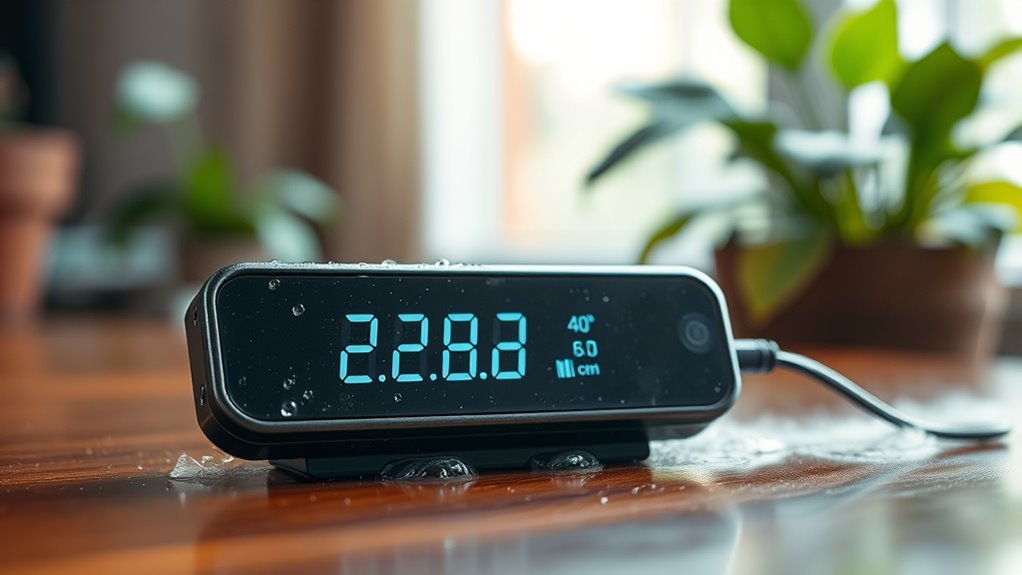
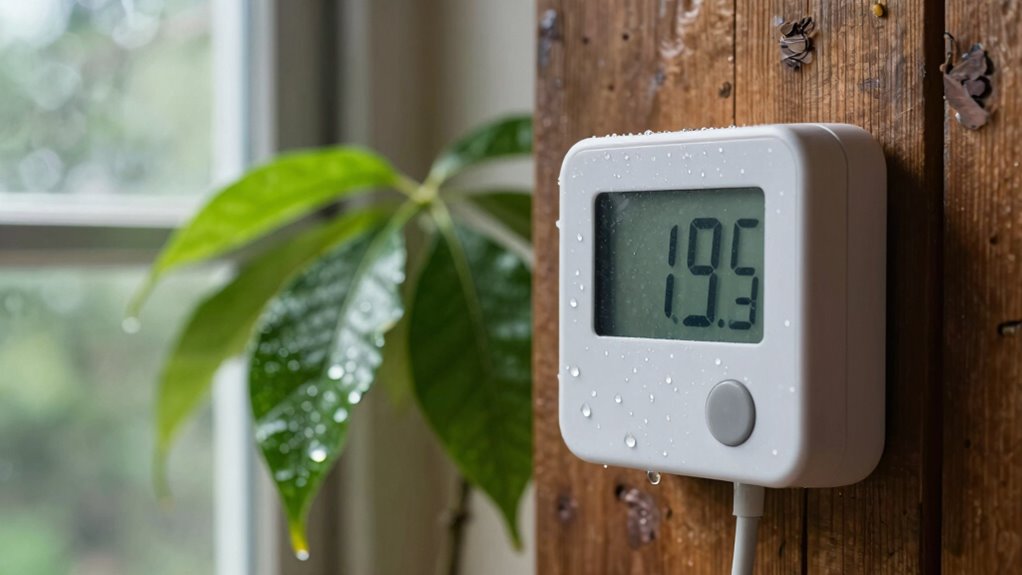
When you think about humidity sensors, you might not realize how crucial they are for various applications, from weather monitoring to indoor climate control. These devices work by detecting moisture levels in the air, and their accuracy largely depends on the sensor material used. Different materials, like capacitive, resistive, and thermal, respond uniquely to changes in humidity. Understanding how these materials influence the humidity response is essential for selecting the right sensor for your needs. For example, capacitive sensors typically offer faster response times, while resistive sensors can be more stable over time. Additionally, using sensors with high color accuracy can further improve the reliability of your readings. Furthermore, AI technologies can assist in analyzing sensor data to provide more accurate predictions about humidity levels. By recognizing the importance of sensor materials and their impact on humidity response, you can make informed decisions for your projects and ensure reliable measurements. Additionally, maintaining good indoor air quality is vital as it can significantly affect the effectiveness of humidity control measures in your home. Furthermore, understanding how necessary cookies support secure and functional website operations can help you appreciate the technology behind humidity sensors and their applications. Additionally, knowing how filtration systems can impact air quality can further enhance the effectiveness of humidity control measures in your home.
Common Types of Humidity Sensors

Understanding the common types of humidity sensors can considerably enhance your ability to choose the right one for your application. Capacitive sensors, often made from polymer or ceramic sensor material, measure humidity by detecting changes in capacitance. Resistive sensors, on the other hand, utilize conductive materials to track humidity levels based on resistance changes. If you’re looking for accuracy over a wide range, hygrometric sensors might be your best bet, but they generally require a stable power supply. Additionally, innovative European cloud servers are increasingly being used to analyze and store data from these sensors in a more efficient manner. Regular calibration of these sensors is essential for maintaining accurate readings and ensuring peak performance. Understanding heat distribution can also aid in determining how environmental factors may affect sensor performance. Furthermore, electric dirt bikes are known for their lightweight design, which can influence how humidity affects electronic components. Finally, thermal conductivity sensors measure humidity based on gas thermal properties, offering another option for specific needs. Each type has its pros and cons, so consider your application carefully to guarantee peak performance and reliability. Additionally, understanding ventilation considerations is crucial for maintaining accurate humidity readings in your environment.
The Importance of Calibration
Calibration is essential for ensuring your humidity sensor provides accurate readings. You need to take into account how often you calibrate, as environmental factors can greatly influence the sensor’s performance. Over time, sensor drift can occur, making regular calibration even more important for reliable data. Additionally, implementing personalized intervention strategies can help improve the overall accuracy of your sensor readings. Regular calibration practices are vital for maintaining high-quality standards in sensor performance, as even small inaccuracies can lead to significant errors in data interpretation. For instance, just as essential oils can impact various health conditions, the accuracy of your sensor can greatly affect the quality of data collected in different environments. Accurate readings from your sensor are similar to top-rated vacuums that simplify cleaning routines and enhance overall efficiency.
Calibration Frequency Matters
Although you might not think about it often, the accuracy of your humidity sensor heavily relies on regular calibration. Calibration intervals play a vital role in maintaining precise readings. If you let too much time pass between calibrations, your sensor’s accuracy can drift, leading to misleading data. This drift can considerably shorten your sensor lifespan, costing you time and money in the long run. By establishing a consistent calibration schedule, you not only guarantee reliable performance but also extend the life of your equipment. Additionally, understanding factors that increase infection risk can help you better monitor your sensor’s performance and adjust your calibration frequency based on usage and environmental conditions. Regular calibrations are key to keeping your humidity readings on point and your projects running smoothly. Furthermore, utilizing sizing and load-planning tools can help you determine the appropriate calibration frequency for your specific sensor application. Moreover, environmental factors such as temperature and pressure can also affect sensor readings. Additionally, be aware that natural filtration systems can also impact the performance of sensors in outdoor environments where humidity levels fluctuate. To ensure optimal accuracy, it is essential to consider cultural celebrations that may influence humidity levels in specific regions.
Environmental Influence Factors
Environmental conditions can markedly affect the accuracy of your humidity sensor. Factors like air circulation and temperature fluctuations can lead to inconsistent readings. If your sensor is placed in a drafty area or near heat sources, you might notice discrepancies in humidity levels. For instance, strong air circulation can dry out the sensor or cause it to pick up too much moisture, skewing results. Similarly, temperature fluctuations can impact sensor performance, as most humidity sensors are calibrated for specific environmental conditions. To maintain accurate readings, it’s essential to regularly calibrate your sensor, especially when you change its location. By understanding these environmental influences, you can guarantee your humidity measurements remain reliable and precise. Additionally, employing space-saving techniques can help optimize the area where your sensor is placed, minimizing the impact of external factors. Regular sensor calibration is vital to ensure that your device continues to perform optimally under varying conditions. Moreover, the presence of air purifiers in your home can improve overall air quality, which may also enhance your sensor’s accuracy by stabilizing the environment.
Sensor Drift Over Time
As time goes on, your humidity sensor can experience drift, leading to inaccurate readings if not addressed. This is often due to sensor aging and component degradation, which can affect performance. To maintain accuracy, consider these important steps:
- Regular Calibration: Schedule routine calibration to ensure your readings reflect true humidity levels.
- Monitor Performance: Keep an eye on any significant changes in readings that may indicate drift.
- Choose Quality Sensors: Invest in high-quality sensors that resist degradation over time.
- Environmental Control: Maintain stable environmental conditions to minimize external influences on sensor performance.
Environmental Factors Affecting Readings
When you measure humidity, several environmental factors can skew your readings. For instance, humidity fluctuations often occur due to temperature changes or external conditions, leading to inconsistent data. If you’re measuring in an area with varying temperatures, your sensor might struggle to provide accurate readings. Airflow effects also play a significant role; drafts or ventilation can disturb the air around your sensor, causing it to pick up false readings. Even minor changes in airflow can lead to significant discrepancies in humidity levels. To guarantee accurate measurements, it’s essential to minimize these environmental factors as much as possible. By understanding and controlling for these influences, you can achieve more reliable humidity readings in your environment.
Sensor Placement and Its Impact
Proper sensor placement considerably influences the accuracy of your humidity readings. If you want dependable results, consider the following factors that can lead to environmental interference:
- Avoid direct sunlight: Placing your sensor in direct sunlight can cause misleading readings due to heat exposure.
- Distance from walls: Sensors should be positioned away from walls to prevent localized humidity variations.
- Ventilation: Ensure your sensor isn’t near vents or fans that can disrupt airflow and skew data.
- Avoid damp areas: Steer clear of areas prone to moisture accumulation, like bathrooms, which can trigger false readings.
Maintenance and Care for Accurate Readings
To guarantee accurate readings from your humidity sensor, regular calibration is essential. You also need to follow proper placement guidelines to avoid any interference that could skew your results. Keeping these practices in mind will help maintain the reliability of your measurements.
Regular Calibration Importance
Although humidity sensors are designed for precision, their accuracy can diminish over time without regular calibration. This decline often results from sensor aging, leading to discrepancies in your readings. To guarantee your sensor operates effectively, follow these essential calibration steps:
- Check calibration standards regularly to maintain accuracy.
- Schedule periodic calibrations based on usage and environmental conditions.
- Clean the sensor to prevent contaminants from affecting readings.
- Document calibration results for future reference and tracking performance.
Proper Placement Guidelines
When you place your humidity sensor correctly, it can markedly enhance the accuracy of your readings. Position it away from direct sunlight and heat sources, like radiators or HVAC vents, as these can skew results. Ideally, place the sensor in a central location where it can measure the overall humidity level of your space, not just areas affected by your heating or cooling system. If you have indoor plants, consider placing the sensor near them, but not too close, to avoid excess moisture from the foliage. Regularly check the placement to ensure it remains suitable, especially if you rearrange furniture or plants. Remember, the right setup leads to reliable readings and a healthier environment.
Comparing Different Instruments
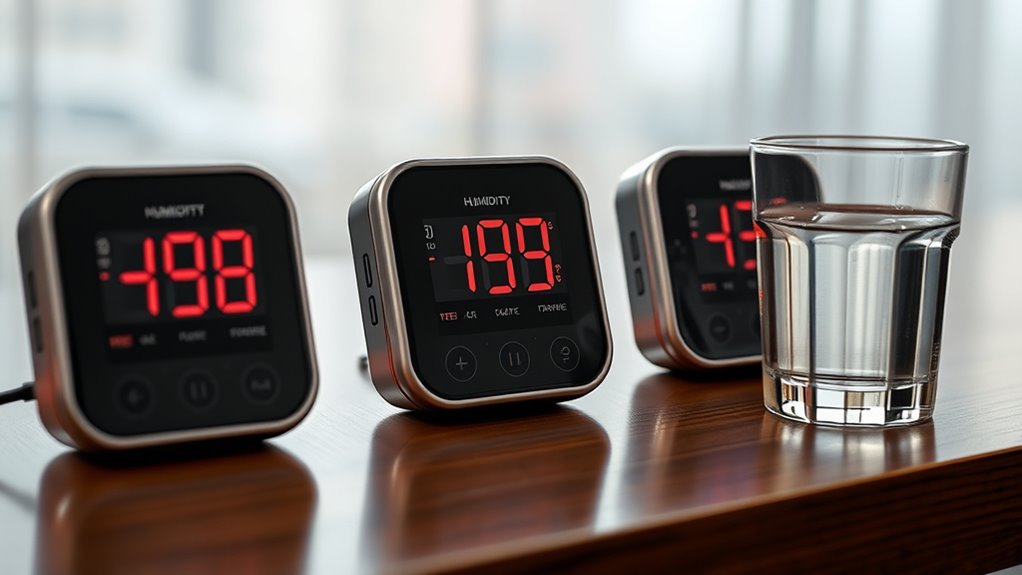
As you explore the world of humidity sensors, you’ll find that not all instruments are created equal. Different sensors can yield varying results due to factors like sensor material and data logging capabilities. When comparing instruments, consider these key aspects:
- Accuracy: Check the manufacturer’s specifications for accuracy ratings.
- Response time: Look for how quickly the sensor reacts to humidity changes.
- Calibration: Ensure the instrument can be calibrated for precise readings.
- Data logging: Some sensors offer advanced data logging features, allowing you to track changes over time.
Troubleshooting Discrepancies in Readings
If you notice discrepancies in your humidity sensor readings, it’s essential to investigate the potential causes. Start with humidity calibration; an improperly calibrated sensor can lead to inaccurate results. Next, consider environmental factors like temperature fluctuations or airflow that might affect your readings.
Here’s a quick troubleshooting guide:
| Possible Issue | Solution |
|---|---|
| Poor Calibration | Perform humidity calibration |
| Environmental Interference | Adjust sensor placement |
| Sensor Age | Replace if outdated |
| Software Glitches | Update or reset the sensor |
Frequently Asked Questions
How Do Humidity Sensors Work Internally?
Humidity sensors work by detecting moisture in the air through various methods, like capacitive or resistive sensing. These sensors rely on materials that change their electrical properties based on humidity levels. However, sensor drift can occur over time due to environmental factors or manufacturing variability, leading to inaccurate readings. To maintain accuracy, you should regularly calibrate your sensors and be aware of their specific limitations and potential drift over time.
Can Humidity Sensors Be Used Outdoors Effectively?
Yes, humidity sensors can be used outdoors effectively. For instance, a farmer might utilize a weatherproofed sensor to monitor soil moisture levels. By employing robust sensor durability and advanced weatherproofing techniques, you guarantee accurate readings despite rain or high winds. These sensors withstand harsh conditions and provide reliable data, helping you make informed decisions about irrigation and crop management. Just remember to choose models specifically designed for outdoor environments for superior performance.
What Materials Can Affect Sensor Performance?
Sensor material plays a vital role in how well your humidity sensor performs. Certain materials, like plastics, can absorb moisture and affect readings, while metals may corrode in harsh environments. Environmental effects, such as temperature fluctuations and exposure to chemicals, can also impact sensor accuracy. To guarantee reliable performance, choose sensors designed for your specific conditions and regularly maintain them to mitigate these influences.
How Often Should Calibration Be Performed?
Think of your humidity sensor like a compass—if it’s not calibrated regularly, it’ll lead you astray. You should perform calibration every six months to a year, especially if you notice sensor drift. Environmental factors can impact accuracy, so keeping a consistent calibration frequency guarantees dependable readings. Regular checks help you maintain ideal performance, allowing you to trust the data your sensor provides. Don’t let inaccurate readings throw you off course!
Are There Any Specific Brands Known for Accuracy?
When it comes to humidity sensors, brands like Honeywell and Testo are often recognized for their accuracy. You’ll want to ensure sensor calibration is done regularly to maintain performance. Additionally, pay attention to material sensitivity; certain sensors may react differently based on the environment. By choosing a reputable brand and regularly calibrating your sensor, you can considerably improve your readings and overall accuracy in measuring humidity levels.
Conclusion
In your quest for quality readings, remember that humidity sensor accuracy hinges on calibration, care, and context. By understanding the types of sensors and their sensitivity to surroundings, you can conquer common discrepancies. Don’t let environmental factors throw you off track—place your sensors wisely and maintain them regularly. With a little diligence, you’ll guarantee your humidity readings are reliable and ready to serve your needs. Stay savvy, and let accuracy elevate your environment!