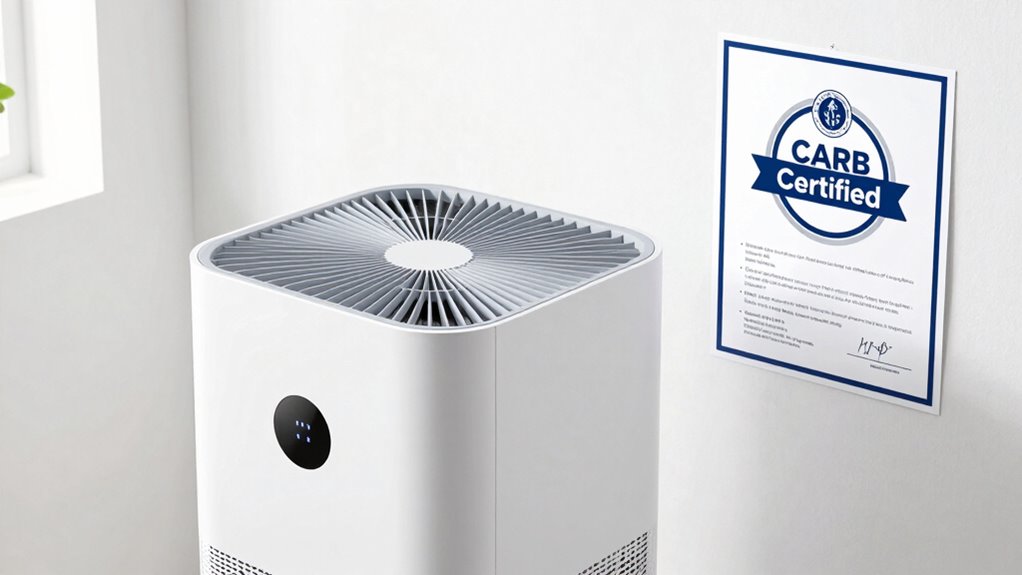
CARB certification guarantees your air cleaner meets California’s strict standards by limiting emissions of pollutants like VOCs, NOx, and particulate matter. It verifies that your product performs safely and responsibly, helping you stay compliant with state laws. The process includes testing in certified labs and requires ongoing documentation. If you’re interested in understanding how this certification impacts product design and market access, keep exploring these important details.

Get health and wellness essentials delivered free — and shop member deals
- Fast, free delivery on millions of items
- Access to Prime Big Deal Days deals on October 6–7
- Prime Video, Amazon Music and more included
Key Takeaways
- Ensures air cleaners meet California’s strict air quality emission standards.
- Regulates emissions of VOCs, NOx, and particulate matter during operation.
- Requires testing in certified labs to verify compliance with environmental criteria.
- Certification label indicates legal sale and marketed as environmentally responsible.
- Demonstrates commitment to reducing pollutants and supporting healthier indoor environments.
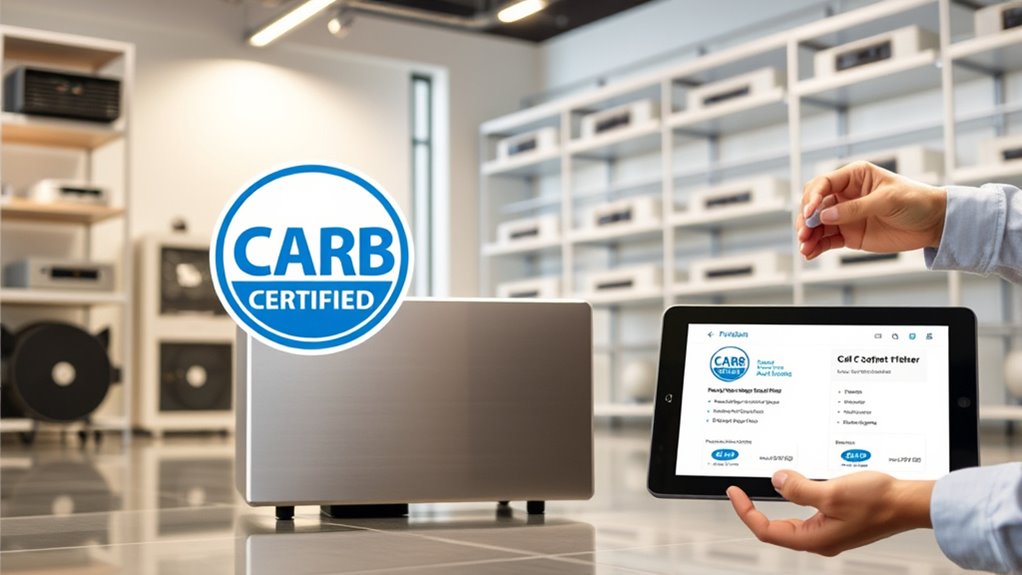
Have you ever wondered what it takes for a vehicle or engine to meet California’s strict air quality standards? If you’re involved in manufacturing, selling, or even just using air cleaners, understanding CARB certification is vital. CARB, the California Air Resources Board, sets rigorous rules to reduce emissions and improve air quality. Certification isn’t just a formality; it’s a thorough process that ensures your air cleaner meets specific environmental standards. When a product is CARB-certified, it means it has been tested and approved to produce minimal emissions that could harm air quality.
For air cleaners, CARB certification focuses on controlling emissions of pollutants like volatile organic compounds (VOCs), nitrogen oxides (NOx), and particulate matter. These pollutants can contribute to smog formation and health issues, so reducing their release is a top priority. The certification process involves detailed testing to verify that the air cleaner complies with the limits established by the board. This testing is conducted in certified laboratories, where the device undergoes a series of rigorous assessments to measure its emissions under typical operating conditions.
Once a product passes these tests, it receives a certification label, which you must display prominently if you’re selling or distributing the unit in California. This label signifies that the air cleaner has met all CARB standards and is legally compliant for sale within the state. Without this certification, your product can’t be marketed as environmentally friendly or compliant with California law. This ensures consumers can trust that the air cleaner they purchase genuinely contributes to cleaner indoor air and doesn’t inadvertently introduce harmful emissions.
The standards cover more than just emissions; they also include durability, safety, and performance criteria to ensure the product functions effectively over time. Manufacturers are often required to provide documentation supporting the product’s compliance, including test results and technical specifications. The certification process might involve periodic testing or audits to confirm ongoing compliance, especially if the product design or manufacturing processes change. Additionally, understanding emission standards is crucial for maintaining compliance and ensuring the product’s marketability.
Obtaining CARB certification can be a lengthy and costly process, but it’s a necessary step to access the California market. It demonstrates your commitment to environmental responsibility and helps consumers make informed choices. Ultimately, CARB certification for air cleaners isn’t just about meeting regulations; it’s about contributing to cleaner air and a healthier environment. If you want your product to succeed in California, understanding and adhering to these standards isn’t optional — it’s vital.
Frequently Asked Questions
How Long Does CARB Certification Last for Air Cleaners?
CARB certification for air cleaners typically lasts for one year from the date of issuance. You’ll need to renew it annually to confirm continued compliance with California air quality standards. Keep track of your certification renewal date, and submit the necessary paperwork and fees before it expires. This process helps you maintain legal operation and assures your air cleaner continues to meet strict environmental requirements.
Are All Air Purifiers Eligible for CARB Certification?
Think of eligibility for CARB certification like a key fitting a specific lock—you need the right design. Not all air purifiers qualify; only those meeting strict emissions standards and safety protocols can earn certification. If your device is designed to reduce air pollutants and adheres to California’s regulations, it might qualify. Always check the manufacturer’s details to confirm if an air purifier is CARB certified before making a purchase.
Does CARB Certification Impact Product Warranty or Lifespan?
CARB certification itself doesn’t directly affect your air cleaner’s warranty or lifespan. Instead, it verifies the product meets strict emissions standards, ensuring safe, clean air. However, choosing a certified air purifier means you’re opting for a device tested for quality and safety, which can help it last longer and perform better. Always check the manufacturer’s warranty details separately, as certification alone doesn’t guarantee extended product life or warranty coverage.
Is CARB Certification Required for All States?
Think of CARB certification as a key opening access to every state’s clean air garden. You’re not required to have it in all states, only where strict emissions rules bloom, like California. If your air cleaner bears this certification, it’s like a passport for legal use across those regions. In states without such rules, certification isn’t a must, but having it can still boost your product’s credibility and market reach.
How Often Must an Air Cleaner Be Recertified?
You need to recertify your air cleaner every two years to stay compliant with CARB standards. The process involves submitting updated documentation and verifying your device still meets the certification requirements. Regular recertification helps maintain the air cleaner’s effectiveness and legality. Be sure to track deadlines and renew on time to avoid any compliance issues or potential legal penalties. Staying proactive ensures your air cleaner continues to operate within legal standards.
Conclusion
Just like a sturdy shield protecting a knight, CARB certification guards your air cleaner from compliance issues. It guarantees your device meets strict standards, so you can breathe easy knowing you’re safeguarding your health and the environment. When you choose a CARB-certified air cleaner, you’re not just picking any tool—you’re selecting a trusted guardian in your home. So, make sure it’s certified, and breathe freely, knowing you’ve got the best armor against pollution.
Fall Picks
fall essentials
As an affiliate, we earn on qualifying purchases.