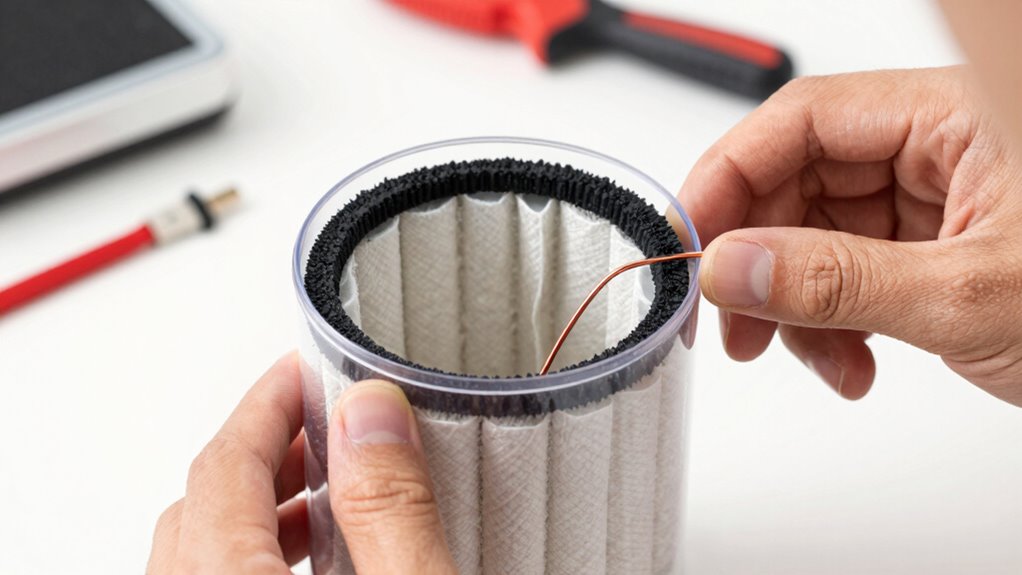
Before plugging in your DIY air cleaner, make sure you inspect all wiring for damage, secure connections, and replace any frayed cords. Check that the power source matches your device’s specifications and is grounded properly. Verify fans are rated for indoor use and that all parts are assembled securely. Test in a well-ventilated area and look out for unusual sounds or overheating. Want to guarantee safety and proper setup? Keep going to learn more essential safety tips.
Key Takeaways
- Inspect all electrical wiring for damage, fraying, or exposed conductors before powering on.
- Verify device compatibility with your power outlet’s voltage and current ratings.
- Ensure fans are rated for indoor use and installed securely to prevent overheating or malfunction.
- Check that all connections are tight, and components are properly assembled to avoid mechanical issues.
- Keep a fire extinguisher nearby and never leave the air cleaner unattended during operation.
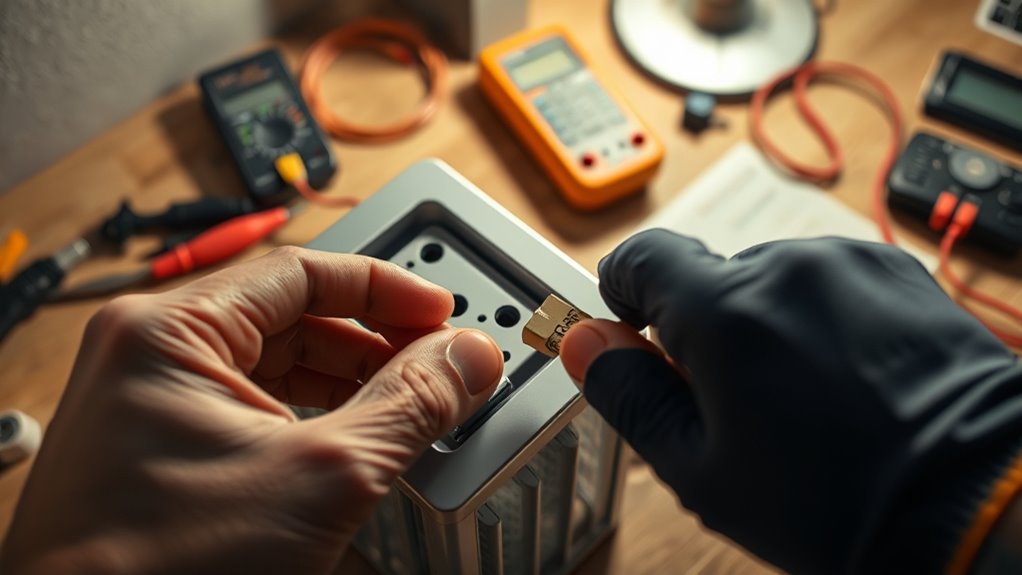
Have you ever wondered how to improve your indoor air quality without spending a fortune? Building your own air cleaner can be a cost-effective way to breathe easier, but safety should always come first. Before you plug in your DIY device, it’s crucial to perform thorough safety checks to prevent accidents or damage. Start by inspecting all electrical components carefully. Make sure wires are intact, connections are secure, and there’s no fraying or exposed wiring. Using damaged cords or improperly connected parts can lead to short circuits or fires. If you notice any issues, replace damaged components before proceeding.
Ensure all electrical components are intact and secure before powering your DIY air cleaner.
Next, verify that your power source matches the requirements of your air cleaner. Check the voltage and current ratings to ensure compatibility. Using an outlet that supplies the correct power prevents overheating and reduces the risk of electrical failure. It’s also wise to plug your device into a grounded outlet and avoid extension cords, which can overload and pose fire hazards if not rated properly.
Another essential safety check involves the materials you use. If your DIY air cleaner includes a fan, confirm it’s rated for continuous operation and designed for indoor use. Fans not built for long-term operation may overheat or malfunction. Additionally, avoid using flammable materials near electrical components or heating elements. If your design involves filters or other consumables, ensure they are installed correctly and securely to prevent them from falling or causing airflow obstructions.
Ventilation is equally important. When testing your device, do so in a well-ventilated area to prevent the buildup of dust, fumes, or any unintended emissions. If your design produces noise or vibrations, check that all parts are tightly secured and properly aligned to avoid mechanical failures. Regularly inspect your device during initial use to catch any signs of trouble early, such as unusual sounds or overheating. Being aware of electrical safety guidelines can further help you prevent common hazards associated with DIY electrical projects.
Finally, familiarize yourself with safety guidelines for electrical devices, including how to shut off power quickly if needed. Keep a fire extinguisher nearby just in case, and never leave your DIY air cleaner unattended for extended periods. Remember, creating an effective air purifier isn’t just about functionality; it’s about ensuring that your homemade device isn’t a safety hazard. Taking these safety precautions before plugging in your DIY air cleaner helps you breathe easier with peace of mind, knowing you’ve minimized risks and prioritized safety in your project.
Frequently Asked Questions
Can I Repurpose Household Items for Air Cleaners Safely?
You can repurpose household items for air cleaners, but you need to be cautious. Avoid using materials that can emit harmful fumes or catch fire, like certain plastics or fabrics. Use items with good filtration, like activated charcoal or clean, dry HEPA filters from old appliances. Always test your setup for safety, guarantee proper ventilation, and never leave DIY air cleaners unattended while in use. Safety first!
How Often Should I Replace Filters in DIY Air Cleaners?
You should switch out filters in your DIY air cleaner every 1 to 3 months to keep it functioning flawlessly. Factors like filter type, usage frequency, and air quality influence replacement timing. Regularly inspect the filter for dirt and debris; if it looks clogged or discolored, it’s time for a change. Staying vigilant guarantees your air stays fresher, healthier, and free from harmful pollutants.
Are There Specific Electrical Ratings to Consider for Safety?
Yes, you should check the electrical ratings before plugging in your DIY air cleaner. Make sure the device’s voltage and wattage match your power outlet’s specifications to prevent electrical hazards. Use components rated for your local electrical standards, and avoid overloading circuits. Always read the manufacturer’s instructions and verify that all parts, including wiring and switches, are rated appropriately, ensuring safe operation and preventing potential fires or damage.
What Are Common Fire Hazards Associated With DIY Air Cleaners?
You risk fire hazards with DIY air cleaners if you overlook wiring issues, use faulty components, or overload circuits. Loose connections, damaged cords, and improper insulation can spark sparks or heat buildup. You should regularly inspect all electrical parts, avoid overloading outlets, and replace worn-out wires. By staying vigilant, you minimize the risk of fires, ensuring your DIY project remains safe and effective for clean air.
Is It Safe to Leave Homemade Air Purifiers Unattended?
It’s not safe to leave your homemade air purifier unattended. Even if it seems to be working fine, electrical components can overheat or short-circuit, posing fire risks. Always stay nearby when it’s running, monitor it regularly, and turn it off if you notice any unusual smells, sparks, or smoke. Never leave it unattended for long periods, especially overnight or when you’re away, to prevent potential hazards.
Conclusion
Before plugging in your DIY air cleaner, remember that safety is your guiding star. Think of it as building a fortress to safeguard your home and loved ones. Double-check all connections, inspect for damage, and verify everything’s secure. A small effort now prevents a storm of problems later. With each safe step, you’re lighting the path toward a healthier, safer space—because a well-made air cleaner is the sense of renewal your home truly deserves.