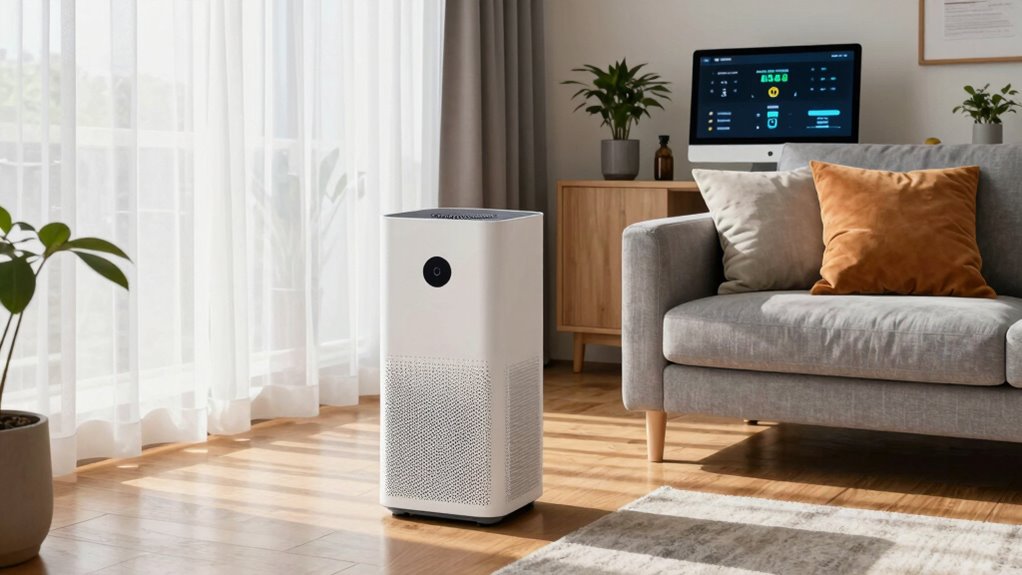

OSHA and NIOSH guidelines for indoor air quality mainly target workplaces, but many safety principles can apply at home. You can improve your home’s air by ensuring proper ventilation, using air purifiers, fixing leaks to prevent mold, and testing for radon. These practices help control airborne pollutants and reduce health risks. If you want to discover more about how these safety standards can benefit your home environment, keep exploring these effective strategies.
Open a free Amazon Business account
Business pricing, bulk buying and tax-exempt orders.
As an affiliate, we earn on qualifying purchases.
Key Takeaways
- OSHA and NIOSH set guidelines to reduce airborne hazards that can inform safe home ventilation and air quality practices.
- Radon testing and mold prevention are key safety measures influenced by occupational safety principles applicable at home.
- Proper ventilation, including opening windows and using exhaust fans, helps control indoor air pollutants based on workplace standards.
- Using air purifiers and maintaining HVAC systems are recommended practices derived from OSHA/NIOSH guidelines for cleaner indoor air.
- Proactive measures like leak repairs and humidity control help prevent mold and moisture-related air quality issues at home.
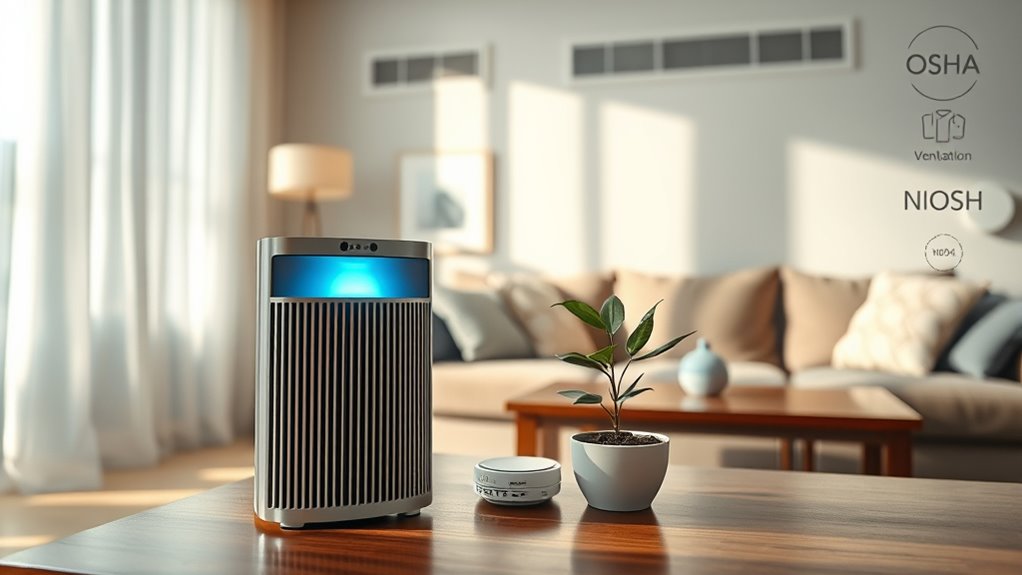
Have you ever wondered how workplace standards protect you from indoor air hazards? You might think these rules only apply to factories, offices, or construction sites, but they also influence how safe your home environment can be. OSHA (Occupational Safety and Health Administration) and NIOSH (National Institute for Occupational Safety and Health) develop guidelines and recommendations to reduce exposure to harmful airborne substances. While OSHA’s primary focus is on workplace safety, many of its standards and research findings influence building codes and best practices that benefit you at home. Similarly, NIOSH conducts research and provides guidance on airborne hazards, aiming to protect workers and, by extension, anyone in environments with potential air quality issues. Indoor air quality standards and research continue to evolve, informing safer practices across various environments.
At home, you’re exposed to a variety of indoor air pollutants—volatile organic compounds (VOCs) from cleaning products and paints, radon, mold spores, tobacco smoke, and even household dust. Although OSHA and NIOSH don’t set strict regulations specifically for residential spaces, their work informs safety standards that can help you minimize these risks. For example, OSHA’s guidelines for ventilation and respiratory protection in workplaces highlight the importance of proper airflow to dilute and remove airborne contaminants. These principles apply equally at home. Ensuring good ventilation, using air purifiers, and maintaining HVAC systems can substantially improve indoor air quality, reducing your risk of respiratory problems or other health issues.
Knowing that OSHA emphasizes controlling airborne hazards in occupational settings can encourage you to adopt similar practices at home. For instance, when painting a room or using strong cleaning agents, you might open windows or run exhaust fans to prevent VOC buildup. NIOSH’s research underscores the importance of reducing exposure to radon—a natural radioactive gas that seeps into basements—by testing your home and installing mitigation systems if levels are high. While OSHA may not regulate radon at home, the awareness and safety principles it promotes are applicable. Moreover, understanding the risks of mold growth helps you take proactive steps—like fixing leaks promptly and controlling humidity—based on the same safety concerns OSHA addresses with mold in workplaces.
air purifier for indoor air quality
As an affiliate, we earn on qualifying purchases.
As an affiliate, we earn on qualifying purchases.
Frequently Asked Questions
Do OSHA and NIOSH Regulations Cover Residential Indoor Air Quality?
OSHA and NIOSH regulations generally don’t cover residential indoor air quality directly. OSHA mainly oversees workplace safety, while NIOSH conducts research. However, you’re responsible for maintaining a healthy environment at home. You can improve indoor air quality by ventilating properly, reducing pollutants, and using air purifiers. While regulations aren’t mandatory at home, following best practices helps protect your health and creates a safer living space.
How Can Homeowners Ensure Compliance With Occupational Indoor Air Standards?
You can’t directly apply OSHA or NIOSH standards at home, but you can improve indoor air quality by ensuring proper ventilation, reducing sources of pollution like smoking or certain chemicals, and maintaining HVAC systems. Keep your home clean to minimize dust and allergens, use air purifiers if needed, and control humidity to prevent mold. Staying proactive helps create a safer, healthier indoor environment for you and your family.
Are There Specific Indoor Air Contaminants OSHA or NIOSH Focus on at Home?
Think of your home as a vintage radio, where every component matters. OSHA and NIOSH don’t set strict standards for specific indoor air contaminants at home, but they emphasize monitoring for mold, radon, asbestos, carbon monoxide, and volatile organic compounds (VOCs). These pollutants can impact your health, so you should regularly check for mold, test radon levels, and guarantee proper ventilation to keep your indoor air safe.
What Are the Legal Implications for Failing to Address Indoor Air Hazards at Home?
If you ignore indoor air hazards at home, you could face legal issues, especially if someone gets sick or injured. Landlords may be liable for failing to maintain safe living conditions, and homeowners could be sued for neglecting known hazards. Additionally, if your actions violate local health and safety laws, you might face fines or other penalties. Taking proactive steps to address indoor air risks helps you stay compliant and protect your loved ones.
Can OSHA or NIOSH Recommendations Be Enforced in Private Residences?
Imagine OSHA and NIOSH as guiding stars in a vast night sky, but they don’t shine directly over your private home. Their recommendations are voluntary, like gentle whispers of advice, not rules etched in stone. You’re not legally bound to follow them at home, but ignoring their guidance can leave your indoor air quality vulnerable—like a ship sailing without a compass. Staying informed helps you keep your home safe.
As an affiliate, we earn on qualifying purchases.
Conclusion
Understanding OSHA and NIOSH guidelines helps you navigate indoor air safety at home, turning your space into a fortress rather than a trap. While these agencies focus on workplaces, their principles can serve as a compass for your personal environment, shielding you from unseen hazards. Think of your home as a garden—you tend to it carefully to keep it healthy and vibrant. By applying these standards, you’re planting the seeds for cleaner, safer air to breathe every day.
As an affiliate, we earn on qualifying purchases.
As an affiliate, we earn on qualifying purchases.
Fall Picks
fall essentials
As an affiliate, we earn on qualifying purchases.