Choosing the best CO2 monitor for classroom use involves balancing accuracy, ease of installation, and affordability. The ideal monitor should reliably detect CO2 levels to maintain healthy indoor air, especially in occupied spaces. The SwitchBot CO2 Detector stands out for its affordability and smart home integration, while the SAF Aranet4 offers precise readings suitable for educational settings. However, some monitors can be overly complex or lack essential features, making it important to weigh simplicity against advanced functionality. Continue reading for a detailed breakdown of the top options and what makes each suitable for classroom environments.
Open a free Amazon Business account
Business pricing, bulk buying and tax-exempt orders.
Create a free accountAs an affiliate, we earn on qualifying purchases.
Key Takeaways
- Accurate CO2 measurement is critical; higher-end models generally provide more reliable data.
- Ease of use and clear alerts matter more in busy classrooms than complex features.
- Portability and installation flexibility are important for diverse classroom layouts.
- Additional air quality metrics like humidity and VOC detection can enhance overall air safety but might increase cost.
- Price differences often reflect build quality, sensor accuracy, and smart features—balance your needs accordingly.
| SwitchBot CO2 Detector, Indoor Air Quality Monitor with Temp & Humidity |  | Best Overall for Versatility and Accurate Indoor Monitoring | Display Size: 92 mm | Measurement Range: 400-9000 ppm (CO2) | Accuracy: ±50 ppm | VIEW LATEST PRICE | See Our Full Breakdown |
| 16-in-1 Indoor Air Quality Monitor with 7-Inch Display, CO2, PM2.5, TVOC, HCHO, Temperature, Humidity, and AQI Alerts |  | Best for Comprehensive Indoor Air Monitoring with Visual Clarity | Display: 7-inch LED | Parameters Monitored: CO2, PM2.5, PM1.0, PM10, HCHO, TVOC, Temperature, Humidity, AQI | Accuracy: 0.001 units for sensors, ±1 to ±3 °F for temperature, ±2% to ±3%RH for humidity | VIEW LATEST PRICE | See Our Full Breakdown |
| SAF Aranet4 Wireless Indoor Air Quality Monitor (CO2, Temperature, Humidity) |  | Best for Long-Term, Wireless Indoor Monitoring | Measurement: CO2, Temperature, Humidity, Atmospheric Pressure | Display: E-ink screen | Battery Life: Up to 4 years | VIEW LATEST PRICE | See Our Full Breakdown |
| Portable CO & CO2 Detector for Travel, 4-in-1 Magnetic Carbon Monoxide and Carbon Dioxide Monitor |  | Best for Portable, On-the-Go Air Quality Monitoring | Detection Range – CO: 0–1000 ppm | Detection Range – CO2: 400–5000 ppm | Temperature Measurement: Yes | VIEW LATEST PRICE | See Our Full Breakdown |
| Kidde Carbon Monoxide Detector, Battery Powered CO Alarm with LEDs, Test-Reset Button, Low Battery Indicator, Portable | 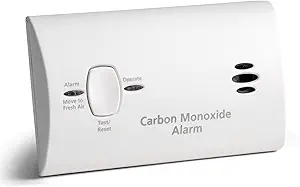 | Best for Portability and Easy Installation | Power Source: Battery Powered | Alarm Sound: 85 decibels | Sensor Technology: Electrochemical | VIEW LATEST PRICE | See Our Full Breakdown |
| Kidde Carbon Monoxide Detector, Plug-In Wall with 9-Volt Battery Backup, Digital LED Display |  | Best for Continuous, Fixed Monitoring with Digital Readout | Power Source: Plug-in with 9-volt backup | Display: Digital LED | Alarm Volume: 85 decibels | VIEW LATEST PRICE | See Our Full Breakdown |
| CO2 Monitor Carbon Dioxide Detector for Home with Adjustable Alerts and Backlight |  | Best for Precise, Customizable Indoor Air Quality Monitoring | CO2 detection range: 400–5000 PPM | Accuracy: +/- 5% + 50 PPM | Temperature range: 14.2°F ~ 122°F | VIEW LATEST PRICE | See Our Full Breakdown |
| CO2 Monitor Air Quality Monitor Indoor Battery Powered, Portable Carbon Dioxide Detector with Temperature and Humidity Meter |  | Best for Portable, Immediate Indoor Air Quality Checks | CO2 detection range: 400–5000PPM | CO2 accuracy: +/- 5% +100PPM | Temperature range: 14.2°F ~ 122°F | VIEW LATEST PRICE | See Our Full Breakdown |
| Kidde Carbon Monoxide Detector, Battery Powered CO Alarm with LEDs and Test Button |  | Best for Portable, Standalone CO Detection | Sensor Technology: Electrochemical | Power Source: 2 AA batteries (included) | Alarm Volume: 85 decibels | VIEW LATEST PRICE | See Our Full Breakdown |
| GoveeLife Smart Air Quality Monitor for Home, CO2 Detector with Real-Time Display & Alarm |  | Best for Integrated Indoor Environmental Monitoring | Sensor Type: CO₂ Sensor | Power Source: AC Powered | Display: Multi-Function with Real-Time Data | VIEW LATEST PRICE | See Our Full Breakdown |
| Indoor 10-in-1 Air Quality Monitor with Smart Sensor and Color Display | 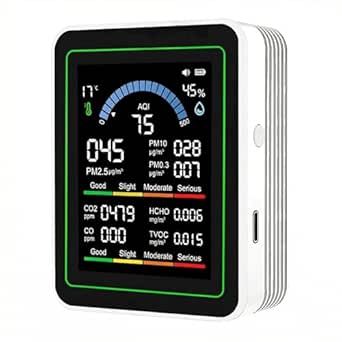 | Best for Multi-Gas, All-in-One Monitoring | Detection Range: CO, CO₂, HCHO, TVOC, benzene, PM2.5, PM10 | Error Margin: less than ±5% | Display: HD color screen with visual alarm | VIEW LATEST PRICE | See Our Full Breakdown |
More Details on Our Top Picks
SwitchBot CO2 Detector, Indoor Air Quality Monitor with Temp & Humidity
The SwitchBot CO2 Detector stands out for its large, easy-to-read display that shows multiple environmental metrics at once, making it ideal for classrooms where quick assessment is needed. Its high-precision Swiss-made NDIR sensors offer reliable CO2 measurements within a broad range, comparable to more specialized monitors like the Aranet4. Unlike the Aranet4, it provides a more detailed environmental overview, but it requires a SwitchBot Hub for app notifications, adding complexity and cost. Its long battery life of up to 12 months makes it suitable for ongoing classroom use without frequent charging. However, it’s limited to indoor use and needs additional setup for custom alarms. This monitor makes the most sense for educators who want a flexible, reliable device that can be wall-mounted or placed on a desk, with a preference for straightforward operation over wireless data tracking.
Pros:- Large, clear display showing multiple metrics simultaneously
- High-precision Swiss-made NDIR sensors for accurate CO2 readings
- Long battery life up to 12 months
- Flexible placement options with wall-mount and adjustable stand
Cons:- Requires SwitchBot Hub for app notifications, adding extra cost
- Limited to indoor environments, no outdoor compatibility
- Alarm customization involves additional setup steps
Best for: Teachers and school administrators seeking a dependable, multi-metric monitor that’s easy to install and read at a glance
Not ideal for: Facilities that prefer wireless alerts without extra hubs or those needing outdoor monitoring capabilities
- Display Size:92 mm
- Measurement Range:400-9000 ppm (CO2)
- Accuracy:±50 ppm
- Battery Life:Up to 12 months
- Weight:154 g
- Dimensions:92mm x 79mm x 25mm
- Connectivity:App notifications (requires SwitchBot Hub)
Bottom line: This device suits schools that prioritize detailed, reliable indoor air quality data with straightforward visual feedback.
16-in-1 Indoor Air Quality Monitor with 7-Inch Display, CO2, PM2.5, TVOC, HCHO, Temperature, Humidity, and AQI Alerts
This 16-in-1 monitor offers a broad view of indoor air quality, making it ideal for environments where detailed data on multiple parameters is needed, such as classrooms with sensitive populations. Its large 7-inch LED display provides clear, adjustable brightness readings of CO2, PM, VOCs, formaldehyde, and environmental conditions, surpassing simpler monitors like the CO2 Monitor Carbon Dioxide Detector. While the extensive parameter tracking is a significant advantage, the device’s 8-hour battery life limits portability and continuous cordless operation, unlike the long-lasting Aranet4. Setup can be complex due to multiple sensors and calibration needs, which might challenge less tech-savvy users. This monitor is best suited for schools prioritizing comprehensive air quality data and visual alerts, especially in controlled indoor settings where power sources are available.
Pros:- Large, adjustable 7-inch display with clear, bright readings
- Monitors nine key parameters for a comprehensive view
- High-precision sensors for accurate data
- Multiple alert buzzers for immediate notifications
Cons:- Limited battery life of about 8 hours, requiring frequent recharging
- Complex initial setup may be daunting for some users
- Relatively bulky compared to portable monitors
Best for: School labs or classrooms requiring detailed, multi-parameter air quality data and visual monitoring
Not ideal for: Classrooms needing portable, long-term wireless solutions or minimal setup
- Display:7-inch LED
- Parameters Monitored:CO2, PM2.5, PM1.0, PM10, HCHO, TVOC, Temperature, Humidity, AQI
- Accuracy:0.001 units for sensors, ±1 to ±3 °F for temperature, ±2% to ±3%RH for humidity
- Battery Life:Up to 8 hours
- Power Supply:USB-C charging cable and adapter
- Dimensions:2.95 x 5.59 x 7.91 inches
Bottom line: This monitor fits environments where detailed, multi-faceted air quality data with visual alerts is essential, and power sources are readily available.
SAF Aranet4 Wireless Indoor Air Quality Monitor (CO2, Temperature, Humidity)
The Aranet4 offers a reliable, long-lasting solution for continuous indoor air quality monitoring, making it particularly suitable for classrooms where consistent data tracking is valued. Its e-ink display ensures clear readings without draining battery life, which can last up to 4 years—far exceeding many other monitors like the SwitchBot. The device’s wireless connectivity and free app facilitate easy access to historical data and trends, ideal for schools that want ongoing oversight without physical clutter. However, it requires a smartphone for full features and doesn’t include a color display, which might limit quick visual interpretation. The Aranet4 excels for schools needing a maintenance-free, long-term solution that integrates seamlessly with digital records.
Pros:- Long battery life up to 4 years, reducing maintenance
- Clear, easy-to-read e-ink display
- Wireless data access via free app for historical analysis
- Accurate NDIR sensor technology
Cons:- Requires a smartphone for full functionality
- Limited to indoor use only
- No color display, only black-and-white e-ink
Best for: Educational settings seeking long-term, wireless data logging without frequent battery changes
Not ideal for: Classrooms that prefer color displays or require real-time alerts without a smartphone
- Measurement:CO2, Temperature, Humidity, Atmospheric Pressure
- Display:E-ink screen
- Battery Life:Up to 4 years
- Connectivity:Wireless, App for data history
- Sensor Technology:NDIR
Bottom line: This monitor is ideal for schools prioritizing long-term, maintenance-free air quality tracking with digital data analysis.
Portable CO & CO2 Detector for Travel, 4-in-1 Magnetic Carbon Monoxide and Carbon Dioxide Monitor
The Portable CO & CO2 Detector offers a compact, travel-friendly option for monitoring air quality on the move or in various indoor spaces. Its ability to detect both CO and CO2, along with temperature and humidity, makes it versatile for quick assessments in classrooms or during field trips. Its magnetic back and lightweight design facilitate easy attachment to metal surfaces or carrying in a pocket, distinguishing it from bulkier units like the 16-in-1 monitor. However, its battery life of up to 72 hours limits continuous operation, and it requires careful testing to ensure alarm responsiveness. This device is best suited for educators or safety officers who need a portable, multi-gas detector for short-term or mobile use, rather than all-day fixed monitoring.
Pros:- Compact, lightweight, and highly portable
- Detects both CO and CO2 for comprehensive safety checks
- Magnetic back for easy attachment
- Rechargeable with long standby (up to 72 hours)
Cons:- Limited to 72 hours of use per charge, not suitable for all-day monitoring
- Requires careful testing of alarms for responsiveness
- Adjusting alarm thresholds may need technical understanding
Best for: Travelers, visiting teachers, or safety personnel needing a portable air quality check in various environments
Not ideal for: Classrooms requiring continuous, long-term monitoring with detailed parameter tracking
- Detection Range – CO:0–1000 ppm
- Detection Range – CO2:400–5000 ppm
- Temperature Measurement:Yes
- Humidity Measurement:Yes
- Alarm Types:Audible and visual (LED indicator)
- Power:Rechargeable battery (up to 72 hours standby)
- Dimensions:Pocket-sized
Bottom line: This detector is perfect for quick, portable assessments but not for continuous classroom monitoring over extended periods.
Kidde Carbon Monoxide Detector, Battery Powered CO Alarm with LEDs, Test-Reset Button, Low Battery Indicator, Portable
This battery-powered Kidde CO detector stands out for its portability and straightforward setup, making it ideal for temporary or movable classroom arrangements. Unlike plug-in models like the Kidde plug-in detector, this unit doesn’t require wiring, which simplifies deployment in multi-room or shared spaces. Its 85-decibel alarm and LED indicators provide clear alerts, but the limited detection focus on CO and the small size—easy to misplace—are notable tradeoffs. It’s best suited for portable safety monitoring in classrooms where permanent installation isn’t feasible.
Pros:- Easy to install without wiring
- Operates during power outages on batteries
- Portable and lightweight for flexible placement
- Clear LED indicators and audible alarm
Cons:- Battery life depends on usage, needing regular replacement
- Limited to CO detection, no smoke or multi-gas detection
Best for: Teachers or administrators who need a portable, quick-to-deploy CO monitor
Not ideal for: Classrooms requiring continuous, fixed air quality monitoring or integrated smart features
- Power Source:Battery Powered
- Alarm Sound:85 decibels
- Sensor Technology:Electrochemical
- Batteries Included:Yes
- Batteries:2-AA alkaline
- Dimensions:1.65 x 4.72 x 2.83 inches
- Weight:3.68 ounces
Bottom line: This device makes the most sense for portable CO monitoring where ease of use and mobility are priorities.
Kidde Carbon Monoxide Detector, Plug-In Wall with 9-Volt Battery Backup, Digital LED Display
This plug-in Kidde CO detector offers reliable, continuous protection, especially with its 9-volt battery backup that ensures operation during outages. Its digital LED display provides real-time CO levels and peak detection history, making it more informative than simple alarms like the Kidde battery model. Compared with portable options, this unit suits classrooms that can accommodate a fixed device without the need for frequent relocation. However, it’s limited to standard outlets and lacks smart features or remote connectivity, which could be a drawback for tech-savvy environments. This model is ideal for classrooms seeking constant, easy-to-read CO monitoring with backup power.
Pros:- Easy to install in standard outlets
- Battery backup maintains operation during power failures
- Digital LED display shows current CO levels
- Records peak CO levels for review
Cons:- Limited to 120V outlets, no smart features
- Requires regular testing to verify operation
Best for: Schools that want dependable, fixed CO detection with visual level display
Not ideal for: Temporary setups or environments needing portable solutions
- Power Source:Plug-in with 9-volt backup
- Display:Digital LED
- Alarm Volume:85 decibels
- Made in:US
Bottom line: This detector makes sense for classrooms that need a reliable, always-on CO monitor with clear visual data.
CO2 Monitor Carbon Dioxide Detector for Home with Adjustable Alerts and Backlight
This CO2 monitor’s Swiss-made photoacoustic sensor makes it stand out for high-precision readings, especially compared to basic models like the portable air quality monitor. Its customizable alert settings and backlight options allow teachers or facility managers to tailor notifications to their specific needs. While it supports both USB power and battery backup, its complexity—particularly calibration—may challenge users unfamiliar with sensor setup. It’s more suited to environments where precise CO2, temperature, and humidity data are critical, rather than quick classroom checks. This pick is ideal for educational environments prioritizing accuracy and detailed air quality data.
Pros:- High-precision Swiss-made sensor
- Customizable alerts and backlight
- Supports USB and battery backup
- Displays temperature and humidity alongside CO2
Cons:- Calibration can be complex
- Batteries not included
- Limited to indoor use
Best for: Educational facilities or home classrooms with a focus on detailed air monitoring
Not ideal for: Quick, simple checks or environments with limited technical support
- CO2 detection range:400–5000 PPM
- Accuracy:+/- 5% + 50 PPM
- Temperature range:14.2°F ~ 122°F
- Humidity range:20% to 95%
- Power options:USB + battery backup
Bottom line: This device is best for users who need exact CO2 measurements and detailed environmental data in a classroom setting.
CO2 Monitor Air Quality Monitor Indoor Battery Powered, Portable Carbon Dioxide Detector with Temperature and Humidity Meter
This compact, battery-powered monitor offers real-time CO2, temperature, and humidity readings, making it very accessible for quick classroom assessments. Its visual and audible alerts for high CO₂ levels, along with manual and automatic calibration, provide a good balance of ease of use and accuracy. Compared with the more sophisticated Swiss sensor model, this device emphasizes convenience and portability, which can be advantageous for temporary or multiple-room use. However, it’s limited to indoor environments and may require calibration to maintain accuracy over time. It’s ideal for teachers or staff needing portable, immediate feedback on classroom air quality.
Pros:- Portable with foldable stand
- Real-time CO2, temperature, and humidity readings
- Effective visual (3-color) and audible alerts
- Automatic calibration for long-term accuracy
Cons:- Limited to indoor use
- Battery life varies with usage
- Calibration needed for precise long-term readings
Best for: Teachers and staff who want a portable device for quick, on-the-spot air quality checks
Not ideal for: Long-term fixed monitoring or classrooms needing integrated data systems
- CO2 detection range:400–5000PPM
- CO2 accuracy:+/- 5% +100PPM
- Temperature range:14.2°F ~ 122°F
- Temperature accuracy:+/- 0.72°F
- Humidity range:1% to 99%
- Humidity accuracy:+/- 3%
Bottom line: This monitor suits educators seeking a portable, immediate assessment tool for classroom air quality.
Kidde Carbon Monoxide Detector, Battery Powered CO Alarm with LEDs and Test Button
This Kidde detector stands out for its simplicity and portability, making it ideal for classrooms that need a quick, reliable CO alert without complex setup. Compared with the GoveeLife monitor, it lacks real-time environmental data and smart features but offers a straightforward, battery-powered solution that’s easy to install on walls or tables. Its electrochemical sensor provides dependable detection, and the 10-year warranty offers long-term peace of mind. However, reliance on batteries means periodic replacements, and the loud alarm could be disruptive in quieter environments. This pick makes the most sense for educators seeking a budget-friendly, maintenance-free CO alarm for supplemental safety monitoring.
Pros:- Easy to install without wiring or external power
- Reliable electrochemical sensor technology for accurate detection
- Portable design suitable for wall or tabletop placement
- Long-lasting 10-year warranty
Cons:- Battery replacement needed after 10 years, requiring periodic maintenance
- Limited to battery power, no wired or smart home integration
- Alarm sound may be too loud for sensitive environments
Best for: Schools or teachers who want a simple, portable CO detector that requires minimal setup and no electrical wiring
Not ideal for: Classrooms seeking integrated environmental monitoring or smart alerts, as this device only detects CO and lacks data tracking
- Sensor Technology:Electrochemical
- Power Source:2 AA batteries (included)
- Alarm Volume:85 decibels
- Warranty:10 years
- Indicators:Green LED for power, red LED for CO detection
- Features:Peak level memory, test-hush button, low battery indicator
Bottom line: This detector is best suited for those prioritizing simple, portable CO safety without the need for environmental data or smart features.
GoveeLife Smart Air Quality Monitor for Home, CO2 Detector with Real-Time Display & Alarm
This GoveeLife monitor excels at providing comprehensive, real-time data on CO₂, temperature, and humidity, making it well-suited for classrooms that want continuous oversight of air quality conditions. Unlike the Kidde detector, it offers instant feedback via a multi-function display, and its smart home compatibility allows for automated alerts through apps and voice assistants like Alexa or Google. While its need for constant AC power limits placement flexibility, this tradeoff is justified for those who value detailed environmental insights. Calibration may be required over time to maintain accuracy, but overall, this device suits educators aiming for a connected, data-driven approach to air safety.
Pros:- Accurate, fast CO₂ measurement with pressure compensation
- Displays multiple parameters simultaneously for comprehensive monitoring
- Customizable alerts via app, buzzer, and email notifications
- Smart home compatibility with Alexa and Google Assistant
Cons:- Requires continuous AC power, limiting placement options
- Calibration may be needed to keep measurements precise over time
- No standalone battery operation for emergencies
Best for: Schools seeking an integrated, smart environmental monitor that offers real-time data and alerts for CO₂ and other parameters
Not ideal for: Classrooms with limited access to power outlets or those preferring battery-operated, portable solutions
- Sensor Type:CO₂ Sensor
- Power Source:AC Powered
- Display:Multi-Function with Real-Time Data
- Connectivity:Wi-Fi, Alexa, Google Assistant
- Measurement Range:CO₂: up to 5000ppm
- Calibration:Outdoor calibration recommended
Bottom line: This monitor is ideal for classrooms that prioritize detailed, connected air quality data and smart alerting capabilities over portability.
Indoor 10-in-1 Air Quality Monitor with Smart Sensor and Color Display
This versatile monitor distinguishes itself by detecting multiple gases, including CO₂, CO, HCHO, and TVOC, as well as particulate matter. Its high-definition color display provides instant visual alerts, which is especially useful in busy classrooms where quick risk assessment is needed. Compared to the GoveeLife, it offers broader gas detection and a portable rechargeable battery, supporting use in various indoor environments. Its comprehensive sensing capabilities are balanced by a lack of advanced app features or long-term data logging, which may limit its use for detailed trend analysis. It suits educators who want a single device to monitor a wide array of air quality factors on the go.
Pros:- Detects multiple gases and particulate matter for thorough air quality assessment
- High-definition color screen with visual risk alerts for quick understanding
- Long-lasting rechargeable battery supports extended portable use
- One-click operation simplifies use in busy environments
Cons:- Lack of detailed app integration or remote access features
- Potential calibration needs over time to maintain accuracy
- Limited data logging or long-term trend tracking capabilities
Best for: Teachers or school administrators needing a portable, multi-gas air quality monitor with visual alerts and long battery life
Not ideal for: Classrooms requiring deep data analysis, remote monitoring, or smart home integration, as these features are limited or absent
- Detection Range:CO, CO₂, HCHO, TVOC, benzene, PM2.5, PM10
- Error Margin:less than ±5%
- Display:HD color screen with visual alarm
- Battery:2000mAh rechargeable lithium battery
- Battery Life:up to 20 hours
- Operation:One-click start, switch temperature units
Bottom line: This device works best for those seeking versatile, portable air quality monitoring with immediate visual feedback and multi-gas detection.

How We Picked
Products were evaluated based on their measurement accuracy, ease of installation, user interface, durability, and value for the classroom setting. We prioritized monitors that offer clear, real-time CO2 readings with simple alert systems suitable for educators and students alike. Devices with reliable sensors and minimal maintenance requirements ranked higher, while features like connectivity to smart devices and additional air quality metrics were considered secondary. Our rankings reflect a balance between performance and usability, aiming to recommend options that suit various budgets and technical comfort levels in educational environments.Factors to Consider When Choosing Best CO2 Monitor For Classroom
When selecting a CO2 monitor for a classroom, it’s vital to focus on reliability, ease of use, and integration with existing safety protocols. A good monitor should provide clear alerts before CO2 levels become unsafe, enabling timely ventilation. Consider the sensor’s accuracy and response time, as these directly impact decision-making. Additional features like temperature, humidity, and VOC detection can provide a broader view of indoor air quality but may also add complexity or cost. Finally, think about installation needs—whether a portable device or a mounted unit suits your space better—and how the monitor’s interface aligns with the technical comfort of staff and students.Accuracy and Sensor Quality
In a classroom, precise CO2 readings are essential to prevent poor air quality. Higher-quality sensors tend to deliver more consistent and reliable data, reducing false alarms or missed warnings. Cheaper monitors might have less sensitive sensors, which could lead to inaccurate readings, especially in fluctuating environments. Investing in a device with proven sensor technology can significantly improve safety and give peace of mind to educators and administrators.
Ease of Use and Alerts
Classrooms require monitors that communicate clearly and promptly. Look for devices with simple, visual indicators like color-coded lights or easy-to-read digital displays, alongside audible alarms. Complex interfaces or complicated setup procedures can hinder quick responses during busy school hours. The goal is a monitor that educators can interpret at a glance, ensuring timely ventilation without technical distractions.
Installation and Portability
Depending on your classroom layout, you may prefer a portable monitor or a fixed, wall-mounted unit. Portable devices offer flexibility, especially in multi-use or changing spaces, but may require frequent charging or battery replacements. Fixed monitors can provide continuous monitoring and are less likely to be misplaced, but they need proper placement for accurate readings. Consider your space and maintenance capacity when choosing between these options.
Additional Air Quality Features
Some monitors include sensors for humidity, VOCs, and temperature, offering a fuller picture of the indoor environment. These extras can help identify other air quality issues that affect comfort and health, such as mold risk or chemical pollutants. However, extra features often come with higher costs and complexity, which might not be necessary if your primary concern is CO2 levels. Balance these considerations against your budget and monitoring priorities.
Cost and Long-Term Value
While budget models may seem attractive initially, they can sometimes lack durability or accuracy, leading to higher replacement or calibration costs. Conversely, more expensive units tend to offer better longevity, sensor reliability, and additional features that can justify the investment over time. Consider the total cost of ownership, including maintenance, calibration, and potential upgrades, to find the best long-term value for your classroom environment.
Frequently Asked Questions
How accurate do CO2 monitors need to be for classroom use?
In educational settings, a CO2 monitor should provide readings within ±50 ppm or better for effective safety management. Accurate sensors ensure that ventilation decisions are based on reliable data, preventing both over-ventilation and unsafe CO2 buildup. While high-precision monitors are more costly, they reduce false alarms and help maintain healthier indoor air, especially in densely occupied classrooms.
Can I rely on a portable CO2 monitor for classroom safety?
Portable CO2 monitors can be a practical solution for temporary or multi-room monitoring, offering flexibility and ease of placement. However, they may require regular charging or battery replacements and might not be as durable as fixed units. For consistent safety, it’s best to pair portable devices with fixed monitors or ensure they are calibrated properly and used in conjunction with established ventilation protocols.
Are smart features necessary in a classroom CO2 monitor?
Smart features like app connectivity, remote alerts, or integrations with building management systems can enhance monitoring efficiency, especially in larger schools. However, these features are not essential for basic safety if the device provides clear visual and audible alerts. For most classrooms, simplicity and reliability take precedence over advanced connectivity, unless your institution values automated data logging or remote management.
What maintenance is required for a classroom CO2 monitor?
Most CO2 monitors require periodic calibration, typically annually, to maintain accuracy. Some units have self-calibration features or easy access to calibration ports, making maintenance straightforward. Regularly checking batteries, cleaning sensor covers, and verifying alert functions ensure consistent performance. Proper maintenance prolongs the device’s lifespan and keeps readings trustworthy.
How should I position a CO2 monitor in a classroom?
Position your monitor at eye level or slightly above, away from direct airflow sources like vents or open windows, which can skew readings. Placing it centrally in the room helps obtain representative air quality data. Avoid corners or areas with poor circulation, as these can lead to misleadingly high or low CO2 levels. Proper placement ensures accurate and timely detection of air quality issues.
Conclusion
For general classroom environments, the SwitchBot CO2 Detector offers a budget-friendly yet reliable choice, especially for those prioritizing smart home integration. Schools seeking the highest accuracy and durability should consider the SAF Aranet4 for its precise sensors and user-friendly display. Budget-conscious educators or temporary setups may find portable monitors sufficient, but for long-term, fixed installations, investing in a dedicated, high-quality device pays off. Beginners and tech-averse staff will benefit from simple, straightforward models, while more advanced institutions may explore monitors with additional air quality metrics and smart features. Tailor your choice to your specific needs, budget, and safety priorities for the best results.NFL season / tailgating Picks
team gear
As an affiliate, we earn on qualifying purchases.