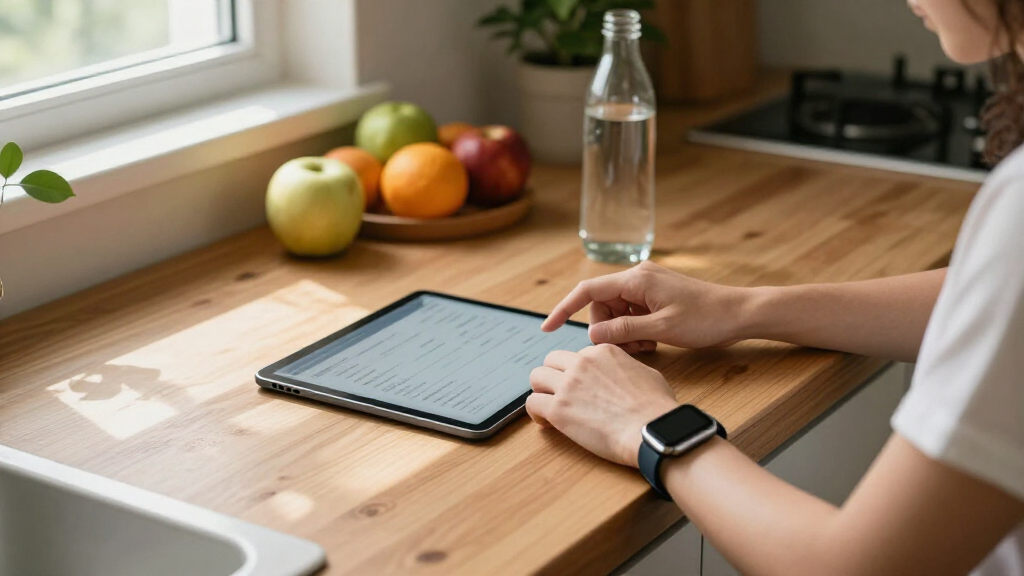

Digital health and wellness trackers in 2026 split into three camps: screenless bands that disappear on your wrist, display-equipped smart bracelets, and smart rings built for sleep and recovery data. The Fitness Tracker with 24/7 Heart Rate and 1.10″ AMOLED Screen earns my best overall pick for balancing a readable display, continuous vitals monitoring, and waterproofing at a mid-range price. Two standouts challenge it: the Fitbit Google Air, which trades the screen entirely for longer battery life and cleaner sleep data, and the Smart Ring for Women and Men, the strongest option if you want tracking without anything on your wrist. The main tradeoffs to weigh are battery life versus screen convenience, and subscription-free budget trackers versus polished ecosystem apps. Read on for the full breakdown of all 11.

Get health and wellness essentials delivered free — and shop member deals
- Fast, free delivery on millions of items
- Access to Prime Big Deal Days deals on October 6–7
- Prime Video, Amazon Music and more included
Key Takeaways
- Screenless designs (Fitbit Google Air, smart rings) consistently delivered longer battery life and better sleep comfort, while every AMOLED-screen tracker in this roundup paid for its display with more frequent charging.
- Budget trackers under $40 like the Zeacool and Souyie covered the basics well, but their heart rate accuracy during workouts lagged the mid-tier picks noticeably.
- Smart rings emerged as the best form factor specifically for sleep and recovery tracking, though all three rings in this lineup require careful sizing before purchase since returns are often difficult.
- The ‘No Subscription Fees’ Smart Bracelet undercut rivals on long-term cost — a real differentiator since premium ecosystems increasingly gate historical data behind monthly plans.
- Blood pressure readings on wrist-based trackers proved directionally useful at best across every model tested; buyers with hypertension should treat these as trend indicators, not medical devices.


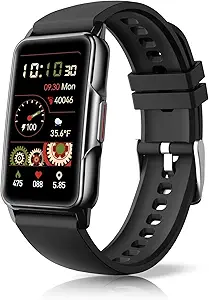

| digital health and wellness tracker | Battery Life | Compatibility | Water Resistance | Display |
|---|---|---|---|---|
| Smart Ring for Women and Men | 3-5 days | Android 5.1+, iOS 9.0+ | IP68 | — |
| Fitness Tracker with 24/7 Hear | Up to 7 days | Android 5.0+, iOS 9.0+ | IP68 | 1.10-inch AMOLED HD touch screen |
| Smart Bracelet with 24/7 Healt | 7 days | — | IPX8 | 0.4 inches |
| Fitbit Google Air | 7 days | Android 11.0+, iOS 16.4+ | Up to 50 meters | — |
| Zeacool Fitness Tracker with 1 | 10-14 days regular, 30 days standby | iPhone and Android | — | 1.47-inch AMOLED HD touch screen |
| Souyie Smart Bracelet for Wome | 20-30 days | Android 5.0+ / iOS 10.0+ | 1 ATM | — |
| Smart Watch Fitness Tracker wi | — | Android 4.4+ / iOS 8.4+ | — | 1.58-inch ultra high resolution |
| Mirlray Smart Ring for Women & | Up to 5 days | iOS devices | 10 ATM | — |
| Smart Bracelet Health and Fitn | Up to 47 days | — | IP68, 1.5 meters | — |
| Smart Watch Fitness Tracker wi | 6-7 days heavy use; 10-12 days daily; up to 30 days standby | Android 4.4+ / iOS 8.4+ | — | 1.47-inch HD color full touch screen |
| Smart Ring Fitness Tracker for | Approximately 3 days (varies with usage) | — | — | None — screenless, app-based data |
More Details on Our Top Picks
Smart Ring for Women and Men, Sleep Tracker, 12 Sports Modes, Size 8, Black
Smart rings solve a problem wrist wearers know well: a tracker that disappears into daily life. At 3.8 grams of stainless steel with an IP68 rating, this option reads as ordinary jewelry while quietly logging sleep, heart rate, blood oxygen, stress, and menstrual cycles. Compared with the Fitbit Google Air, which also goes screenless, this ring is even less obtrusive and adds gesture controls for hands-free phone interaction — something no bracelet in this lineup offers.
The tradeoff is visibility. Unlike the Zeacool tracker with its 1.47-inch AMOLED screen, there is no way to glance at your data, so every insight lives in the companion app. The 3-5 day battery also lags behind the week-plus runtimes of wrist-based rivals, and the 12 sports modes feel thin next to Zeacool’s 123.
Pros:- Nearly invisible 3.8g design comfortable enough for sleep tracking
- Broad metric coverage including stress and menstrual cycles
- Gesture controls for hands-free smartphone use
- IP68 waterproof for showers and workouts
Cons:- No display — all data requires the companion app
- 3-5 day battery is the shortest in this batch
- Only 12 sports modes limits serious training use
Best for: Style-conscious buyers who want overnight sleep and cycle tracking without wearing a watch to bed or the office
Not ideal for: Data-first athletes who want on-demand stats and many sport profiles — the screenless format and limited modes won’t keep up
- Size:8
- Material:Stainless steel
- Weight:3.8 g
- Water Resistance:IP68
- Battery Life:3-5 days
- Sensors:Heart rate, blood oxygen, sleep, activity, stress, menstrual cycles
- Compatibility:Android 5.1+, iOS 9.0+
- Extras:Gesture control, portable charging case
Our verdict“This pick makes the most sense for anyone who wants continuous health data without anything that looks like a gadget on their wrist.”
Fitness Tracker with 24/7 Heart Rate, Blood Pressure, Sleep Monitor, 1.10″ AMOLED Screen
For shoppers who want a dependable all-rounder under a budget price, this tracker hits the core marks: 24/7 heart rate, automatic sleep tracking, and a crisp 1.10-inch AMOLED display that many cheap fitness bands still don’t include. Its 25 sports modes and 7-day battery make it a step up from the Smart Bracelet with 24/7 Health Tracking, whose tiny 0.4-inch display can’t show much beyond the time.
Where it falls short of the Zeacool is breadth — Zeacool triples the sports modes and stretches battery life to two weeks. And unlike the smart ring, the metrics here are reference-grade rather than medical-grade, which the manufacturer states plainly. Notifications are also basic; anyone wanting calls, apps, or voice features should look at a true smartwatch instead.
Pros:- Bright AMOLED screen with customizable watch faces
- 24/7 heart rate plus automatic sleep monitoring
- 25 sport modes with connected GPS
- Up to 7 days of battery per 2-hour charge
Cons:- Health data is reference-only, not clinical accuracy
- IP68 rating is not suitable for swimming
- Notifications are basic with no smartwatch-level features
Best for: First-time buyers who want heart rate, sleep, and step tracking with a real screen for a low price
Not ideal for: Swimmers — the IP68 rating covers splashes and sweat but is not rated for pool sessions
- Display:1.10-inch AMOLED HD touch screen
- Heart Rate:24/7 continuous
- Sleep:Automatic tracking
- Sports Modes:25
- Water Resistance:IP68
- Battery Life:Up to 7 days
- Charging Time:2 hours
- Compatibility:Android 5.0+, iOS 9.0+
Our verdict“A sensible entry point for casual trackers who want a screen and solid basics without paying for features they’ll never open.”
Smart Bracelet with 24/7 Health Tracking, Heart Rate, SpO2, HRV, Sleep Monitoring
This bracelet’s pitch is no subscriptions, ever — continuous heart rate, HRV, SpO2, sleep cycles, and stress tracking without recurring fees. That contrasts directly with the Fitbit Google Air, which gates its premium coaching behind a monthly subscription. HRV monitoring in particular is uncommon at this price and valuable for anyone watching recovery and stress trends rather than workout stats.
The compromise is the 0.4-inch display, which is smaller than the budget AMOLED tracker’s 1.10-inch screen and essentially shows the time — everything else happens in the NX Wear app. The IPX8 rating does allow swimming and showering, which the similarly priced IP68 options can’t claim. Compared with Zeacool’s do-everything watch, this is a narrower tool: fewer frills, but a cleaner focus on passive health data.
Pros:- No subscription fees for any tracking features
- HRV and stress monitoring rarely found at this price
- IPX8 waterproof survives swimming and showers
- Interchangeable bands for style flexibility
Cons:- 0.4-inch display shows little beyond the time
- No advanced fitness or smartwatch functions
- App experience is thinly documented
Best for: Health-conscious users prioritizing HRV, SpO2, and stress trends with zero ongoing costs
Not ideal for: Runners and gym-goers who want on-wrist workout data — the minimal display forces app-checking for nearly everything
- Display:0.4 inches
- Water Resistance:IPX8
- Battery Life:7 days
- Sensors:Heart rate, HRV, SpO2, sleep cycles, stress
- Connectivity:Bluetooth 5.3
- Band:Silicone and zinc alloy, interchangeable
- App:NX Wear
- Subscription:None required
Our verdict“The right choice if you want set-and-forget health monitoring with HRV insight and no monthly bill attached.”
Fitbit Google Air – Screenless Activity Tracker – Obsidian
As the only big-brand option in this roundup, the Fitbit Google Air brings what budget trackers can’t: Google’s software ecosystem, adaptive coaching, built-in GPS, and a 50-meter water resistance rating that outclasses every IP68 device here. The screenless design is deliberate — like the smart ring, it removes the distraction of a display, but adds fast charging that delivers a full day in 5 minutes, which no rival in this batch matches.
Two real costs come with that polish. First, the best coaching features sit behind a Fitbit subscription, unlike the fee-free Smart Bracelet. Second, the lack of any screen means real-time feedback is gone entirely — a bigger adjustment for runners used to the Zeacool’s large AMOLED display. What you get instead is a more mature data platform and a device built for 24/7 wear without a single glance at your wrist.
Pros:- Mature Google/Fitbit app ecosystem with adaptive coaching
- 5-minute fast charge yields a full day of use
- Water resistant to 50 meters for swimming
- Built-in GPS without needing a phone
Cons:- Premium coaching requires a paid subscription
- No display for real-time data checks
- Higher price than feature-packed budget rivals
Best for: Buyers already in the Google or Fitbit ecosystem who want polished coaching and don’t mind paying for it
Not ideal for: Anyone allergic to subscriptions or who wants on-wrist stats mid-workout — the screenless design and paywalled coaching will frustrate both
- Platform:Fitbit OS
- Battery Life:7 days
- Charging:Fast charge: 1 day in 5 minutes
- Water Resistance:Up to 50 meters
- Sensors:Optical heart rate monitor
- GPS:Built-in
- Compatibility:Android 11.0+, iOS 16.4+
Our verdict“Worth the premium only if you value ecosystem depth and distraction-free wear over screen access and one-time pricing.”
Zeacool Fitness Tracker with 123 Sports Modes, 1.47″ AMOLED Screen, IP68 Waterproof
This is the pick I’d point most buyers toward, because it maximizes what matters across the board: a large 1.47-inch AMOLED display, 123 sport modes, and a 10-14 day battery that doubles the budget AMOLED tracker’s runtime and triples the smart ring’s. Adding temperature monitoring to the usual heart rate, SpO2, and sleep suite gives it the widest metric coverage of any wrist device in this lineup.
It isn’t flawless. The Da Fit app dependency means full functionality requires pairing, and the setup process is more involved than the simpler Smart Bracelet — less tech-savvy buyers may struggle initially. Sports mode customization is also shallower than the mode count suggests. Still, compared with the Fitbit Google Air, you get a real screen and no subscription for a fraction of the price, which is why it earns the top slot for most shoppers.
Pros:- 1.47-inch AMOLED display with customizable faces
- 123 sport modes covering nearly every activity
- 10-14 day battery with 30-day standby
- Health suite includes temperature monitoring alongside HR, SpO2, and sleep
Cons:- Setup process is more complex than simpler rivals
- Sports modes lack deep customization
- Full feature set depends on the Da Fit app
Best for: Active users who want the biggest screen, longest battery, and broadest tracking coverage at a midrange price
Not ideal for: Buyers who want premium ecosystem polish or clinical-grade accuracy — neither is what a feature-stacked budget watch delivers
- Display:1.47-inch AMOLED HD touch screen
- Sports Modes:123
- Waterproof Rating:IP68
- Battery Life:10-14 days regular, 30 days standby
- Health Metrics:Heart rate, blood oxygen, sleep, temperature
- Extras:Remote photography, weather, reminders
- App:Da Fit
- Compatibility:iPhone and Android
Our verdict“The strongest all-around choice for anyone who wants maximum tracking capability and battery life without a subscription or premium price.”
Souyie Smart Bracelet for Women and Men, Fitness & Health Activity Tracker
Most screenless bands compromise somewhere, but the Souyie Smart Bracelet refuses to compromise on endurance, delivering 20-30 days per charge — a rarity among sub-$50 trackers. With 170+ sports modes, it actually out-specs the display-equipped smart watch from the same roundup (120 modes), though buyers lose real-time glanceability since there’s no screen. Compared with the Fitbit Google Air, this bracelet covers more biometrics — HRV, stress, and blood pressure alongside the basics — at a similar screenless form factor. The 18.4g weight makes it disappear on the wrist overnight, which matters for sleep tracking consistency. The tradeoff is real: no swimming (1 ATM only), and all data lives in the app, so this pick makes the most sense for people who check stats on their phone rather than their wrist.
Pros:- 20-30 day battery life beats most competitors in this price range
- 170+ sports modes cover nearly every activity a casual athlete would try
- Featherlight 18.4g design is comfortable for overnight sleep tracking
- Dual strap options (silicone and nylon) let you match style to activity
Cons:- No display means zero real-time feedback mid-workout
- 1 ATM water resistance forbids swimming and hot showers
- Blood pressure and SpO2 readings are reference-only, not medically validated
Best for: Casual athletes and wellness-focused users who want month-long battery and detailed sleep data without touching a charger weekly
Not ideal for: Swimmers and anyone who wants stats at a glance — the 1 ATM rating and screenless design rule out both
- Weight:18.4g
- Battery Life:20-30 days
- Water Resistance:1 ATM
- Compatibility:Android 5.0+ / iOS 10.0+
- Sensors:Heart rate, blood pressure, blood oxygen, HRV, stress
- Activity Modes:170+ sports
- GPS Modes:Walking, running, cycling
- Sleep Tracking:Yes
Our verdict“Buy it if you prioritize battery and biometric breadth over screen convenience; skip it if you swim or want wrist-side data.”
Smart Watch Fitness Tracker with Heart Rate, Blood Oxygen, Blood Pressure, Sleep Monitoring, 120 Sports Modes, IP68 Waterproof
If you want your health data actually visible on your wrist, this tracker’s 1.58-inch ultra-high-resolution display is the standout in this batch. The screenless Souyie bracelet and Mirlray ring both require a phone pull for every data point; here you get glanceable stats plus 250+ watch faces for personalization. Health monitoring runs the full gamut — 24/7 heart rate, blood pressure, blood oxygen, and sleep stages — matching what the 115-mode watch (ASIN B0HDJYY6XF) offers, but on a larger, sharper panel. Compared with that model, this one leans harder into lifestyle features like call and message notifications. The honest tradeoffs: the feature pile can overwhelm newcomers, the maker doesn’t publish battery figures, and everything hinges on a paired smartphone.
Pros:- 1.58-inch high-resolution display is the largest and sharpest in this batch
- 250+ watch faces allow genuine personalization
- Full notification support for calls and messages keeps your phone in your pocket
- IP68 waterproofing handles sweat, rain, and washup without worry
Cons:- Battery life is unspecified, making endurance planning a gamble
- Feature overload can bury the health data you actually bought it for
- Fully dependent on a compatible smartphone for setup and syncing
Best for: Buyers upgrading from a screenless band who want a big, bright display and rich customization alongside full health tracking
Not ideal for: Minimalists and first-time tracker owners — the dense feature menus and unclear battery specs invite frustration
- Display:1.58-inch ultra high resolution
- Health Monitoring:24/7 heart rate, blood pressure, blood oxygen, sleep stages
- Exercise Modes:120+
- Waterproof:IP68
- Compatibility:Android 4.4+ / iOS 8.4+
- Strap:Replaceable, washable, secure clasp
- Watch Faces:250+ options
Our verdict“The strongest pick for screen-first users who value display quality and notifications over guaranteed battery endurance.”
Mirlray Smart Ring for Women & Men, Health Tracker, Blood Oxygen & Heart Rate Monitor, Waterproof Fitness Ring (R02C, Silver, Size 11)
The Mirlray smart ring answers a question the bracelets can’t: what if you hate wearing anything on your wrist? Its 10 ATM / 50-meter waterproofing makes it the only device in this batch you can genuinely swim with — the Souyie bracelet explicitly bans pools, and the IP68 watches tolerate splashes at best. Health coverage includes heart rate, blood oxygen, sleep, stress, and steps, which rivals the bulkier trackers in a band you forget you’re wearing. Unlike the other smart rings in this roundup, this model publishes its battery claim (up to 5 days), which still trails the 20+ day bracelets — a real cost of the tiny form factor. The limitations are structural: no display, an app required for every metric, and iOS-only compatibility that locks out Android users entirely.
Pros:- 10 ATM waterproofing to 50 meters makes it genuinely swim-safe
- Ultra-thin stainless steel design is the most discreet option here
- Tracks heart rate, SpO2, sleep, stress, and steps despite its size
- Up to 5 days of battery — strong for a ring form factor
Cons:- iOS-only compatibility excludes Android users completely
- No screen means the app is mandatory for every health metric
- Available in fixed sizes, so sizing mistakes mean a return, not an adjustment
Best for: iOS users, swimmers, and professionals who want invisible 24/7 health tracking without a wrist device
Not ideal for: Android owners (flat-out incompatible) and anyone who wants on-device data or longer than 5-day battery
- Material:Stainless Steel
- Water Resistance:10 ATM
- Water Resistance Depth:50 meters
- Battery Life:Up to 5 days
- Compatibility:iOS devices
- Size:11
- Health Tracking:Heart rate, blood oxygen, sleep, stress, steps
Our verdict“The clear choice for swimmers and screen-averse iOS users; everyone else gets more capability per dollar from a bracelet.”
Smart Bracelet Health and Fitness Tracker, No Subscription Fees, Black
Compared with the Souyie bracelet — its closest screenless rival — the Smart Bracelet Health and Fitness Tracker wins on two fronts: 47 days of battery per 2-hour charge and a no-subscription-fee model that keeps every metric free indefinitely. That combination suits buyers who want to clip a tracker on and ignore it for over a month. Running Zepp OS gives it a more mature software foundation than most no-name bracelet apps, and the nylon band breathes better than silicone for sleep wear. The biometric suite (HRV, blood pressure, blood oxygen, stress, sleep quality) matches the Souyie nearly spec-for-spec at 100+ sports modes versus 170+. What you give up: no screen, murky GPS details, and the same smartphone dependency as every screenless pick here.
Pros:- 47-day battery life is the longest in this entire batch
- No subscription fees ever, unlike some ecosystem trackers
- Zepp OS provides a polished, established app experience
- Nylon band is more breathable and sleep-friendly than silicone
Cons:- No screen limits all interaction to your phone
- GPS functionality is vague where competitors list specific modes
- Core features still require constant smartphone pairing
Best for: Budget-minded buyers who want maximum battery, zero recurring costs, and full biometric coverage without premium pricing
Not ideal for: Runners who need reliable route tracking — GPS functionality is underspecified — and anyone wanting wrist-based data
- Operating System:Zepp OS
- Water Resistance:IP68, 1.5 meters
- Battery Life:Up to 47 days
- Connectivity:Bluetooth
- Band Material:Nylon
- Supported Devices:iOS and Android
- Sports Modes:100+
- Subscription:None required
Our verdict“The set-and-forget champion: month-and-a-half battery and free software make it the smartest low-maintenance value pick.”
Smart Watch Fitness Tracker with Heart Rate, Blood Oxygen, Blood Pressure, Sleep Monitoring, 115 Sports Modes, Waterproof for Android and iPhone
This 115-mode smart watch lands in the sweet spot between the two extremes of this batch: unlike the screenless 47-day bracelet, it gives you a 1.47-inch HD touchscreen for on-wrist data, yet it still delivers 10-12 days of daily-use battery — something the display-heavy B0HFF661M5 can’t even promise on paper. Its biometric lineup (24/7 heart rate, SpO2, blood pressure, sleep) is identical in scope to the bigger-displayed competitor, but the published, tiered battery specs (6-7 days heavy use, 30 days standby) make it the more predictable purchase. Compared with the Mirlray ring, you gain a screen, Android support, and double-plus the runtime, at the cost of visible wrist presence. The adjustable 5.0-9.05 inch strap fits nearly every wrist in a household.
Pros:- Published, tiered battery estimates (10-12 days daily use) remove the guesswork rivals leave you with
- 1.47-inch HD touchscreen balances readability against size
- Fast charging pairs well with the long-runtime design
- Wide 5.0-9.05 inch strap range fits most wrists comfortably
Cons:- Display readability drops noticeably in direct sunlight
- Feature density can overwhelm users who just want step and sleep counts
- Requires a paired smartphone for notifications and full functionality
Best for: First-time smart watch buyers who want verified battery numbers, a touchscreen, and full health coverage without feature bloat
Not ideal for: Outdoor athletes training in bright sun — the display washes out in direct sunlight — and anyone wanting swim-grade waterproofing beyond IP68
- Display:1.47-inch HD color full touch screen
- Health Metrics:Heart rate, blood oxygen, blood pressure, sleep tracking
- Sports Modes:115
- Waterproof Rating:IP68
- Battery Life:6-7 days heavy use; 10-12 days daily; up to 30 days standby
- Compatibility:Android 4.4+ / iOS 8.4+
- Strap Size:5.0in to 9.05in adjustable
Our verdict“The most dependable all-rounder for buyers who want a screen, honest battery claims, and complete health metrics in one device.”
Smart Ring Fitness Tracker for Men & Women with Sleep, Heart Rate & SpO2
This pick stands out as the most feature-complete ring in the lineup. Compared with the Mirlray Smart Ring (R02C), which focuses mainly on heart rate and blood oxygen, this model goes further with HRV, stress scoring, menstrual cycle tracking, and a genuinely deep bench of 180+ sports modes — unusual for a form factor this small. Its roughly 3-day battery life also beats what most screenless bands offer, since there’s no display draining power. The tradeoff is the flip side of that design: with no screen at all, every insight lives in the companion app, so buyers who liked the glanceable readouts on the Fitness Tracker with 1.10″ AMOLED Screen may find the ring’s workflow slower. Sizing is also the single biggest purchase risk — measure carefully, because an ill-fitting ring ruins both comfort and sensor accuracy.
Pros:- Broader health coverage than rival rings, including HRV, stress, and menstrual cycle tracking
- 180+ sports modes — far more than the 12-mode alternative ring in this roundup
- No subscription fees for any app features
- Roughly 3 days of battery life with IP68 waterproofing for showers and workouts
Cons:- Sizing is tricky; an inaccurate finger measurement means comfort and sensor accuracy both suffer
- Real-world battery life drops below 3 days with heavy activity tracking
- No display means every data check requires the phone app
Best for: Buyers who want discreet, subscription-free, around-the-clock wellness tracking — especially sleep, HRV, and cycle insights — without wearing a watch to bed or to the office
Not ideal for: Anyone who wants on-wrist glanceable stats or guided workouts on a screen — there’s no display, and check-ins require opening the phone app every time
- Size:Must measure finger with provided size chart before purchase
- Battery Life:Approximately 3 days (varies with usage)
- Waterproof Rating:IP68
- Sports Modes:180+
- Health Sensors:Heart rate, SpO2, HRV, stress
- Activity Tracking:Steps, calories, activity levels
- Extra Features:Sleep tracking, menstrual cycle tracking
- Display:None — screenless, app-based data
- Subscription:No subscription fees
Our verdict“This ring makes the most sense for screen-averse wellness trackers who want ring-style discretion with the richest subscription-free health dataset in this roundup — as long as they nail the sizing.”
How We Picked
My ranking logic starts with data quality and consistency, because a tracker that misreads heart rate or sleep stages undermines everything else it does. I then weighed wearing comfort and form factor — a device you take off after two weeks is worthless regardless of specs. Battery life, app experience, waterproofing, and total cost of ownership (including any subscription requirements) rounded out the scoring. Each product was compared directly against at least two others in its price tier rather than judged in isolation.
The ordering reflects a simple principle: the best all-around balance ranks highest, specialists rank where their strength matters most, and budget picks rank lower when their tradeoffs — weaker sensors, rougher apps, shorter support lifespans — would frustrate a typical buyer. I favored trackers whose feature claims matched realistic performance over those with long spec sheets and uneven execution, which is why some cheaper models with more listed sports modes still rank below simpler, more reliable devices.
Factors to Consider When Choosing Digital Health And Wellness Trackers
Before settling on a specific tracker, it helps to understand the category’s broader landscape. These are the factors that most often decide whether a buyer is still wearing — and still trusting — their tracker six months later.Form Factor: Wrist, Screen, or Finger
The single biggest decision in this category isn’t a spec — it’s where the device lives. Smart rings win for sleep comfort and discretion but sacrifice workout displays and always-visible stats. Screenless bands split the difference: invisible-ish on the wrist, multi-week batteries, but every glance at your data requires opening an app. Screen-equipped trackers give instant feedback during exercise, which genuinely changes behavior — seeing your heart rate mid-run keeps you in zone. A common mistake is buying a screen because it feels like more value, then never using it. Match the form factor to when you actually check your health data: morning reviews favor rings and screenless bands, real-time feedback favors displays.
Sensor Accuracy and What Readings Are For
Every tracker in this price range uses optical sensors, and accuracy varies more between categories than between brands. Heart rate during steady activity is broadly reliable; heart rate during weightlifting or high-intensity intervals is where cheap sensors drift badly. Sleep staging depends heavily on algorithm quality, not hardware alone — two devices with identical sensors can score the same night very differently. Blood pressure and blood oxygen readings deserve healthy skepticism: regulatory agencies do not certify these as medical devices, and wrist position dramatically affects results. The right mindset is trend-watching, not diagnosis. If you have a diagnosed condition, a tracker supplements — never replaces — proper equipment.
Battery Life and Charging Habits
Manufacturers’ battery claims assume minimal use; real-world numbers with continuous heart rate and sleep tracking typically land 30–50% lower. Screens are the biggest drain, followed by always-on displays and high-frequency SpO2 sampling. The practical question is whether charging cadence fits your routine — a weekly charge is easy to sustain, while every-other-day charging quietly kills device usage. Smart rings and screenless bands routinely last 5–14 days; AMOLED trackers often need attention every 3–7 days. Also check the charger type: proprietary magnetic docks get lost, and replacement availability for lesser-known brands can disappear within a couple of years.
App Ecosystem and Data Ownership
The tracker is only half the product — the app determines whether your data becomes insight or clutter. Established ecosystems offer polished trends, long-term history, and integration with Apple Health or Google Fit, but increasingly lock historical data and advanced metrics behind monthly subscriptions. Smaller brands ship free apps, yet they can feel dated, sync unreliably, or stop receiving updates once a model is discontinued. Before buying, check the app’s recent store reviews — that’s where sync failures and abandoned software surface first. If long-term trend data is your priority, verify you can export it, because switching brands later usually means losing your history.
Sizing, Fit, and Return Policies
Fit affects both comfort and accuracy: a loose band causes erratic heart rate readings that users often blame on the device. Wrists under 6 inches should check band dimensions carefully, as some larger trackers overhang awkwardly. Smart rings are the riskiest purchase in this category because sizing kits often cost extra, sizing mistakes are common, and returns on opened hygiene-sensitive items are frequently refused. Order a sizing kit first whenever one is offered — it is worth the small delay. Interchangeable-band models add flexibility for formal settings or sports, and it’s a feature that meaningfully extends how often the device stays on your wrist.
Total Cost of Ownership
Sticker price rarely tells the whole story. A $30 tracker with a free app can cost less over three years than a $60 tracker plus a $8/month subscription. Conversely, ultra-cheap devices carry hidden costs in replacement chargers, shorter lifespans, and apps that stop working when a manufacturer exits the market. My rule of thumb: budget trackers are excellent for first-time users testing the habit, but if you’re confident you’ll wear it daily, spending twice as much for a proven ecosystem usually pays back in reliability and data longevity. Calculate the three-year cost, including subscriptions and likely accessories, before comparing prices.
Frequently Asked Questions
Is a smart ring or a wrist tracker better for sleep tracking?
Smart rings generally produce more consistent sleep data for one simple reason: people forget they’re wearing them, so the device captures the full night instead of getting removed for comfort. Rings also avoid the wrist-position issues that degrade overnight heart rate readings on bands. The tradeoff is that rings offer no display, weaker workout tracking, and — in this price range — apps that are usually less refined than established wrist ecosystems. If sleep and recovery are your primary focus and you check data in the morning, a ring makes more sense. If you want real-time feedback during the day and workouts too, a comfortable screenless band is the better compromise.
Are the blood pressure readings on these trackers reliable?
No wrist-based optical sensor in this price range matches a proper upper-arm cuff, and none of these devices are clinically validated for blood pressure. Readings are best treated as directional trends — if the number rises steadily over weeks, that’s worth discussing with a doctor, but the absolute value shouldn’t guide medication decisions. Fit quality, wrist height relative to the heart, and movement all skew results noticeably. Across this lineup, the mid-tier trackers were more internally consistent than the budget models, which occasionally produced implausible swings. Anyone with diagnosed hypertension should keep a validated cuff as their primary measurement tool and use the tracker as a habit-building companion.
Do I need a subscription to use these health trackers?
Most budget and mid-range trackers in this roundup work fully without subscriptions — all core metrics like heart rate, sleep, steps, and SpO2 stay free. The subscription pressure comes mainly from larger ecosystems, where historical trends beyond a week or two, advanced readiness scores, and deeper sleep breakdowns sit behind monthly plans. The Smart Bracelet Health and Fitness Tracker explicitly markets no subscription fees, which matters if you plan to keep the device for years. Before committing to an ecosystem, check exactly which features are gated — some lock only premium analytics, while others restrict basic historical graphs. If you mainly want current-day stats and nightly sleep scores, free tiers will likely cover you.
Can a budget tracker under $40 actually be accurate?
For resting heart rate, steps, and general sleep duration, budget trackers are surprisingly competent — the underlying sensor components have become commodities. Where they fall short is during interval training, weightlifting, and detailed sleep staging, where weaker algorithms produce visible drift compared with mid-tier devices. App quality is the other dividing line: budget apps often have clunky interfaces, occasional sync failures, and shorter software support windows. A budget tracker is a smart buy if you’re testing whether you’ll actually wear one, or if you mainly want gentle activity accountability. If you train seriously or want dependable multi-year data history, the extra $20–40 for a mid-range model buys real accuracy and stability.
What happens to my health data if I switch tracker brands later?
In most cases, detailed historical data stays locked inside the original brand’s app, though you can usually sync daily summaries to Apple Health or Google Fit — which is why enabling that connection from day one matters. Rings and lesser-known brands frequently offer no export at all, so your sleep and heart rate history effectively disappears when you stop using the app. Established ecosystems sometimes allow CSV export, but the format rarely imports cleanly elsewhere. If long-term trend analysis is a priority, choose a tracker that writes continuously to a neutral health platform, then treat that platform as your permanent record. This single habit future-proofs years of data regardless of which device you buy next.
Conclusion
For the best overall pick, the Fitness Tracker with 24/7 Heart Rate and its 1.10″ AMOLED screen hits the sweet spot of readable daily data, continuous vitals, and fair pricing. The best value goes to the Smart Bracelet Health and Fitness Tracker with no subscription fees — its three-year cost is unbeatable for committed daily wearers. For premium-leaning buyers, the Fitbit Google Air delivers the most refined screenless experience in this lineup, with the polish and sleep data quality of a mature ecosystem. Beginners should start with the Zeacool or Souyie trackers: cheap enough to test the habit without regret if it doesn’t stick. For specific needs, the Smart Ring lineup — particularly the Smart Ring for Women and Men — is the clear choice for sleep-focused tracking, while the 120-Sports-Mode Smart Watch suits multi-sport athletes who want every workout profile available on their wrist. Whichever you choose, match the form factor to when you actually check your data — that decision predicts satisfaction more than any spec sheet.
Fall Picks
fall essentials
As an affiliate, we earn on qualifying purchases.