
Infrared therapy lamps fall into two very different camps: high-wattage near-infrared heat lamps like the 275W models built for deep muscle and joint pain, and LED red light panels like the SANSI 660nm/850nm and Comfytemp 26W designed for skin, recovery, and gentler daily use. My top overall pick is the SANSI Red Light Therapy Panel, because its dual wavelengths cover both surface-level skin benefits and deeper tissue work, something most single-bulb heat lamps can’t do. If your priority is raw penetrating heat for a sore back or shoulder, the Beurer IL11 and the 275W lamps with timers offer more intensity at lower cost. The main tradeoff in this category is intensity versus control: incandescent bulbs run hot and cover large areas but offer no precision, while LED panels run cool, offer timers and brightness settings, but cost more per watt. Keep reading for the full breakdown of all 14 lamps and which one fits your body, budget, and routine.

Get health and wellness essentials delivered free — and shop member deals
- Fast, free delivery on millions of items
- Access to Prime Big Deal Days deals on October 6–7
- Prime Video, Amazon Music and more included
Key Takeaways
- The roundup split cleanly into two technologies: 275W incandescent heat lamps (picks 1, 6, 8, 9, 12) that excel at deep-muscle pain relief, and LED panels (SANSI, Comfytemp, INTEO) that excel at skin care — no single product dominated both.
- A built-in timer was the feature that most separated the top-ranked 275W lamps from the cheaper ones, because untimed high-wattage bulbs make overheating and session-skipping mistakes easy.
- The Comfytemp 26W proved that low wattage isn’t a dealbreaker for skin work: 145 high-power LEDs delivered more usable coverage than some larger panels, at a fraction of the energy cost.
- Bundled accessories drove real ranking differences — the 2-in-1 panel with belt and the 7-in-1 device cost more upfront but replaced two separate products for targeted and full-body use.
- Adjustable stands varied more than any other component; lamps with stable, height-adjustable bases ranked higher because floor-lamp positioning is the single biggest usability complaint in this category.
| Infrared Heat Lamp, 275W Near Red Infrared Light for Pain Relief |  | Best for Deep-Tissue Pain Relief | Light Type: Infrared | Wattage: 275 watts | Bulb Shape: ED28 | VIEW LATEST PRICE | See Our Full Breakdown |
| SANSI Red Light Therapy Panel, 660nm 850nm Infrared Lamp for Face & Body |  | Best Overall | Wavelengths: 660nm and 850nm | Power Source: USB-C with universal adapter | Usage Modes: Tabletop, clip-on, upright stand | VIEW LATEST PRICE | See Our Full Breakdown |
| Comfytemp 26W Red Light Therapy Lamp for Face & Body, 145 High-Power LEDs |  | Best for Full-Body Coverage | LED Count: 145 dual-chip LEDs | Wavelengths: 660nm visible red, 850nm near-infrared | Power: 26 watts | VIEW LATEST PRICE | See Our Full Breakdown |
| Red Light Therapy for Face & Body, 2-in-1 Red Light Panel with Belt, Remote Control |  | Best Portable Pick | Wavelengths: 660nm and 850nm | Light Modes: Constant, low-frequency flicker, high-frequency flicker | Brightness Levels: 5 | VIEW LATEST PRICE | See Our Full Breakdown |
| Beurer IL11 Infrared Heat Lamp for Muscles, Joints & Skin |  | Best for Beginners | Light Source: Incandescent infrared | Wattage: 100 watts | Voltage: 120 volts | VIEW LATEST PRICE | See Our Full Breakdown |
| 275W Infrared Light Therapy Lamp for Pain Relief and Skin Care |  | Best Stand-Based Workhorse | Power: 275W | Light Type: Near infrared and red light | Adjustable Temperature: Yes | VIEW LATEST PRICE | See Our Full Breakdown |
| Near Infrared LED Lamp with Adjustable Stand & Timer |  | Best Safety Features | Light Source: LED, 150W | Wavelength Range: 600–1400 nm | Controls: Timer, adjustable temperature, auto shut-off | VIEW LATEST PRICE | See Our Full Breakdown |
| Infrared Heat Lamp, 275W Red Light Therapy Lamp, Adjustable | 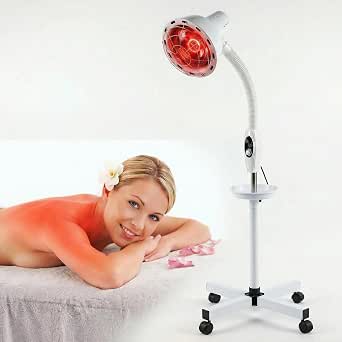 | Best Mobility and Convenience | Wattage: 275W | Bulb: A19, E10 base | Control Method: Remote | VIEW LATEST PRICE | See Our Full Breakdown |
| KS Choi Corp Infrared Heat Lamp 110V with Bulb Made in Korea |  | Best Clinic-Style Durability | Wattage: 250W | Bulb: ED28, E26 base | Timer: Up to 60 minutes | VIEW LATEST PRICE | See Our Full Breakdown |
| 7-in-1 Portable Light Therapy Device for Face and Body with Stand |  | Best Portable Multi-Function Pick | Light Modes: Red, infrared, yellow, green, blue, blue-green, purple, white | Wavelengths: 630nm red, 920nm infrared | Battery: 6000mAh rechargeable | VIEW LATEST PRICE | See Our Full Breakdown |
| INTEO Red Light Therapy for Face and Body, Infrared Red Light Therapy Lamp |  | Best for Full-Body Customization | Wavelengths: 660nm red, 850nm infrared | Panel Size: 13 × 7.5 inches | Maximum Height: 46.5 inches | VIEW LATEST PRICE | See Our Full Breakdown |
| Infrared Red Light Therapy Lamp 275W with Timer and Adjustable Height Stand |  | Best for Deep Heat Pain Relief | Power: 275W | Adjustable Height: Yes | Rotation: 360 degrees | VIEW LATEST PRICE | See Our Full Breakdown |
| Red Light Therapy for Face and Body with Stand – 660nm Red Light & 850nm Infrared Light Device |  | Best Simple Dual-Wavelength Option | LED Count: 120 LEDs | Red Light Wavelength: 660 nm | Infrared Wavelength: 850 nm | VIEW LATEST PRICE | See Our Full Breakdown |
| 3-in-1 Infrared Red Light Therapy Lamp with Adjustable Stand |  | Best Premium Multi-Wavelength Pick | Wavelengths: 600–750nm red, 750–1500nm near infrared, 1500–2500nm mid infrared | Power: 150W | Irradiance: 250 mW/cm² at 3 inches | VIEW LATEST PRICE | See Our Full Breakdown |
More Details on Our Top Picks
Infrared Heat Lamp, 275W Near Red Infrared Light for Pain Relief
Most red light panels in this roundup use LEDs, but this model takes the classic 275W infrared bulb approach, and that difference matters if your goal is pain relief rather than skin treatments. The thermal output penetrates deeper into joints and muscles than the Comfytemp 26W panel can manage, making it the stronger choice for chronic soreness, stiffness, and circulation issues. The adjustable height, angle, brightness, and timer let you dial in a session without hovering over the controls.
The tradeoff is raw power comes with responsibility: you need to stay at least 19 inches away, the glass bulb gets hot enough to burn on contact, and the focused heat means it treats one area at a time rather than a wide surface like the Comfytemp’s 16-inch panel. Compared with the Beurer IL11’s gentler 100W output, this lamp works faster but demands more caution.
Pros:- Deep-penetrating 275W heat that targets muscle and joint pain effectively
- Full adjustability across height, angle, brightness, and timer
- Works across a wide range of ages and pain conditions
- Faster warmth delivery than lower-wattage rivals like the Beurer IL11
Cons:- Mandatory 19-inch minimum distance makes sessions less flexible
- Hot glass surface poses a real burn risk if touched
- Treats a focused zone rather than a broad panel area
Best for: Adults with chronic joint or muscle pain who want serious heat output and don’t mind a stationary, supervised treatment session
Not ideal for: Households with curious kids or pets, or anyone shopping for skin-focused light therapy — the intense heat is overkill for facial use
- Light Type:Infrared
- Wattage:275 watts
- Bulb Shape:ED28
- Bulb Base:E26
- Light Color:Red
- Power Source:Corded Electric
- Material:Glass
- Additional Features:Adjustable height, angle, brightness, timer
Our verdict“This is the pick for people prioritizing serious pain relief over convenience, as long as they treat the heat with respect.”
SANSI Red Light Therapy Panel, 660nm 850nm Infrared Lamp for Face & Body
This SANSI panel earns the top spot because it solves the flexibility problem that trips up most competitors. With three usage modes — tabletop, clip-on, and upright stand — it adapts to face treatments at a desk one hour and full-body work on the floor the next. The dual 660nm/850nm wavelengths cover both visible red light for skin radiance and invisible near-infrared for deeper tissue, which is the same pairing found in the 2-in-1 panel with belt, but here the delivery is more polished.
The 79-inch power cord is longer than anything else in this lineup, and the 3-year warranty signals confidence the budget options don’t match. What holds it back from perfection is power dependence: there’s no built-in battery, and the USB-C connection can be awkward if your outlets aren’t near where you like to sit. Still, compared with the single-purpose Beurer IL11, this is the more complete home therapy station.
Pros:- Tabletop, clip-on, and stand modes cover nearly every positioning scenario
- Dual 660nm/850nm wavelengths serve skin surface and deep tissue needs
- Exceptionally long 79-inch power cord
- 3-year warranty beats most budget rivals
Cons:- No internal battery means zero cordless flexibility
- USB-C power requirement may need adapters depending on your setup
Best for: Buyers who want one device to handle both facial skincare and body treatments without buying multiple gadgets
Not ideal for: Anyone hoping for cordless sessions or outdoor use — this panel is fully tethered to a power source
- Wavelengths:660nm and 850nm
- Power Source:USB-C with universal adapter
- Usage Modes:Tabletop, clip-on, upright stand
- Adjustable Height:Yes
- Power Cord Length:79 inches
- Warranty:3 years
Our verdict“The most versatile and best-backed option here — the one to buy if you want a single panel for everything.”
Comfytemp 26W Red Light Therapy Lamp for Face & Body, 145 High-Power LEDs
Where the Beurer IL11 concentrates 100 watts into a single small bulb, the Comfytemp spreads 145 dual-chip LEDs across a 16″ x 11″ curved panel, covering roughly 50% more area than typical panels. That matters if you’d rather treat your whole back or both knees at once instead of working spot by spot — the practical difference between a 10-minute session and a 30-minute one.
The 4.9 lb weighted metal base deserves credit too: unlike lighter panels that wobble when you adjust the arm mid-yoga, this one stays planted. The 360° flexible positioning lets you angle light onto your waist, hips, or legs without moving furniture around it. The catch is raw output — 26W of LED power delivers a gentler experience than the 275W infrared heat lamp, so this is a light-therapy-first choice, not a serious heat-therapy substitute. Anyone chasing deep thermal relief should look at the higher-wattage options instead.
Pros:- 16″ x 11″ panel treats a much larger area than standard compact panels
- Heavy 4.9 lb counterweighted base prevents tipping during movement
- 360° positioning targets nearly any body part without repositioning the unit
- Dual-chip 660nm/850nm LEDs combine skin and deeper-tissue coverage
Cons:- 26W LED output can’t match the thermal intensity of bulb-based infrared lamps
- Large panel footprint takes up real floor space in smaller rooms
Best for: People who want to treat large body areas hands-free during yoga, meditation, or couch time
Not ideal for: Buyers seeking intense heat-based pain relief — the LED output is far milder than 275W infrared bulb lamps
- LED Count:145 dual-chip LEDs
- Wavelengths:660nm visible red, 850nm near-infrared
- Power:26 watts
- Panel Size:16″ x 11″
- Base Weight:4.9 lb counterweighted metal
- Adjustment:360° flexible positioning
- Design:Curved panel with stand
Our verdict“The best pick for broad, gentle, whole-body sessions — just don’t expect deep-heat muscle relief from it.”
Red Light Therapy for Face & Body, 2-in-1 Red Light Panel with Belt, Remote Control
This 2-in-1 device takes a different approach from every fixed panel here: the panel detaches into a wearable belt, so you can strap it to your lower back while answering emails or pack it in a bag for travel. The SANSI panel offers more mounting modes, but none of them wrap around your waist — that’s this model’s exclusive trick, and for people with back or hip complaints it’s genuinely more practical than sitting in front of a stand.
The remote control, five brightness levels, and granular 20–60 minute timer range give it the most customizable sessions of the group, and the included goggles and tool-free setup show thoughtful bundling. The tradeoffs are real though: the belt-and-stand combo is bulkier than a bare panel in tight spaces, and like any LED device, results only appear with consistent, regular use — this isn’t a one-and-done fix. It trades the Comfytemp’s large coverage area for portability and targeting precision.
Pros:- Detachable belt enables wearable, hands-free treatment anywhere on the torso
- Remote control with 5 brightness levels and 20–60 minute timers
- Three light modes including flicker options for varied sessions
- Complete accessory bundle with stand, goggles, and adapter
Cons:- Belt-plus-stand hardware feels bulky in cramped apartments or offices
- Noticeable results demand consistent long-term use
Best for: Commuters and travelers with localized pain who want wearable, hands-free therapy on the go
Not ideal for: Anyone wanting large-area treatments or fast results — the panel is small for its footprint and requires a committed routine
- Wavelengths:660nm and 850nm
- Light Modes:Constant, low-frequency flicker, high-frequency flicker
- Brightness Levels:5
- Timer Settings:20/30/40/50/60 minutes
- Accessories:Detachable belt, adjustable stand, remote control, power adapter, goggles
- Setup:Tool-free, lightweight, portable
Our verdict“Buy this for the belt, not the panel — mobility is its whole reason for existing.”
Beurer IL11 Infrared Heat Lamp for Muscles, Joints & Skin
The Beurer IL11 is the gentlest entry point in this lineup, and that’s exactly its value. At 100W with a safety grill and included protective glasses, it removes the intimidation factor of the 275W infrared lamp, which demands careful distance management and a hot glass bulb you can’t touch. For someone new to heat therapy — or nervous about it — this is the model that builds confidence first.
At just 320 g and compact freestanding dimensions, it’s also the easiest to move from a nightstand to a living room, unlike the heavier Comfytemp with its weighted base. The adjustable tilt handles precise targeting on shoulders or the face. The honest downside: 100W warms slowly compared with higher-wattage rivals, and the lack of dimming or timer functions means you’re managing session length yourself. Think of it as training wheels with a trusted German brand behind them — capable, but eventually outgrown if your needs get serious.
Pros:- Safety grill and bundled protective glasses reduce beginner anxiety
- Compact 320 g design moves easily between rooms
- Adjustable tilt for precise targeting of muscles or face
- Established brand with a proven, simple design
Cons:- 100W output heats noticeably slower than 275W alternatives
- No dimmer or timer — session control is entirely manual
- Corded-only power limits where you can use it
Best for: First-time infrared users and those wanting gentle facial or localized heat therapy with safety features included
Not ideal for: People with deep muscle or joint pain who need fast, intense heat — the 100W output works slowly by comparison
- Light Source:Incandescent infrared
- Wattage:100 watts
- Voltage:120 volts
- Bulb Base:E27
- Beam Angle:80 degrees
- Mounting:Freestanding with adjustable tilt
- Weight:320 g
- Safety Features:Safety grill, protective glasses included
Our verdict“The safest, simplest way to try infrared therapy at home — just upgrade later if you need more power.”
275W Infrared Light Therapy Lamp for Pain Relief and Skin Care
This model earns its place as the most dependable 275W workhorse in the mid-price bracket. Where the Near Infrared LED Lamp with Adjustable Stand & Timer leans on LED efficiency and safety timers, this option trades some convenience for raw heat and deeper tissue penetration, which matters if your soreness sits in thick muscle groups rather than near the surface.
The adjustable head and temperature settings mean you can dial intensity down for skin sessions and up for joint work — something the fixed-output KS Choi Corp Infrared Heat Lamp handles only through a simpler dial. The tradeoff is tedium: sessions cap out at 5–20 minutes, and the 90-day bulb warranty is short, so replacement costs should be budgeted into the real price.
Pros:- Strong 275W output for deep tissue relief
- Adjustable head and temperature for personalized sessions
- Sturdy stand keeps positioning stable
- Simple enough for daily use across age groups
Cons:- Requires supervision to avoid excessive heat exposure
- 90-day bulb warranty means early replacement costs
Best for: Chronic muscle and joint pain sufferers who want salon-grade heat output at home with adjustable intensity
Not ideal for: Anyone wanting set-and-forget sessions — the short treatment windows and heat supervision requirements demand attention
- Power:275W
- Light Type:Near infrared and red light
- Adjustable Temperature:Yes
- Stand:Sturdy therapy stand included
- Session Length:5–20 minutes
- Warranty:12 months (90 days bulb)
Our verdict“Buy this if you prioritize heat intensity and targeted relief over convenience features like timers and remotes.”
Near Infrared LED Lamp with Adjustable Stand & Timer
Among the heat-lamp style units here, this one stands out for thoughtful safety engineering: a built-in timer plus automatic shut-off means you can treat a shoulder while reading without clock-watching. Compared with the 275W Infrared Light Therapy Lamp for Pain Relief, its 150W LED source runs cooler and covers a wide 600–1400 nm range, making it better suited to longer, gentler sessions and users nervous about hot bulbs.
The compromises are real, though. A single BR38 LED source concentrates output on a smaller area than panel-style options like the SANSI Red Light Therapy Panel, so full-back treatment takes patience. And the faint rattle at low power — harmless thermal expansion — may bother anyone using it beside a bed.
Pros:- Timer and automatic shut-off for safer unattended use
- Wide 600–1400 nm wavelength range for deep penetration
- Cooler-running LED source vs. incandescent rivals
- Lightweight at 4 pounds for easy repositioning
Cons:- Corded only — no battery option
- Slight rattling at low power settings
- Bulb still warms up during extended use
Best for: People who do solo sessions and want timer-controlled, auto-shutoff safety without babysitting a hot bulb
Not ideal for: Users treating large body areas — the single light source covers less surface than panel alternatives
- Light Source:LED, 150W
- Wavelength Range:600–1400 nm
- Controls:Timer, adjustable temperature, auto shut-off
- Mounting:Stand mount
- Bulb:BR38, E27 base
- Weight:4 pounds
Our verdict“This is the pick for safety-minded buyers who value automated shut-off more than maximum wattage.”
Infrared Heat Lamp, 275W Red Light Therapy Lamp, Adjustable
If the KS Choi Corp lamp is the fixed station at your desk, this one is the rover of the lineup — casters on the base and a remote control let you roll it from the living room to the bedroom and adjust output from the couch. The flexible gooseneck plus adjustable head gives it the best aiming precision of the 275W trio here.
Against the 7-in-1 Portable Light Therapy Device, it sacrifices true portability (no battery, indoor outlets only) but delivers far more power per session. The main frustrations: the E10 bulb base is a less common size, which complicates replacements, and despite a 50,000-hour rated life, finding that specific bulb years down the road may take effort.
Pros:- Remote control for convenient mid-session adjustments
- Casters and sturdy frame for easy room-to-room movement
- Flexible gooseneck for precise targeting
- Long 50,000-hour rated light source life
Cons:- Uncommon E10 bulb base complicates future replacements
- Corded, indoor-only — zero portable flexibility
Best for: Households where multiple people use one lamp in different rooms and want remote-adjusted, mobile operation
Not ideal for: Anyone hoping for battery-powered or outdoor use — it’s tethered to indoor outlets
- Wattage:275W
- Bulb:A19, E10 base
- Control Method:Remote
- Voltage:110V, 100–120V / 60Hz
- Light Color:Red
- Rated Life:50,000 hours
- Usage:Indoor only, corded
Our verdict“Choose this if convenience and mobility across rooms matter more than battery power or compact storage.”
KS Choi Corp Infrared Heat Lamp 110V with Bulb Made in Korea
This is the closest thing in the batch to professional clinic equipment — a design long favored by acupuncture and massage practices. The 60-minute timer outlasts the 5–20 minute windows of the 275W Infrared Light Therapy Lamp, and the protective bulb cover is a safety feature most consumer rivals skip entirely.
The dial-based heat adjustment is analog rather than digital, which some will find less precise than the Near Infrared LED Lamp’s push-button controls, but it’s proven and rarely fails. Handle it with respect: the 250W bulb runs genuinely hot, cracks if seated carelessly, and the whole unit demands the burn-awareness the clinic crowd already has. Its beige-and-white build also reads clinical rather than sleek next to modern black units.
Pros:- Up to 60-minute timer for longer therapy sessions
- Protective bulb cover for safer handling
- Extra-long flexible goose neck for precise positioning
- Clinic-proven 250W Korean-made bulb with ~5000-hour life
Cons:- Hot components require careful handling to avoid burns
- Bulb can crack if inserted improperly
- Dated, utilitarian appearance
Best for: Buyers wanting proven, clinic-grade hardware with a long goose neck and 60-minute treatment capacity
Not ideal for: Design-conscious home users or anyone uncomfortable managing a hot, exposed incandescent bulb
- Wattage:250W
- Bulb:ED28, E26 base
- Timer:Up to 60 minutes
- Heat Control:Adjustable dial
- Bulb Life:~5000 hours
- Usage:Indoor only
Our verdict“A no-nonsense, practitioner-grade choice for serious users who value durability and long sessions over looks.”
7-in-1 Portable Light Therapy Device for Face and Body with Stand
This device plays an entirely different game from the heat-lamp entries. Rather than raw 250W+ warmth, it offers seven light modes — red, infrared, blue, green, and more — paired with a 6000mAh battery that makes it the only genuinely cordless option in this lineup. Where the 275W Red Light Therapy Lamp demands an outlet and a stationary stance, this travels in a bag for hotel-room skin sessions.
The honest tradeoff is intensity. At 630nm/920nm wavelengths with battery-driven output, it can’t match the KS Choi Corp lamp’s heat-based deep tissue relief for a sore lower back. Its strength is versatility across skincare concerns — acne-targeting blue light, red for repair — which requires learning what each mode actually does. Expect results from consistency, not single sessions.
Pros:- Seven light modes covering both skin and muscle concerns
- True cordless use with 6000mAh rechargeable battery
- Compact and lightweight for travel
- Handles both facial and full-body treatments
Cons:- Requires learning curve to use each mode effectively
- Higher price relative to single-function lamps
- Results depend on consistent long-term use
Best for: Travelers and skincare-focused users who want multi-mode light therapy without being tethered to an outlet
Not ideal for: People seeking serious deep-muscle pain relief — the battery-powered output is too gentle for thick tissue
- Light Modes:Red, infrared, yellow, green, blue, blue-green, purple, white
- Wavelengths:630nm red, 920nm infrared
- Battery:6000mAh rechargeable
- Stand:Included
- Treatment Areas:Face and body
- Certification:International certification
Our verdict“Buy this for portable, multi-purpose skincare therapy — skip it if your priority is high-wattage pain relief.”
INTEO Red Light Therapy for Face and Body, Infrared Red Light Therapy Lamp
Between the dual-wavelength output (660nm and 850nm) and its unusually deep settings menu, the INTEO stands out as the most customizable panel-style option in this lineup. Where the Curved 120-LED lamp offers a fixed treatment experience, this one lets you dial in five brightness levels, three light modes including 10Hz and 40Hz pulse options, and nine timer settings up to 90 minutes — a level of control that matters once you start tailoring sessions for face versus larger muscle groups. The 46.5-inch adjustable height and rotatable head give it genuine full-body reach, something desk-style panels like the SANSI can’t match without accessories. The tradeoff: first-time users may find the setup and settings overwhelming, and like most LED therapy devices, results demand patience over weeks of consistent use rather than days.
Pros:- Dual 660nm/850nm wavelengths cover both skin-surface and deeper tissue therapy
- Five brightness levels plus pulsed light modes for genuinely customized sessions
- Adjustable 46.5-inch height and rotatable head enable true full-body coverage
- Aviation-grade aluminum build keeps the panel durable yet portable
Cons:- Noticeable results require several weeks of consistent sessions — not a quick fix
- Setup and mode adjustment can frustrate first-time red light therapy users
Best for: Users who want one device for both facial skincare and larger body areas and like fine-tuning intensity, pulse mode, and session length
Not ideal for: Beginners who want a plug-in-and-go experience — the multi-mode controls take time to learn and adjust correctly
- Wavelengths:660nm red, 850nm infrared
- Panel Size:13 × 7.5 inches
- Maximum Height:46.5 inches
- Light Modes:Constant, 10Hz pulse, 40Hz pulse
- Brightness Levels:5
- Timer Options:9 settings, 10–90 minutes
- Material:Aviation-grade aluminum
Our verdict“Buy this if you treat light therapy as a routine you want full control over, and skip it if you’d rather press one button and sit down.”
Infrared Red Light Therapy Lamp 275W with Timer and Adjustable Height Stand
If your priority is muscle and joint pain relief rather than skincare, this 275W heat lamp plays in a different category than the LED-based options like the INTEO or Curved 120-LED lamp. Heat lamps work by delivering infrared warmth that penetrates and relaxes tense tissue, and at 275W this model delivers substantially more thermal output than the 150W 3-in-1 lamp. The 360-degree rotating head and adjustable stand make it easy to angle treatment at a shoulder, knee, or lower back from a chair, and the remote control means you never have to interrupt a session to adjust positioning. The weaknesses are real, though: treatment duration guidance is thin, there’s no stated automatic shutoff, and the bulb carries only a 90-day warranty versus 12 months on the base.
Pros:- 275W high-power output delivers genuinely penetrating heat for pain relief
- 360-degree rotating head and adjustable height allow precise targeting of joints and muscles
- Remote control enables adjustments mid-session without breaking position
- Suitable for a wide range of ages and pain conditions
Cons:- No automatic shutoff or documented safety features — you must monitor sessions yourself
- Short 90-day bulb warranty signals a likely recurring replacement cost
Best for: Adults with chronic muscle or joint pain who want salon-style infrared heat therapy at home and don’t need beauty-focused LED features
Not ideal for: Anyone primarily targeting skin or anti-aging goals — this is a heat-first device with no 660nm-style LED skincare output
- Power:275W
- Adjustable Height:Yes
- Rotation:360 degrees
- Remote Control:Yes
- Warranty:12 months lamp base, 90 days bulb
Our verdict“This pick makes the most sense for pain-focused buyers who want serious heat output, provided they’re comfortable managing session safety manually.”
Red Light Therapy for Face and Body with Stand – 660nm Red Light & 850nm Infrared Light Device
This lamp takes the opposite approach from the INTEO: fewer settings, simpler operation, and a curved design that does the work of focusing light so you don’t have to fiddle with modes. With 120 LEDs split across 660nm red and 850nm infrared, it covers the same wavelength ground as pricier panels but in a more approachable package, and the 180-degree angle adjustment plus a 3-meter power cord make it genuinely easy to position around a couch or bed — longer than most competitors’ cables. Compared with the 275W heat lamp, it trades raw thermal intensity for gentler, skin-oriented treatment. That’s the right call for elasticity and complexion goals, but buyers chasing deep tissue relief will find it underpowered, and the required daily 15–30 minute commitment is a real ask for anyone with a packed schedule.
Pros:- Curved panel concentrates light for more efficient coverage than flat budget panels
- Simple operation with no complicated modes — ideal for therapy newcomers
- 3-meter power cord offers unusual placement flexibility around the home
- Combined 660nm/850nm wavelengths support both skin and superficial tissue benefits
Cons:- Demands daily 15–30 minute sessions, a commitment many users abandon
- Less effective for deep tissue therapy compared with professional-grade equipment
Best for: Skincare-focused users who want an easy, no-fuss dual-wavelength device for improving skin elasticity and general wellness
Not ideal for: People seeking deep tissue or heavy-duty pain relief — the LED output is milder than professional or high-wattage heat equipment
- LED Count:120 LEDs
- Red Light Wavelength:660 nm
- Infrared Wavelength:850 nm
- Design:Curved light-focusing panel
- Power Cord Length:3 meters
- Adjustable Angles:180°
Our verdict“Choose this if you want a straightforward, skin-first light routine without a settings maze, and look elsewhere if pain relief is your main goal.”
3-in-1 Infrared Red Light Therapy Lamp with Adjustable Stand
The most technically ambitious entry here, this 3-in-1 lamp spans red (600–750nm), near infrared (750–1500nm), and mid infrared (1500–2500nm) — the mid-range band most rivals skip entirely. That third wavelength brings heat-like soothing effects to complement LED-style therapy, positioning it between the Curved 120-LED lamp (skin-focused) and the 275W heat lamp (pain-focused). Its 250 mW/cm² irradiance at 3 inches is serious output for this price class, supporting credible deep tissue work. What separates it from the 275W model on safety: dual switch control and automatic power-off protection come standard. The intensity cuts both ways — the 8-inch recommended distance demands eye discipline, and users with sensitive skin or certain health conditions should consult a doctor before starting.
Pros:- Three wavelength bands deliver skin, near-infrared, and mid-infrared benefits in one device
- High 250 mW/cm² irradiance supports genuinely effective deep tissue treatment
- Automatic power-off protection and dual switch control add meaningful safety margins
- Adjustable stand enables targeted therapy across multiple body areas
Cons:- Direct eye exposure must be strictly avoided given the intensity — goggles or careful positioning required
- May prove too intense for sensitive skin or users with certain health conditions
Best for: Buyers who want one high-output device covering skincare, muscle recovery, and relaxation without choosing between LED and heat-style therapy
Not ideal for: Users with sensitive skin or eye sensitivity concerns — the high irradiance and multi-band output require careful exposure management
- Wavelengths:600–750nm red, 750–1500nm near infrared, 1500–2500nm mid infrared
- Power:150W
- Irradiance:250 mW/cm² at 3 inches
- Adjustable Stand:Yes
- Safety Features:Dual switch control, automatic power-off protection
- Recommended Distance:8 inches
Our verdict“For buyers who want maximum therapeutic range and built-in safety features in a single lamp, this is the strongest all-rounder — as long as they respect its power.”
How We Picked
I evaluated each lamp against four buyer-facing criteria: therapeutic output (wattage for heat lamps, wavelength coverage and LED count for panels), usability (timers, adjustable stands, remote controls, and how easy it is to hold a consistent position for a 10–20 minute session), build quality and safety (heat shielding, base stability, certification, and bulb replacement availability), and value over time (energy cost, bulb lifespan, and whether the price matches what you actually get). Because heat lamps and LED panels serve different goals, I ranked them against their own category’s standards first, then by how well each serves its most likely buyer.
The ranking logic is straightforward: dual-wavelength LED panels with solid stands and timers sit at the top because they serve the widest range of uses, followed by 275W heat lamps with safety and convenience features, then bare-bones bulbs that deliver intensity but little control. Products that bundled thoughtful extras — a belt, a remote, brightness adjustment — earned credit only when those extras genuinely changed the treatment experience, not as spec padding.
Factors to Consider When Choosing Infrared Therapy Lamps
Before picking a specific lamp, it helps to understand what actually drives results and cost in this category. These are the factors that separated the winners from the rest of the lineup — and the mistakes I saw repeated across cheaper listings.Heat Lamp or LED Panel: Pick Your Technology First
This is the single biggest decision, and many buyers get it wrong by treating all infrared lamps as interchangeable. Incandescent 275W bulbs produce intense near-infrared heat that penetrates deeply into muscle and joint tissue — they’re the right call for back pain, arthritis, and post-workout recovery, but they run hot, dry the skin, and shouldn’t be used close to the face. LED panels at 660nm and 850nm deliver therapeutic light without meaningful heat, making them better for facial skin work, fine lines, and consistent daily use, but they won’t produce the warming, blood-flow-boosting sensation many pain sufferers expect. If your goal is pain relief, buy a heat lamp; if it’s skin, buy a panel; only split-use buyers need to pay for a premium dual-mode device. The 2-in-1 panel with belt in this roundup exists precisely for that split-use buyer.
Wattage, Wavelengths, and What the Numbers Actually Mean
Marketers lean hard on specs, but two numbers matter more than the rest. For heat lamps, wattage translates directly to treatment depth: a 275W bulb delivers meaningful warmth at 18–24 inches, while weaker bulbs force you uncomfortably close to get the same effect. For LED panels, look for both 660nm (red, for skin surface) and 850nm (near-infrared, for deeper tissue) — single-wavelength devices only do half the job, which is why the SANSI outranked single-mode competitors. Ignore raw LED counts in isolation; 145 well-driven LEDs can outperform 300 cheap ones. Also be skeptical of ‘medical grade’ claims on generic imports — most have no clinical backing beyond the general research on red and near-infrared light itself.
The Timer Question Nobody Asks Until It’s Too Late
The most common mistake with high-wattage infrared lamps is overshooting session length. Twenty minutes is the standard ceiling for most protocols, and without a timer it’s easy to lose track and end up with reddened, dried-out skin or a mild burn on bony areas. Models with built-in timers, like the 275W lamp with timer and adjustable stand, ranked higher for this reason alone. LED panels are more forgiving, but brightness adjustment still matters — a face-adjacent panel at full power can be uncomfortably bright and may cause you to skip sessions entirely. If you buy a lamp without a timer, use your phone; but if you’re choosing between two similar models, the one with a timer is almost always the better long-term purchase.
Stands, Positioning, and Real-World Usability
A lamp you can’t position comfortably is a lamp you’ll stop using within a month. The best setups in this roundup offered height-adjustable stands with weighted bases that let you treat a shoulder while seated or a lower back while lying down. Clamp and gooseneck designs work for desks but fail for floor or bed use, and top-heavy lamps near bare skin are a genuine tipping hazard. The KS Choi floor-style lamp earns its place here because clinical-style stands are simply more versatile than desktop models. Before buying, picture your actual treatment position — if you can’t name the surface the lamp will sit on and the body part it will aim at, you’re guessing, and guessing is how home therapy equipment ends up in a closet.
Total Cost of Ownership: Bulbs, Energy, and Lifespan
The sticker price is only part of the math. A 275W incandescent bulb costs pennies per session but typically needs replacement after 500–1,000 hours, and replacement bulbs for obscure imported models can be hard to source — the KS Choi’s made-in-Korea bulb availability is a real advantage over generic listings. LED panels cost more upfront but sip power and last 50,000 hours, effectively eliminating consumables. Also factor in returns: this category is full of inconsistent generic listings, so buying through a retailer with a real return policy protects you from the unit-to-unit quality variance that plagues no-name heat lamps. As a rule, spend more when you’ll use it daily; buy cheap only for occasional use.
Safety Basics That Apply to Every Lamp on This List
Whatever you buy, the same precautions apply. Keep 18–24 inches between the lamp and your skin for heat lamps, closer is not better, and never fall asleep under one. Protect your eyes — near-infrared exposure at close range calls for closed eyes or goggles, especially with panels aimed at the face. People with diabetes, neuropathy, or reduced skin sensation should check with a doctor first, because they may not feel overheating before damage occurs. And avoid using heat lamps over topical treatments, recent sunburn, or open wounds. None of these are dealbreakers for any product here, but they explain why I weighted built-in safety features like timers and protective grilles so heavily in the rankings.
Frequently Asked Questions
Is a 275W infrared heat lamp better than an LED red light panel for pain?
For deep muscle and joint pain, yes — a 275W heat lamp generally delivers more penetrating warmth and a stronger blood-flow response than a low-wattage LED panel, which is why several 275W models made this list despite their basic designs. The tradeoff is control and comfort: heat lamps run hot, require careful distance management, and aren’t suitable for facial use. LED panels with 850nm near-infrared diodes can support tissue recovery too, but more gently and over longer consistent use. If pain is your only goal, start with a 275W lamp that has a timer; if you want pain and skin benefits together, a dual-wavelength panel like the SANSI is the more versatile choice.
How far away should I sit from an infrared therapy lamp, and for how long?
For 275W incandescent heat lamps, the standard guidance is 18–24 inches from the target area for 10–20 minutes per session, adjusting distance if the warmth becomes uncomfortable rather than pushing through it. LED panels can be used closer — typically 6–12 inches — because they produce negligible heat, and session lengths of 10–15 minutes per area are common. More distance and more time is not a shortcut to faster results; overtreatment mostly adds skin dryness and burn risk. This is exactly why the lamps with built-in timers ranked higher in this comparison than their untimed equivalents.
Do I need both 660nm and 850nm wavelengths?
If skin improvement is part of your goal, yes. The 660nm red wavelength is absorbed near the skin’s surface and is the one most associated with collagen and complexion benefits, while 850nm near-infrared penetrates deeper toward muscle and joint tissue. Panels that offer only one wavelength — or that don’t clearly state their wavelengths — are doing half the job, and that ambiguity hurt several generic listings in this roundup. Dual-wavelength devices like the SANSI and the 2-in-1 panel cost a bit more, but the flexibility is worth it unless you’re certain you only need one type of benefit. For pure heat-lamp buyers, this question matters less, since incandescent bulbs emit a broad near-infrared spectrum naturally.
Are the cheap generic 275W lamps on marketplace listings any good?
Some are, and a few earned spots in this lineup — but quality variance is the real risk. The same listing can ship bulbs from different factories with different actual output, and replacement bulbs for unbranded models are often impossible to match once the original burns out. Look for listings that name the bulb type, include a timer, and show a stable weighted base, and buy through a retailer with a workable return window. Established brands like Beurer cost more but offer consistent output, certified safety testing, and replacement parts. For occasional use, a well-reviewed generic can be fine; for daily therapy, brand reliability pays for itself.
Can I use an infrared lamp on my face for skin care?
Only if it’s an LED panel — not a 275W heat lamp. Incandescent infrared bulbs generate far too much surface heat for facial skin and pose eye-exposure risks at the distances face treatment requires; several products in this roundup are explicitly body-only for that reason. LED panels like the Comfytemp 26W or the SANSI are built for facial use, run cool, and can be positioned 6–12 inches from your face with eyes closed or protected. Keep facial sessions to 10–15 minutes and skip them entirely if you have photosensitive skin conditions or take photosensitizing medications. If skin is your main reason for buying, treat the panel-versus-bulb decision as settled from the start.
Conclusion
After comparing all 14 lamps, the right choice comes down to what you’re treating and how much control you want. Best overall goes to the SANSI Red Light Therapy Panel, whose dual 660nm/850nm output serves both skin and deeper tissue with clean usability. Best value is the Comfytemp 26W panel for skin-focused buyers, or a timer-equipped 275W heat lamp if pain relief is the mission — both deliver real results without the premium pricing. Best premium pick is the 2-in-1 panel with belt, which effectively replaces two devices for anyone doing both targeted and full-body treatment. Best for beginners is the Beurer IL11: a trusted brand, simple operation, and enough safety engineering to forgive early mistakes. For specific needs, the KS Choi floor lamp suits clinical-style whole-body positioning, and the 7-in-1 device fits buyers who want one purchase covering face and body with maximum flexibility. Whatever you choose, prioritize a timer, a stable stand, and the right technology for your goal — those three factors predicted satisfaction in this lineup more than price or wattage ever did.
Evergreen bestsellers Picks
bestsellers
As an affiliate, we earn on qualifying purchases.