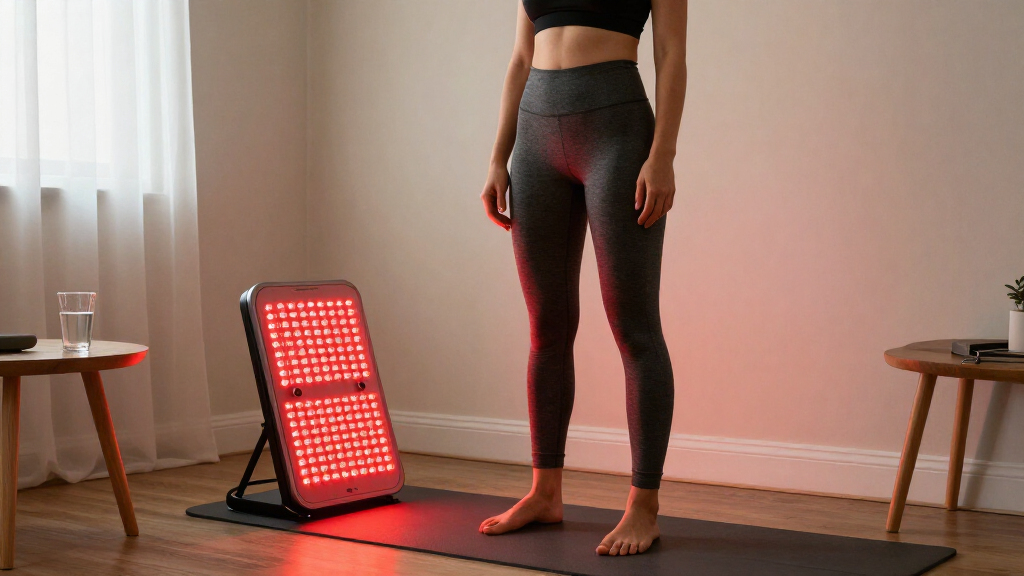

Red light therapy panels vary widely in irradiance, wavelength coverage, and treatment area, and those three factors explain most of the price differences in this category. The iRESTORE Apex 1500 stands out as my best overall pick because it delivers professional-grade power and a large treatment area without requiring a clinic budget. For value seekers, the Hooga HG300 balances output and size well, while the Comfytemp 26W lamp is the easiest entry point for face-focused use. The main tradeoff you’ll face: bigger panels with dual wavelengths (660nm red and 850nm near-infrared) cost more and demand floor space, while compact models are cheaper and portable but treat smaller areas over longer sessions. Multi-wavelength panels like the T70 and BestQool Pro100 add 5-wavelength blending, which appeals to experienced users but may be overkill for beginners. Keep reading for the full breakdown of all 14 panels and which one fits your goals.

Get health and wellness essentials delivered free — and shop member deals
- Fast, free delivery on millions of items
- Access to Prime Big Deal Days deals on October 6–7
- Prime Video, Amazon Music and more included
Key Takeaways
- Irradiance and panel size mattered more than LED count — the iRESTORE Apex 1500 and Hooga PRO300 delivered faster full-body coverage despite fewer marketing-forward specs than some rivals.
- Every strong pick in this roundup offered both 660nm red and 850nm near-infrared wavelengths; single-wavelength or low-power units like the Comfytemp 26W are best reserved for face-only use.
- Included stands became a real differentiator: the Viconor and SOLRA Arc Pro 60 arrive floor-stand ready, while bare panels like the Hooga HG200 and HG300 often need a separate mounting purchase.
- Multi-wavelength models (T70 with 5 wavelengths, BestQool Pro100 with 4) sit mid-pack — they suit experienced users chasing targeted benefits but add complexity and cost beginners won’t use.
- Small-format panels under 100 LEDs consistently required longer session times to cover the same body area, which quietly erodes their upfront savings for anyone treating more than the face.
| Viconor Red Light Therapy Lamp with Stand |  | Best Budget Starter Setup | LED count: 120 | Wavelengths: 660 nm red and 850 nm infrared | LED configuration: 1 red and 2 infrared LEDs per light | VIEW LATEST PRICE | See Our Full Breakdown |
| iRESTORE Apex 1500 Red Light Therapy Panel |  | Best Premium Full-Body Option | Wavelengths: 590, 630, 660, 810, 830, 850, 940, and 1060 nm | LEDs: 300 | Power: 1500 W | VIEW LATEST PRICE | See Our Full Breakdown |
| Hooga HG300 Red Light Therapy Panel |  | Best Value for Targeted Use | LED count: 60 | Wavelengths: 660 nm red; 850 nm near-infrared | Irradiance: Over 73 mW/cm² at 6 inches | VIEW LATEST PRICE | See Our Full Breakdown |
| BestQool BQ60 Red Light Therapy Panel |  | Best for Flexible Placement | Power: 105 W | Wavelengths: 660 nm red and 850 nm near-infrared | Irradiance: 95.6 mW/cm² at 3 inches | VIEW LATEST PRICE | See Our Full Breakdown |
| Hooga PRO300 Red and Near-Infrared Light Therapy Panel |  | Best for Timed Daily Routines | Wavelengths: 660 nm red and 850 nm near-infrared | LEDs: 60 dual-chip | Controls: Digital timer and independent red/near-infrared controls | VIEW LATEST PRICE | See Our Full Breakdown |
| T70 Red Light Therapy Panel for Face and Body, 70 LEDs, 5 Wavelengths |  | Best High-Irradiance Workhorse | LED count: 70 | Wavelengths: 600nm, 660nm, 810nm, 850nm, 940nm | Power: 350W | VIEW LATEST PRICE | See Our Full Breakdown |
| Viconor Red Light Therapy Lamp with Stand, 660 nm Red and 850 nm Infrared LEDs |  | Best Freestanding Floor Lamp | LED count: 120 | Wavelengths: 660 nm red and 850 nm near-infrared | Design: Curved panel | VIEW LATEST PRICE | See Our Full Breakdown |
| SOLRA Arc Pro 60 Red Light Panel with 64 Dual-Chip LEDs and Adjustable Stand |  | Best Premium Compact Setup | LEDs: 64 dual-chip LEDs | Wavelengths: 630 nm, 660 nm, 810 nm, 850 nm | Light modes: Red, NIR, combined | VIEW LATEST PRICE | See Our Full Breakdown |
| Hooga HG200 Red and Near-Infrared Light Therapy Panel |  | Best Starter Panel | Model: HG200 | LEDs: 40 individual 5W LEDs | Wavelengths: 660 nm red; 850 nm near-infrared | VIEW LATEST PRICE | See Our Full Breakdown |
| Red Light Therapy Panel with 5 Wavelengths and 40 Dual-Chip LEDs |  | Best Budget Multi-Wavelength Pick | Wavelengths: 630nm, 660nm, 810nm, 830nm, 850nm | LEDs: 40 dual-chip LEDs | Continuous output: 60W | VIEW LATEST PRICE | See Our Full Breakdown |
| BestQool Pro100 Red Light Therapy Panel, 4 Wavelengths, 160W |  | Best for Expanding Coverage | Wavelengths: 4 | Power: 160W | Irradiance: 109 mW/cm² at 3 inches | VIEW LATEST PRICE | See Our Full Breakdown |
| Comfytemp 26W Red Light Therapy Lamp with 145 LEDs |  | Best Budget Starter Panel | Power: 26 W | LED count: 145 | Wavelengths: 660 nm red light and 850 nm near-infrared | VIEW LATEST PRICE | See Our Full Breakdown |
| Red Light Therapy Lamp with Floor and Desktop Stands |  | Most Complete Accessory Kit | Panel size: 19.3 × 11.6 inches | Wavelengths: 660nm and 850nm | Stands: Floor and desktop | VIEW LATEST PRICE | See Our Full Breakdown |
| SOLRA SR40 Red Light Therapy Panel with Magnetic Mount and Floor Stand |  | Best Compact and Portable | Wavelengths: 660 nm red light and 850 nm near-infrared | LEDs: 40 | Irradiance: At least 150 mW/cm² at 3 inches (manufacturer test conditions) | VIEW LATEST PRICE | See Our Full Breakdown |
| red light therapy panel | Wavelengths | LEDs |
|---|---|---|
| Viconor Red Light Therapy Lamp | 660 nm red and 850 nm infrared | — |
| iRESTORE Apex 1500 Red Light T | 590, 630, 660, 810, 830, 850, 940, and 1060 nm | 300 |
| Hooga HG300 Red Light Therapy | 660 nm red; 850 nm near-infrared | — |
| BestQool BQ60 Red Light Therap | 660 nm red and 850 nm near-infrared | Flicker-free dual-chip |
| Hooga PRO300 Red and Near-Infr | 660 nm red and 850 nm near-infrared | 60 dual-chip |
| T70 Red Light Therapy Panel fo | 600nm, 660nm, 810nm, 850nm, 940nm | — |
| Viconor Red Light Therapy Lamp | 660 nm red and 850 nm near-infrared | — |
| SOLRA Arc Pro 60 Red Light Pan | 630 nm, 660 nm, 810 nm, 850 nm | 64 dual-chip LEDs |
| Hooga HG200 Red and Near-Infra | 660 nm red; 850 nm near-infrared | 40 individual 5W LEDs |
| Red Light Therapy Panel with 5 | 630nm, 660nm, 810nm, 830nm, 850nm | 40 dual-chip LEDs |
| BestQool Pro100 Red Light Ther | 4 | — |
| Comfytemp 26W Red Light Therap | 660 nm red light and 850 nm near-infrared | — |
| Red Light Therapy Lamp with Fl | 660nm and 850nm | — |
| SOLRA SR40 Red Light Therapy P | 660 nm red light and 850 nm near-infrared | 40 |
More Details on Our Top Picks
Viconor Red Light Therapy Lamp with Stand
For a first dip into red light therapy without a big commitment, this Viconor lamp bundles the essentials: a curved panel, a stand, a hook, and a generous 3 m power cord. The curved shape is a genuine differentiator compared with flat panels like the Hooga HG300, wrapping light around a knee, shoulder, or face rather than hitting one flat plane. The 180° tilt adjustment makes it easy to angle during a session, whether it’s on a desk or hanging from a door.
The tradeoff is transparency: unlike the Hooga or BestQool panels here, no irradiance or power figures are published, so buyers can’t verify treatment intensity or compare dosage. That matters if you’re following a specific protocol. Compared with the pricier BestQool BQ60, you also give up touchscreen controls and dual-mode flexibility. This pick makes the most sense for casual, exploratory use rather than structured routines.
Pros:- Curved panel design wraps light around joints and contours better than flat entry-level panels
- Complete accessory kit with stand, hook, and long 3 m cord right out of the box
- 180° tilt adjustment allows precise angling during sessions
- Portable and easy to move between rooms
Cons:- No published irradiance or power output, so treatment intensity can’t be verified
- No timer or independent wavelength controls, which pricier rivals in this lineup offer
Best for: Curious first-timers who want a complete, affordable kit with stand and mounting options for occasional home sessions
Not ideal for: Anyone following a dosage-based protocol — the lack of published irradiance makes it impossible to calculate or track treatment intensity
- LED count:120
- Wavelengths:660 nm red and 850 nm infrared
- LED configuration:1 red and 2 infrared LEDs per light
- Adjustment:Up to 180°
- Power cord:3 m
- Included accessories:Stand and hook
- Recommended use time:15–30 minutes daily
Our verdict“A sensible low-risk entry point for casual users, as long as you don’t need verifiable intensity numbers.”
iRESTORE Apex 1500 Red Light Therapy Panel
Sitting at the opposite end of the spectrum from the Viconor starter lamp, the Apex 1500 is built for people who’ve committed to red light therapy as a daily ritual. Its eight wavelengths span from 590 to 1060 nm — a far broader spectrum than the dual-wavelength Hooga or BestQool panels — and the 1500 W output with over 200 mW/cm² irradiance at 6 inches means shorter sessions at greater distances. At nearly 46 inches tall, it covers the full torso or legs in one pass instead of working spot by spot.
The intelligence layer is what separates it: six preset modes, app control, and 0–100% dimming let you tailor protocols in ways the Hooga PRO300‘s basic timer simply can’t match. The cost of all this capability is physical — at over 6 kg and corded, it demands dedicated wall space and stays there.
Pros:- Eight wavelengths offer the broadest spectral coverage in this lineup
- High irradiance above 200 mW/cm² at 6 inches supports shorter, more efficient sessions
- App, remote, and touchscreen controls with six presets and full dimming
- Near-46-inch panel covers large body areas in a single session
Cons:- Large and heavy at over 6 kg, requiring dedicated wall mounting
- Corded power source limits placement flexibility
- Far more capacity than needed for targeted face or joint work
Best for: Dedicated daily users and households wanting full-body coverage with app-controlled, preset-driven protocols
Not ideal for: Apartment dwellers or anyone wanting a portable spot-treatment device — it’s heavy, wall-mounted, and needs a permanent spot
- Wavelengths:590, 630, 660, 810, 830, 850, 940, and 1060 nm
- LEDs:300
- Power:1500 W
- Irradiance:Over 200 mW/cm² at 6 inches
- Controls:Touchscreen, remote, and mobile app
- Presets:6 therapy modes
- Timer:1–30 minutes
- Mounting:Wall mount with door hook and ratchet hanger included
- Weight:6123 g
Our verdict“The pick for serious whole-body routines where spectrum breadth, power, and smart controls justify the footprint.”
Hooga HG300 Red Light Therapy Panel
The HG300 earns its place through honest, verifiable specs — something the Viconor lamp can’t claim. With a stated 73+ mW/cm² irradiance at 6 inches, buyers can actually calculate dosage, and the independent red and near-infrared controls let you run one wavelength or both depending on whether you’re targeting skin surface or deeper tissue. Add a 3-year warranty and a claimed 50,000-hour LED lifespan, and the long-term ownership picture beats most budget rivals.
Compared with the BestQool BQ60, you trade the touchscreen and higher headline irradiance for more trustworthy measurement distance and a longer warranty. The 60-LED count limits it to small treatment zones — a shoulder, a knee, the face — so anyone hoping to cover their back in one pass should look at the larger panels in this guide instead.
Pros:- Published irradiance of over 73 mW/cm² at 6 inches allows real dosage tracking
- Independent red and near-infrared controls for flexible protocols
- 3-year warranty and stated 50,000-hour LED lifespan
- Includes protective eyewear and adjustable tabletop stand
Cons:- Small coverage area limits it to spot treatment
- Requires tabletop placement near a power outlet, with no hanging kit included
Best for: Buyers who want transparent irradiance specs and independent wavelength control for targeted joint or facial work at a mid-range price
Not ideal for: Anyone wanting full-body or large-area treatment — the 60-LED panel is strictly for small zones
- LED count:60
- Wavelengths:660 nm red; 850 nm near-infrared
- Irradiance:Over 73 mW/cm² at 6 inches
- LED power:5 W per LED
- Controls:Independent red and near-infrared controls
- Stand:Adjustable tabletop stand
- Warranty:3 years
Our verdict“The most trustworthy compact panel here for buyers who value verifiable specs over feature count.”
BestQool BQ60 Red Light Therapy Panel
What sets the BQ60 apart in this lineup is mounting versatility: unlike the tabletop-only Hooga HG300, it ships with both an adjustable U-shaped stand and a hanging kit for wall mounting, so it works on a desk, over a door, or fixed to a wall. Touchscreen controls give it a more modern feel than the physical switches on the Hooga, and the three light modes — red, near-infrared, or both — cover the same protocol flexibility.
The headline 95.6 mW/cm² irradiance looks stronger than the HG300’s figure, but it’s measured at 3 inches rather than 6, so real-world intensity at typical session distances is likely comparable or lower. There’s also no session timer, meaning you’ll need to track your own 15–20 minute sessions manually, where the Hooga PRO300 handles that for you. Flicker-free LEDs are a nice touch for eye comfort during face sessions.
Pros:- Both tabletop stand and hanging kit included for desk or wall use
- Touchscreen controls with red, near-infrared, or combined modes
- Flicker-free LEDs improve comfort during facial sessions
- Cooling system supports consistent daily use
Cons:- Irradiance quoted at only 3 inches, making comparison with 6-inch rivals misleading
- No built-in session timer or stated treatment area dimensions
Best for: Users who want one panel that moves between desk, door, and wall mounting as their routine changes
Not ideal for: Anyone who wants set-and-forget sessions — the missing timer means you must track treatment duration yourself
- Power:105 W
- Wavelengths:660 nm red and 850 nm near-infrared
- Irradiance:95.6 mW/cm² at 3 inches
- Light modes:Red, infrared, or both
- Controls:Touchscreen
- Mounting:Adjustable U-shaped stand and hanging kit
- LEDs:Flicker-free dual-chip
Our verdict“A solid mid-range choice if mounting flexibility matters more to you than automated session control.”
Hooga PRO300 Red and Near-Infrared Light Therapy Panel
Where the standard Hooga HG300 requires you to watch the clock, the PRO300 adds a built-in digital timer — a small feature that changes daily use more than you’d expect, letting you settle into a session without overshooting your duration. Like its sibling, it runs 60 dual-chip LEDs at 660 nm and 850 nm with independent controls for each wavelength, and it shares the same 3-year warranty backing.
Compared with the BestQool BQ60, the PRO300 counters its rival’s touchscreen and hanging kit with cooling fans and that timer, making it the better fit for a fixed spot on a nightstand or desk where repeatability matters. One caveat: the listing contains conflicting LED counts and coverage claims, so verify specs with the seller before buying — a transparency wobble the HG300 listing doesn’t share.
Pros:- Built-in digital timer automates session length
- Independent red and near-infrared controls for targeted protocols
- Cooling fans support back-to-back sessions
- 3-year manufacturer warranty
Cons:- Listing contains conflicting LED counts and coverage claims
- Tabletop stand only — no wall or hanging options included
Best for: Users building a consistent daily routine who want automatic session timing on a set-and-forget basis
Not ideal for: Buyers who need exact spec certainty — the conflicting LED count and coverage claims in the listing make pre-purchase research necessary
- Wavelengths:660 nm red and 850 nm near-infrared
- LEDs:60 dual-chip
- Controls:Digital timer and independent red/near-infrared controls
- Cooling:Cooling fans
- Stand:Tabletop stand
- Warranty:3 years
Our verdict“The Hooga to buy if you value hands-off timed sessions over mounting flexibility.”
T70 Red Light Therapy Panel for Face and Body, 70 LEDs, 5 Wavelengths
Among the mid-size panels in this lineup, the T70 stands out for raw power: 350W driving 70 LEDs across five wavelengths, including the deeper-penetrating 810nm and 940nm bands that cheaper two-wavelength options like the Hooga HG200 skip entirely. That translates into shorter sessions for the same coverage — the 205mW/cm² irradiance at 2 inches is well beyond what most panels in this group publish, so buyers treating both face and body get more done per session. The bundled stand, hanging kit, eye protection, and timer mean there is little to buy separately. The tradeoff is heat and weight: a 350W panel draws real electricity and benefits from ventilation, and the 70-LED footprint is still smaller than full-body panels, so torso coverage takes repositioning.
Pros:- Five wavelengths including 810nm and 940nm for varied penetration depths
- Very high published irradiance for shorter session times
- Complete accessory bundle: stand, hanging kit, eye protection, timer
- Carrying handle makes it easy to move between rooms
Cons:- 350W power draw is heavy for a 70-LED panel and raises running costs
- Panel footprint still requires repositioning for large body areas
- No pulse or brightness controls — just on, timed, and off
Best for: Users who want fast, high-intensity full-face and targeted body sessions without stepping up to a full-body panel
Not ideal for: Anyone wanting a set-and-forget floor lamp experience — this is a panel you position deliberately, and power draw adds up with daily use
- LED count:70
- Wavelengths:600nm, 660nm, 810nm, 850nm, 940nm
- Power:350W
- Irradiance at 2 inches:205mW/cm²
- Irradiance at 6 inches:140mW/cm²
- Features:Built-in timer, adjustable stand, carrying handle
- Included accessories:Eye protection, hanging kit, manual
Our verdict“This pick makes the most sense for buyers who prioritize session intensity and wavelength range over convenience features.”
Viconor Red Light Therapy Lamp with Stand, 660 nm Red and 850 nm Infrared LEDs
The Viconor’s real advantage over desk-bound options like the Hooga HG200 is that it arrives as a complete floor lamp — stand, hook, and power cord included — with 180° tilt and adjustable height so you can treat your face seated or your legs from the couch without holding anything. The curved 120-LED panel wraps light around contours better than a flat panel of the same size, which helps on shoulders and knees. The compromise is scale: the treating surface is modest compared with the T70, so full-back or leg sessions mean repositioning, and it commits you to regular 15–30 minute sessions to see benefit — this is a routine device, not an occasional one.
Pros:- Floor stand and hook included, so it works out of the box with no mounting
- Curved panel conforms better to faces and joints than flat designs
- 180° angle and height adjustment allow hands-free positioning
- Compact and lightweight enough to move between rooms
Cons:- Small treating surface requires repositioning for larger body areas
- Only two wavelengths — no deeper 810nm or broader spectrum options
- Requires consistent 15–30 minute sessions to be worthwhile
Best for: People who want a ready-to-use standing lamp for face and joint treatments while sitting or reclining
Not ideal for: Anyone hoping to cover large areas like the full back in one pass — the panel is simply too small for that
- LED count:120
- Wavelengths:660 nm red and 850 nm near-infrared
- Design:Curved panel
- Adjustability:180° angle and adjustable height
- Included accessories:Stand, hook, 1.8 m power cord
Our verdict“This model is better suited to buyers who value hands-free convenience and targeted treatment over coverage area.”
SOLRA Arc Pro 60 Red Light Panel with 64 Dual-Chip LEDs and Adjustable Stand
The Arc Pro 60 is the most hardware-rich option here, and it earns its premium tag through mounting flexibility nothing else in this batch matches: a rolling floor stand, a desk clamp, and a magnetic stand all ship in the box, with a telescopic pole, 180° tilt, and 360° rotation. Compared with the Viconor lamp, which offers one stand and two wavelengths, the SOLRA adds four wavelengths, a touchscreen, 10–100% brightness control, and pulse settings — features that let you dial intensity down for facial work or up for deeper tissue. At roughly 2.6 lb, it moves between rooms easily. The catch: the desk clamp only fits surfaces up to 2.5 inches thick, and the 11.8-inch panel is a targeted-treatment size, not a body-coverage tool.
Pros:- Three mounting options included: rolling floor stand, desk clamp, magnetic stand
- Four wavelengths with separate red, NIR, and combined modes
- Touchscreen controls brightness, pulse rate, and timer
- Lightweight at about 2.6 lb for easy room-to-room use
Cons:- Desk clamp limited to surfaces up to 2.5 inches thick
- Premium feature set adds cost over simpler two-wavelength panels
- EMF claims rest on manufacturer testing rather than third-party verification
Best for: Buyers who want one panel that shifts between desk, floor, and magnetic mounting for face and spot treatments
Not ideal for: People with thick countertops or those expecting full-torso coverage — the clamp limit and panel size rule both out
- LEDs:64 dual-chip LEDs
- Wavelengths:630 nm, 660 nm, 810 nm, 850 nm
- Light modes:Red, NIR, combined
- Brightness:10%–100%
- Pulse settings:10–100 Hz
- Timer:5–60 minutes
- Mounting options:Rolling floor stand, desk clamp, magnetic stand
- Weight:Approximately 2.6 lb
Our verdict“This option stands out for buyers who want maximum positioning flexibility and fine control in a compact, well-equipped panel.”
Hooga HG200 Red and Near-Infrared Light Therapy Panel
For a first dip into red light therapy, the HG200 gets the fundamentals right without overwhelming you. It runs the two most-studied wavelengths — 660nm red and 850nm near-infrared — which you can select individually or together, and its 9.5 × 6 × 1 inch frame sits naturally on a desk or nightstand. Compared with the five-wavelength T70, it trades spectral breadth and power for simplicity and a smaller footprint, and compared with the SOLRA Arc Pro 60, it skips pulse modes and touchscreens entirely. The built-in timer and cooling fan handle the essentials, and published irradiance above 90mW/cm² at 6 inches is respectable for the size. Just know that a 40-LED panel means treating one area at a time.
Pros:- Covers the two core wavelengths (660nm and 850nm) with selectable modes
- Built-in timer and cooling fan included at an entry-level size
- Slim 1-inch profile works on any desk, table, or shelf
- Published irradiance over 90mW/cm² at 6 inches is solid for its class
Cons:- Compact footprint requires repositioning for anything beyond the face or a joint
- Only two wavelengths — no 810nm or broader spectrum options
- No brightness or pulse adjustment as higher-end panels offer
Best for: First-time buyers who want a simple, proven two-wavelength panel for face or small-area use at a desk
Not ideal for: Anyone treating large muscle groups or the whole back — the small panel demands constant repositioning
- Model:HG200
- LEDs:40 individual 5W LEDs
- Wavelengths:660 nm red; 850 nm near-infrared
- Light modes:Red, near-infrared, or both
- Irradiance:Over 90 mW/cm² at 6 inches
- Dimensions:9.5 × 6 × 1 inches
- Features:Built-in timer, adjustable stand, cooling fan
Our verdict“This pick makes the most sense for beginners who want a no-fuss desktop panel covering the essentials well.”
Red Light Therapy Panel with 5 Wavelengths and 40 Dual-Chip LEDs
This panel’s pitch is simple: five wavelengths — including 830nm and 810nm bands the Hooga HG200 doesn’t offer — at a power level and price point friendly to cautious first-time buyers. Red, Near-Infrared, and Combo modes let you tailor sessions, and the metal housing with an integrated cooling fan feels sturdier than the plastic shells common at this tier. A 3-year warranty and 30-day return window also beat what many competitors list. The honest weakness: no irradiance figures are published, so unlike the T70 or HG200, you can’t compare dosing head-to-head — you’re trusting the 60W output to be enough. Eye protection is required, and the 30° beam angle means treating at close range.
Pros:- Five wavelengths spanning red and near-infrared ranges
- Red, Near-Infrared, and Combo modes for session flexibility
- Metal housing and integrated cooling fan suggest durable build
- 3-year warranty and 30-day return policy offer real buyer protection
Cons:- No published irradiance measurements, making dose comparison impossible
- Protective eyewear is required during every session
- 60W continuous output limits coverage speed compared with higher-wattage panels
Best for: Budget-conscious buyers who want broad wavelength coverage and a long warranty without paying for extra mounting hardware
Not ideal for: Specification-driven shoppers who need verified irradiance data to plan dosing — it simply isn’t provided
- Wavelengths:630nm, 660nm, 810nm, 830nm, 850nm
- LEDs:40 dual-chip LEDs
- Continuous output:60W
- Modes:Red, Near-Infrared, Combo
- Beam angle:30°
- Timer:1–30 minutes with auto shut-off
- Housing:Metal
- Warranty:3 years
Our verdict“This model is better suited to value-focused buyers who want wavelength variety and warranty backing and can live without verified power specs.”
BestQool Pro100 Red Light Therapy Panel, 4 Wavelengths, 160W
The Pro100’s modular, linkable design is what separates it from fixed-size options like the Hooga HG300. One panel handles targeted work on a back or legs, but the real appeal is chaining units together for a wider treatment field without buying an entirely new system. With four wavelengths across red and near-infrared, plus three lighting modes, it offers more spectral variety than dual-wavelength panels such as the SOLRA SR40. The stated 109 mW/cm² irradiance at 3 inches gives buyers a concrete number many competing listings omit. The tradeoff: at 19.7 inches long, a single unit still covers only a slice of the body, so anyone wanting full-body sessions faces added cost and setup complexity. Compared with the smaller BestQool BQ60, this model trades portability for power and coverage.
Pros:- Four wavelengths offer broader spectral coverage than dual-wavelength rivals
- Linkable modular design lets you scale coverage later
- Published irradiance figure of 109 mW/cm² at 3 inches
- Three lighting modes (red, NIR, combined) for different session goals
Cons:- Full-body treatment realistically requires buying multiple panels
- Larger footprint and 6.61 lb weight make it less travel-friendly than compact units
Best for: Dedicated users planning to build a multi-panel wall setup over time
Not ideal for: Buyers who want one-and-done full-body coverage from a single purchase — one panel is not enough
- Wavelengths:4
- Power:160W
- Irradiance:109 mW/cm² at 3 inches
- Lighting modes:3
- Beam angle:60 degrees
- Dimensions:19.7 × 8.4 × 2.6 inches
- Weight:6.61 pounds
- Design:Linkable modular panels
Our verdict“This pick makes the most sense for buyers who want to start with one panel and expand into a modular treatment wall.”
Comfytemp 26W Red Light Therapy Lamp with 145 LEDs
At 26 watts, the Comfytemp sits at the low-power end of this lineup, and that is exactly its selling point. Compared with the 160W BestQool Pro100, it sacrifices raw output but delivers a large 16 × 11-inch treatment surface with 145 dual-chip LEDs at a friendlier entry price. The 360° flexible positioning and 4.9 lb weighted metal base mean it stays put while you angle it toward a shoulder or knee — a step up from panels that require you to prop them against furniture. The tradeoff is honest: lower power means longer or closer sessions to achieve similar exposure, and serious users will eventually outgrow it. For a first dip into red light therapy without a big commitment, this model covers the basics without clutter or complexity.
Pros:- Large 16 × 11-inch panel for broad coverage at a low price
- 360° flexible positioning targets different body areas easily
- Weighted 4.9 lb metal base resists tipping
- Dual-wavelength 660 nm and 850 nm output covers the standard spectrum
Cons:- 26W output means longer or closer sessions than higher-powered rivals
- Needs dedicated floor or table space for the full panel and base
Best for: First-time buyers testing red light therapy on a small area like the face or a joint
Not ideal for: Users chasing high-intensity, short-session treatment — 26W cannot match 100W+ panels
- Power:26 W
- LED count:145
- Wavelengths:660 nm red light and 850 nm near-infrared
- Panel size:16 × 11 inches
- Base weight:4.9 lb
- Adjustment:360° flexible positioning
Our verdict“A sensible low-cost entry point for cautious beginners, as long as you accept slower results than pricier high-wattage panels deliver.”
Red Light Therapy Lamp with Floor and Desktop Stands
This option stands out for everything in the box: floor and desktop stands, a detachable light pad with extension strap, goggles, controller, and power cord — a bundle that competing listings, like the SOLRA SR40, only partially match. The 19.3 × 11.6-inch panel is the largest surface in this batch, edging out the Comfytemp’s 16 × 11 inches, and the wrap-style pad handles spots a flat panel struggles to reach, such as an elbow or knee. The honest drawback: the listing publishes no irradiance or power figures, while the BestQool Pro100 and SOLRA SR40 both state measurable output. That makes it impossible to compare dosing precision, which matters if you follow specific session protocols. Buyers prioritizing flexibility and included hardware over published specs will still find genuine value here.
Pros:- Both floor and desktop stands included for varied room setups
- Detachable pad with extension strap targets joints a flat panel can’t wrap
- Complete accessory kit with goggles and controller
- Tool-free assembly gets you started quickly
Cons:- No published irradiance or power output specifications
- Two stands plus a large panel demand significant storage space
Best for: Buyers who want a complete out-of-the-box setup with both standing and targeted treatment options
Not ideal for: Specification-driven buyers who need verified irradiance numbers to plan treatment dosing
- Panel size:19.3 × 11.6 inches
- Wavelengths:660nm and 850nm
- Stands:Floor and desktop
- Light pad:Detachable, with extension strap
- Accessories:Eye protection goggles, controller, power cord
- Suggested session duration:10–30 minutes
- Assembly:Tool-free
Our verdict“Choose this if bundled versatility matters more to you than verifiable output specs — skip it if dosing precision is your priority.”
SOLRA SR40 Red Light Therapy Panel with Magnetic Mount and Floor Stand
The SR40 wins on convenience and control. At roughly 2 pounds with a silicone carry handle, it moves from desk to floor stand via a magnetic mount — no brackets or tools, unlike the stand-included Red Light Therapy Lamp above. Its touchscreen interface offers finer control than anything else in this batch: 10–100% brightness, 10–100 Hz pulse frequency, and a 5–60 minute timer. The tighter 30° beam angle concentrates output on a smaller area, which suits targeted work but covers far less skin per session than the 19-inch-plus panels here. Its stated 150 mW/cm² irradiance beats the BestQool Pro100’s figure, but note it was measured at just 3 inches under manufacturer test conditions — expect less intensity at realistic treatment distances. With only 40 LEDs, this is a precision tool, not a full-body solution.
Pros:- Featherweight ~2 lb build with handle moves easily between rooms
- Touchscreen control of brightness, pulse frequency, and timer
- Magnetic mount snaps onto the included floor stand instantly
- Narrow 30° beam concentrates light for targeted treatment
Cons:- Only 40 LEDs cover a small treatment area per session
- Irradiance claim measured at 3 inches under manufacturer conditions — expect lower real-world intensity
Best for: Apartment dwellers and travelers who want precise, targeted treatment on the go
Not ideal for: Full-body users — 40 LEDs and a 10-inch panel can’t cover large areas efficiently
- Wavelengths:660 nm red light and 850 nm near-infrared
- LEDs:40
- Irradiance:At least 150 mW/cm² at 3 inches (manufacturer test conditions)
- Beam angle:30°
- Light modes:Red, NIR, or combined
- Brightness:10% to 100%
- Pulse frequency:10 to 100 Hz
- Timer:5 to 60 minutes
- Weight:Approximately 2 lb
Our verdict“This model is better suited to targeted, portable treatment than blanket coverage — ideal as a second panel or a small-space primary.”

How We Picked
My ranking logic starts with irradiance and treatment coverage, because these determine how long your sessions take and how deep the light penetrates. Panels with dual-chip LEDs combining 660nm red and 850nm near-infrared scored higher, since these two wavelengths have the strongest research support for skin and muscle-recovery applications. I then weighed build quality and included accessories — a panel that ships with a sturdy floor stand or adjustable mount saves a second purchase and daily frustration compared to a bare board you have to prop up yourself.
Usability came next: control placement, timer functions, pulse modes, and whether the panel is small enough to store easily all affect whether you’ll actually stick with a daily routine. I also penalized models with confusing spec sheets or inflated LED counts paired with weak actual output. Finally, I considered value as a whole-system cost — factoring in mounts, stands, and expected session time — rather than judging price tags alone. That’s why larger, pricier panels like the iRESTORE and Hooga PRO300 rank above cheap compact units that look like bargains until you add up the accessories and hours of use.
Factors to Consider When Choosing Red Light Therapy Panels
Before committing to a panel, it helps to understand how the specs translate into real-world results. These are the factors that separated the top performers from the rest of this lineup — and the mistakes buyers make most often.Wavelength Coverage: Why 660nm and 850nm Are the Baseline
The single most common mistake I see is buyers chasing raw LED counts while ignoring wavelength specificity. Most credible research on red light therapy centers on 660nm red light, which targets skin-level concerns like collagen production and complexion, and 850nm near-infrared, which penetrates deeper into muscle and joint tissue. A panel with 300 LEDs at random wavelengths will underperform a smaller panel tuned to these two bands. Some premium models add secondary wavelengths like 630nm, 810nm, or 830nm for more granular targeting, but those extras benefit experienced users with specific goals — they’re not a reason to pay double if you’re new to the therapy. If a listing doesn’t clearly state wavelengths, treat that as a red flag. My advice: treat dual 660/850 coverage as your non-negotiable floor, then decide whether extra wavelengths justify the premium for your situation.
Irradiance and Power: The Spec That Determines Your Session Time
Irradiance — the intensity of light delivered at your skin — matters more than wattage on paper, and it directly controls how long each session takes. A high-irradiance panel like the iRESTORE Apex 1500 lets you reach a therapeutic dose at a comfortable distance in 10 minutes, while a low-power 26W unit like the Comfytemp might need double or triple that for the same dose over the same area. Distance is the hidden variable here: output drops sharply as you move away from the panel, so a panel that feels underpowered at arm’s length may work fine held closer for targeted areas. Manufacturers measure irradiance differently (some at the surface, some at 6 or 12 inches), which makes cross-brand comparisons unreliable — a good reason to favor brands that publish measurement distances. If you plan full-body sessions, prioritize power and size together; if you’re treating a shoulder or face, a compact panel used close up is perfectly adequate.
Panel Size and Coverage Area
Panel size should match the body area you actually plan to treat, not the area you imagine treating in an ideal week. A compact 60-LED panel works well for the face, a knee, or a surgical scar, but covering a full back or both legs means repositioning it repeatedly — a chore that quietly kills consistency. Larger panels cost more and demand dedicated wall or floor space, which matters if you live in an apartment. A useful middle path is a mid-size panel like the Hooga HG300 or PRO300, which covers a torso in one position while still being storable. One pattern from this roundup: buyers who oversized their first panel rarely regretted it, while buyers who undersized often upgraded within a year. Think of panel size as a commitment to a routine, not just a hardware choice.
Stands, Mounts, and Everyday Usability
The mounting situation is where budget panels quietly get expensive. A bare panel requires you to lean it against a wall, rig a door mount, or buy a stand separately — and awkward setups lead to skipped sessions. Panels like the Viconor with its included stand or the SOLRA Arc Pro 60 with an adjustable stand remove that friction entirely, which is why they rank above similarly powered bare boards in daily-use practicality. Door-mounted setups work for dedicated home spaces but limit flexibility; floor stands let you move between rooms or store the panel in a closet. Also check cable length and control placement — a panel whose controller sits at floor level when mounted high becomes genuinely annoying. My rule: whatever the panel costs, budget for the mounting solution you’d actually use, and factor that into value comparisons.
Multi-Wavelength and Pulse Features: When They’re Worth It
Higher-end panels in this roundup, like the T70 and BestQool Pro100, offer multiple wavelengths and pulse modes, and it’s fair to ask whether those features are meaningful or marketing. The honest answer: they’re a genuine upgrade for targeted use — different wavelengths interact with tissue at different depths, and pulsing may reduce heat buildup during long sessions — but the marginal benefit is small compared to simply getting a well-powered dual-wavelength panel and using it consistently. If you’re addressing a mix of surface skin concerns and deep-muscle recovery, 4–5 wavelength options give you flexibility to experiment. If your goal is general wellness or one specific issue, a 660/850 panel covers the research-backed basics. Pay for these features because you have a defined use for them, not because a spec sheet looks more impressive.
Consistency and Total Cost of Ownership
Red light therapy only works with regular, repeated sessions — typically 3 to 5 times per week — so the best panel is the one you’ll actually use on a tired Tuesday night. That reframes value: a cheap panel that’s awkward to set up is a worse investment than a pricier one with a stand, timer, and simple controls that fits your space. Consider noise from cooling fans if you’ll use it while watching TV, heat output if you’re sensitive, and whether the timer lets you relax instead of watching a clock. LED lifespan is generally long across the category, so warranty coverage and brand responsiveness matter more than longevity claims. When comparing costs, add up the panel, any mounts, and your realistic commitment level — the cheapest option that goes unused is the most expensive purchase you can make.
Frequently Asked Questions
Do I need both 660nm red and 850nm near-infrared wavelengths, or is one enough?
For most buyers, having both is the right call because they do different jobs. 660nm red light is absorbed near the skin’s surface and is the wavelength most associated with skin texture, collagen, and complexion benefits, while 850nm near-infrared passes through the surface to reach muscle, joints, and deeper tissue where it’s used for recovery and discomfort relief. A single-wavelength panel locks you into one category of benefit, which is fine if your goal is purely facial — that’s part of why the compact Comfytemp still earns a place for face-focused users. Dual-wavelength coverage was the single most consistent trait among the top-ranked panels in this comparison. Since nearly every panel here includes both, there’s little reason to compromise unless you’re choosing an ultra-budget unit.
Is a bigger panel always better, or should I start small?
Bigger isn’t automatically better — it depends on the area you’re treating and your space. A large panel like the iRESTORE Apex 1500 or Hooga PRO300 pays off if you want full-body or torso coverage in a single position, cutting session time dramatically. But if your target is your face, a wrist, or a knee, a compact panel like the BestQool BQ60 or the SOLRA SR40 delivers the same dose to that spot at a fraction of the cost and storage footprint. The mistake to avoid is buying big for motivation you don’t have yet: full-size panels need wall or floor space and a committed routine. A reasonable path many buyers take is starting with a mid-size panel like the Hooga HG300, which covers a face-to-torso range without dominating a room.
How far away should I sit from a red light therapy panel, and for how long?
Most panels work best at roughly 6 to 18 inches from the skin, with session lengths of about 10 to 20 minutes per treatment area. Closer distances deliver higher intensity suited to targeted, deeper-tissue goals, while stepping back spreads light over a wider area at lower intensity — useful for larger zones. Because output drops off with distance, a low-power panel used at 6 inches can outperform a powerful panel used across the room, which is why irradiance-at-distance specs matter when comparing models. Panels with built-in timers, like several of the mid-range options in this roundup, make it easier to hold a consistent dose instead of guessing. If your skin feels uncomfortably warm, increase distance rather than cutting the session short, and always protect your eyes with the included goggles or by not looking directly at the LEDs.
Are cheap red light therapy panels under $100 worth buying, or am I wasting money?
Budget panels can be worthwhile if your expectations match their output. A low-wattage unit like the Comfytemp 26W lamp is a legitimate choice for face-only use at close range, where its lower intensity is still sufficient. The problem arises when buyers expect small panels to deliver full-body results — the longer session times and constant repositioning make them frustrating for anything beyond localized treatment. Watch also for hidden costs, since many inexpensive panels ship without stands or mounts, adding to the real price. The pattern from this comparison: budget panels fail on coverage and convenience, not on the underlying therapy itself. If your budget is firm and your target area is small, they’re a sensible entry point; if you want full-body sessions, saving longer for a mid-size or large panel is the better economic decision.
What’s the difference between the Hooga HG200, HG300, and PRO300 — which should I choose?
Think of these as the same design philosophy at three sizes. The HG200 is the compact option, best for face or spot treatment where you’ll hold it close; the HG300 scales up to cover a torso or large muscle group in one position, making it the sweet spot for most first-time buyers; and the PRO300 sits in the premium tier with higher output and refined build, aimed at users who’ve already committed to a daily routine. The practical differences come down to session time and mounting flexibility — the larger and more powerful the panel, the less repositioning and the shorter the dose time. If you’re unsure, the HG300 is the lowest-regret choice because it covers both face and body use cases adequately. The PRO300 makes sense mainly if you know you’ll use it intensively and want the extra headroom.
Conclusion
After comparing all 14 panels, the right choice comes down to your treatment area, your space, and how much setup friction you’ll tolerate. For the best overall pick, the iRESTORE Apex 1500 delivers the power and coverage of a clinical device in a home-friendly package — the panel I’d point most serious users toward. The Hooga HG300 takes best value, hitting the dual-wavelength sweet spot at a mid-range price without forcing compromises on output.
For premium buyers who want refinement rather than just size, the Hooga PRO300 offers higher output and build quality that rewards a committed daily routine. Beginners and face-focused users should start with the Comfytemp 26W lamp or the BestQool BQ60 — both are low-risk ways to test whether red light therapy fits your life before spending more. If convenience is your priority, the Viconor with its included stand and the SOLRA Arc Pro 60 remove the mounting headache entirely. And for those chasing multi-wavelength versatility, the T70 and BestQool Pro100 offer the tuning options experienced users want. Whatever you choose, consistency beats specs — pick the panel you’ll actually turn on four times a week, and the results will follow.
Evergreen bestsellers Picks
bestsellers
As an affiliate, we earn on qualifying purchases.