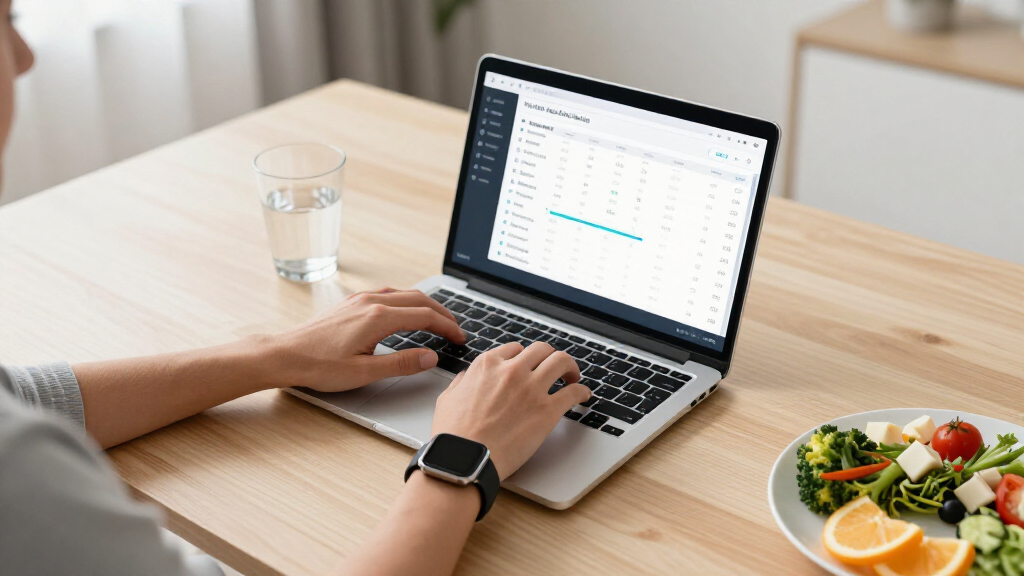

The best personal health and wellness trackers in 2026 split into three camps: smart rings you forget you’re wearing, wrist-worn bands and watches with screens and bigger feature lists, and even a paper journal for people who want reflection instead of raw data. My top pick is the RingConn Gen 2 Smart Ring, which pairs sleep apnea monitoring and stress tracking with no subscription fee — a combination almost nothing else in this lineup matches. The Fitbit Inspire 3 is the easiest starting point for beginners thanks to its polished app, while the Fitness Tracker with Personalized Coaching suits data-hungry users who want recovery guidance and 30+ day battery life. The biggest tradeoffs you’ll face are ring versus wrist comfort, one-time cost versus subscriptions, and how much you trust budget sensors with bold metrics like blood pressure. Keep reading for the full breakdown of all nine picks, who each one suits, and who should skip it.
Get ready for Prime Big Deal Days — try Prime free
Exclusive member deals on October 6–7, plus fast free delivery. Cancel anytime.
Start your free trialAs an affiliate, we earn on qualifying purchases.
Key Takeaways
- The RingConn Gen 2 earned the top spot because it combines sleep apnea monitoring with no subscription fee — the only ring in this lineup that pairs a genuinely premium health feature with a one-time price.
- Three of the nine picks are smart rings, and all three skip subscriptions, which makes them hundreds of dollars cheaper than subscription-based wearables over two or three years of ownership.
- The Fitbit Inspire 3 is the only big-name brand here, and its app polish and reliable sleep staging beat the generic companion apps bundled with the budget watches — the clearest case in this roundup where paying more buys software, not sensors.
- Both budget smartwatches advertise 100+ sport modes and blood pressure readings, but sport-mode counts are mostly marketing, and wrist-based blood pressure on sub-$100 devices is an estimate rather than a measurement.
- A paper Wellness Journal earned a place on this list because habit, mood, and food logging often drive behavior change better than passive sensor data — and it never needs charging.



| personal health and wellness tracker | Compatibility | Color | Battery Life |
|---|---|---|---|
| Smart Ring Health Tracker | iPhone & Android | Green | 5 days (up to 7 claimed) |
| Smart Ring No Subscription | iOS & Android | Rose Gold | 5 days |
| Fitness Tracker with 30+ Day B | Android 5.0+ / iOS 10.0+ | — | 30+ days |
| RingConn Gen 2 Smart Ring | Android & iOS | Silver | 10-12 days |
| Wellness Journal | — | Pastel Rainbow | — |
| Google Fitbit Inspire 3 | iOS 16.4+ and Android 11.0+ | Midnight Zen/Black | — |
| Health & Fitness Tracker Watch | Android 4.4+ / iOS 9.0+ | — | — |
| Smart Watch Health Fitness Tra | Android 4.4 / iOS 8.4 or above | — | 6-7 days heavy use; 10-12 days daily use |
| Smart Ring Fitness Tracker for | Android & iOS | Matte Pink | — |
More Details on Our Top Picks
Smart Ring Health Tracker (Green, Size 6)
This green smart ring is the cheapest way into ring-style tracking in this lineup, and it covers the expected bases — heart rate, blood oxygen, sleep, steps — plus a blood pressure estimate that even the pricier RingConn Gen 2 doesn’t advertise. I’d treat that reading as a rough guide rather than medical data, which holds true for every ring here. The 5-day battery falls well short of RingConn’s 10-12 days, so buyers trade charging frequency for a lower entry price. Extras like remote photography and family health sharing sweeten the deal for gift-givers. The catch: at 3.5 g of alloy rather than titanium, durability is a question mark under rough use, and the size 6 fit demands careful measurement before ordering. This pick makes the most sense for curious first-timers who want full vitals tracking at minimal cost.
Pros:- Tracks heart rate, blood oxygen, blood pressure, and sleep at the lowest price in this lineup
- IP68 rating holds up to swimming and outdoor use
- Remote photography and family health sharing add gift appeal
- Featherweight 3.5 g build is easy to forget on the finger
Cons:- 5-day battery needs far more frequent charging than premium rings
- Alloy construction is less rugged than titanium under rough wear
- Size 6 fit requires careful measurement before ordering
Best for: First-time smart ring buyers with smaller fingers (size 6) who want full vitals tracking at the lowest price in the roundup
Not ideal for: Rough-and-tumble users and serious athletes — the alloy build and app ecosystem are less proven than the RingConn Gen 2’s
- Material:Aerospace-grade alloy
- Color:Green
- Size:6
- Weight:3.5 g
- Battery Life:5 days (up to 7 claimed)
- Water Resistance:IP68
- Charging:USB with 300mAh case
- Compatibility:iPhone & Android
Our verdict“The right starter ring for budget-conscious buyers with smaller fingers who can live with shorter battery life.”
Smart Ring No Subscription, Health Tracker Ring for Women (Rose Gold, Size 9)
What separates this ring from the green budget model is value over time: every feature, including HRV and stress tracking, stays free forever, while many rivals quietly gate their best metrics behind monthly fees. Its five sport modes — walking, running, cycling, yoga, hiking — also make it more workout-friendly than the size-6 budget ring, which leans on passive monitoring. Stacked against the RingConn Gen 2, though, this ring gives up sleep apnea detection and nearly a week of battery life, so buyers paying for polish should look there instead. The 400mAh charging case keeps the 5-day battery painless on trips. Real drawbacks: it ships in size 9 only, which excludes a large share of buyers outright, and the rose gold finish reads less refined than a traditional metal band. A sensible middle ground for fee-averse shoppers.
Pros:- No subscription — every metric, including HRV and stress, stays free
- Five sport modes make it more workout-ready than basic rings
- 400mAh charging case keeps the 5-day battery painless on the road
- IP68 waterproofing is safe for swimming
Cons:- Ships in size 9 only, excluding many buyers outright
- Rose gold styling looks less refined than a traditional ring
- Full functionality depends entirely on the companion app
Best for: Women who wear size 9 and want workout-friendly tracking with zero recurring fees
Not ideal for: Anyone outside size 9 — there is no sizing flexibility — and style purists who want the look of a real metal ring
- Size:9
- Color:Rose Gold
- Battery Capacity:400mAh (charging case)
- Battery Life:5 days
- Waterproof Rating:IP68
- Sport Modes:Walking, Running, Cycling, Yoga, Hiking
- Compatibility:iOS & Android
- Subscription:None required
Our verdict“The best long-term value for size-9 wearers who want workout tracking with zero monthly fees.”
Fitness Tracker with 30+ Day Battery, Coaching & Menstrual Cycle Insights
Most trackers in this roundup need a charger within a week; this one stretches past 30 days per charge, and that changes how it fits into daily life — wear it, forget it, open the app when curiosity strikes. That endurance pairs with unusually deep software for the price: 170+ sports modes, stress and sleep tracking, and menstrual cycle insights that none of the smart rings here match. Compared with the rings, the interchangeable knitted and velcro straps give it a softer, more casual look, though buyers wanting at-a-glance stats should consider the touchscreen tracker watches elsewhere in this roundup instead. The 1 ATM rating is the real compromise — it survives sweat and rain but not swimming, unlike the IP68-rated Smart Ring No Subscription. It also leans entirely on Bluetooth pairing, with no onboard display for mid-workout checks.
Pros:- 30+ days of battery life, the longest in this roundup by a wide margin
- 170+ sports modes plus stress, sleep, and menstrual cycle insights
- Interchangeable knitted and velcro straps suit different looks
- All app features are free with no subscription
Cons:- 1 ATM rating rules out swimming and hot baths
- Screenless design — every stat lives in the phone app
- Bluetooth-only, so it’s dependent on a paired smartphone nearby
Best for: People who hate charging devices and want guided coaching plus menstrual cycle insights in a lightweight band
Not ideal for: Swimmers — 1 ATM means no pool sessions — and anyone who wants a screen on their wrist
- Battery Life:30+ days
- Water Resistance:1 ATM (splash-proof only)
- Sports Modes:170+
- Sleep Tracking:Yes
- Strap Options:Knitted and velcro
- Display:None (screenless)
- Compatibility:Android 5.0+ / iOS 10.0+
- Subscription:None required
Our verdict“Ideal for anyone who wants months between charges and guided wellness insights, as long as they never swim with it.”
RingConn Gen 2 Smart Ring
The RingConn Gen 2 earns the top spot because it goes past step counting into genuinely health-changing territory: sleep apnea monitoring, HRV, stress and blood oxygen, all packed into a 2-gram titanium ring. Where the cheaper rings in this lineup stop at basic vitals, RingConn’s apnea detection is the kind of feature that can alter a buyer’s health trajectory, and the app charges no subscription for any of it. Battery life of 10-12 days roughly doubles what the budget rings manage, and 100-meter water resistance means it stays on in the pool. The tradeoffs: there is no display, so everything funnels through the phone app, and a sizing kit is practically required before ordering since wrong-size returns are common. Silver is also the only finish, which limits appeal next to the rose gold Smart Ring No Subscription for style-conscious buyers.
Pros:- Sleep apnea monitoring, a feature none of the cheaper rings here offer
- 10-12 day battery roughly doubles budget ring endurance
- Titanium build at just 2 g with 100 m water resistance
- No subscription for any health feature
Cons:- No display — all data requires the smartphone app
- Silver is the only color option
- Sizing kit is practically required, adding a step before purchase
Best for: Health-focused buyers concerned about sleep apnea who want premium titanium build and no subscription
Not ideal for: Budget shoppers and anyone who wants at-a-glance stats — it’s the priciest ring here and has no display
- Size:10
- Color:Silver
- Material:Titanium
- Weight:2 g
- Battery Life:10-12 days
- Water Resistance:100 meters
- Tracked Metrics:Sleep, Sleep Apnea, Stress, Heart Rate, HRV, Blood Oxygen
- Compatibility:Android & iOS
- Warranty:12 months
Our verdict“The ring to buy if sleep apnea insight and premium build matter more than price.”
Wellness Journal – 90 Day Health, Fitness & Mindfulness Tracker (Pastel Rainbow)
The Wellness Journal is the outlier in this roundup: a 90-day paper planner that logs habits, food, mood, sleep, and gratitude without a single sensor. That sounds like a limitation until it’s set against the rings — the RingConn Gen 2 and its rivals record data automatically, but they can’t prompt reflection the way a structured daily page does, and there’s no battery, app, or pairing to manage. I’d frame it less as a tracker and more as a behavior-change tool for people who abandon wearables after a month. The tradeoffs are real: a 3.8/5 customer rating sits well below every device here, paper quality and durability are poorly documented, and the dense layout — body measurements, vitamins, anxiety logs — can overwhelm anyone who just wants a quick habit check. Data-driven buyers should pick a ring instead.
Pros:- 90 days of structured pages covering habits, food, mood, sleep, and gratitude
- Weekly and monthly planners keep goals visible over time
- No battery, app, or pairing — works anywhere
- Pastel rainbow design is gift-friendly
Cons:- 3.8/5 customer rating trails every device in this roundup
- Paper quality and durability are poorly documented
- Dense layout can overwhelm casual users
Best for: Paper-and-pen people building mindfulness, gratitude, and diet habits through a structured 90-day reset
Not ideal for: Data-driven buyers who want automatic, precise metrics — every entry here is manual, with no sensors at all
- Brand:Templatables
- Format:A5, 90-day planner
- Color:Pastel Rainbow
- Target Audience:Adult
- Tracking Areas:Fitness, meals, body measurements, sleep, mood, vitamins, anxiety
- Model Number:TPWPPR
- Customer Rating:3.8/5
Our verdict“A mindful, screen-free alternative for people who track habits better on paper than on a wrist.”
Google Fitbit Inspire 3 – Midnight Zen/Black – Small and Large Bands
The Fitbit Inspire 3 earns the top spot because it pairs a polished app ecosystem with genuinely useful metrics like daily readiness scores and stress tracking — things the cheaper watch-style options here, like the 1.47-inch Gold tracker, can’t match in depth or consistency. Where that rival counters with a bigger screen and 100+ sports modes for less money, the Inspire 3 bets on more trustworthy sleep and heart-rate data, which matters more if you’re making real decisions about recovery or training load. The tradeoffs are honest ones: Fitbit gates its best insights behind Premium once the included 3-month trial ends, and the slim band means a far smaller display than any watch in this lineup. This pick makes the most sense for buyers who value data quality over screen size.
Pros:- Readiness scores and stress tools translate raw data into usable daily guidance
- Mature, well-supported app ecosystem on both iOS and Android
- Small and large bands included, so fit works out of the box
- Slim, light band design that’s comfortable for 24/7 wear
Cons:- Deepest insights sit behind a Premium paywall after the trial period
- Minimal display compared with watch-style trackers at similar prices
- Full functionality depends on a compatible smartphone nearby
Best for: Health-focused buyers who want reliable sleep, stress, and readiness data inside a mature app they’ll actually keep using
Not ideal for: Anyone who wants a large on-wrist display, or who refuses to pay a subscription once the 3-month Premium trial expires
- Color:Midnight Zen/Black
- Band Sizes:Small and Large included
- Compatibility:iOS 16.4+ and Android 11.0+
- Key Features:Stress management, sleep tracking, 24/7 heart rate, exercise modes
- Membership:3-month Google Health Premium trial included
- Form Factor:Slim wristband tracker
Our verdict“Buy this if you want the most dependable health data and app experience in the roundup and can live with a small screen and a likely subscription.”
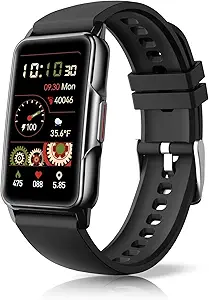
Health & Fitness Tracker Watch for Men and Women, Gold, 1.47″ HD Touchscreen, 24/7 Heart Rate, Blood Oxygen, Sleep Monitoring, 100+ Sports Modes, IP68
Compared with the Fitbit Inspire 3, this 1.47-inch tracker watch gives you a far bigger full-color touchscreen for a fraction of the price, plus 100+ sports modes that cover everything from running to yoga — and no premium tier locking away your own data. Against the Smart Watch with 115 modes, the spec sheet is nearly a mirror image, so I’d decide between them on styling and whichever is cheaper the day you buy. The catches are real: you can read notifications but can’t answer calls or reply to texts, readings are for fitness reference rather than anything medical, and sensor accuracy plus app polish won’t match the bigger brands. For buyers who mostly want a readable screen, solid basics, and IP68 water resistance, the screen-to-price ratio is hard to argue with.
Pros:- Large 1.47-inch full-color touchscreen with customizable watch faces
- 100+ sports modes cover casual and serious training alike
- IP68 rating handles rain, sweat, and outdoor workouts
- No subscription required to view your health data
Cons:- Can’t answer calls or reply to texts from the watch
- Sensor data is for fitness reference only, not medical use
- Companion app and accuracy trail established brands
Best for: Budget-minded buyers who want a large, readable touchscreen and broad sport coverage without paying brand-name prices or subscription fees
Not ideal for: Buyers who need medical-grade readings, call handling from the wrist, or the app depth of an established ecosystem like Fitbit’s
- Display:1.47″ TFT full-color touch screen (170×320 px)
- Sports Modes:100+
- Sensors:Heart rate, blood oxygen, sleep monitoring
- Water Resistance:IP68
- Battery:190mAh, low power consumption
- Compatibility:Android 4.4+ / iOS 9.0+
- Extras:Customizable watch faces, notifications, weather, remote camera, find phone
Our verdict“The right pick if you want maximum screen and sport modes per dollar and can accept notification-only messaging and reference-grade sensors.”
Smart Watch Health Fitness Tracker with Heart Rate, Blood Oxygen, Blood Pressure, Sleep Monitoring, 115 Sports Modes, Waterproof for Android and iPhone
On paper this overlaps heavily with the 1.47-inch Gold tracker, but it pulls ahead in two places that matter: blood pressure monitoring joins the usual heart-rate and blood-oxygen sensors, and battery life stretches to 10-12 days of typical use with up to 30 days on standby. That combination suits frequent travelers and anyone tired of charging a wearable every few nights. The tradeoff is complexity — 115 sports modes and a long menu of health readouts can overwhelm someone who just wants steps and sleep, and the 1.47-inch screen still feels cramped next to larger smartwatches. Wrist-based blood pressure at this price should be read as a trend line, not a diagnosis. Set beside the screen-free Smart Ring, this option stands out for sheer metric volume per dollar, provided you’re willing to learn its menus.
Pros:- Adds blood pressure to heart-rate, blood-oxygen, and sleep tracking
- 10-12 days of daily-use battery, up to 30 days standby
- 115 sports modes for unusually broad activity coverage
- IP68 waterproofing rated for swimming and showering
Cons:- Dense feature set can overwhelm casual users
- Wrist-based blood pressure is a trend indicator, not a medical reading
- 1.47-inch display feels small for users who want larger text
Best for: Data-hungry users who want the widest sensor set — including blood pressure — plus multi-week standby and don’t mind digging through menus
Not ideal for: Minimalists or first-time tracker buyers who’d find 115 modes and dense health readouts more confusing than motivating
- Display:1.47-inch HD color full touch screen
- Health Monitoring:Heart rate, blood oxygen, blood pressure, sleep
- Sports Modes:115 modes
- Battery Life:6-7 days heavy use; 10-12 days daily use
- Standby Time:Up to 30 days
- Waterproof:IP68
- Compatibility:Android 4.4 / iOS 8.4 or above
- Strap Size:Adjustable 5.0–9.05 in
Our verdict“Choose this if you want the most sensors and the longest battery in the roundup and won’t be put off by a busier interface.”
Smart Ring Fitness Tracker for Women & Men, Sleep, Step, Blood Oxygen, Heart Rate Monitor, Long-Lasting Battery, No Subscription Fee, Compatible with Android & iOS (Matte Pink, Size 11)
Worn on a finger instead of a wrist, this smart ring trades the touchscreen away entirely in exchange for comfort — something the Fitbit Inspire 3 and both watch-style trackers here can’t offer, especially overnight. Sleep, heart-rate, blood-oxygen, and stress tracking run quietly in the background, and the no-subscription model means the data you buy is the data you keep, unlike Fitbit’s Premium upsell after month three. Against the RingConn Gen 2 elsewhere in this roundup, it undercuts on price but skips extras like sleep-apnea screening. The drawbacks deserve attention: the listing stays vague on exact battery life and gives no water-resistance or durability rating, and a fixed Size 11 in Matte Pink narrows who it fits. This model is better suited to sleep-first buyers who dislike wearing a watch to bed.
Pros:- Screen-free ring design is far more comfortable for sleep than any wrist device
- No subscription fee — full data access is included
- Tracks heart rate, blood oxygen, stress, sleep, and activity
- Works with both Android and iOS
Cons:- No published water-resistance or durability rating
- Battery life described only as ‘long-lasting’ with no concrete figures
- Single fixed size and color limit who it fits and suits
Best for: Sleep-focused users who want discreet, screen-free 24/7 tracking with no ongoing fees and already know a Size 11 fits
Not ideal for: Swimmers, athletes wanting on-device stats mid-workout, or anyone who needs documented water resistance and sizing flexibility
- Form Factor:Smart ring (no display)
- Color:Matte Pink
- Size:11 (fixed)
- Tracking:Heart rate, blood oxygen, stress, sleep, activity
- Subscription:None required
- Battery:Long-lasting (duration not specified)
- Compatibility:Android & iOS
Our verdict“The right call if overnight comfort and zero subscription fees outrank documented durability and a display.”
How We Picked
I evaluated each tracker on the factors that actually change day-to-day ownership: sensor coverage and credibility (heart rate, SpO2, sleep staging, and whether bold claims like blood pressure hold up), comfort over 24/7 wear, battery life, app quality, and total cost of ownership including subscription fees. Compatibility with both iPhone and Android was a baseline requirement, and every pick had to offer a clear reason a buyer would choose it over the others.
The ranking reflects long-term value more than spec sheets. That’s why the RingConn Gen 2 leads: sleep apnea monitoring is a meaningfully differentiated health feature, and skipping the subscription keeps its real cost below rivals. The Fitbit Inspire 3 ranks high on software maturity even with modest hardware, while the budget watches land lower because their long feature lists mask weaker apps and unverifiable blood pressure claims. The Wellness Journal rounds out the list deliberately — for some buyers, the best tracker is the one they’ll actually keep using, and pen-and-paper reflection has a real track record there.
| personal health and wellness tracker | Color |
|---|---|
| Smart Ring Health Tracker | Green |
| Smart Ring No Subscription | Rose Gold |
| Fitness Tracker with 30+ Day B | — |
| RingConn Gen 2 Smart Ring | Silver |
| Wellness Journal | Pastel Rainbow |
| Google Fitbit Inspire 3 | Midnight Zen/Black |
| Health & Fitness Tracker Watch | — |
| Smart Watch Health Fitness Tra | — |
| Smart Ring Fitness Tracker for | Matte Pink |
Factors to Consider When Choosing Personal Health And Wellness Trackers
Nine products, four form factors, and a wide price spread — the right pick depends less on specs than on how you plan to live with the thing. These are the factors I’d weigh before buying any tracker in this roundup, including the mistakes buyers make most often.
Ring, Band, Watch, or Paper: Form Factor Decides What You’ll Actually Wear
The single biggest decision isn’t which sensor suite you want — it’s which shape you’ll keep on your body. Smart rings disappear on your finger and are the easiest to sleep in, which is why three of them made this list, but they need accurate sizing and show you nothing until you open the app. Wristbands like the Inspire 3 split the difference: slim enough for 24/7 wear, with a small screen for glanceable stats. Smartwatches give you the biggest displays and the most sport modes, but plenty of people take them off at night, which guts their sleep data. The paper journal sits at the other extreme — no charging and no notifications, but no passive data either. The most common buying mistake in this category is choosing by feature list and then not wearing the device to bed. A tracker that lives on your nightstand captures none of the sleep and recovery data that justifies owning one.
The Sticker Price Isn’t the Real Price
Wearables are one of the few gadget categories where the purchase price can be the smaller half of the bill. Subscription-based platforms typically gate their best analysis — recovery scores, guided programs, long-term trends — behind $5 to $15 per month, which adds up to $120 to $360 over two years. Most of this roundup deliberately favors no-subscription options, including the RingConn Gen 2 and all three rings, because their real cost is the number on the listing. The tradeoff is that free companion apps from smaller brands get updated less often, and their trend analysis is thinner than what a mature paid platform offers. Before comparing any two trackers, multiply the monthly fee by 24 and add it to the price — a $99 ring with no fee often beats a $149 band with a $10 subscription by year two. If you know you’ll actually follow structured coaching, the math can flip, so judge that honestly rather than aspirationally.
Treat Blood Pressure and SpO2 Claims With Healthy Skepticism
Several budget picks in this lineup advertise blood pressure monitoring, and that claim deserves scrutiny before it drives a purchase. Optical sensors on the wrist or finger estimate pressure from pulse-wave patterns, and those estimates drift further from cuff readings than most listings admit — calibration against a real cuff helps but doesn’t close the gap. SpO2 readings are more credible for spotting overnight trends than for any single number, and sleep apnea features screen for risk rather than diagnose anything. Where every tracker here genuinely earns its keep is trend data: resting heart rate drifting up, sleep duration shrinking, recovery sliding over weeks. Those patterns are what prompt useful changes, and they don’t require clinical precision to be valuable. If you have a real medical concern, use a wearable’s trends as a conversation starter with your doctor, not as an answer.
Battery Life Shapes the Data You Actually Get
Advertised battery life quietly decides how complete your data will be. The rings in this roundup run roughly a week per charge, the coaching band claims 30+ days, and the touchscreen watches typically need a top-up every few days — and every charging session is a window where nothing gets tracked. Short-battery devices work fine if you build charging into a fixed routine, like your morning shower; without that anchor, sleep data ends up full of gaps. Battery health also degrades, so a ring that lasts seven days on day one may manage five by year two, which matters on a multi-year purchase. My advice: pick the device whose charging rhythm fits a habit you already have, because consistency of wear beats any single sensor spec. A modest tracker worn 23 hours a day outperforms a powerful one that spends every third night on a charger.
Match the Tracker to the Goal, Not the Other Way Around
The fastest way to waste money in this category is buying for the person you wish you were. If your real question is why am I always tired, prioritize sleep staging and overnight comfort — that points to a ring or slim band, not a 115-sport-mode watch. If you want training guidance, look for recovery scores and coaching rather than raw mode counts, since most people use fewer than five sport modes in a year. If you’re brand new to tracking, a polished app with gentle nudges will keep you engaged longer than a dense data dashboard. And if your goals are habits, mood, and food, no sensor solves that — reflection does, which is the journal’s whole case. Write down the one question you want your tracker to answer, then buy the device that answers it best; everything else on the spec sheet is decoration.
Frequently Asked Questions
Are subscription-free smart rings as accurate as the big-name trackers?
For core metrics — resting heart rate, HRV trends, sleep duration — the no-subscription rings in this roundup hold up well against mainstream bands, because the underlying optical sensors are similar across the category. Where big brands still pull ahead is sleep staging refinement and the quality of trend analysis in their apps, since their algorithms have been trained on far larger datasets. The rings here compensate with strong battery life and no monthly fee, which matters more to many buyers than marginal accuracy gains. Fit also plays a role: a ring that spins on your finger produces noisier data than a snug budget band. If you size a ring correctly and wear it consistently, the data is good enough for everyday wellness decisions. What no consumer wearable offers, at any price, is medical-grade precision.
Can a fitness tracker really measure blood pressure?
Not the way a cuff does. The budget watches and rings in this list that advertise blood pressure use optical sensors and algorithms to estimate pressure trends from pulse-wave data, and those estimates can drift well off cuff readings. Some devices ask you to calibrate against a real cuff periodically, which helps but doesn’t close the gap. Treat those numbers as directional at best — useful for spotting a rising or falling pattern, not for diagnosing hypertension. If blood pressure is a genuine health concern for you, buy a validated upper-arm cuff and use the wearable for everything else. No tracker in this roundup replaces that device, and I’d distrust any product listing that implies otherwise.
Is a smart ring or a wristband better for sleep tracking?
Rings win on comfort, and comfort decides whether sleep tracking actually happens. A lightweight ring is far easier to wear through the night than a watch with a bright screen and a strap that traps sweat, and finger arteries give clean pulse signals. Wristbands strike back with richer reporting — the Fitbit Inspire 3 in this list pairs solid hardware with more mature sleep-stage algorithms than any of the rings’ companion apps. If you already take your watch off at night, a band will sit in a drawer while a ring keeps collecting data. My rule of thumb: choose the ring if sleep is your main reason for buying, and the band if you also want daytime workout stats on a screen. Either beats a device you only wear half the day.
Do I need a subscription to get useful health insights?
No — and this roundup proves it. Most of the picks here, including the RingConn Gen 2 and all three no-subscription rings, deliver heart rate, sleep, stress, and activity data for a one-time purchase. Subscriptions typically pay for deeper analysis, guided programs, and long-term trend reports rather than access to your raw data. The question to ask yourself is whether you’ll actually use coaching content every week; if the answer is no, a subscription adds cost without adding value. On the other hand, if you’re the kind of person who follows structured plans, a coaching subscription can be worth more than fancier hardware. Decide based on your real habits, not on what the marketing page highlights.
Why would anyone choose a paper wellness journal over a wearable?
Because awareness and measurement aren’t the same thing. Wearables excel at passive data — heart rate, sleep, steps — but they capture almost nothing about mood, gratitude, food choices, or why a week felt good or bad. A journal forces reflection, and reflection is what changes behavior for many people; writing down meals and moods creates accountability a sensor can’t. It’s also the only option in this roundup with zero charging, zero app permissions, and zero data privacy tradeoffs. The honest limitation is that it demands daily discipline, and plenty of journals end up half-filled. If you know you stick with routines, it’s a legitimate tool — and it pairs well with a wearable if you want both sides of the picture.
Conclusion
After weighing all nine, my pick for best overall is the RingConn Gen 2 — sleep apnea monitoring, stress tracking, and a one-time price give it the strongest long-term value in this lineup. The best value title goes to the Smart Ring No Subscription (Rose Gold), which offers the same ring convenience as the leader at a lower price, with slightly less ambitious health features. If you’d rather spend up for guidance, the best premium choice is the Fitness Tracker with Personalized Coaching, whose 30+ day battery and recovery feedback justify the cost for committed trainers. Beginners should start with the Fitbit Inspire 3 — its app is the most forgiving and polished here. And for specific needs: the two budget touchscreen watches suit anyone who wants a big display and sport modes on a tight budget, while the Wellness Journal is the right call if your goals are habits, mood, and food rather than biometrics. Choose the tracker that matches the question you’re actually asking about your health, and it will earn its place on your body instead of in a drawer.
NFL season / tailgating Picks
team gear
As an affiliate, we earn on qualifying purchases.