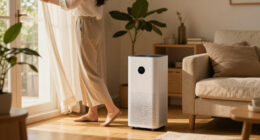
For an air purifier for 2,500 sq. ft., I’d start with the Blueair Blue Pure 211i Max as the best overall choice for shoppers prioritizing a known large-room model with smart controls. The KNKA APH4000 and SIESEAN H13 stand out as alternatives for buyers comparing broad coverage claims and HEPA-style filtration. The main tradeoff is that a stated room-size figure does not tell you how quickly a purifier cleans the air, how loud it is at useful speeds, or how often its filters need replacement. I compare those differences alongside controls, upkeep, and fit for different home layouts. Read on for the full breakdown and a guide to choosing a model for your actual space.

Get health and wellness essentials delivered free with Prime
- Fast, free delivery on millions of items
- Prime Video, Amazon Music and more included
- Member-only deals all year
Complete the kit


Key Takeaways
- The Blueair Blue Pure 211i Max leads the roundup for buyers who want a large-room option with app-connected controls; shoppers who prefer simpler operation may favor a non-smart model.
- Coverage claims need context. The SIESEAN lists up to 3,500 sq. ft., but buyers should check the stated air-change rate and room conditions before treating that number as equivalent to fast cleaning across a full home.
- The lineup splits between feature-led and straightforward choices. The Blueair and Winix include app controls, while several MOOKA options keep the feature set more focused.
- Large-room capacity and convenient placement can conflict. A purifier designed for broad coverage may be harder to position in a compact room or open-plan area with limited floor space.
- Filter care is part of the purchase decision. Compare replacement-filter availability and the maker’s recommended schedule, since upkeep affects long-term convenience as much as the initial feature set.
| MOOKA PR1 Air Purifier for Large Rooms, White |  | Best for Pet Households Near the Target Size | Model: PR1 | Coverage: Up to 2,200 sq. ft. | Filtration: Four-stage system with washable pre-filter | VIEW ON AMAZON | See Our Full Breakdown |
| Blueair Blue Pure 211i Max Smart Air Purifier |  | Best Overall for 2,500 Sq. Ft. | Coverage area: 3,234.75 sq. ft.; product description states one-hour cleaning | Filter technology: HEPASilent | Filter type: Activated carbon | VIEW ON AMAZON | See Our Full Breakdown |
| KNKA APH4000 Air Purifier for Home, White |  | Best for Smaller Rooms Within a Large Home | Model: APH4000 | Maximum room size: 1,695 sq. ft. at 1 air refresh per hour | Room size for 4.8 air refreshes per hour: 350 sq. ft. | VIEW ON AMAZON | See Our Full Breakdown |
| Winix 5510 Air Purifier with App Control |  | Best for Allergen and Odor Control in a Smaller Zone | Model: 5510 | Room coverage: Up to 1,882 sq. ft. in 1 hour | Filtration: True HEPA and advanced odor-control carbon filter | VIEW ON AMAZON | See Our Full Breakdown |
| LUNINO K2 Air Purifier for Large Rooms |  | Best Value for Large-Area Coverage | Coverage area: Up to 3,000 sq. ft. | Filtration system: Three-stage: washable pre-filter, HEPA filter, activated carbon | Pollutant capture: 99.97% of listed airborne pollutants | VIEW ON AMAZON | See Our Full Breakdown |
| MOOKA Air Purifier with HEPA Filter, White |  | Best for Quiet, Sub-2,500-Sq.-Ft. Spaces | Coverage: Up to 2,200 sq ft | Filtration: Three-stage system with HEPA filter and washable pre-filter | Air quality monitoring: PM2.5 sensor with digital display | VIEW ON AMAZON | See Our Full Breakdown |
| SIESEAN H13 HEPA Air Purifier for Large Rooms, Up to 3,500 sq. ft. |  | Best for Extra Coverage Headroom | Coverage area: Up to 3,500 sq ft | CADR: 235 CFM | Filter type: H13 True HEPA and activated carbon | VIEW ON AMAZON | See Our Full Breakdown |
| KOIOS H13 True HEPA Air Purifier with Carbon Filter |  | Best Match for the 2,500-Sq.-Ft. Target | Coverage: Up to 2,500 sq ft per hour | Filtration: H13 True HEPA and activated carbon | Pre-filter: Washable nylon | VIEW ON AMAZON | See Our Full Breakdown |
| air purifier for 2500 sq ft | Certifications | Filtration | Sleep mode noise | Filter replacement interval |
|---|---|---|---|---|
| MOOKA PR1 Air Purifier for Lar | CARB, ETL, DOE, FCC | Four-stage system with washable pre-filter | — | Every 3–6 months |
| Blueair Blue Pure 211i Max Sma | — | — | — | — |
| KNKA APH4000 Air Purifier for | — | Dual filters; washable pre-filter, high-efficiency filter, and activated carbon | 22–24 dB | 3–6 months |
| Winix 5510 Air Purifier with A | AHAM Verified and UL Certified | True HEPA and advanced odor-control carbon filter | — | — |
| LUNINO K2 Air Purifier for Lar | ETL, FCC, EPA, CARB | — | As low as 15 dB | Recommended every 3–6 months |
| MOOKA Air Purifier with HEPA F | CARB, ETL, DOE | Three-stage system with HEPA filter and washable pre-filter | As low as 20 dB | — |
| SIESEAN H13 HEPA Air Purifier | CARB, DOE, EPA, UL, ENERGY STAR | — | 30 dB | — |
| KOIOS H13 True HEPA Air Purifi | FCC, EPA, CARB, DOE | H13 True HEPA and activated carbon | As low as 20 dB | Every 3–6 months |
More Details on Our Top Picks
MOOKA PR1 Air Purifier for Large Rooms, White
For a home close to 2,500 sq. ft., the MOOKA PR1 falls short of the stated coverage: it is rated for up to 2,200 sq. ft., so I would treat it as a better fit for a somewhat smaller area or a zone within an open plan. Its washable pre-filter helps catch pet hair before it reaches the main filter, while Pet mode and automatic fan adjustment make it easier to respond to changing air quality. Compared with the LUNINO K2, it has a lower coverage rating but offers six fan settings and a PM2.5 display. Sleep mode is quiet at 26 dB, though the main filter still needs replacement every 3–6 months, and the sensor requires cleaning. I would skip it if one unit must cover the full target area.
Pros:- Washable pre-filter helps capture pet hair before it reaches the main filter.
- Pet and Auto modes adjust operation to household needs and detected air quality.
- PM2.5 display provides a visible reading of air quality.
- Sleep mode is rated as low as 26 dB, with six fan settings available.
Cons:- Its stated coverage of up to 2,200 sq. ft. is below the 2,500 sq. ft. target.
- The main filter is recommended for replacement every 3–6 months.
- The PM2.5 sensor requires regular cleaning.
Best for: Pet owners seeking a purifier for a room or defined zone smaller than 2,200 sq. ft., with a washable hair-catching pre-filter and automatic mode.
Not ideal for: Buyers who need a single purifier rated for the full 2,500 sq. ft. area or want to avoid periodic filter changes and sensor cleaning.
- Model:PR1
- Coverage:Up to 2,200 sq. ft.
- Filtration:Four-stage system with washable pre-filter
- Air quality sensor:PM2.5 sensor with real-time display
- Fan modes:Sleep, I, II, III, Auto, Pet
- Sleep noise:As low as 26 dB
- Filter replacement interval:Every 3–6 months
- Certifications:CARB, ETL, DOE, FCC
Our verdict“Choose the MOOKA PR1 for pet hair and flexible controls in a smaller zone, but not as a single-unit match for 2,500 sq. ft.”
Blueair Blue Pure 211i Max Smart Air Purifier
The Blueair Blue Pure 211i Max is the clearest match here for buyers seeking coverage around 2,500 sq. ft.: its stated area is 3,234.75 sq. ft., with the product description specifying that it cleans that area in one hour. That gives it more stated reach than the MOOKA PR1 and a closer fit for large open plans than the Winix 5510, rated for 1,882 sq. ft. Its HEPASilent filtration is listed for particles down to 0.1 micron, and app control, sensors, scheduling, and automatic fan adjustment give owners more ways to manage operation. The tradeoff is ongoing filter maintenance, and the supplied specifications list activated carbon as the filter type without detailing odor performance. At 14.4 inches square and 22.7 inches tall, it also needs a real place to stand.
Pros:- Stated coverage of 3,234.75 sq. ft. exceeds the 2,500 sq. ft. target.
- HEPASilent filtration is listed for particles as small as 0.1 micron.
- App, button, and Alexa controls support remote monitoring and scheduling.
- Sensors can adjust fan operation automatically; listed noise level is 23 dB.
Cons:- Filter replacement remains part of ongoing ownership.
- Its 14.4 x 14.4 x 22.7-inch body needs dedicated floor or furniture space.
- The supplied specifications do not give a replacement interval or detailed odor-reduction measures.
Best for: Owners of large open-plan homes who want stated coverage above 2,500 sq. ft. plus app monitoring, scheduling, and automatic fan control.
Not ideal for: Shoppers who want a compact purifier, or who need the most detailed supplied information about odor-filtering performance before choosing.
- Coverage area:3,234.75 sq. ft.; product description states one-hour cleaning
- Filter technology:HEPASilent
- Filter type:Activated carbon
- Particle retention size:0.1 micron
- Noise level:23 dB
- Wattage:46 watts
- Dimensions:14.4 x 14.4 x 22.7 inches
- Controls:App, buttons, Amazon Alexa, Android, iOS
Our verdict“For a single unit aimed at 2,500 sq. ft., I would start with the Blueair if its size and filter upkeep suit your home.”
KNKA APH4000 Air Purifier for Home, White
The KNKA APH4000’s headline coverage needs context for this roundup: its 1,695 sq. ft. rating provides one air refresh per hour, while its faster stated rate—4.8 refreshes per hour—applies to only 350 sq. ft. That makes it a weak choice as the sole purifier for 2,500 sq. ft., even though its dual filters and washable pre-filters suit a busy household. Compared with the Blueair 211i Max, the KNKA’s supplied coverage is much smaller, but it offers clearly stated CADR figures and modes for pets, sleep, eco, and automatic operation. Sleep mode is rated at 22–24 dB. I would place it in a bedroom, office, or other defined space rather than expect it to handle a whole large floor; filter replacement is also recommended every 3–6 months.
Pros:- Dual three-stage filters combine washable pre-filters, high-efficiency filters, and activated carbon.
- Sleep, PET, ECO, and Auto modes offer options for different rooms and routines.
- Sleep noise is listed at 22–24 dB.
- ECO mode can enter standby and restart automatically based on air quality.
Cons:- The 1,695 sq. ft. coverage figure is based on only one air refresh per hour.
- The 4.8-refreshes-per-hour rating applies to a much smaller 350 sq. ft. room.
- Filters are recommended for replacement every 3–6 months.
Best for: Households with a large home that want a quiet, dual-filter purifier for a bedroom or other smaller, defined room.
Not ideal for: Anyone seeking one unit to serve 2,500 sq. ft., especially if they expect the faster 4.8 refreshes-per-hour rate across a large area.
- Model:APH4000
- Maximum room size:1,695 sq. ft. at 1 air refresh per hour
- Room size for 4.8 air refreshes per hour:350 sq. ft.
- Smoke/dust/PM2.5 CADR:226 CFM (384 m³/h)
- Pollen CADR:244 CFM (415 m³/h)
- Filtration:Dual filters; washable pre-filter, high-efficiency filter, and activated carbon
- Sleep mode noise:22–24 dB
- Filter replacement interval:3–6 months
Our verdict“Choose the KNKA APH4000 for a quiet smaller-room setup, not for single-unit coverage of 2,500 sq. ft.”
Winix 5510 Air Purifier with App Control
The Winix 5510 pairs True HEPA filtration with an odor-control carbon filter, making it a sensible fit for households focused on pollen, dust, smoke, pet dander, and household odors. Its coverage is stated as up to 1,882 sq. ft. in one hour, so I would not treat it as a full-area answer for 2,500 sq. ft. The Blueair 211i Max has a larger stated coverage figure for buyers prioritizing a single large open plan; the Winix instead makes a more specific case for allergen capture, washable pre-filter upkeep, and app-based control. Its sensor adjusts fan speed in Auto mode, and the slowest setting is rated at 23.5 dB. The main limitation is the coverage gap, with the one-hour basis also worth factoring into expectations.
Pros:- True HEPA filtration is specified to capture 99.99% of airborne allergens as small as 0.01 microns.
- Advanced odor-control carbon filter targets household odors and VOCs.
- Washable fine-mesh pre-filter supports reusable first-stage particle capture.
- Air quality sensing, Auto mode, and app control add remote and automatic operation.
Cons:- Stated coverage of up to 1,882 sq. ft. is below the 2,500 sq. ft. target.
- The coverage figure is based on cleaning over a one-hour period.
- The supplied specifications do not state a filter replacement interval.
Best for: People with pets or seasonal allergies who want app control and a purifier for a room or zone smaller than 1,882 sq. ft.
Not ideal for: Buyers who need a single purifier rated for a 2,500 sq. ft. area or who want a stated faster air-refresh rate for that full area.
- Model:5510
- Room coverage:Up to 1,882 sq. ft. in 1 hour
- Filtration:True HEPA and advanced odor-control carbon filter
- Particle capture:99.99% of airborne allergens as small as 0.01 microns
- Pre-filter:Washable fine mesh
- Noise level:23.5 dB on the slowest speed
- Controls:Winix Smart App, air quality sensor, and Auto Mode
- Certifications:AHAM Verified and UL Certified
Our verdict“Pick the Winix 5510 for app-controlled allergen and odor filtration in a smaller zone, rather than as a solo 2,500 sq. ft. solution.”
LUNINO K2 Air Purifier for Large Rooms
The LUNINO K2 is a strong large-area contender for a 2,500 sq. ft. roundup, with stated coverage of up to 3,000 sq. ft. and a double-sided intake designed to draw air from both sides. That makes its coverage claim a closer fit than the MOOKA PR1’s 2,200 sq. ft. rating, while its six modes include Turbo for higher-intensity operation and Sleep for quieter use. It also combines a washable pre-filter, HEPA filter, activated carbon, and a real-time PM2.5 display. The listed 15 dB Sleep level is especially low, though the supplied data does not give a CADR or the air-refresh rate behind its coverage figure, so buyers should not assume the same cleaning pace as a model with a stated rate. Filter replacement is recommended every 3–6 months.
Pros:- Stated coverage of up to 3,000 sq. ft. exceeds the target area.
- Double-sided intake is designed to draw air in from two sides.
- Six fan modes include Turbo, Auto, and Sleep.
- PM2.5 display, automatic speed adjustment, and washable pre-filter support everyday monitoring and maintenance.
Cons:- The supplied specifications do not state a CADR or air-refresh rate for the 3,000 sq. ft. coverage.
- The HEPA filter is recommended for replacement every 3–6 months.
- Air quality readings may be briefly inaccurate after startup while the sensor assesses the air.
Best for: Buyers seeking a purifier with stated coverage above 2,500 sq. ft., multiple fan modes, and a washable pre-filter.
Not ideal for: Shoppers who need a published CADR or specified air-refresh rate to compare cleaning speed across a large open area.
- Coverage area:Up to 3,000 sq. ft.
- Filtration system:Three-stage: washable pre-filter, HEPA filter, activated carbon
- Pollutant capture:99.97% of listed airborne pollutants
- Fan modes:Sleep, Auto, Low, Med, High, Turbo
- Sleep mode noise:As low as 15 dB
- Air quality display:Real-time PM2.5 levels
- Filter replacement interval:Recommended every 3–6 months
- Certifications:ETL, FCC, EPA, CARB
Our verdict“Choose the LUNINO K2 for its stated 3,000 sq. ft. reach and flexible controls, but compare carefully if a published cleaning rate is a priority.”
MOOKA Air Purifier with HEPA Filter, White
For a space approaching 2,500 square feet, the MOOKA’s 2,200-square-foot stated coverage is a near fit, not a full match. Its PM2.5 display and Auto Mode let the fan respond to detected air changes, while the washable pre-filter can catch larger debris before it reaches the replaceable filter. Compared with the SIESEAN, which lists greater coverage and a 235 CFM CADR, this MOOKA is a more restrained choice for buyers who value its 20 dB sleep mode and lights-off option over more headroom. The tradeoff is clear: its coverage falls short of the roundup’s 2,500-square-foot target, and maintaining filtration still means buying replacement filters. I’d choose it for a somewhat smaller open area or for supplemental cleaning, not as the sole purifier for a full 2,500-square-foot home.
Pros:- PM2.5 display and Auto Mode adjust operation in response to detected air quality.
- Washable pre-filter can capture larger particles before they reach the replaceable filter.
- Sleep mode is rated as low as 20 dB and can turn the lights off.
- Four fan speeds and four timer settings offer straightforward control.
Cons:- Stated coverage of up to 2,200 square feet is below the roundup’s 2,500-square-foot target.
- Replacement filters are still needed to maintain filtration performance.
- The aromatherapy pad is included, but the product data does not specify whether essential oil is included.
Best for: Buyers with open rooms or connected living spaces below 2,200 square feet who want automatic air-quality response and a quiet sleep setting.
Not ideal for: Anyone relying on one unit to cover a full 2,500-square-foot area; the stated coverage is lower than the target, and the product data provides no CADR figure for comparison.
- Coverage:Up to 2,200 sq ft
- Filtration:Three-stage system with HEPA filter and washable pre-filter
- Air quality monitoring:PM2.5 sensor with digital display
- Fan speeds:4
- Sleep mode noise:As low as 20 dB
- Timer:2, 4, 6, or 8 hours
- Maximum-speed energy use:0.63 kWh per 24 hours
- Certifications:CARB, ETL, DOE
Our verdict“Choose the MOOKA for a large but sub-2,200-square-foot space where quiet automatic operation matters more than meeting the full 2,500-square-foot brief.”
SIESEAN H13 HEPA Air Purifier for Large Rooms, Up to 3,500 sq. ft.
The SIESEAN is the strongest fit here for shoppers who want coverage beyond 2,500 square feet: it lists up to 3,500 square feet and a 235 CFM CADR. Those figures give it more stated capacity than the MOOKA’s 2,200-square-foot coverage, though the manufacturer notes that real performance depends on room conditions. Its H13 True HEPA and activated carbon filtration targets particles as well as smoke, VOCs, and odors, and Auto Mode uses PM2.5 readings to guide fan operation. It also packs in practical controls, including a child lock, dimmer, timer, and filter-change indicator. The compromise is upkeep: replacement is recommended every three to four months, and its 30 dB sleep mode is not as quiet on paper as the 20 dB modes listed for the MOOKA and KOIOS. I’d favor this model when coverage headroom matters more than the lowest sleep-noise figure.
Pros:- Listed coverage of up to 3,500 square feet provides headroom beyond the 2,500-square-foot target.
- 235 CFM CADR offers a published airflow figure for comparison.
- H13 True HEPA and activated carbon filtration targets particles, smoke, VOCs, and odors.
- PM2.5 display, Auto Mode, child lock, dimmer, and filter indicator provide useful monitoring and control.
Cons:- Actual performance may vary with room conditions despite the large stated coverage.
- Replacement filters are recommended every three to four months.
- 30 dB sleep mode is louder on paper than the 20 dB modes listed for the MOOKA and KOIOS.
Best for: Households with a large open-plan area that want stated coverage beyond 2,500 square feet, automatic monitoring, and child-lock controls.
Not ideal for: Buyers prioritizing the quietest listed sleep mode or those who want longer intervals between filter replacements; replacement is recommended every three to four months.
- Coverage area:Up to 3,500 sq ft
- CADR:235 CFM
- Filter type:H13 True HEPA and activated carbon
- Air quality monitoring:PM2.5 display and Auto Mode
- Sleep mode noise:30 dB
- Energy use:As little as 0.66 kWh per day
- Recommended filter replacement:Every 3–4 months
- Certifications:CARB, DOE, EPA, UL, ENERGY STAR
Our verdict“Pick the SIESEAN if you want the greatest stated coverage in this batch and accept more frequent filter changes and a higher listed sleep-mode noise level.”
KOIOS H13 True HEPA Air Purifier with Carbon Filter
The KOIOS most directly matches this roundup’s size target, with air circulation listed for up to 2,500 square feet per hour. That wording matters: unlike the SIESEAN, which also publishes a 235 CFM CADR and states coverage up to 3,500 square feet, KOIOS provides no CADR figure, so I can’t make a direct airflow comparison from the supplied specs. It pairs H13 True HEPA and activated carbon with a washable nylon pre-filter, PM2.5 monitoring, and Auto Mode, giving buyers a useful mix of particle and odor filtration with less manual fan adjustment. Its 20 dB sleep mode, display-off option, child lock, and carry handle add flexibility that the simpler MOOKA does not list. The main caveat is that coverage is expressed as hourly circulation, not a room-size claim alone, and filter replacement is recommended every three to six months. I’d shortlist it for target-sized spaces, while checking room layout and replacement-filter availability before choosing.
Pros:- Listed circulation of up to 2,500 square feet per hour aligns most directly with the roundup’s target.
- H13 True HEPA and activated carbon target particles and odors.
- Washable nylon pre-filter may help extend the life of the other filters.
- 20 dB sleep mode, display-off option, child lock, and carry handle support flexible use.
Cons:- Coverage is specified as circulation per hour, making direct comparison with room-area claims less clear.
- No CADR figure is provided in the supplied product data.
- Replacement filters are recommended every three to six months.
Best for: Buyers targeting a space around 2,500 square feet who want H13 filtration, automatic fan adjustment, and a washable pre-filter.
Not ideal for: Shoppers who need a published CADR to compare airflow or want a clearly stated coverage figure independent of hourly circulation.
- Coverage:Up to 2,500 sq ft per hour
- Filtration:H13 True HEPA and activated carbon
- Pre-filter:Washable nylon
- Air quality monitoring:PM2.5 sensor with 4-color indicator
- Fan speeds:4
- Sleep mode noise:As low as 20 dB
- Timer:1–12 hours
- Filter replacement interval:Every 3–6 months
- Certifications:FCC, EPA, CARB, DOE
Our verdict“Choose the KOIOS for a roughly 2,500-square-foot space when its hourly-circulation claim fits your needs and you do not require a published CADR for comparison.”

How We Picked
I ranked these eight models for shoppers searching for an air purifier for 2,500 sq. ft., with priority given to how well a product’s stated coverage, filtration approach, and operating features fit that unusually large target. I also weighed usability—such as app controls, automatic modes, and straightforward settings—alongside footprint, maintenance needs, and the clarity of available product information. Coverage claims can use different test conditions, so I treated a large advertised area as a starting point, not proof that a unit will clean every layout equally well.
The order reflects the balance of large-room suitability, practical controls, and buyer clarity, rather than a single headline specification. The Blueair earns the lead for combining a large-room focus with connected controls; the KNKA, Winix, and SIESEAN serve different priorities around broad coverage claims, app convenience, and stated filtration. The MOOKA and KOIOS models remain relevant for shoppers seeking simpler or more targeted options, but buyers should verify that their coverage and airflow match the intended space. I do not treat a brand’s room-size figure as a substitute for checking air changes, noise at higher fan speeds, and filter costs.
| air purifier for 2500 sq ft | Filtration | Certifications |
|---|---|---|
| MOOKA PR1 Air Purifier for Lar | Four-stage system with washable pre-filter | CARB, ETL, DOE, FCC |
| Blueair Blue Pure 211i Max Sma | — | — |
| KNKA APH4000 Air Purifier for | Dual filters; washable pre-filter, high-efficiency filter, and activated carbon | — |
| Winix 5510 Air Purifier with A | True HEPA and advanced odor-control carbon filter | AHAM Verified and UL Certified |
| LUNINO K2 Air Purifier for Lar | — | ETL, FCC, EPA, CARB |
| MOOKA Air Purifier with HEPA F | Three-stage system with HEPA filter and washable pre-filter | CARB, ETL, DOE |
| SIESEAN H13 HEPA Air Purifier | — | CARB, DOE, EPA, UL, ENERGY STAR |
| KOIOS H13 True HEPA Air Purifi | H13 True HEPA and activated carbon | FCC, EPA, CARB, DOE |
Factors to Consider When Choosing Air Purifier For 2500 Sq Ft
Choosing for 2,500 sq. ft. takes more than matching a number on a box. I’d use the factors below to test whether a purifier fits the room layout, cleaning goal, and maintenance routine you can realistically support.
Match Coverage to the Room You Actually Want to Clean
A home’s total floor area is not always the right target: doors, hallways, and separate floors limit how air moves between rooms. Decide whether you need one purifier for a connected open-plan area or multiple units for closed-off rooms. Check the manufacturer’s coverage figure alongside the air-change rate used to calculate it; a larger area may assume fewer clean-air cycles per hour. If the published figure lacks that context, treat it as a rough guide rather than a guarantee. A slightly smaller stated area with a faster cleaning rate may suit allergy or smoke concerns better than a headline maximum. Avoid paying for whole-home coverage if your main problem is confined to one bedroom or living area.
Choose Filtration for the Pollutant You Want to Reduce
HEPA-style filters are aimed at airborne particles, including dust and pollen, while activated carbon is used to capture some odors and gases. A carbon layer’s usefulness depends on its quantity and design, not just the word “carbon” in a listing. If cooking smells or smoke are your primary concern, check whether the manufacturer describes carbon capacity or replacement details. For recurring pollen or pet dander, focus on particle filtration and how air is drawn through the unit. No room purifier removes every pollutant, and it cannot replace source control or ventilation. Match the filter system to the problem instead of assuming that one filter label covers every need.
Compare Airflow, Noise, and Daily Use
Large-room cleaning often depends on running the fan faster, which can make noise and energy use more noticeable. A purifier that is quiet only on its lowest setting may not suit someone who needs frequent air cleaning in a shared living space. Look for sound information across fan speeds, not just a single quiet-mode claim. Automatic modes and air-quality sensors can reduce hands-on adjustments, but they add little value if you plan to run a fixed setting. Before buying, consider where the unit will sit and whether its intake and outlet can remain unobstructed. The best specification is the one you can comfortably use day after day.
Check Filter Availability and Ongoing Upkeep
Filter replacement is a recurring task, so confirm that compatible replacements are easy to identify and that the maker gives a clear replacement interval. Actual filter life can vary with pollution levels, fan use, and household pets, which means a stated schedule is not a promise. Washable prefilters may capture larger debris and reduce the load on the main filter, but they still need regular cleaning. Check whether the unit signals filter changes or leaves you to track them yourself. A lower-maintenance design can be a better fit for a busy household even when it has fewer automated features. Factor in access to parts before choosing a model you expect to keep for years.
Decide Whether Smart Features Earn Their Place
App control can help when you want to change settings remotely, set schedules, or check status without walking to the unit. It may matter less if the purifier will run continuously on a manual setting. Automatic operation depends on sensor placement and the kinds of particles the sensor detects, so it should not be treated as a complete measure of indoor air quality. Consider whether other household members can use the controls easily and whether the unit remains usable without an app. Smart features can add convenience, but they should not outweigh a poor fit on coverage, noise, or filter upkeep. Choose connected controls for a specific routine, not simply because they are available.
Plan Placement Before You Buy
A large purifier needs open space around its air intake and outlet, which can make placement difficult in a crowded room. Measure the intended spot and check the unit’s dimensions before deciding that a high coverage claim makes it a fit. In a home with several closed rooms, one large unit may clean its immediate area well while doing little for distant spaces. Two smaller units can offer better room-by-room coverage, though they add another filter and power connection to manage. Keep the purifier away from curtains and furniture that block airflow, and place it where normal air circulation can help distribute cleaned air. A realistic placement plan often matters more than a small difference in the advertised coverage figure.
Frequently Asked Questions
Can one air purifier really clean a 2,500 sq. ft. home?
It depends on whether that area is open and connected or divided among rooms, and on the cleaning rate behind the stated coverage claim. One unit may suit a large open-plan space, but air will not move freely through closed doors or between floors. Check the room-size figure alongside the air changes per hour used to calculate it. If you need consistent cleaning in separate bedrooms and living areas, several smaller units may serve the layout better. Treat the advertised area as a guide to a test setup, not a guarantee for every home.
Should I choose a purifier rated for more than 2,500 sq. ft.?
A higher coverage figure can provide flexibility, but it is only useful when the rating reflects a cleaning speed that meets your needs. Some maximum-area claims may assume a slower air-change rate than buyers expect for allergens or smoke. Compare the stated airflow and air-change information before selecting a unit based on the largest number. Also check whether the purifier can run at a useful speed without creating too much noise for your room. A well-matched model is often a better choice than the one with the highest headline coverage.
Is one large purifier better than two smaller units?
One large unit can be simpler to operate and maintain in a connected open-plan area. Two smaller units can place filtration closer to the source in a home with closed rooms, a separate floor, or distant bedrooms. The tradeoff is more filter changes, more space required, and potentially more noise or energy use across the home. Think about where air can travel naturally and whether you want to clean one shared area or several distinct rooms. If you split units, compare their combined maintenance needs with those of a single large model.
Do I need an app or an air-quality sensor?
Neither feature is required for effective routine use, but each can make operation more convenient. An app helps if you want remote adjustments or schedules; an automatic mode can reduce manual changes when room conditions shift. Sensor readings reflect what the device detects near its own intake and may not represent every room or pollutant. If you prefer a simple routine, a clear manual control panel may be enough. Give priority to suitable coverage, filtration, and filter access before paying attention to connected features.
What should I check before buying a purifier for smoke, odors, or pets?
For smoke and odors, check whether the purifier includes an activated-carbon filter and whether the manufacturer provides useful details about its capacity and replacement. For pet dander and other particles, focus on particle filtration and airflow rather than odor claims alone. Pet hair can also load a prefilter, so find out whether it can be cleaned and how often the maker recommends doing so. A purifier can reduce airborne particles and some odors, but it will not remove the source of smoke or replace cleaning and ventilation. Match the filter design to your main concern, then verify that the unit can cover the room at a tolerable noise level.
Conclusion
For buyers who want a balanced large-room choice with connected controls, I’d start with the Blueair Blue Pure 211i Max as the best overall pick. The KNKA APH4000 is a sensible value-oriented option for shoppers focused on broad room coverage claims, while the Blueair is also the premium-leaning choice for people who want a more feature-led experience. Beginners who prefer a simpler setup may find a focused, straightforward model such as the MOOKA Air Purifier with HEPA Filter easier to approach than an app-centered unit. For buyers prioritizing a published coverage claim above 2,500 sq. ft., the SIESEAN H13 merits a closer look, but verify its cleaning-rate assumptions before relying on that figure. Whatever you choose, match the rated area to your room layout and check filter availability before purchase.
Halloween Picks
halloween
As an affiliate, we earn on qualifying purchases.