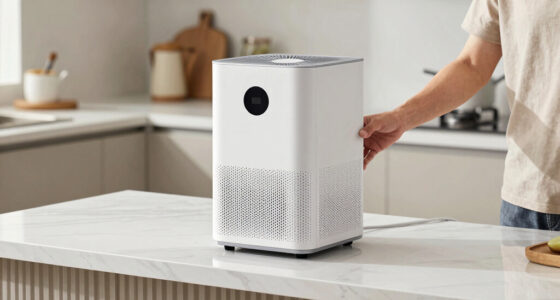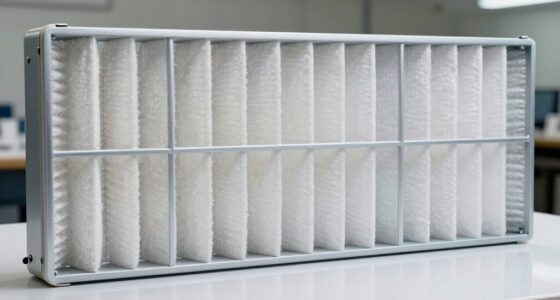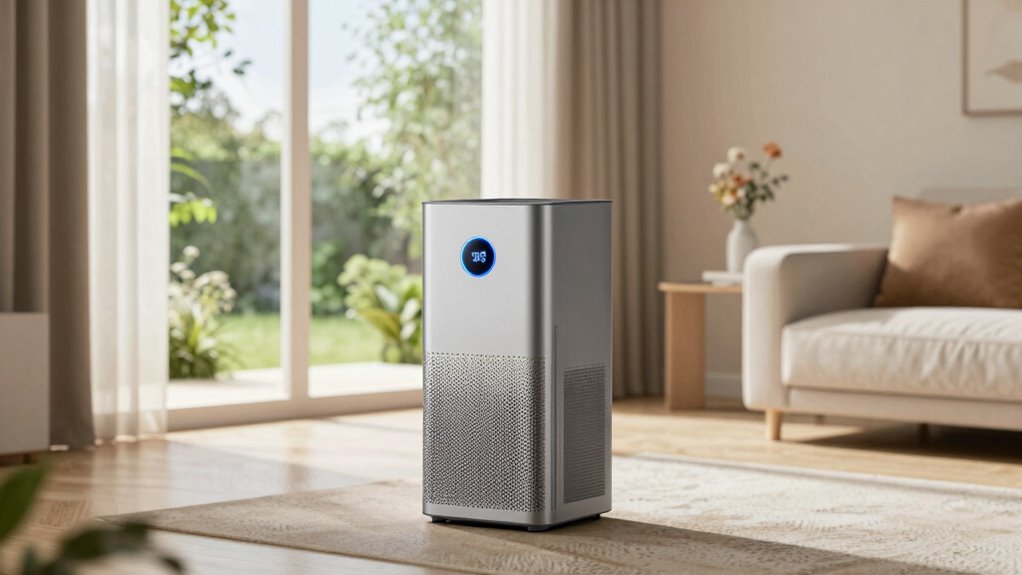
For an air purifier for VOCs and odors in a large room, my best overall pick is the Levoit Core 600S-P for buyers who want smart controls and broad-room coverage, while the Winix 5520 stands out for its odor-focused carbon filtration and the Coway Mighty AP-1512HH(W) for a more established, compact-room alternative. The main tradeoff is that HEPA filtration captures particles, while activated carbon is the part that adsorbs many gases and odors; a large advertised coverage area alone does not show how well a unit handles either job. Filter size, replacement cost, fan noise, and the room’s actual air-change rate all shape the choice. Read on for how these 12 models compare and which compromises make sense for different rooms and budgets.

Get health and wellness essentials delivered free with Prime
- Fast, free delivery on millions of items
- Prime Video, Amazon Music and more included
- Member-only deals all year
Complete the kit


Key Takeaways
- VOCs and smells call for meaningful carbon media: HEPA filtration targets particles, so a purifier’s carbon filter and its replacement schedule matter more for gases and odors.
- Large coverage claims need context: Compare the room size at a useful cleaning rate, not just the biggest square-foot figure on the package.
- Smart features separate the Levoit models: The Core 600S-P is the stronger fit for broad spaces, while the Vital 200S-P suits buyers who need a different room footprint and smart controls.
- The Winix 5520 and Coway Mighty serve different priorities: Winix puts more emphasis on odor filtration, while Coway is a smaller, familiar choice that may not suit the largest open rooms.
- More features can mean more upkeep: Washable pre-filters, app controls, and extra modes are useful only if they fit your cleaning habits and do not distract from carbon-filter maintenance.
| Air Purifiers for Home Large Room, Up to 2400 Ft² with True HEPA Filter |  | Best for Quiet, Sensor-Led Operation | Coverage: Up to 2,400 sq ft | Air refresh rate: Two times per hour | Filter type: True HEPA, 2X-Power filtration | VIEW ON AMAZON | See Our Full Breakdown |
| ECOSELF HAP602 Air Purifier for Large Rooms, White |  | Best for Simple, Quiet Large-Room Use | Model: HAP602 | Color: White | Room coverage: Up to 2,400 sq ft | VIEW ON AMAZON | See Our Full Breakdown |
| KNKA APH4000 Air Purifier for Home, White |  | Best for Measurable Particle Performance | AHAM verified: Yes | Smoke/Dust/PM2.5 CADR: 226 CFM (384 m³/h) | Pollen CADR: 244 CFM (415 m³/h) | VIEW ON AMAZON | See Our Full Breakdown |
| FreAire Air Purifier for Large Rooms up to 2,600 sq ft with HEPA Filter |  | Best for Maximum Stated Room Coverage | Coverage: Up to 2,600 sq ft per hour | Filtration: HEPA filter captures 99.97% of airborne particles | Air inlets: Front and dual-side intakes | VIEW ON AMAZON | See Our Full Breakdown |
| PuroAir 400 HEPA Air Purifier for Large Rooms |  | Best for VOC and Odor Filtration | Coverage: Up to 2,000 sq ft per hour | Filtration system: Pre-filter, HEPA filter, and activated carbon | Pollutant filtration: Up to 99.9% | VIEW ON AMAZON | See Our Full Breakdown |
| MOOKA PR1 Air Purifier for Large Rooms, White |  | Best for Pet Odors and Hair | Model: PR1 | Color: White | Coverage: Up to 2,200 sq. ft. | VIEW ON AMAZON | See Our Full Breakdown |
| Coway Mighty AP-1512HH(W) Air Purifier, White |  | Best for Specified Odor Filtration | Model: AP-1512HH(W) | Color: White | Coverage: Up to 1,748 sq. ft. in 60 minutes | VIEW ON AMAZON | See Our Full Breakdown |
| Winix 5520 Air Purifier for Large Rooms |  | Best App-Controlled Pick | Model: 5520 | AHAM-verified room coverage: 392 sq. ft. | Extended coverage claim: Up to 1,882 sq. ft. in 1 hour | VIEW ON AMAZON | See Our Full Breakdown |
| Dhyala Air Purifier with Wi-Fi, Dual HEPA Filters, and Aromatherapy |  | Best for Very Large Rooms | Coverage: Up to 3,000 sq. ft. in one hour | CADR: Up to 265 CFM | Filtration: Dual filters, each with washable pre-filter, HEPA filter, and activated carbon filter | VIEW ON AMAZON | See Our Full Breakdown |
| WESTHEY H13 HEPA Air Purifier for Home up to 1650 Sq Ft with Washable Pre-Filter |  | Best for Quiet Bedrooms | Model: AP02 | Coverage: Up to 1,650 sq. ft. | Filter type: H13 True HEPA | VIEW ON AMAZON | See Our Full Breakdown |
| Levoit Core 600S-P Smart Air Purifier for Large Rooms |  | Best for Extra-Large Open Plans | CADR: 391 CFM | Coverage: 2,933 sq ft once per hour | Faster-turnover coverage: 606 sq ft every 12.5 minutes | VIEW ON AMAZON | See Our Full Breakdown |
| LEVOIT Vital 200S-P Smart Air Purifier for Large Rooms |  | Best for Pet Homes and Large Rooms | Coverage area: Up to 1,875 sq ft | Smoke CADR: 250 CFM | Dust CADR: 254 CFM | VIEW ON AMAZON | See Our Full Breakdown |
| air purifier for vocs and odors large room | Coverage | Filtration |
|---|---|---|
| Air Purifiers for Home Large R | Up to 2,400 sq ft | — |
| ECOSELF HAP602 Air Purifier fo | — | Three-stage |
| KNKA APH4000 Air Purifier for | Up to 1,695 sq ft at 1 air refresh per hour | — |
| FreAire Air Purifier for Large | Up to 2,600 sq ft per hour | HEPA filter captures 99.97% of airborne particles |
| PuroAir 400 HEPA Air Purifier | Up to 2,000 sq ft per hour | — |
| MOOKA PR1 Air Purifier for Lar | Up to 2,200 sq. ft. | Four-stage system with washable pre-filter |
| Coway Mighty AP-1512HH(W) Air | Up to 1,748 sq. ft. in 60 minutes | Washable pre-filter, deodorization filter, bipolar device, and HEPA filter |
| Winix 5520 Air Purifier for La | — | Four-stage system with True HEPA, carbon filter, and washable mesh pre-filter |
| Dhyala Air Purifier with Wi-Fi | Up to 3,000 sq. ft. in one hour | Dual filters, each with washable pre-filter, HEPA filter, and activated carbon filter |
| WESTHEY H13 HEPA Air Purifier | Up to 1,650 sq. ft. | — |
| Levoit Core 600S-P Smart Air P | 2,933 sq ft once per hour | Three-stage system |
| LEVOIT Vital 200S-P Smart Air | — | — |
More Details on Our Top Picks
Air Purifiers for Home Large Room, Up to 2400 Ft² with True HEPA Filter
For a large open room where automatic particle monitoring and quiet nighttime operation matter, this ECOSELF pairs a PM2.5/AQI display with an infrared sensor that adjusts fan speed. Its stated coverage reaches 2,400 square feet with two air changes per hour, a more frequent refresh claim than the HAP602’s stated once every 30 minutes, though the coverage figures are not directly comparable without a shared test basis. The 22 dB Sleep Mode is a useful fit for bedrooms, and aromatherapy adds an option neither the KNKA APH4000 nor the PuroAir 400 lists. The key limitation for an odor-focused buyer is that the supplied specifications identify a True HEPA system but do not describe an activated-carbon stage or its capacity. I’d choose it for broad particle control and quiet automation, not as my clearest pick for VOC-heavy spaces; proprietary replacement filters also narrow filter choices.
Pros:- Stated coverage up to 2,400 square feet with two air changes per hour
- PM2.5/AQI display and infrared sensor adjust fan speed automatically
- 22 dB Sleep Mode is suited to quiet nighttime use
- Aromatherapy and timer, auto, sleep, and lock settings add operating flexibility
Cons:- Product data does not specify an activated-carbon stage or its capacity for VOCs and odors
- Optimal performance calls for proprietary ECOSELF replacement filters
Best for: People furnishing a large bedroom or open-plan area who want automatic particle readings, quiet sleep operation, and aromatherapy.
Not ideal for: Buyers dealing with persistent VOCs or strong household odors who want a clearly specified activated-carbon filter, or anyone who wants flexibility in replacement filters.
- Coverage:Up to 2,400 sq ft
- Air refresh rate:Two times per hour
- Filter type:True HEPA, 2X-Power filtration
- Filtration efficiency:Captures 99.97% of airborne particles
- Air quality display:Real-time PM2.5/AQI with infrared sensor
- Sleep mode noise:22 dB
- Additional feature:Aromatherapy
- Certifications:ETL, FCC, EPA, CARB, DOE
Our verdict“Choose this ECOSELF for quiet, sensor-driven particle filtration across a large area, but look elsewhere if odor and VOC filtration is your main priority.”
ECOSELF HAP602 Air Purifier for Large Rooms, White
The HAP602 is the straightforward large-room choice in this group: it pairs a three-stage filter with real-time PM2.5 readings, auto operation, and a child lock. Its stated coverage is up to 2,400 square feet, with air refreshed every 30 minutes; that cadence makes it a better fit for broad room coverage than the KNKA APH4000, whose largest-room rating is based on one refresh per hour. The HAP602’s 20 dB sleep mode is also quieter on paper than the 22 dB modes listed for the other ECOSELF and the FreAire. But the product data does not identify the filter stages or confirm the amount of carbon, so I would not rank it ahead of the PuroAir 400 for a buyer focused specifically on VOCs and odors. Filters need replacement every three to six months, and it is not designed to collect substantial pet hair from floors or fabric.
Pros:- Stated coverage up to 2,400 square feet with air refreshed every 30 minutes
- Three-stage filtration and real-time PM2.5 display
- 20 dB sleep mode is the quietest specified sleep setting among these five products
- Auto mode, three fan speeds, and child lock support simple household operation
Cons:- Filter materials and activated-carbon capacity are not specified in the supplied product data
- Replacement filters are recommended every three to six months
- Not intended to remove substantial pet hair from floors or fabrics
Best for: Households wanting a simple large-room purifier with automatic PM2.5 monitoring, quiet sleep operation, and a child lock.
Not ideal for: People prioritizing documented odor or VOC reduction, or pet owners expecting a purifier to remove hair from furniture and floors.
- Model:HAP602
- Color:White
- Room coverage:Up to 2,400 sq ft
- Air refresh rate:Every 30 minutes
- Filtration:Three-stage
- Air quality monitoring:Real-time PM2.5 sensor and display
- Fan speeds:3
- Sleep mode noise:20 dB
- Filter replacement interval:Every 3 to 6 months
Our verdict“Pick the HAP602 for quiet, low-complexity particle filtration in a large room, but favor a model with clearly specified carbon filtration for odor control.”
KNKA APH4000 Air Purifier for Home, White
The KNKA APH4000 stands apart through AHAM verification and published CADR figures, giving buyers more concrete particle-performance data than the ECOSELF HAP602 or FreAire descriptions provide. Its smoke, dust, and PM2.5 CADR is 226 CFM, and its dual filters include activated carbon, making it a more clearly documented choice for odors than those models. PET mode, four fan speeds, and a washable pre-filter also suit homes with shedding animals. The tradeoff is room scale: its rating reaches 1,695 square feet at only one air refresh per hour, while both ECOSELF models claim larger coverage and more frequent refreshes. In rooms up to 350 square feet, it lists 4.8 refreshes per hour, a much stronger fit for concentrated cleaning in a smaller zone. I’d pick it for a defined living area and transparent performance figures, not maximum whole-room coverage.
Pros:- AHAM-verified with published smoke, dust, PM2.5, and pollen CADR figures
- Dual filters include activated carbon for odor filtration
- PET mode and washable pre-filters suit homes with shedding pets
- Real-time AQI display, four fan speeds, and ECO mode offer useful control
Cons:- Coverage up to 1,695 square feet is rated at only one air refresh per hour
- Replacement filters are recommended every three to six months
- Sleep mode is specified at 22–24 dB, louder on paper than the HAP602’s 20 dB setting
Best for: Buyers who want published CADR figures, a specified activated-carbon stage, and pet-oriented modes for a living room or medium-large zone.
Not ideal for: People seeking frequent air changes throughout a very large open-plan space, since its largest-room rating is based on one refresh per hour.
- AHAM verified:Yes
- Smoke/Dust/PM2.5 CADR:226 CFM (384 m³/h)
- Pollen CADR:244 CFM (415 m³/h)
- Coverage:Up to 1,695 sq ft at 1 air refresh per hour
- Air refresh rate:4.8 times per hour in rooms up to 350 sq ft
- Filter system:Dual filters with washable pre-filter, high-efficiency filter, and activated-carbon filter
- Modes:PET, ECO, Sleep, Auto
- Fan speeds:4
- Sleep mode noise:22–24 dB
Our verdict“Choose the KNKA for verifiable particle data and a specified carbon stage in a defined room, rather than for the broadest high-frequency coverage.”
FreAire Air Purifier for Large Rooms up to 2,600 sq ft with HEPA Filter
FreAire earns its place for buyers focused on the largest stated room rating in this five-product group: up to 2,600 square feet per hour. Its front and dual-side air inlets offer multiple intake paths, while a washable framed pre-filter can catch larger debris before it reaches the main filter. Auto mode uses PM2.5 readings to adjust fan speed, and the 22 dB sleep setting allows quiet operation with lights off. Compared with the PuroAir 400, though, FreAire’s supplied specs do not list an activated-carbon layer or make a specific VOC-filtration claim. Its HEPA specification addresses airborne particles, not the broader odor-focused need by itself. The coverage figure also does not state a multi-change-per-hour rate, so I would not treat it as equivalent to a smaller room rating with a more demanding refresh schedule. Plan for filter replacement every three to six months.
Pros:- Highest stated coverage among these five products, up to 2,600 sq ft per hour
- Front and dual-side intakes provide multiple air entry points
- Washable pre-filter can capture larger debris before it reaches the main filter
- PM2.5 display, auto mode, four fan speeds, and 22 dB sleep mode
Cons:- Supplied specifications do not identify an activated-carbon stage or VOC capacity
- Coverage details do not state how many air refreshes occur per hour
- Replacement filters are recommended every three to six months
Best for: Owners of very large open rooms who prioritize broad stated coverage, PM2.5-based auto control, and a washable pre-filter.
Not ideal for: Buyers whose main problem is persistent VOCs, cooking smells, or smoke odors and who want a clearly specified activated-carbon filter.
- Coverage:Up to 2,600 sq ft per hour
- Filtration:HEPA filter captures 99.97% of airborne particles
- Air inlets:Front and dual-side intakes
- Air quality monitoring:PM2.5 sensor with real-time display
- Fan speeds:4
- Pre-filter:Washable, framed plastic grid
- Sleep mode noise:22 dB
- Filter replacement interval:Every 3–6 months
- Certifications:ETL, FCC, EPA, CARB, DOE
Our verdict“Choose FreAire for its broad stated coverage and washable pre-filter, but select a model with specified carbon filtration when odors are the central concern.”
PuroAir 400 HEPA Air Purifier for Large Rooms
For this roundup’s specific focus, the PuroAir 400 makes the clearest case for odors and VOCs: its stated three-layer system includes activated carbon, alongside a pre-filter and HEPA filter, and its pollutant list explicitly includes VOCs and smoke. That gives it a more direct odor-filtration rationale than the ECOSELF models and FreAire, whose supplied specifications do not describe a carbon stage. Its 2,000-square-foot coverage is rated per hour, so buyers should not assume it delivers the same refresh frequency as a smaller area rating; the KNKA APH4000, by comparison, spells out one refresh per hour at its maximum coverage. The PuroAir also includes a particle sensor, sleep mode, and a two-year warranty. Its product data does not state carbon quantity or give a VOC-specific removal rate, so the filtration claim is useful but not a measure of how well it handles a particular odor source.
Pros:- Three-layer filtration explicitly includes activated carbon and lists VOCs among target pollutants
- Designed for rooms up to 2,000 square feet per hour
- Particle sensor adjusts operation when pollution is detected
- Two-year warranty and quiet sleep mode
Cons:- Coverage is stated per hour without a specified number of air refreshes during that period
- Product data does not give activated-carbon quantity or a VOC-specific removal rate
- Some performance and health-benefit claims are based on laboratory testing
Best for: Households seeking a large-room purifier with an explicitly listed activated-carbon layer for everyday odors, smoke, and VOC filtration.
Not ideal for: Buyers who need a stated VOC-specific removal rate or carbon capacity, or who need a defined high air-change rate across the entire rated area.
- Coverage:Up to 2,000 sq ft per hour
- Filtration system:Pre-filter, HEPA filter, and activated carbon
- Pollutant filtration:Up to 99.9%
- Listed target pollutants:Dust, pollen, smoke, pet dander, and VOCs
- Features:Particle sensor and sleep mode
- Warranty:2 years
- Certifications:CARB, ETL, ISO, and UL
Our verdict“Choose the PuroAir 400 when a clearly listed activated-carbon stage matters more than maximum stated room size or a published VOC-specific performance figure.”
MOOKA PR1 Air Purifier for Large Rooms, White
The MOOKA PR1 earns this spot for combining pet-focused operation with a washable pre-filter and broad stated coverage. Pet mode gives owners a dedicated setting, while the pre-filter can catch larger debris such as hair before it reaches the main filter. Its PM2.5 display and Auto mode also make it easier to respond to changing particle levels without choosing a fan speed manually. Compared with the Coway Mighty, the PR1 claims more room coverage and offers six fan settings, but the Coway lists a dedicated deodorization filter and a three-year warranty. The PR1’s odor performance depends on its four-stage system, whose individual media details are not specified here. Expect to replace filters every three to six months, and keep the sensor clean for dependable readings.
Pros:- Washable pre-filter helps catch pet hair and larger debris
- Pet and Auto modes provide different ways to respond to household air needs
- PM2.5 display shows measured particle levels
- Sleep mode is rated as low as 26 dB
Cons:- Replacement filters are recommended every three to six months
- PM2.5 sensor requires regular cleaning
- Four-stage filtration is described without naming each stage’s materials
Best for: Pet owners who want a washable pre-filter, a dedicated Pet mode, and a purifier with a large stated coverage area.
Not ideal for: Buyers prioritizing clearly specified odor-control media or a stated long warranty; the Coway Mighty provides both a named deodorization filter and a three-year warranty.
- Model:PR1
- Color:White
- Coverage:Up to 2,200 sq. ft.
- Filtration:Four-stage system with washable pre-filter
- Fan settings:Sleep, I, II, III, Auto, and Pet
- Air quality sensor:PM2.5
- Sleep-mode noise:As low as 26 dB
- Certifications:CARB, ETL, DOE, and FCC
- Ozone release:None
Our verdict“Choose the MOOKA PR1 if pet hair and flexible automatic operation matter more to you than a specifically named deodorization filter.”
Coway Mighty AP-1512HH(W) Air Purifier, White
The Coway Mighty is the clearest fit here for shoppers who want to know what is handling odors: its four-stage system explicitly includes a deodorization filter alongside a washable pre-filter and HEPA filter. That gives its odor-focused case more detail than the MOOKA PR1’s broadly described four-stage system. The stated particle performance—99.97% reduction of 0.3-micron particles—speaks to particle filtration, not a guarantee of VOC removal, so I would not treat it as a substitute for source control or ventilation. Its air-quality monitoring and Auto mode reduce the need for constant manual adjustment, and the indicator can be switched off at night. The tradeoff is a lower stated coverage figure than the MOOKA PR1 and Winix 5520; its pre-filter also needs periodic cleaning.
Pros:- Four-stage system includes a named deodorization filter
- Auto mode adjusts operation using the air-quality monitor
- Sleep-friendly indicator light can be turned off
- Three-year warranty is specified
Cons:- Stated coverage is lower than the MOOKA PR1 and Winix 5520
- Washable pre-filter requires periodic cleaning
- Coverage and filtration performance can vary by environment
Best for: Buyers seeking a purifier with a specifically named deodorization filter, automatic operation, and a stated three-year warranty.
Not ideal for: People prioritizing the largest stated room coverage or app control; the MOOKA PR1 and Winix 5520 offer broader stated coverage, while the Winix lists app compatibility.
- Model:AP-1512HH(W)
- Color:White
- Coverage:Up to 1,748 sq. ft. in 60 minutes
- Filtration:Washable pre-filter, deodorization filter, bipolar device, and HEPA filter
- Particle filtration:Reduces 99.97% of 0.3-micron particles
- Modes:Auto and Eco
- Controls and alerts:Air-quality monitor, timer, filter indicator, and light control
- Warranty:3 years
Our verdict“Pick the Coway Mighty when a clearly identified deodorization filter and warranty matter more than maximum stated coverage or app control.”
Winix 5520 Air Purifier for Large Rooms
The Winix 5520 stands out for pairing an odor-reducing carbon filter with True HEPA filtration, air-quality monitoring, and app compatibility. That makes it a more connected choice than the Coway Mighty, whose listed controls focus on on-unit monitoring and automatic operation. For odors and VOC-related concerns, the carbon layer is the relevant feature, though the product data does not specify its capacity or establish a particular VOC reduction rate. Its coverage figures also need context: 392 sq. ft. is AHAM-verified, while the larger 1,882 sq. ft. figure is listed for one air change per hour. That distinction matters for buyers expecting faster cleaning in a large room. The 23.5 dB slowest setting is quiet, but the Dhyala lists an even lower sleep-mode figure and dual filters.
Pros:- Carbon filter is specified for reducing household odors
- True HEPA filter targets airborne particles
- Air-quality monitoring can adjust fan speed automatically
- Washable pre-filter and app compatibility add convenience
Cons:- The 1,882 sq. ft. coverage figure is based on one air change per hour
- Provided product data does not specify the carbon filter’s capacity or VOC reduction rate
- Dhyala offers dual filters and a lower listed sleep-mode noise level
Best for: Buyers who want app control, automatic fan adjustment, and a carbon filter for everyday household odors in a large room.
Not ideal for: Shoppers who need rapid air turnover across the full advertised area or want a larger stated CADR; the 1,882 sq. ft. figure is based on one air change per hour.
- Model:5520
- AHAM-verified room coverage:392 sq. ft.
- Extended coverage claim:Up to 1,882 sq. ft. in 1 hour
- Filtration:Four-stage system with True HEPA, carbon filter, and washable mesh pre-filter
- Particle capture claim:99.99% of airborne allergens as small as 0.01 microns
- Slowest-speed noise:23.5 dB
- Controls:Auto mode, sleep mode, and Winix Smart App compatibility
- Certifications:AHAM Verified and UL Certified
Our verdict“Choose the Winix 5520 for app-enabled automatic control and a named carbon filter, while treating its largest coverage figure as a low-turnover rating.”
Dhyala Air Purifier with Wi-Fi, Dual HEPA Filters, and Aromatherapy
Dhyala makes the strongest room-size claim in this group, pairing dual filters with a stated capacity of up to 3,000 sq. ft. in one hour and a CADR of up to 265 CFM. Each filter includes activated carbon, making this a more explicitly odor-oriented setup than the WESTHEY AP02, whose listed filtration centers on H13 HEPA. The headline coverage still needs a reality check: it is based on one air exchange per hour, so buyers wanting more frequent cleaning should focus on room size and airflow needs rather than the largest number alone. App and voice control, PM2.5-based Auto mode, and a very quiet listed sleep setting add flexibility. In exchange, both main filters still need replacement, and the listed CADR is a maximum rather than a guaranteed rate in every setting.
Pros:- Dual filters each include activated carbon for odor reduction
- Up to 265 CFM CADR is specified
- App, Alexa, Google Assistant, and Auto mode provide multiple control options
- Sleep mode is rated as low as 15 dB
Cons:- The 3,000 sq. ft. coverage claim is based on one air exchange per hour
- Main filters require replacement despite washable pre-filters
- CADR is listed as a maximum and can vary with operating conditions
Best for: Owners of very large, open rooms who want dual carbon-equipped filters, app or voice controls, and a high stated CADR.
Not ideal for: Buyers who need frequent air changes across a 3,000-square-foot area or want to avoid replacement-filter costs; the coverage claim assumes one air exchange per hour and the main filters are not washable.
- Coverage:Up to 3,000 sq. ft. in one hour
- CADR:Up to 265 CFM
- Filtration:Dual filters, each with washable pre-filter, HEPA filter, and activated carbon filter
- Controls:Wi-Fi app, Alexa, Google Assistant, Auto mode, and four fan speeds
- Air-quality monitoring:Built-in PM2.5 sensor
- Sleep-mode noise:As low as 15 dB
- Timer:1–12 hours
- Safety features:Child lock, anti-chew power cord, and automatic shutoff when tilted more than 45 degrees
- Warranty:24 months
Our verdict“Choose Dhyala for a very large space and connected control, provided its one-air-change-per-hour coverage basis matches your expectations.”
WESTHEY H13 HEPA Air Purifier for Home up to 1650 Sq Ft with Washable Pre-Filter
The WESTHEY AP02 is the quiet-focused option: its listed 15 dB sleep mode is a useful distinction for bedrooms where fan noise can be as bothersome as lingering odors. Its 360-degree intake and H13 True HEPA filter are aimed at circulating and capturing particles, with a stated 99.98% capture rate for 0.3-micron particles. That particle claim does not tell buyers how much gas or odor the unit removes; unlike the Winix 5520 and Dhyala, the supplied details do not name an activated-carbon or deodorization filter. Its PM2.5 display and Auto mode help with particle-level feedback, while aromatherapy offers a way to add fragrance rather than remove an odor source. Compared with the Dhyala, it has lower stated coverage and fewer controls, but its simpler three-speed setup may suit buyers who want quiet operation without app or voice features.
Pros:- Sleep mode is rated at 15 dB
- H13 True HEPA filtration is specified
- 360-degree surround intake supports air intake from multiple directions
- PM2.5 display and Auto mode provide particle-level feedback
Cons:- No activated-carbon or deodorization filter is identified in the supplied product data
- Coverage is lower than Dhyala’s stated maximum
- Main filter replacement is recommended every three to six months
Best for: Bedroom users who prioritize very quiet sleep operation, particle filtration, and a simple purifier with a PM2.5 display.
Not ideal for: Buyers whose main goal is removing VOCs or persistent odors; the supplied specifications do not identify a carbon or deodorization filter.
- Model:AP02
- Coverage:Up to 1,650 sq. ft.
- Filter type:H13 True HEPA
- Filtration efficiency:99.98% of 0.3-micron particles
- Air intake:360-degree surround intake
- Sleep-mode noise:15 dB
- Fan speeds:3 levels
- Timer:2, 4, 6, or 8 hours
- Features:PM2.5 display, Auto mode, aromatherapy, night light, and filter replacement reminder
Our verdict“Pick the WESTHEY AP02 for quiet bedroom particle filtration, not as a first choice for VOC or odor removal.”
Levoit Core 600S-P Smart Air Purifier for Large Rooms
The Core 600S-P is the stronger fit when a large, connected space needs frequent air turnover: its 391 CFM CADR exceeds the Vital 200S-P’s listed smoke CADR of 250 CFM. That higher airflow is useful for moving air through open floor plans, though it does not by itself establish how quickly this purifier removes gases or odors. Its three-stage filtration and broad stated coverage also suit homes dealing with airborne dust, pollen, and pet dander alongside smells. Auto Mode adjusts fan speed without constant manual changes. The tradeoff is that its Sleep Mode’s HEPA-grade filtration depends on using Levoit’s Original Filter, so replacement-filter choice matters. I’d choose this over the Vital 200S-P for a larger space and faster particle-focused circulation; buyers prioritizing a dedicated odor-removal specification should look for clearer filter-media details.
Pros:- 391 CFM CADR offers stronger listed airflow than the Vital 200S-P.
- Stated coverage reaches 2,933 sq ft at one air change per hour.
- Auto Mode adjusts fan speed automatically.
- Three-stage filtration targets particles such as pollen, dust, and animal dander.
Cons:- Sleep Mode’s HEPA-grade filtration depends on using Levoit’s Original Filter.
- The supplied product details do not specify activated-carbon quantity or VOC-removal performance.
- Large stated coverage is based on one air change per hour, which may be too slow for buyers seeking more frequent cleaning.
Best for: People with extra-large open-plan living areas who want high airflow, automatic fan adjustment, and filtration for particles as well as household odors.
Not ideal for: Buyers focused mainly on VOC removal or persistent chemical odors who need documented gas-filter media or VOC performance; the supplied details do not specify either.
- CADR:391 CFM
- Coverage:2,933 sq ft once per hour
- Faster-turnover coverage:606 sq ft every 12.5 minutes
- Filtration:Three-stage system
- Particle filtration efficiency:99.97% for 0.1–0.3 μm particles
- Technology:VortexAir Technology 3.0
- Auto Mode:Automatically adjusts fan speed
- Operating temperature:14°–104°F (-10°–40°C)
Our verdict“Choose the Core 600S-P for stronger airflow across an extra-large open plan, but not as a documented VOC specialist.”
LEVOIT Vital 200S-P Smart Air Purifier for Large Rooms
The Vital 200S-P earns its place for households where pet hair and everyday allergens are as much of a concern as odors. Its U-shaped inlet adds another path for drawing in airborne particles and pet hair, a practical distinction from the Core 600S-P, whose supplied details emphasize higher airflow and extra-large coverage instead. The Vital’s AHAM-verified CADR figures—including 250 CFM for smoke—give buyers separate airflow measures for common particle categories, but they do not prove VOC removal. At up to 1,875 sq ft, it serves large rooms, though the Core 600S-P is the better match for a substantially bigger open plan. I’d shortlist this model for pet-focused particle cleanup; I’d skip it if odor control depends on knowing the filter’s gas-adsorption capacity, which the provided specifications do not state.
Pros:- AHAM-verified performance with separate smoke, dust, and pollen CADR figures.
- U-shaped inlet provides an additional route for capturing airborne particles and pet hair.
- Targets common household particles including pollen, dander, and dust.
- Stated coverage extends to rooms up to 1,875 sq ft.
Cons:- Its 250 CFM smoke CADR is lower than the Core 600S-P’s 391 CFM.
- The supplied details do not specify activated-carbon capacity or measured VOC reduction.
- The listed maximum coverage does not indicate the air-change rate for that room size.
Best for: Pet owners with a large living room or open-concept home who want verified particle airflow and an inlet designed to capture pet hair.
Not ideal for: People with extra-large spaces who need more airflow than its 250 CFM smoke CADR, or buyers who require published VOC-removal or carbon-media specifications.
- Coverage area:Up to 1,875 sq ft
- Smoke CADR:250 CFM
- Dust CADR:254 CFM
- Pollen CADR:289 CFM
- Certification:AHAM VERIFIDE
- Air inlets:Traditional intake plus U-shaped inlet
- Targeted pollutants:Pollen, pet hair, dander, dust, and odors
Our verdict“Pick the Vital 200S-P for a large pet home that needs verified particle filtration, not for the strongest airflow or specified VOC capture.”

How We Picked
I compared the 12 models against the needs of people trying to reduce VOCs and everyday odors across a large room, rather than treating particle filtration as the whole job. The main criteria were the type and apparent role of the gas-phase filter, stated room coverage and airflow information, usability at lower fan speeds, filter maintenance, and practical features such as sensors, controls, and washable pre-filters. I gave more weight to clearly relevant odor-control features than to a large coverage claim on its own, since room-size figures may rely on different air-change assumptions.
The ranking favors options that appear to balance odor filtration, large-room fit, and manageable ownership. Models with smart controls or broader cleaning capacity earn credit when those features help with daily use, but they do not automatically rank above a simpler purifier with a clearer fit. Several product names and descriptions provide limited detail about carbon quantity, gas-removal performance, or coverage conditions; I treat those as unknowns rather than making unsupported performance claims. Buyers should check the current filter specifications and replacement guidance before choosing any model for a specific VOC source.
Factors to Consider When Choosing Air Purifier For Vocs And Odors Large Room
Choosing a purifier for a large room starts with matching the machine to the pollutant and the space, not selecting the biggest number in a listing. These factors can help you judge what the product descriptions do not always make clear.
Match the Filter to the Pollutant
HEPA and carbon do different jobs. HEPA media capture airborne particles such as dust and pollen, but they are not a substitute for activated carbon when the concern is gases or lingering smells. Carbon works by adsorption, and its useful capacity depends on the amount and type of media, not simply the word “carbon” on a product page. Ask whether the replacement filter includes a substantial carbon stage and whether the maker identifies it for gas or odor reduction. If the product description offers no clear carbon details, treat its VOC performance as uncertain. For a known chemical source, reducing or removing that source is usually more effective than relying on an air purifier alone.
Read Coverage Claims Alongside Air Changes
Square footage is not a complete performance measure. A stated coverage area may describe one air change per hour, while a buyer may need faster cleaning to manage persistent pollutants. Look for the clean-air delivery rate or a clear room-size figure tied to an air-change rate, then compare that with your room’s floor area and ceiling height. Open layouts, doorways, and high ceilings make a space harder to treat than a closed room of the same floor area. A purifier sized just at its maximum coverage may need to run loudly to keep up. When uncertain, prioritize suitable airflow at a tolerable setting over an impressive maximum-area claim.
Plan for Carbon Filter Replacement
Odor control depends on keeping the gas filter active. Carbon can become saturated, and a loaded filter may lose usefulness even when the HEPA section still appears to be collecting particles. Check whether carbon is built into a combined filter or sold as a separate stage, how often the maker recommends replacement, and whether the filter is easy to source. Compare maintenance instructions and filter availability before you buy, especially if the purifier will run every day. A washable pre-filter can catch larger debris and may reduce strain on the main filter, but it does not wash or renew the carbon. Do not assume that rinsing a filter restores its ability to adsorb VOCs.
Choose a Noise Level You Can Live With
Real-world use often means running the purifier below maximum speed. A high fan setting can move more air but may be distracting in a bedroom, home office, or shared living area. Check whether the model offers a quiet or sleep mode and whether its sensor and automatic mode can adjust airflow without constant manual changes. If you need continuous odor control, a quieter setting that runs for more hours may be more practical than a loud burst followed by switching the unit off. Auto modes can respond to particle sensors without directly detecting every VOC or smell, so they should not be treated as proof that the air is free of gases. Match convenience features to your routine, not to promises of hands-free chemical monitoring.
Account for Room Layout and Placement
Airflow needs an unobstructed path. A purifier tucked behind furniture, tight against curtains, or in a distant corner may circulate air less effectively than one placed where air can enter and leave freely. In a large open-plan room, one unit may not distribute clean air evenly through separate areas, even if the total floor area falls within its stated coverage. Consider where odors originate and whether the purifier can sit nearby without being exposed to direct moisture, grease, or heavy dust. For multiple closed rooms, one centrally placed large unit may be less useful than separate appropriately sized machines. Follow the manufacturer’s clearance instructions and leave the intake and outlet open.
Set Expectations for VOCs and Persistent Odors
An air purifier is one part of indoor-air management. VOC levels can rise from paints, cleaners, furnishings, adhesives, and other sources, and an odor can come from a source that a portable purifier cannot remove. Ventilation, using lower-emission products, storing chemicals safely, and fixing moisture or combustion issues may address the cause more directly. Avoid treating a lack of smell as evidence that VOCs are gone; many gases have little or no detectable odor. For a specific chemical concern, seek guidance based on that pollutant rather than assuming any general-purpose purifier is suitable. Buyers should also check whether claims apply to the exact replacement filter sold for their model.
Frequently Asked Questions
Is a HEPA air purifier enough to remove VOCs and odors in a large room?
No—not by itself. HEPA filtration is designed to capture particles, while many VOCs and odor compounds are gases that call for an adsorbent such as activated carbon. A model can include both types of filtration, but the amount and design of its carbon stage affect how useful it may be for gas reduction. Check the replacement-filter details rather than relying on “HEPA” or a large room-coverage figure. If you know the pollutant source, reducing that source and improving ventilation can matter more than adding another particle filter.
How can I tell whether a large-room coverage claim is suitable for my space?
Look for the conditions behind the coverage number. A room-size claim without a stated air-change rate may describe a gentler cleaning rate than you need for ongoing odors. Compare the product’s airflow or clean-air delivery information with your room’s floor area, ceiling height, and whether it opens into other rooms. A large open plan can behave like several connected spaces, limiting how well a single purifier serves every corner. If the details are unclear, avoid assuming that the maximum square footage means strong cleaning throughout the room.
How often should I replace the carbon filter for odor control?
Follow the maker’s guidance, then adjust for use and conditions. Carbon capacity varies by filter size, pollutant load, and how continuously the purifier runs, so there is no single replacement interval that suits every home. Persistent odors or a return of smells can signal that the carbon stage is no longer doing enough, though they may also point to an untreated source. A washable pre-filter can help collect larger particles, but washing it does not refresh the carbon. Check whether the carbon stage can be replaced separately or only as part of a combined filter before you settle on a model.
Will one purifier cover a large open-plan living room and kitchen?
Possibly, but a single coverage figure cannot guarantee even cleaning across an open plan. Ceilings, adjoining hallways, cooking activity, and the distance between the purifier and the odor source all affect circulation. Compare the machine’s airflow with the full connected area rather than counting only the main room. Place it where its intake and outlet have clear space, and avoid positioning it so close to a stove that grease or moisture can reach the filters. For distinct zones or frequent cooking odors, more than one appropriately placed unit—or stronger ventilation—may be a better fit.
Should I choose a smart purifier if VOCs are my main concern?
Smart controls can make operation easier, but they do not prove that VOCs are being measured. Many automatic modes respond to particles or general air-quality readings, and a sensor may not identify a particular gas or chemical. An app can still help with scheduling, fan adjustments, and filter reminders if those controls suit your routine. Check what the sensor actually detects and whether the purifier lists a dedicated gas-filter stage. For a specific VOC concern, source control and suitable carbon filtration matter more than connectivity.
Conclusion
For most buyers who want a feature-rich purifier for a large room, I would start with the Levoit Core 600S-P as the best overall, while checking the current filter details for the carbon capacity needed for the odor source. The Winix 5520 is my odor-focused pick among these options, and the Coway Mighty AP-1512HH(W) is a sensible choice for buyers who value a more compact, straightforward unit and do not need the broadest room fit. For best value, compare the ECOSELF HAP602, MOOKA PR1, and WESTHEY model by their actual carbon-filter specifications and replacement availability rather than their coverage claims alone. For beginners, the Levoit Vital 200S-P or another model with simple controls may be easier to manage than one built around numerous modes; for a specific VOC concern, prioritize verified gas-filter details and source reduction over app features. My final choice would depend on the room’s true layout, the pollutant source, and how readily I can replace the carbon filter.
Cold & flu season Picks
humidifiers
As an affiliate, we earn on qualifying purchases.