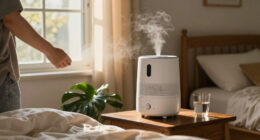
For a large safe room, the AEOCKY RHEA-001 is my best overall pick because its 80-pint capacity is aimed at substantial spaces without stepping up to commercial equipment. The Waykar 145-Pint is a stronger fit when moisture loads are heavier and its pump can simplify drainage, while the Mounto 268-Pint LGR suits demanding, continuous-duty conditions. The main tradeoff is between capacity and installation needs: a larger unit can remove more moisture, but it also needs room, drainage planning, and an electrical setup that fits its demands. Smaller units and reusable silica gel bags may suit limited areas, but they are not substitutes for a high-capacity machine in a persistently damp large room. Read on for the full breakdown and help matching capacity, drainage, and maintenance to your storage space.

Get health and wellness essentials delivered free with Prime
- Fast, free delivery on millions of items
- Prime Video, Amazon Music and more included
- Member-only deals all year
Complete the kit


Key Takeaways
The lineup spans very different jobs: household-scale units such as the AEOCKY RHEA-001 sit between a 21-pint room model and commercial machines like the Mounto 268-Pint LGR.
Drainage separates convenient large-room options from hands-on ones: several Waykar and AEOCKY picks include pumps, while other machines may need gravity drainage or regular bucket emptying.
Capacity should match the moisture problem, not just the room label: a large room with a modest dampness issue may not need a commercial unit, while a wet or frequently opened storage room may outgrow a residential model.
The Wisedry bags fill a narrow role: they can help manage moisture in a small enclosed space, but their limited quantity makes them a poor primary solution for an entire large safe room.
Higher extraction capacity brings practical costs: commercial choices can make sense for severe moisture loads, but their larger footprint, setup needs, and operating demands make them excessive for many home storage rooms.
| AEOCKY RHEA-001 80-Pint Dehumidifier for 5,500 Sq. Ft. |  | Best Overall for Large Safe Rooms | Model: RHEA-001 | Coverage area: Up to 5,500 sq. ft. | Dehumidification capacity: Up to 80 pints/day at 95°F and 95% RH; 56 pints/day at 86°F and 80% RH | VIEW ON AMAZON | See Our Full Breakdown |
| Waykar 120-Pint Dehumidifier for Spaces up to 6,000 Sq. Ft. |  | Best for Maximum Stated Capacity | Dehumidification capacity: 120 pints per day | Coverage area: Up to 6,000 sq. ft. | Tank volume: 1.24 gallons | VIEW ON AMAZON | See Our Full Breakdown |
| AEOCKY LEO-Lite-2 5,500 Sq. Ft. Energy Star Version 6.0 Dehumidifier |  | Best for High Capacity with Automatic Defrost | Coverage area: 5,500 sq. ft. | Dehumidification capacity: 105 pints/day at 95°F and 95% RH; 72 pints/day at 86°F and 80% RH | Energy certification: Energy Star Version 6.0, as claimed in product text | VIEW ON AMAZON | See Our Full Breakdown |
| Wisedry Reusable Silica Gel Car Dehumidifier Bags, 2 × 500 g |  | Best Compact Supplement for Sealed Storage | Quantity: 2 bags | Weight per bag: 500 g (1.1 lbs) | Total weight: 1,000 g (2.2 lbs) | VIEW ON AMAZON | See Our Full Breakdown |
| Mounto 268-Pint LGR Commercial Dehumidifier with Pump and Drain Hose |  | Best for Commercial-Scale Safe Rooms | Moisture removal capacity: 155 pints/day under AHAM conditions; 268 pints at saturation | Coverage area: 4,000 sq. ft. | Built-in pump lift: 15 ft | VIEW ON AMAZON | See Our Full Breakdown |
| Waykar 145-Pint Energy Star Dehumidifier with Pump |  | Best for Maximum Stated Capacity | Daily dehumidification capacity: 145 pints | Coverage area: Up to 6,500 sq ft | Tank volume: 1.88 gallons | VIEW ON AMAZON | See Our Full Breakdown |
| AEOCKY LEO-001 Dehumidifier with Pump |  | Best for Flexible Pump Drainage | Model: LEO-001 | Capacity at 95°F and 95% RH: Up to 80 pints/day | Capacity at 86°F and 80% RH: 56 pints/day | VIEW ON AMAZON | See Our Full Breakdown |
| AlorAir 180 PPD Commercial Dehumidifier with Pump |  | Best Commercial-Style Pick | Moisture removal: Up to 180 PPD at saturation; 85 PPD at AHAM | Coverage area: 2,300 sq ft | Airflow: 210 CFM | VIEW ON AMAZON | See Our Full Breakdown |
| Dehumidifier for up to 4,500 sq. ft. with Drain Hose |  | Best for Quiet, Hose-Drained Operation | Coverage area: Up to 4,500 sq ft | Dehumidification capacity: 45–80 pints/day | Water tank capacity: 1.72 gallons | VIEW ON AMAZON | See Our Full Breakdown |
| 21-Pint Dehumidifier with Drain Hose, 1,600 Sq. Ft., White |  | Best Compact Option for Smaller Safe Rooms | Coverage: Up to 1,600 sq ft | Moisture removal: 21 pints/day | Humidity range: 30%–80% | VIEW ON AMAZON | See Our Full Breakdown |
| dehumidifier for safe room storage large | Coverage area | Dimensions |
|---|---|---|
| AEOCKY RHEA-001 80-Pint Dehumi | Up to 5,500 sq. ft. | 14.45 × 8.66 × 24.09 in |
| Waykar 120-Pint Dehumidifier f | Up to 6,000 sq. ft. | — |
| AEOCKY LEO-Lite-2 5,500 Sq. Ft | 5,500 sq. ft. | — |
| Wisedry Reusable Silica Gel Ca | — | — |
| Mounto 268-Pint LGR Commercial | 4,000 sq. ft. | 24 × 16 × 15 in |
| Waykar 145-Pint Energy Star De | Up to 6,500 sq ft | 13.35 × 24.1 × 10.55 in |
| AEOCKY LEO-001 Dehumidifier wi | Up to 4,500 sq ft | — |
| AlorAir 180 PPD Commercial Deh | 2,300 sq ft | 22.8 × 13.7 × 17.3 in |
| Dehumidifier for up to 4,500 s | Up to 4,500 sq ft | 8.6 × 14.6 × 23.8 in |
| 21-Pint Dehumidifier with Drai | — | — |
More Details on Our Top Picks
AEOCKY RHEA-001 80-Pint Dehumidifier for 5,500 Sq. Ft.
For a large safe room where steady humidity control matters more than commercial-scale extraction, I’d start with the AEOCKY RHEA-001. Its stated capacity reaches 80 pints per day in hot, humid conditions, and its power-off memory can restore settings after an outage—a useful detail for storage spaces that aren’t checked constantly. Low-temperature defrost operation also gives it a broader seasonal role than a small desiccant bag. Compared with the Waykar 120-Pint, the RHEA-001 has lower stated capacity but provides an ENERGY STAR Most Efficient 2025 certification claim and a 44 dB lowest-fan rating. The tradeoff is limited drainage information: the supplied details don’t specify a tank size or continuous-drain setup. I’d verify how it can be drained before placing it in an unattended room.
Pros:- Rated for spaces up to 5,500 sq. ft.
- Stated removal capacity of up to 80 pints per day in hot, humid conditions
- Power-off memory can restore settings after an interruption
- Low-temperature defrost operation and a 44 dB lowest-fan rating
Cons:- Tank capacity and continuous-drain details are not provided
- Capacity and energy-efficiency figures are manufacturer claims in the supplied product data
Best for: Owners of large, enclosed safe rooms who want a high-capacity compressor unit with humidity control and power-restoration memory.
Not ideal for: Buyers who need confirmed tank capacity or a documented continuous-drain connection before leaving the unit unattended.
- Model:RHEA-001
- Coverage area:Up to 5,500 sq. ft.
- Dehumidification capacity:Up to 80 pints/day at 95°F and 95% RH; 56 pints/day at 86°F and 80% RH
- Lowest fan noise:44 dB
- Dimensions:14.45 × 8.66 × 24.09 in
- Weight:31 lbs
- Certification:ENERGY STAR Most Efficient 2025
- Features:Humidity control, power-off memory, low-temperature defrost operation
Our verdict“Choose the RHEA-001 for a large safe room when its stated capacity and power-off memory fit your needs, but confirm drainage before unattended use.”
Waykar 120-Pint Dehumidifier for Spaces up to 6,000 Sq. Ft.
If the safe room is unusually large or moisture loads are high, I’d favor the Waykar 120-Pint over the lower-capacity AEOCKY RHEA-001. It is rated for up to 6,000 sq. ft. and offers three fan speeds, adjustable humidity from 30% to 80% RH, and auto comfort mode, giving buyers more operating flexibility. For a room that can’t be checked often, its included 3.3-foot drain hose offers a route to continuous drainage, though the short hose may not reach a distant drain. The 1.24-gallon tank is modest relative to the stated extraction capacity, so tank-only operation can mean frequent emptying. At 40 dB on low, it is quieter on paper than the RHEA-001’s stated minimum, but its noise can reach 55 dB at higher settings.
Pros:- Rated for up to 6,000 sq. ft. and 120 pints per day
- Included hose supports drainage without relying on the tank
- Adjustable humidity control and auto comfort mode
- Wheels and handle support repositioning
Cons:- The 1.24-gallon tank may need frequent emptying when the hose is not used
- The included hose is only 3.3 ft long, and an extended-drain hose is not included
- Noise is specified as reaching 55 dB on higher settings
Best for: Owners of very large safe rooms or storage areas who prioritize high stated extraction capacity and have a nearby drain.
Not ideal for: People who need a large reservoir for tank-only operation or who need a drain hose long enough to reach a distant outlet.
- Dehumidification capacity:120 pints per day
- Coverage area:Up to 6,000 sq. ft.
- Tank volume:1.24 gallons
- Noise level:40 dB on low; up to 55 dB
- Humidity range:30%–80% RH
- Airflow:230 CFM
- Power:470 W
- Drainage:Removable tank or included 3.3-ft hose
- Dimensions and weight:12.21 × 9.02 × 19.69 in; 28.8 lbs
Our verdict“Pick the Waykar when high stated capacity and hose drainage matter more than a larger tank or quieter operation at every speed.”
AEOCKY LEO-Lite-2 5,500 Sq. Ft. Energy Star Version 6.0 Dehumidifier
The AEOCKY LEO-Lite-2 is the higher-capacity alternative to the RHEA-001 for buyers looking to manage a large safe room through humid conditions and cooler periods. Its stated 105-pint daily capacity at 95°F and 95% RH exceeds the RHEA-001’s 80-pint figure under the same stated conditions, while automatic defrost is useful where temperatures fall. A 44 dB low-fan rating and power-off memory add practical features for a storage room that may not be monitored every day. The main reservation is the incomplete product information: dimensions and drainage details are missing from the supplied text, making placement and unattended operation harder to plan. Its Energy Star Version 6.0 status is also presented as a product-text claim, so I’d verify certification and full specifications before choosing it over the better-documented Waykar.
Pros:- Stated capacity of up to 105 pints per day in hot, humid conditions
- Automatic defrost supports operation in cooler environments
- Power-off memory supports restart with saved settings
- Low fan speed is rated at 44 dB
Cons:- Dimensions and drainage details are absent from the supplied product text
- Capacity and energy claims are seller-provided and not independently substantiated in the supplied information
- The stated 5,500 sq. ft. coverage is below the Waykar’s 6,000 sq. ft. rating
Best for: Safe-room owners seeking higher stated extraction capacity than the RHEA-001, especially where cooler conditions make automatic defrost useful.
Not ideal for: Buyers who need complete dimensions, confirmed drainage arrangements, or independently verified certification details before purchase.
- Coverage area:5,500 sq. ft.
- Dehumidification capacity:105 pints/day at 95°F and 95% RH; 72 pints/day at 86°F and 80% RH
- Energy certification:Energy Star Version 6.0, as claimed in product text
- Lowest fan speed noise:44 dB
- Defrost:Automatic defrost
- Compressor:Rotary compressor
- Control feature:Smart humidity control
- Power recovery feature:Power-off memory
Our verdict“Choose the LEO-Lite-2 for its higher stated capacity and automatic defrost, provided you can confirm its missing size and drainage details.”
Wisedry Reusable Silica Gel Car Dehumidifier Bags, 2 × 500 g
For a sealed safe, small cabinet, or storage container, the Wisedry silica gel bags offer a compact supplement where a compressor unit would be oversized or impractical. Each 500 g bag absorbs about 150 g of moisture before reactivation, so the pair is suited to modest, localized moisture—not a large room with ongoing humidity problems. That makes it a very different tool from the AEOCKY RHEA-001, which is designed for large spaces and removes moisture continuously while running. Wisedry’s advantage is that it needs no outlet and can be recharged in a microwave or oven, with more than 10 reuses stated. The tradeoff is capacity and upkeep: the bags eventually saturate, and recharge time varies by appliance. I’d use them for enclosed storage, not as the sole defense for a large safe room.
Pros:- Compact, power-free option for enclosed storage
- Two reusable bags can be reactivated in a microwave or oven
- Each bag absorbs about 150 g of moisture
- Suitable for vehicles and other enclosed spaces
Cons:- Limited absorption capacity makes it unsuitable as the only solution for a large room
- Bags require periodic reactivation after absorbing moisture
- Recharge time varies with microwave power
Best for: Owners of sealed safes, cabinets, vehicles, or storage boxes who need a compact moisture absorber without electrical power.
Not ideal for: Anyone trying to control humidity across a large room or address a persistent, high moisture load.
- Quantity:2 bags
- Weight per bag:500 g (1.1 lbs)
- Total weight:1,000 g (2.2 lbs)
- Moisture absorption per bag:About 150 g; maximum 180 g
- Recharge time:Approximately 10–16 minutes, depending on microwave power
- Reusability:More than 10 reuses stated
- Reactivation methods:Microwave or oven
Our verdict“Use Wisedry bags for a sealed safe or small storage enclosure, not as a substitute for a compressor dehumidifier in a large room.”
Mounto 268-Pint LGR Commercial Dehumidifier with Pump and Drain Hose
When a safe room is part of a large facility or faces serious ongoing moisture, the Mounto LGR is the heavy-duty pick here. Its 155-pint-per-day rating under AHAM conditions and built-in pump with a 15-foot lift head make it better suited to continuous operation and drainage than the residential Waykar 120-Pint, whose included hose is only 3.3 feet. Automatic restart and digital humidity controls also suit a space where settings need to recover after a power interruption. The tradeoffs are substantial for ordinary home storage: it weighs 88 pounds, measures 24 × 16 × 15 inches, and offers only one fan speed. Its commercial capacity and transport wheels don’t make it a quiet, unobtrusive choice. I’d reserve it for large, demanding spaces with a practical route to a drain.
Pros:- Rated to remove 155 pints per day under AHAM conditions
- Built-in pump provides drainage with a 15-foot lift head
- Automatic restart and digital humidity controls support unattended operation
- Wheels and handle aid movement despite its weight
Cons:- Heavy at 88 lbs and bulky compared with the residential units
- Only one fan speed limits operating flexibility
- Commercial-scale capacity may be excessive for a modest safe room
Best for: Facility managers and owners of large safe rooms with persistent moisture who need pump-assisted drainage and commercial-scale extraction.
Not ideal for: Homeowners with a small safe or low-moisture room who need a lightweight, easy-to-store, multi-speed appliance.
- Moisture removal capacity:155 pints/day under AHAM conditions; 268 pints at saturation
- Coverage area:4,000 sq. ft.
- Built-in pump lift:15 ft
- Airflow:350 CFM
- Power:470 W
- Voltage and current:120 V; 11 A
- Dimensions:24 × 16 × 15 in
- Weight:88 lbs
- Housing and features:Roto-molded plastic; automatic restart, digital display, humidity setting, built-in pump
Our verdict“Choose the Mounto for a large, persistently damp safe room with pump drainage access, and skip it for compact or lightly damp storage.”
Waykar 145-Pint Energy Star Dehumidifier with Pump
For a large safe room with persistent dampness, the 145-pint daily capacity and stated coverage of up to 6,500 square feet give this Waykar the broadest reach among the residential-style options here. Smart humidity control and a washable filter reduce routine upkeep, while the pump and continuous-drain option can keep water moving without relying on the 1.88-gallon tank. Compared with the Waykar 120-Pint in this roundup, this model offers more stated moisture removal, which may suit a larger or wetter space. The tradeoff is its 40.8-pound weight; it is better treated as a stationary appliance than something to move between rooms. The capacity figures also do not, by themselves, establish what humidity level it will maintain in a particular safe room.
Pros:- 145-pint stated daily capacity for demanding large-space moisture removal
- Pump and continuous-drain support reduce dependence on the 1.88-gallon tank
- Smart humidity control can limit hands-on adjustments
- Washable filter and auto defrost support routine operation
Cons:- At 40.8 pounds, relocating it is less convenient
- The 1.88-gallon tank may require frequent emptying if the pump or hose is not used
- Its large coverage claim does not specify safe-room humidity results
Best for: Owners of large, persistently humid storage rooms who can position the unit near a suitable drain and want automatic humidity control.
Not ideal for: People who need a lightweight unit to move between rooms or who cannot use continuous drainage and want fewer tank-emptying interruptions.
- Daily dehumidification capacity:145 pints
- Coverage area:Up to 6,500 sq ft
- Tank volume:1.88 gallons
- Power:783 watts
- Noise level:40 dB on low
- Dimensions:13.35 × 24.1 × 10.55 in
- Weight:40.8 lb
- Features:2025 ENERGY STAR, pump, continuous drainage, smart humidity control, auto defrost, washable filter
Our verdict“Choose this Waykar for a large, damp storage room where high stated capacity and pumped drainage matter more than easy portability.”
AEOCKY LEO-001 Dehumidifier with Pump
The LEO-001’s pump can lift water up to 16.5 feet, giving it an advantage when a safe room lacks a floor drain or the nearest drain sits above the unit. Its included 5 m hose also allows more placement flexibility than a short, gravity-only drain setup. Capacity needs careful interpretation: the listing states up to 80 pints per day at 95°F and 95% RH, and 56 pints at 86°F and 80% RH. That condition-specific detail is useful, but it means the headline figure should not be treated as a guaranteed output in a cooler storage room. Compared with the Waykar 145-Pint, this AEOCKY has lower stated capacity but a clearly specified pump lift and a three-year warranty. I’d favor it for drainage flexibility, not maximum moisture removal.
Pros:- Pump can raise drainage water up to 16.5 ft
- Included 5 m hose supports flexible placement
- Capacity is stated for two specific temperature and humidity conditions
- Three-year warranty is specified
Cons:- Maximum 80-pint figure applies to 95°F and 95% RH conditions
- Listed capacity is lower than the Waykar 145-Pint model
- The provided product information leaves some operating details unspecified
Best for: Safe-room owners who need to pump condensate upward or across a longer route and want a stated three-year warranty.
Not ideal for: Buyers prioritizing the highest listed daily capacity or those who need performance figures specifically established for cooler storage conditions.
- Model:LEO-001
- Capacity at 95°F and 95% RH:Up to 80 pints/day
- Capacity at 86°F and 80% RH:56 pints/day
- Coverage area:Up to 4,500 sq ft
- Maximum pump drainage height:16.5 ft
- Hose length:5 m
- Certification:ENERGY STAR Most Efficient 2025
- Warranty:3 years
Our verdict“Pick the LEO-001 when pumped drainage flexibility matters more than matching the highest capacity claim in this group.”
AlorAir 180 PPD Commercial Dehumidifier with Pump
The AlorAir is the most commercial-oriented option in this set: it lists 180 pints per day at saturation, a built-in pump, and a continuous operating mode. For comparison, its more decision-useful 85 PPD at AHAM figure is lower than the saturation headline, so I would not compare its 180-pint number directly with household units’ capacities without matching test conditions. The 19.6-foot hose and stated 14.7-foot lift give it practical drainage reach, while automatic defrost and restart can reduce manual attention. Its listed coverage is 2,300 square feet, less than the Waykar 145-Pint’s 6,500-square-foot claim, so the AlorAir is better framed as a focused, heavy-duty room unit than a broad-area pick. At 64.3 pounds with one operating speed, it sacrifices portability and tuning flexibility for commercial-style operation.
Pros:- Commercial-style construction with 85 PPD listed at AHAM
- Built-in pump, 19.6-foot hose, and 14.7-foot maximum drain height
- Automatic defrost and restart reduce some routine supervision
- Limited six-year warranty is specified
Cons:- Heavy at 64.3 pounds, despite carrying handles
- Only one operating speed is listed
- The 180-pint saturation figure is not directly comparable to the 85 PPD AHAM rating
Best for: Owners of a large, moisture-prone safe room who want a commercial-style unit with a built-in pump and can leave it in one place.
Not ideal for: Anyone needing a lightweight, multi-speed household unit or choosing solely by the 180-pint saturation figure.
- Moisture removal:Up to 180 PPD at saturation; 85 PPD at AHAM
- Coverage area:2,300 sq ft
- Airflow:210 CFM
- Pump drainage:Built-in pump; 19.6 ft hose; maximum 14.7 ft lift
- Dimensions:22.8 × 13.7 × 17.3 in
- Weight:64.3 lb
- Power and voltage:646 W; 115 V
- Warranty:Limited six-year
Our verdict“Choose the AlorAir for a fixed, demanding storage room where commercial-style drainage and operation matter more than easy movement or broad coverage claims.”
Dehumidifier for up to 4,500 sq. ft. with Drain Hose
This model’s appeal for a storage room is its combination of 40 dB operation, sleep mode, and a choice of tank or hose drainage. Its stated 4,500-square-foot coverage and 45–80-pint daily range place it below the Waykar 145-Pint on headline capacity, while its adjustable 90-degree air outlet offers airflow control that the listing does not specify for the Waykar. The capacity range is broad, though, and the data does not explain which conditions produce 45 versus 80 pints. I’d treat the coverage and output as claims to verify against room conditions rather than guarantees of safe humidity. The listed 10-pound weight also seems difficult to reconcile with its dimensions and claimed capacity, so I would not rely on it when planning frequent moves. It offers useful safeguards, but less confidence in its performance details.
Pros:- 40 dB noise level with quiet and sleep modes
- Tank or included-hose drainage options
- Adjustable 90-degree air outlet and humidity settings
- Auto defrost, overload protection, and child lock are listed
Cons:- Daily capacity varies from 45 to 80 pints without stated test conditions
- The listed 10-pound weight appears difficult to reconcile with the dimensions and capacity
- Lower maximum stated capacity than the Waykar 145-Pint
Best for: Buyers who want quiet operation, sleep mode, hose drainage, and adjustable airflow for a large room with moderate moisture needs.
Not ideal for: People who need clearly condition-specific capacity data, verified portability, or the strongest stated moisture-removal capacity.
- Coverage area:Up to 4,500 sq ft
- Dehumidification capacity:45–80 pints/day
- Water tank capacity:1.72 gallons
- Dimensions:8.6 × 14.6 × 23.8 in
- Listed weight:10 lb
- Noise level:40 dB
- Humidity setting range:30%–80%
- Drainage and features:Tank with auto shutoff or included drain hose; auto defrost; overload protection; sleep mode; washable filter
Our verdict“Consider this unit if quiet, adjustable airflow is the priority, but verify its capacity and weight details before relying on it for a large safe room.”
21-Pint Dehumidifier with Drain Hose, 1,600 Sq. Ft., White
Unlike the larger-capacity Waykar 145-Pint or the 4,500-square-foot models, this 21-pint unit is a better fit for a smaller safe room where space and quieter operation matter more than rapid moisture removal. Its 34 dB noise rating, wheels, and lift-up handles make it easier to position near stored items, while the included drain hose can avoid repeated trips to empty its small 0.52-gallon tank. Three modes—Dehumidify, Dry, and Continuous—give it more operating choices than the AlorAir, which lists one speed and continuous operation. But its coverage is only up to 1,600 square feet and its 21-pint capacity is modest for persistently damp or very large storage spaces. I’d choose it for supplemental or smaller-room control, not as a substitute for a high-capacity unit.
Pros:- Quiet 34 dB operation
- Three operating modes and adjustable humidity control
- Included hose supports continuous drainage
- Wheels and lift-up handles aid repositioning
Cons:- 21-pint daily capacity is far below the Waykar 145-Pint and other large-room picks
- The 0.52-gallon tank can fill quickly without hose drainage
- Coverage is limited to up to 1,600 square feet
Best for: Owners of a smaller safe room or storage area who value low noise, easy repositioning, and a simple hose-drain option.
Not ideal for: People managing a large, persistently damp room who need high daily moisture removal or a larger water reservoir.
- Coverage:Up to 1,600 sq ft
- Moisture removal:21 pints/day
- Humidity range:30%–80%
- Operating modes:Dehumidify, Dry, Continuous
- Tank capacity:0.52 gallons
- Noise level:34 dB
- Power:120 watts
- Dimensions and weight:6.89 × 9.65 × 15.94 in; 15.3 lb
Our verdict“Choose this compact unit for a smaller safe room where quiet operation and mobility matter more than high-capacity moisture control.”

How We Picked
I ranked these products around the demands of large safe room storage: moisture-removal capacity, the usefulness of a pump or drain connection, stated room coverage, and how well each format fits ongoing operation. I also weighed usability factors that affect storage protection, including the burden of emptying a tank, the likely space needed for the machine, and whether a product is intended for a room or only a small enclosed area. Because safe contents can be sensitive to both dampness and rapid environmental changes, capacity alone did not determine placement.
The order favors machines that appear to balance substantial room coverage with practical home use, then separates higher-capacity residential and commercial equipment by the severity of moisture needs. The 80-pint AEOCKY RHEA-001 leads as a broad-use choice; pump-equipped higher-capacity Waykar models move up for tougher loads or easier drainage. Commercial units rank as specialized picks rather than automatic winners, while the 21-pint model and silica gel bags sit lower because their scale is less suited to large-room control. Product names and listed capacity are used as stated; buyers should confirm real operating conditions and installation requirements for their room.
Factors to Consider When Choosing Dehumidifier For Safe Room Storage Large
Choosing a dehumidifier for a large safe room is less about picking the biggest number and more about matching moisture removal to the room, drainage, and storage routine. These factors can help prevent both underbuying for a persistently damp space and overspending on equipment your room does not need.
Match Capacity to the Moisture Load, Not Only the Floor Area
Room coverage figures are useful for narrowing choices, but they cannot fully describe how wet a space gets or how quickly moisture returns. A sealed interior room with occasional humidity spikes may need less capacity than a similarly sized room with a damp foundation, frequent door openings, or nearby water intrusion. Think about the source and persistence of moisture before moving from a residential unit to a commercial one. If the cause is a leak or seepage, a dehumidifier treats the symptom rather than the source. A practical mistake is buying the largest listed capacity without checking whether the unit suits the room’s normal conditions. When conditions are uncertain, monitor humidity over time and size the equipment around observed patterns rather than a single reading.
Plan Drainage Before Choosing a Pump or Tank
A large-capacity unit can collect water quickly, so drainage affects daily effort as much as extraction capacity. A tank may be manageable in a room used occasionally, but it can become a chore if the machine runs continuously or sits somewhere difficult to reach. A gravity drain needs a suitable lower outlet and a hose route that will not kink, leak, or create a trip hazard. A built-in pump can move water to a higher drain, though the pump adds another component and still depends on a safe discharge route. Before buying, map the path from the unit to the drain and check whether the hose can stay in place without crossing storage access. Do not assume a pump makes setup automatic; confirm the unit’s lift and hose requirements in its documentation.
Protect Stored Contents With Stable Humidity Control
Safe room storage may include firearms, documents, electronics, or other items that respond differently to moisture and temperature. A machine’s capacity does not tell you whether it can hold the humidity range your contents require, so use a separate hygrometer to track conditions near the stored items. Place the sensor away from the dehumidifier’s outlet, door drafts, and exterior walls to get a more representative reading. Avoid setting a very low target without checking guidance for the items in the room, since over-drying can also be undesirable for some materials. Large rooms can develop pockets of different humidity, especially behind shelving or in crowded corners. Leave air circulation around the equipment and check readings in more than one location before deciding the room is controlled.
Account for Heat, Noise, Space, and Power
Large dehumidifiers occupy floor space and may add heat and operating noise to a room, which matters if the safe room doubles as an occupied space. Commercial models can be physically bulky and may be better placed where airflow and service access are available rather than squeezed beside a safe or shelving. Check the electrical requirements and operating guidance before purchase, particularly for high-capacity equipment intended for extended use. Keep air inlets and outlets clear; blocking them with storage can reduce performance and complicate maintenance. A common mistake is planning only for the unit’s footprint, then discovering there is no room to remove a filter, reach controls, or route a drain. Compare the full setup—including clearance and hose path—not just the advertised capacity.
Choose a Maintenance Routine You Can Keep
Filters, water paths, tanks, and pumps all need attention, and neglected maintenance can undermine moisture control. A unit with a pump may reduce manual emptying but does not remove the need to inspect hoses and clean the machine as directed. Reusable silica gel bags avoid powered equipment, but they require periodic reactivation and are suited to a much smaller enclosed volume than a large room. Decide who will check the equipment and how often, especially if the storage area is visited infrequently. A simpler residential unit may be a better fit than commercial gear if its upkeep is easier to sustain. For unattended storage, use humidity monitoring and alarms or routine checks rather than assuming the appliance will run without attention indefinitely.
Know When Commercial Capacity Is Worth the Added Setup
Commercial LGR equipment is most defensible when a room has a severe, recurring moisture load, needs rapid drying, or already has a workable drainage and power plan. For a typical home storage space with moderate dampness, a large residential model may deliver enough capacity with less bulk and a simpler ownership experience. The higher-capacity option is not automatically safer for stored goods if it is poorly positioned, misconfigured, or left unmonitored. Compare the machine’s intended duty and operating requirements with the actual problem rather than using capacity as a proxy for quality. If the room is damp because of building defects, address those defects before relying on a powerful appliance. Pay more for commercial capability when the workload justifies it, not just because the room is large.
Frequently Asked Questions
Is an 80-pint dehumidifier enough for a large safe room?
It may be enough when the room is large but has a moderate, manageable moisture load; square footage alone cannot settle the question. Persistent dampness, water intrusion, high outdoor humidity, or frequent door openings can push a room beyond what a household-scale unit handles comfortably. The AEOCKY RHEA-001 is the lineup’s broad-use 80-pint choice, while the 120- and 145-pint Waykar models offer more capacity for heavier conditions. Track humidity with a separate hygrometer before and after running a unit to judge whether it is keeping up. If readings stay high despite correct placement and drainage, investigate the moisture source and consider greater capacity or professional advice.
Should I choose a dehumidifier with a pump for unattended storage?
A pump can reduce the need to empty a collection bucket, which is useful when a storage room is visited infrequently. It does not make the appliance maintenance-free: hoses can clog, disconnect, or leak, and the discharge point must be appropriate. A gravity drain may be simpler if a suitable lower outlet is nearby. For a room that will be unattended, check the manufacturer’s guidance on continuous operation and use a humidity monitor to verify conditions independently. Among this lineup, pump-equipped models make the most sense when their drainage advantage solves a real setup problem rather than merely adding another component.
Can silica gel bags control humidity in a large safe room?
The Wisedry bags are better suited to a small enclosed space, container, or localized area than to controlling humidity throughout a large room. Their reusable format avoids continuous powered operation, but their moisture capacity is limited and they must be reactivated according to instructions. They can serve as a supplement near a specific stored item, but they should not replace a room-sized dehumidifier where moisture is persistent. If you use them, monitor the room separately rather than assuming the bags have controlled the wider space. For large-room protection, choose powered equipment sized to the observed moisture load and keep the bags for smaller pockets.
When is a commercial dehumidifier excessive for home safe storage?
A commercial unit may be excessive when the room has only occasional humidity spikes, the moisture source is minor, or the machine’s footprint and drainage needs are hard to accommodate. The Mounto 268-Pint LGR and AlorAir 180 PPD options are aimed at more demanding moisture-control work than many household storage rooms require. Bigger equipment can add setup, power, noise, and maintenance demands without solving a building leak or poor ventilation. Start by measuring room conditions and identifying whether dampness is steady or occasional. Move to commercial capacity when a properly installed residential unit cannot keep up with a clearly documented load.
How should I set humidity for a safe room with mixed stored items?
There is no single target that suits every combination of firearms, paper, electronics, wood, and other stored materials. Check the storage guidance for the most sensitive contents and avoid assuming that the lowest possible humidity is best. Use a separate hygrometer placed near the stored items, and give the room time to stabilize after changing settings. In a large space, readings near the machine may differ from readings behind shelving or near an exterior wall, so check more than one spot. If the contents have specialized preservation requirements, follow their maker’s recommendations or consult a preservation professional.
Conclusion
For most buyers seeking a large-room balance, I recommend the AEOCKY RHEA-001 as best overall, with its 80-pint capacity positioned between compact room models and commercial equipment. The Wisedry bags are the best value for a small enclosed area, but not as the main solution for a large room; buyers needing a powered budget-scale option can compare the 21-pint model only if their moisture load is modest. For a premium, heavy-duty setup, consider the Mounto 268-Pint LGR when the room’s moisture problem and installation plan justify commercial capacity. The Waykar 145-Pint is my best choice for buyers who want easier drainage through its pump, while the simpler 21-pint model is the most approachable starting point for a smaller, less demanding space. For severe moisture conditions, compare the Waykar 120- and 145-pint models with the AlorAir 180 PPD; choose by drainage, room setup, and workload rather than capacity alone. Match the machine to measured humidity and confirm that its drain, power, and maintenance needs fit the room before buying.