Choosing the right ERV ventilation system for your home means balancing performance, energy efficiency, and ease of installation. The Broan B210E75RS stands out as the best overall for its reliable airflow and versatile mounting options. For those prioritizing smart features, the Wi-Fi-Enabled Pioneer 50 offers seamless remote control, while the Aprilaire V22BEC delivers excellent whole-house ventilation at a competitive price. Many buyers face tradeoffs between higher upfront costs and ongoing energy savings or ease of use. Continue reading for a detailed comparison that helps clarify these choices and guides you to the best fit for your home.

Get health and wellness essentials delivered free with Prime
- Fast, free delivery on millions of items
- Prime Video, Amazon Music and more included
- Member-only deals all year
Key Takeaways
- The top picks balance energy recovery efficiency with ease of installation and maintenance.
- Smart, Wi-Fi-enabled models offer greater convenience but often come at a higher price point.
- Whole-house systems tend to be more cost-effective for larger spaces, while single-room units focus on targeted ventilation.
- Build quality and noise levels vary significantly and should influence final decisions.
- Higher CFM ratings generally mean better airflow but can also increase energy consumption and installation complexity.
| Broan B210E75RS AI 206 CFM Wall or Ceiling Mounted Energy Recovery Ventilator |  | Best Overall ERV for Flexible Installation | CFM: 206 | Mounting: Wall or Ceiling | Type: Energy Recovery Ventilator | VIEW ON AMAZON | See Our Full Breakdown |
| Aprilaire V22BEC Energy Recovery Ventilator (ERV), 120 CFM for Whole-House Ventilation |  | Best for Large Homes and Whole-House Air Quality | Airflow: 120 CFM | Suitable for: Homes up to 6,000 sq. ft. | Type: Energy Recovery Ventilator | VIEW ON AMAZON | See Our Full Breakdown |
| Wi-Fi-Enabled Pioneer 50 Single-Room Wall-Mounted Energy Recovery Ventilator |  | Best for Smart Control and Quiet Operation | Heat Recovery Efficiency: 97% | Airflow: up to 35 CFM | Power Consumption: 8W | VIEW ON AMAZON | See Our Full Breakdown |
| Panasonic WhisperComfort 60 ERV Ventilation Fan | 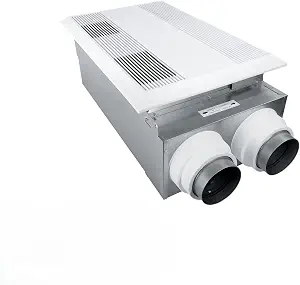 | Best for Adjustable Airflow and Easy Installation | CFM: 20 to 60 | Type: Energy Recovery Ventilation | Mounting: Ceiling or wall | VIEW ON AMAZON | See Our Full Breakdown |
| 6 Inch Heat Recovery Ventilator with Ceramic Heat Exchanger |  | Best for High Heat Recovery and Smart Control | Size: 6 Inch | Heat Exchanger: Ceramic | Airflow Modes: Fresh Air, Exhaust, Recirculation | VIEW ON AMAZON | See Our Full Breakdown |
| Pioneer ECOasis 150 Ductless Wall-Mounted Single-Room Wi-Fi Energy Recovery Ventilator |  | Best for Smart, Quiet Single-Room Ventilation | Coverage Area: up to 500 sq. ft. | Filtration System: HEPA & Activated Charcoal Filters | Energy Efficiency: 82% heat exchanger efficiency | VIEW ON AMAZON | See Our Full Breakdown |
| Panasonic FV-11ES1 Intelli-Balance Elite ERV, 110 CFM |  | Best for Flexible Indoor Ventilation with Adjustable Speed | Power Source: AC | Room Type: Bathroom | Special Features: Manual | VIEW ON AMAZON | See Our Full Breakdown |
| Panasonic FV-12ESC1 Intelli-Balance Elite Plus ERV, 120 CFM | | Best for Quiet, High-Capacity Balanced Ventilation | CFM: 120 | Motors: Dual brushless ECM | Filters: Dual MERV 13, optional washable MERV 6 | VIEW ON AMAZON | See Our Full Breakdown |
| erv ventilation system for home | Noise Level |
|---|---|
| Broan B210E75RS AI 206 CFM Wal | — |
| Aprilaire V22BEC Energy Recove | — |
| Wi-Fi-Enabled Pioneer 50 Singl | 32.7 dB |
| Panasonic WhisperComfort 60 ER | — |
| 6 Inch Heat Recovery Ventilato | Under 30dB |
| Pioneer ECOasis 150 Ductless W | 23 to 37.9 dB(A) |
| Panasonic FV-11ES1 Intelli-Bal | 45 db |
| Panasonic FV-12ESC1 Intelli-Ba | — |
More Details on Our Top Picks
Broan B210E75RS AI 206 CFM Wall or Ceiling Mounted Energy Recovery Ventilator
This model stands out for its straightforward design and flexible mounting options, making it suitable for a wide range of homes. Compared to the Pioneer 50, it offers higher airflow capacity, which benefits larger spaces needing more ventilation. However, its limited detailed specifications and absence of user ratings mean you might lack insight into real-world performance. Its high-performance ERV core ensures effective air exchange, helping improve indoor air quality without complicating installation. Still, the lack of detailed data might be a concern for those seeking more technical info before purchase.
Pros:- Flexible wall or ceiling mounting for versatile installation
- Effective ERV core for improved air quality
- Provides efficient air exchange in various home layouts
Cons:- Limited detailed specs and performance data
- No customer ratings or reviews available
Best for: Homeowners looking for a reliable, wall- or ceiling-mounted ERV with flexible installation options
Not ideal for: Small apartments or spaces requiring detailed technical specifications, as info is limited
- CFM:206
- Mounting:Wall or Ceiling
- Type:Energy Recovery Ventilator
- Ports:Side Ports
Our verdict“This ERV is best suited for homeowners who want flexible installation without needing detailed technical specs upfront.”
Aprilaire V22BEC Energy Recovery Ventilator (ERV), 120 CFM for Whole-House Ventilation
This pick makes the most sense for larger residences up to 6,000 sq. ft., offering balanced ventilation with energy-efficient heat and moisture recovery. Unlike the Pioneer 50, which is suited for single rooms, the Aprilaire V22BEC handles whole-house needs effectively, helping reduce HVAC costs over time. Its ability to operate across various climates and simple controls make it a practical choice for those seeking consistent comfort. The main tradeoff is installation complexity, often requiring professional help, and it might be overkill for small or single-room spaces where a compact unit like the Pioneer 50 would suffice.
Pros:- Balances indoor air quality by replacing stale air with fresh outdoor air
- Energy-efficient heat and moisture recovery saves on HVAC costs
- Suitable for various climates, maintaining comfort year-round
Cons:- Installation may require professional assistance
- Designed for larger spaces, potentially overpowered for small homes
Best for: Homeowners with large houses who need reliable, whole-house ventilation with energy savings
Not ideal for: Small apartments or single-room setups, as its capacity exceeds minimal needs and installation can be complex
- Airflow:120 CFM
- Suitable for:Homes up to 6,000 sq. ft.
- Type:Energy Recovery Ventilator
- Mounting options:Wall, Ceiling, or Floor
Our verdict“Ideal for owners of large homes seeking energy-efficient, whole-house ventilation solutions that improve comfort and air quality.”
Wi-Fi-Enabled Pioneer 50 Single-Room Wall-Mounted Energy Recovery Ventilator
This unit excels with its high-efficiency heat recovery system at 97%, making it perfect for individual rooms needing fresh air without noise disruption. Compared to the Panasonic WhisperComfort 60, it offers Wi-Fi control and smart management, ideal for tech-savvy users. Its quiet operation at just over 32 dB ensures it won’t disturb daily activities. However, its limited airflow capacity (35 CFM) means it’s best suited for smaller spaces, and multiple units may be necessary for larger rooms or open-plan areas. Installation requires appropriate wall space and some technical skill, which could deter beginners.
Pros:- High heat recovery efficiency of 97%
- Quiet operation with noise levels just over 32 dB
- Wi-Fi control via smartphone app for convenience
Cons:- Limited airflow capacity for larger rooms
- Requires wall installation with sufficient space
Best for: Homeowners who want a compact, smart-controlled ERV for individual rooms or small spaces
Not ideal for: Large open-plan areas or homes requiring high airflow, as capacity is limited
- Heat Recovery Efficiency:97%
- Airflow:up to 35 CFM
- Power Consumption:8W
- Dimensions:9-3/8″ x 19-5/8″ x 10-1/8″
- Water-Resistance:IPX4
- Noise Level:32.7 dB
Our verdict“This unit suits tech-oriented homeowners seeking a quiet, energy-efficient ERV for small or individual rooms.”
Panasonic WhisperComfort 60 ERV Ventilation Fan
This pick provides a balanced approach with adjustable airflow from 20 to 60 CFM, making it suitable for different room sizes and needs. Compared to the Pioneer 50, which is more compact and smarter, the Panasonic offers more manual control and is easier to install for those familiar with basic wiring. Its high-efficiency heat recovery core helps conserve energy, but installation might require some technical skill, especially in integrating with existing ductwork. Its limited airflow range means it’s less ideal for very large or open spaces, but for typical rooms, it delivers reliable, customizable ventilation.
Pros:- Provides balanced fresh air intake and exhaust
- High-efficiency heat recovery core conserves energy
- Multiple speed settings for customizable airflow
Cons:- Installation may require some technical knowledge
- Limited to 20-60 CFM airflow range
Best for: Homeowners seeking a versatile, easy-to-install ERV with adjustable airflow for various room sizes
Not ideal for: Large open-plan areas or homes that need very high airflow rates, as its maximum is 60 CFM
- CFM:20 to 60
- Type:Energy Recovery Ventilation
- Mounting:Ceiling or wall
- Certification:HVI
Our verdict“Ideal for those wanting a customizable, easy-to-install ERV for standard rooms with moderate ventilation needs.”
6 Inch Heat Recovery Ventilator with Ceramic Heat Exchanger
This unit offers impressive heat recovery of up to 90%, thanks to its ceramic heat exchanger, making it a strong choice for energy-conscious homes. Compared with the Pioneer 50 and Panasonic WhisperComfort, it provides a higher heat recovery rate, which can significantly reduce heating costs. Its smart WiFi and remote control features add convenience, especially for users who prefer managing ventilation remotely. However, its 6-inch duct size and wall-mounting requirements mean professional installation is recommended, and space constraints could limit placement options. Its quiet operation under 30dB makes it suitable for bedrooms or quiet zones.
Pros:- High heat recovery efficiency of up to 90%
- Smart control via app and remote
- Quiet operation under 30dB
Cons:- Requires wall mounting and space for installation
- Limited to 6-inch duct size, restricting airflow in larger spaces
Best for: Homeowners seeking maximum heat recovery efficiency with smart control features, suitable for various spaces including apartments and offices
Not ideal for: Homes with limited wall space for mounting or those requiring larger airflow capacities, as it’s limited to 6-inch ducting
- Size:6 Inch
- Heat Exchanger:Ceramic
- Airflow Modes:Fresh Air, Exhaust, Recirculation
- Motor:EC, 8.5W, PWM control
- Noise Level:Under 30dB
- Voltage:100–240V
Our verdict“This unit is best for energy-savvy homeowners who want high heat recovery with modern smart controls in smaller or medium-sized spaces.”
Pioneer ECOasis 150 Ductless Wall-Mounted Single-Room Wi-Fi Energy Recovery Ventilator
The Pioneer ECOasis 150 stands out for its combination of advanced air purification and smart Wi-Fi control, making it ideal for those who prioritize remote management and superior air quality in a single room. Its HEPA and activated charcoal filters effectively remove contaminants, while the heat recovery system delivers energy savings. Compared with the Panasonic FV-11ES1, this model offers more sophisticated filtration and smarter connectivity, but it is limited to just one room, making it less suitable for whole-house ventilation. The ultra-quiet operation is perfect for bedrooms or offices, though its higher price point and wall-mount installation might deter budget-conscious buyers.
Pros:- Highly effective 4-stage air filtration system
- Smart Wi-Fi control for remote operation
- Energy-efficient heat recovery technology
- Ultra-quiet operation suitable for bedrooms
Cons:- Limited to single-room use
- Requires wall-mount installation
- Higher price compared to basic models
Best for: Homeowners seeking a high-tech, quiet solution for single-room air quality improvement with remote access capabilities
Not ideal for: Large open-plan spaces or those needing whole-house ventilation, as it only covers up to 500 sq. ft.
- Coverage Area:up to 500 sq. ft.
- Filtration System:HEPA & Activated Charcoal Filters
- Energy Efficiency:82% heat exchanger efficiency
- Power Consumption:35W
- Noise Level:23 to 37.9 dB(A)
- Control Options:Wi-Fi app, touch screen, remote
Our verdict“This pick is perfect for tech-savvy users who want a quiet, filtered, single-room ERV with smart control features.”
Panasonic FV-11ES1 Intelli-Balance Elite ERV, 110 CFM
The Panasonic FV-11ES1 offers a solid balance of performance and flexibility, making it well-suited for those who want adjustable airflow in a bathroom or small indoor space. Its SmartFlow ECM motors automatically adjust speeds to maintain quiet, efficient operation, although at 45 dB, it may be slightly noisy for ultra-quiet environments compared to the Pioneer ECOasis 150. The high-efficiency MERV 13 filters ensure a clean indoor atmosphere, and its multiple mounting options provide versatility. Unlike the Panasonic FV-12ESC1, which offers higher capacity, this model is more straightforward and easier to install but might lack the capacity for larger areas.
Pros:- Energy-efficient with adjustable speed settings
- High-quality MERV 13 filters for cleaner air
- Flexible installation options (wall, floor, ceiling)
- Automatic motor adjustment for quiet operation
Cons:- Noise level of 45 dB may be noticeable in quiet spaces
- Installation complexity might require professional help
- Limited to indoor use
Best for: Homeowners needing a reliable, adjustable ventilation solution in bathrooms or small indoor areas
Not ideal for: Large open spaces or homes requiring high airflow capacity, as it is limited to 110 CFM
- Power Source:AC
- Room Type:Bathroom
- Special Features:Manual
- Air Flow Capacity:110 cfm
- Noise Level:45 db
- Mounting Type:Wall Mount
Our verdict“This model suits those who want a versatile, energy-efficient ERV with adjustable speeds for smaller indoor spaces.”
Panasonic FV-12ESC1 Intelli-Balance Elite Plus ERV, 120 CFM
The Panasonic FV-12ESC1 is designed for users who need a balanced, high-capacity ERV with customizable airflow. Its dual brushless ECM motors deliver very quiet operation at a higher 120 CFM, suitable for larger spaces or whole-house applications. The high-efficiency MERV 13 filters keep indoor air clean, and the multi-speed control provides tailored ventilation. Compared with the FV-11ES1, this model offers greater airflow capacity and dual motors, but its more complex control system may be overwhelming for those seeking simplicity. Professional installation is often recommended due to its more involved setup, yet it offers excellent energy efficiency and flexibility.
Pros:- Energy-efficient dual ECM motors for quiet operation
- Customizable airflow with multi-speed control
- High-quality MERV 13 filters
- Flexible installation options (ceiling, wall, floor)
Cons:- Installation may require professional setup
- Complex controls could be overwhelming for casual users
- Higher initial cost
Best for: Homeowners with larger or multi-room spaces looking for a quiet, customizable, high-capacity ventilation system
Not ideal for: Small spaces or users seeking a straightforward, plug-and-play solution, due to its complex controls and installation requirements
- CFM:120
- Motors:Dual brushless ECM
- Filters:Dual MERV 13, optional washable MERV 6
- Installation:Ceiling, wall, or floor mount
- Controls:Wi-Fi, touch screen, low-voltage timer
Our verdict“Ideal for larger homes or multi-room setups where quiet, high-capacity ventilation with adjustable flow is a priority.”

How We Picked
This lineup was curated based on performance metrics, build quality, ease of installation, energy efficiency, and user-friendly features. We prioritized systems with proven reliability and effective heat recovery technology suitable for various home sizes. Cost and value were also key factors, ensuring options are accessible for different budgets. Each product was evaluated against its intended use case—whether for whole-house ventilation or single-room setups—to provide targeted recommendations. The ranking reflects a balance of these criteria, highlighting models that excel across multiple aspects while acknowledging tradeoffs like price and complexity.Factors to Consider When Choosing Erv Ventilation System For Home
Selecting an ERV ventilation system involves understanding several key factors that impact performance, energy savings, and ease of use. Knowing what features matter most for your home can help prevent overspending on unnecessary functionalities or choosing a system that underperforms. This guide covers the most important considerations to help you make an informed decision and avoid common pitfalls.Size and Airflow Capacity
Choosing an ERV with the appropriate CFM rating is crucial; too small, and it won’t ventilate effectively, too large, and it may waste energy and cause noise issues. Consider your home’s square footage and ventilation needs—larger homes generally require higher CFM units. An oversized system can lead to unnecessary energy use, while an undersized one won’t keep indoor air fresh. Always match the system’s capacity with your home’s size and occupancy levels for optimal results.
Energy Efficiency and Heat Recovery
Look for systems with high heat recovery efficiency, which reduces heating and cooling costs by reclaiming energy from outgoing air. Some models feature advanced heat exchangers that improve efficiency, especially in extreme climates. However, higher efficiency often comes with increased upfront costs. Balance your climate considerations and long-term savings potential when choosing between models—sometimes investing in a more efficient unit pays off over time.
Control Features and Connectivity
Smart controls, Wi-Fi connectivity, and programmable timers add convenience and allow for better system management. These features are particularly useful if you want remote monitoring or integration with home automation systems. On the downside, they can add complexity and cost, and may require ongoing software updates. Decide whether remote control functionalities are worth the extra expense based on your comfort with technology and how much you value convenience.
Installation and Maintenance
Proper installation is essential for optimal performance and energy savings. Some systems are designed for straightforward DIY installation, while others require professional setup. Maintenance requirements vary; systems with more accessible filters and self-diagnostic features reduce ongoing effort. Consider your technical comfort level and whether you prefer a plug-and-play unit or are willing to invest in professional installation for a more integrated setup.
Noise Levels and Build Quality
Lower noise levels improve indoor comfort, especially if installing units in bedrooms or living areas. Look for models with noise ratings (measured in sones or decibels) that suit your environment. Build quality also impacts longevity; well-made units with durable fans and corrosion-resistant components tend to last longer and require fewer repairs. Weigh these factors, especially if the system will operate continuously in quiet zones of your home.
Frequently Asked Questions
How do I determine the right size ERV for my home?
Calculating the appropriate size involves estimating your home’s total air volume and considering your ventilation needs. Typically, a system with a CFM rating that matches or slightly exceeds your home’s square footage, multiplied by a factor for occupancy, works well. For larger or multi-story homes, consulting with a professional can ensure you select a system with the right capacity. Proper sizing ensures effective air exchange without wasting energy or creating noise issues.
Are smart or Wi-Fi-enabled ERV systems worth the extra cost?
Smart ERV systems offer the convenience of remote control, monitoring, and programmable settings, which can improve overall system management. If you value automation and integration with smart home setups, these features justify the higher price. However, if you prefer simplicity or are budget-conscious, standard models without connectivity can still provide excellent ventilation. Consider your tech comfort level and whether remote features significantly enhance your experience before paying extra.
What maintenance is required for an ERV system?
Most ERV systems require regular filter replacement, typically every 6 to 12 months, to maintain efficiency and air quality. Some models have self-diagnostic features or easy-access filters that simplify upkeep. Annual inspections of the heat exchanger and fans help prevent buildup and ensure longevity. Proper maintenance maximizes energy savings and extends the system’s lifespan, making it worth considering the ease of service when choosing a model.
Can I install an ERV system myself, or should I hire a professional?
Installation difficulty varies depending on the system’s complexity and your home’s existing ventilation setup. Many single-room units or ductless models are designed for DIY installation if you have basic electrical skills. Whole-house systems or more complex setups, however, typically require professional installation to ensure proper ducting, sealing, and electrical connections. Investing in professional installation can prevent issues like air leaks or improper operation, ultimately saving money and ensuring effective ventilation.
How long do ERV systems typically last?
With proper maintenance, most ERV units last between 10 to 15 years. The key factors influencing lifespan include build quality, usage patterns, and regular servicing of filters and mechanical components. Higher-end models with corrosion-resistant parts tend to last longer, providing better value over time. Replacing filters and scheduling periodic inspections can significantly extend the system’s useful life, making it a worthwhile investment in your home’s indoor air quality.
Conclusion
For most homeowners seeking a reliable, efficient ventilation solution, the Broan B210E75RS offers a balanced combination of performance and ease of use, making it the best overall pick. Budget-conscious buyers should consider the Aprilaire V22BEC, which provides excellent coverage at a lower cost. If advanced features and smart controls are priorities, the Wi-Fi-Enabled Pioneer 50 stands out as the top choice. First-time buyers or those with simple needs will appreciate the straightforward design of the Panasonic WhisperComfort 60. For larger or more demanding spaces, investing in higher-capacity models like the Panasonic FV-12ESC1 ensures ample airflow. Ultimately, your choice depends on your home size, budget, and specific preferences—consider these factors carefully to find the best fit.
Fall Picks

Therabody Theragun Mini 3rd Gen Massage Gun (Travel Essential, Black)
As an affiliate, we earn on qualifying purchases.