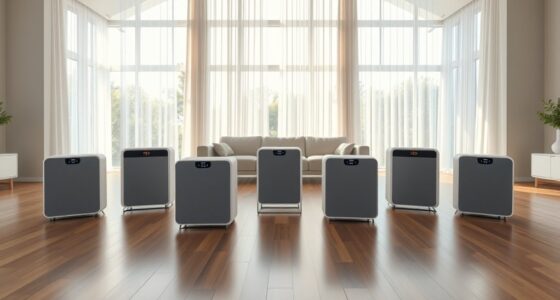
If you’re looking for the best heat recovery ventilators for your basement in 2026, I recommend considering models like the Tjernlund X2D for versatility, VENTS-US Micra for compact design, ERV 120s for high capacity, Aprilaire V22BEC for energy efficiency, Broan B110H65RS for quiet operation, and TwinFresh Comfo RB1-50-2 for ductless convenience. These units offer excellent energy recovery, airflow control, and installation flexibility—if you want more details, just keep exploring the options.
Listen free for 30 days with Audible
Thousands of audiobooks and originals — cancel anytime.
Start your free trialAs an affiliate, we earn on qualifying purchases.
Key Takeaways
- Consider units with high energy recovery efficiency (above 60%) for optimal energy savings and air quality.
- Prioritize models with flexible installation options suitable for basement spaces, such as wall-mount or ductless designs.
- Choose HRVs with anti-frost features and cold climate ratings for reliable operation in freezing environments.
- Look for systems with adjustable speeds, humidity control, and easy maintenance features for consistent performance.
- Select models that balance ventilation capacity with basement size and humidity levels for effective moisture and air quality control.
| Tjernlund X2D Model Products Xchanger Reversible Basement Fans | 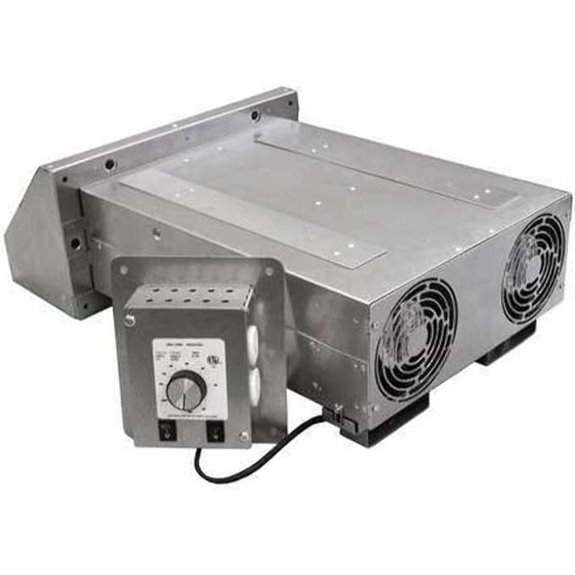 | Versatile Basement Ventilation | Airflow Capacity: 90 CFM per fan (two fans, reversible) | Ducting/Installation Type: No ducting, direct vent with exterior hood | Energy Recovery Efficiency: Not specified | VIEW LATEST PRICE | See Our Full Breakdown |
| VENTS-US Micra 60 HRV Wall-Mount Ventilation Fan | 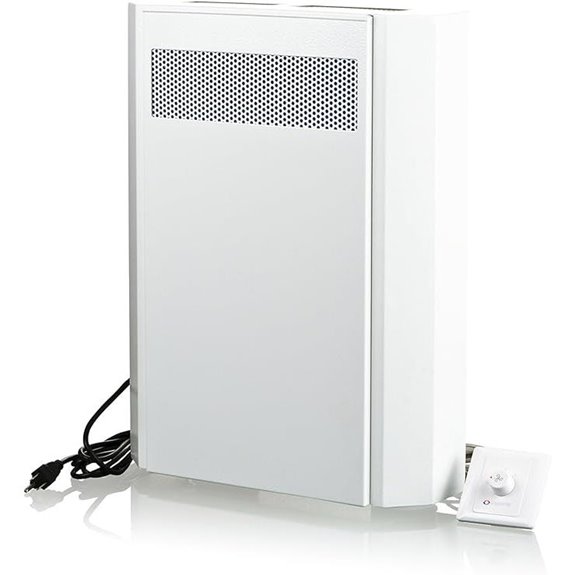 | Compact Energy Saver | Airflow Capacity: Up to 35 CFM (three speeds) | Ducting/Installation Type: Ductless, wall-mounted | Energy Recovery Efficiency: Up to 79% | VIEW LATEST PRICE | See Our Full Breakdown |
| VENTS-US ERV 120s Energy Recovery Ventilator |  | Whole-House Efficiency | Airflow Capacity: Up to 162 CFM total | Ducting/Installation Type: Standard duct connection, ceiling mounting | Energy Recovery Efficiency: Up to 65% apparent sensible | VIEW LATEST PRICE | See Our Full Breakdown |
| Aprilaire V22BEC Energy Recovery Ventilator (ERV) | 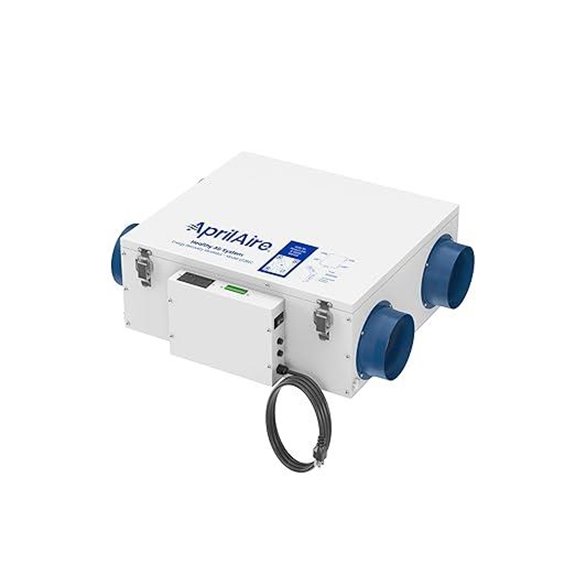 | Premium Air Quality | Airflow Capacity: 120 CFM | Ducting/Installation Type: Wall or ceiling mounting with duct connections | Energy Recovery Efficiency: Not specified | VIEW LATEST PRICE | See Our Full Breakdown |
| Broan B110H65RS AI 100 CFM Heat Recovery Ventilator | 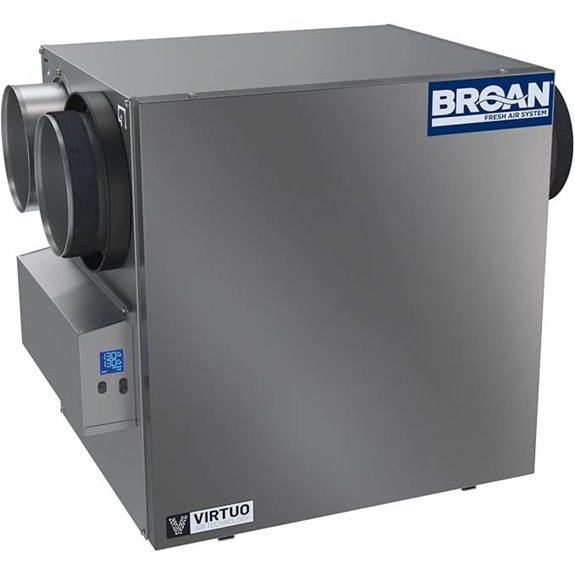 | Smart Home Integration | Airflow Capacity: 60 CFM (up to 110 CFM adjustable) | Ducting/Installation Type: Wall or ceiling mounting, flexible ports | Energy Recovery Efficiency: Energy recovery core, not specified % | VIEW LATEST PRICE | See Our Full Breakdown |
| TwinFresh Comfo RB1-50-2 Ductless ERV Ventilation Fan | 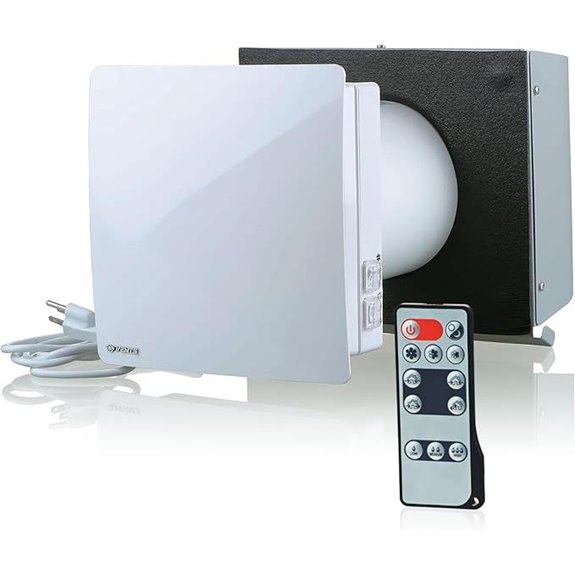 | Ductless Convenience | Airflow Capacity: 30 CFM | Ducting/Installation Type: Ductless, through-the-wall | Energy Recovery Efficiency: Up to 88% | VIEW LATEST PRICE | See Our Full Breakdown |
More Details on Our Top Picks
-
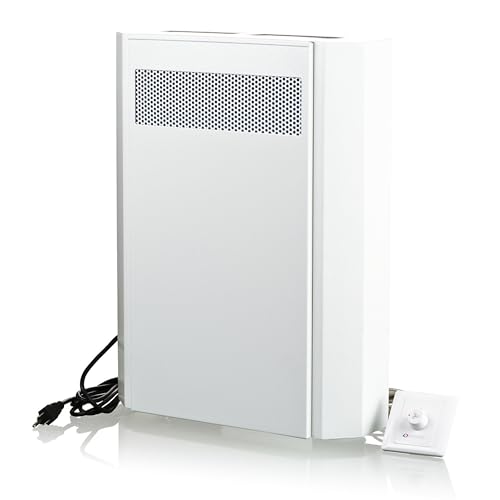
VENTS-US Micra 60 Ductless HRV Ventilator Kit – Single Room Heat Recovery Ventilation System with Included Mounting Kit for Bedrooms, Offices & Apartments | Fresh Air Ventilation Without Ductwork
- Fresh Air Without Ducts: Ventilates rooms without ductwork
- High Heat Recovery: Up to 79% heat transfer efficiency
- Ideal for Retrofit Spaces: Suitable for older buildings and basements
As an affiliate, we earn on qualifying purchases.
Tjernlund X2D Model Products Xchanger Reversible Basement Fans
If you’re looking for a versatile solution to improve airflow in your basement, the Tjernlund X2D Model Xchanger Reversible Basement Fans could be just what you need. These fans feature two 90 CFM units that can be individually reversed, allowing you to ventilate damp, musty spaces or bring in fresh air easily. They include an adjustable dehumidistat to control humidity levels and come with a plug-in connection for simple setup. The exterior hood has a removable screen to prevent debris, and the separate hood design offers flexible installation options. Magnetic covers are included for winter, helping prevent cold drafts while maintaining proper airflow.
- Airflow Capacity:90 CFM per fan (two fans, reversible)
- Ducting/Installation Type:No ducting, direct vent with exterior hood
- Energy Recovery Efficiency:Not specified
- Filtration System:Not specified
- Control Features:Dehumidistat, reversible operation
- Power Consumption:Not specified
- Additional Feature:Exterior hood with debris screen
- Additional Feature:Separate hood from fans for flexible installation
- Additional Feature:Includes winter covers for cold drafts
-

VENTS-US Frigate ERV 120s Energy Recovery Ventilator – Whole House Ventilation Fan with Freeze Protection and Dual Air Filtration – Up to 162 CFM
- HVI Certified Air Exchange: Ensures continuous fresh and stale air exchange
- Cold Climate Reliability: Anti-frost protection with fan cycling
- Three-Speed Control: Select LOW, MED, or STANDBY modes
As an affiliate, we earn on qualifying purchases.
VENTS-US Micra 60 HRV Wall-Mount Ventilation Fan
The VENTS-US Micra 60 HRV Wall-Mount Ventilation Fan is an excellent choice for homeowners seeking an easy-to-install, ductless solution to improve indoor air quality in small spaces like basements, bedrooms, or home offices. It recirculates fresh air while exhausting stale air, recovering up to 79% of energy from the outgoing air. Its compact, wall-mounted design suits retrofit projects and saves space. With three adjustable speeds and quiet operation, it’s perfect for maintaining comfort and reducing humidity, odors, and dust. The included filters improve indoor air quality, making it a reliable, energy-efficient option that boosts home comfort without complex installation or ductwork.
- Airflow Capacity:Up to 35 CFM (three speeds)
- Ducting/Installation Type:Ductless, wall-mounted
- Energy Recovery Efficiency:Up to 79%
- Filtration System:MERV8 filters
- Control Features:Adjustable speeds, quiet operation
- Power Consumption:Low power, long-life EC motor
- Additional Feature:Compact wall-mount design
- Additional Feature:Three adjustable airflow speeds
- Additional Feature:Filtered outdoor air intake
-

Aprilaire V22BEC Energy Recovery Ventilator (ERV), 120 CFM Air Exchanger for Homes up to 6,000 Sq. Ft. – Whole-House Fresh Air Ventilation System (HRV/ERV) with Wall, Ceiling, or Floor Mount Bracket
- Indoor Air Quality: Replaces stale air with fresh outdoor air
- Energy Efficiency: Reduces HVAC load with heat and moisture recovery
- Balanced Ventilation: Provides equal fresh and exhaust air exchange
As an affiliate, we earn on qualifying purchases.
VENTS-US ERV 120s Energy Recovery Ventilator
Looking for a reliable ventilation solution that balances energy efficiency with continuous air exchange? The VENTS-US ERV 120s Energy Recovery Ventilator is a solid choice. It provides up to 162 CFM of airflow with minimal power consumption—just 19 Watts on low. Its three-speed control offers flexibility for 24/7 operation, while the durable steel casing makes installation easy with standard duct fittings. Equipped with electronic anti-frost protection and an advanced enthalpy core, it efficiently transfers heat and moisture, improving indoor comfort. Washable filters help maintain air quality, making this ERV a dependable, energy-efficient system for keeping your basement fresh and healthy year-round.
- Airflow Capacity:Up to 162 CFM total
- Ducting/Installation Type:Standard duct connection, ceiling mounting
- Energy Recovery Efficiency:Up to 65% apparent sensible
- Filtration System:Washable MERV6 filters
- Control Features:Three-speed control, simple connection
- Power Consumption:19 Watts at low speed
- Additional Feature:Electronic anti-frost protection
- Additional Feature:Corrosion-resistant steel casing
- Additional Feature:Washable MERV 6 filters
Aprilaire V22BEC Energy Recovery Ventilator (ERV)
The Aprilaire V22BEC Energy Recovery Ventilator (ERV) stands out for its ability to efficiently ventilate large homes, providing 120 CFM airflow suitable for spaces up to 6,000 square feet. It functions as a whole-house system, easily mounted on walls, ceilings, or floors with included brackets. This ERV improves indoor air quality by replacing stale air with fresh outdoor air, reducing odors, humidity, and pollutants. Its energy recovery core tempers incoming air using heat and moisture from exhaust, lowering HVAC loads and saving energy. With simple push-button controls, it offers convenient operation, making it a reliable choice for maintaining comfortable, healthy indoor environments year-round.
- Airflow Capacity:120 CFM
- Ducting/Installation Type:Wall or ceiling mounting with duct connections
- Energy Recovery Efficiency:Not specified
- Filtration System:MERV8 filters
- Control Features:Push-button controls
- Power Consumption:Quiet, energy-efficient, powered by PMSM ECM motors
- Additional Feature:Simple push-button controls
- Additional Feature:Suitable for various mounting orientations
- Additional Feature:Maintains balanced indoor humidity
Broan B110H65RS AI 100 CFM Heat Recovery Ventilator
If you’re seeking a compact, energy-efficient heat recovery ventilator for your basement, the Broan B110H65RS AI 100 CFM model is an excellent choice. It features VIRTUO Air Technology, which continuously monitors indoor and outdoor conditions to deliver fresh, filtered, healthy air. Its universal, space-saving design allows multiple mounting options, simplifying installation. The unit comes with MERV 8 filters, with an optional upgrade to MERV 13 for enhanced filtration. Powered by quiet PMSM ECM motors, it offers up to 60% energy savings. The built-in LCD makes setup and diagnostics easy, while compatibility with Broan controls guarantees regulatory compliance and customizable operation.
- Airflow Capacity:60 CFM (up to 110 CFM adjustable)
- Ducting/Installation Type:Wall or ceiling mounting, flexible ports
- Energy Recovery Efficiency:Energy recovery core, not specified %
- Filtration System:MERV8 filters (upgrade optional)
- Control Features:LCD control panel, automatic balancing
- Power Consumption:Quiet, efficient motors, no specific wattage
- Additional Feature:LCD system diagnostics
- Additional Feature:Multiple mounting options
- Additional Feature:Compact universal platform
TwinFresh Comfo RB1-50-2 Ductless ERV Ventilation Fan
For homeowners seeking an efficient, space-saving ventilation solution without the hassle of ductwork, the TwinFresh Comfo RB1-50-2 Ductless ERV Ventilation Fan stands out. It delivers up to 30 CFM of filtered, fresh air for rooms up to 500 square feet, recovering up to 88% of heat or cooling energy. Its ductless, through-the-wall design makes installation straightforward in bedrooms, basements, or tiny homes. The quiet DC motor runs at just 0.2 sones, consuming only 4.5 watts. With built-in humidity sensors, energy-efficient operation, and easy remote control, it promotes healthier indoor air while reducing energy costs—perfect for compact, ductless spaces.
- Airflow Capacity:30 CFM
- Ducting/Installation Type:Ductless, through-the-wall
- Energy Recovery Efficiency:Up to 88%
- Filtration System:MERV5 filters
- Control Features:Remote control, humidity sensor
- Power Consumption:4.5 Watts (motor)
- Additional Feature:Wireless remote control
- Additional Feature:Built-in humidity sensor
- Additional Feature:Ductless through-wall installation
Factors to Consider When Choosing a Heat Recovery Ventilator for Basement

When choosing a heat recovery ventilator for your basement, I consider factors like ventilation capacity to guarantee it meets my space’s needs and energy efficiency features to save on power bills. I also look at installation flexibility to fit my setup and how well it improves air quality, especially in different climate conditions. These points help me find a unit that’s effective, adaptable, and suitable for my environment.
Ventilation Capacity Needs
Choosing the right heat recovery ventilator (HRV) for your basement hinges on understanding the ventilation capacity you need. First, determine the air exchange rate in cubic feet per minute (CFM) to keep air fresh and healthy. Decide if you need continuous airflow or intermittent ventilation, as this affects the required CFM. It’s important to take into account the size and layout of your basement so the HRV’s airflow matches the space’s needs. Basements often have higher humidity levels, so selecting an HRV capable of handling moisture is vital. Also, verify the ventilation capacity aligns with your existing HVAC system to maximize energy efficiency. Proper capacity prevents over- or under-ventilating, ensuring a comfortable, healthy environment.
Energy Efficiency Features
Energy efficiency is a crucial factor when selecting a heat recovery ventilator for your basement, as it directly impacts long-term savings and environmental footprint. I look for units with high energy recovery efficiency, ideally above 60%, to maximize energy savings. Low power consumption models, operating between 19-50 Watts, help reduce overall energy use. Adjustable fan speeds and controls allow me to fine-tune performance based on seasonal needs, improving efficiency. I also consider systems with advanced heat and moisture transfer cores, like enthalpy cores, which boost recovery rates and indoor comfort. Additionally, smart or automated features are a plus, as they optimize energy use by adjusting ventilation according to indoor humidity and temperature levels. This approach ensures I get efficient ventilation without unnecessary energy waste.
Installation Flexibility Options
Selecting a heat recovery ventilator for your basement requires considering installation flexibility to guarantee it fits your space and future needs. Look for HRVs with adjustable mounting options—wall, ceiling, or floor—to suit different layouts. Verify the system offers flexible duct connection points and can adapt to various duct sizes for easier setup. Reversible or multi-directional airflow features are also valuable, especially in confined or irregular spaces, helping you optimize placement. Modular components or removable panels can make installation in tight or awkward areas much simpler. Additionally, consider models with optional accessories or adapters that allow for varied installation configurations and future expansion. Prioritizing these flexibility options ensures your HRV can be installed efficiently and adapt as your basement’s needs evolve.
Air Quality Improvement
Have you ever noticed how stale, musty air can build up in your basement? That’s where a heat recovery ventilator (HRV) truly helps. HRVs continuously exchange indoor air with fresh outdoor air, improving overall air quality. They filter incoming air through MERV-rated filters, removing dust, pollen, allergens, and airborne pollutants, which is essential for a healthier environment. Additionally, HRVs reduce indoor humidity, preventing mold growth and musty odors that often plague basements. Properly installed units supply a steady flow of clean, oxygen-rich air, making your space healthier and more comfortable. Plus, because they recover heat from exhaust air, HRVs maintain good air quality without raising energy bills or causing temperature swings. It’s a smart way to guarantee a cleaner, fresher basement environment.
Climate Compatibility
When choosing a heat recovery ventilator for your basement, it’s crucial to take into account your climate to guarantee peak performance and durability. If you live in a cold climate, ensure the HRV is rated for low temperatures to avoid frost buildup and freezing issues in winter. Opt for models with anti-frost or defrosting features if freezing temperatures last long. Check that the heat recovery efficiency remains high in your area to maximize energy savings. If your climate has high humidity or dry conditions, consider HRVs with humidity control to maintain comfort. Additionally, match the airflow capacity to your basement size and climate needs to prevent over- or under-ventilation. Proper climate compatibility ensures your ventilation system operates effectively and lasts longer.
Frequently Asked Questions
How Do Heat Recovery Ventilators Impact Basement Humidity Levels?
Heat recovery ventilators help control basement humidity by exchanging stale air for fresh, conditioned air while retaining heat. This process reduces excess moisture, preventing mold growth and dampness. I’ve found that HRVs keep the air balanced, making my basement more comfortable and healthier. They work efficiently, especially during humid seasons, by maintaining ideal humidity levels and preventing the space from becoming too damp or too dry.
Are There Specific Noise Levels to Consider for Basement HRVS?
Think of a basement HRV as a gentle whisper in a quiet room—noise levels matter. I recommend choosing models with noise ratings below 30 decibels, so they operate quietly without disturbing your peace. During installation, I guarantee the units are mounted properly to minimize vibrations. If noise is a concern, look for HRVs with sound-insulating features, making sure your basement remains a calm, comfortable space.
Can HRVS Be Integrated With Existing Basement Insulation Systems?
Yes, HRVs can be integrated with your existing basement insulation systems. I recommend consulting with a professional to guarantee compatibility and proper installation. They can help modify or adapt your insulation if needed, optimizing airflow and energy efficiency. Proper integration not only enhances ventilation but also maintains your basement’s insulation integrity, ensuring a comfortable, healthy environment. Don’t overlook this step—it’s key to maximizing your HRV’s benefits.
What Maintenance Is Required for Basement Heat Recovery Ventilators?
I recommend checking your basement HRV regularly for dust and debris, which can reduce efficiency. I also suggest replacing filters every 3 to 6 months, depending on usage and air quality. It’s important to inspect the vents and ducts for blockages or leaks and clean or seal them as needed. Additionally, keep an eye on humidity levels and ensure the system’s controls are functioning properly for maximum performance.
Do Certain HRV Models Offer Better Energy Savings in Basements?
They say “you get what you pay for,” and that’s true with HRVs. Certain models with higher efficiency ratings, like those with ENERGY STAR certification, definitely offer better energy savings in basements. I’ve found that units with advanced heat exchange cores and smart controls maximize savings by reducing energy waste. Investing in a well-rated model pays off long-term, keeping your basement comfortable and energy bills lower.
Conclusion
Choosing the right heat recovery ventilator for your basement isn’t just about efficiency—it’s about comfort and peace of mind. Whether you prefer a wall-mounted model or a ductless system, each option offers unique benefits. The key is balancing performance with your space’s needs. After all, in a world where fresh air is essential, don’t settle for just any ventilator—select one that truly transforms your basement into a healthy, comfortable haven.
College move-in / dorm season Picks
dorm essentials
As an affiliate, we earn on qualifying purchases.