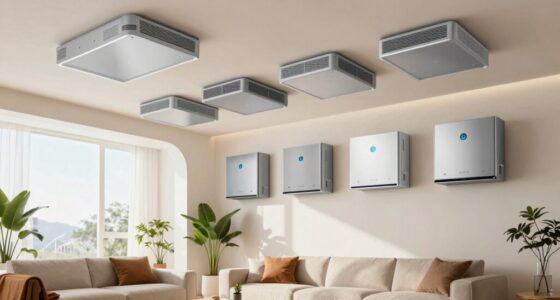
If you’re looking for the best through-wall ERV ventilators for 2026, I recommend options like the TwinFresh Comfo RB1-50-2, Aprilaire V22BEC, Broan B210E75RS, a WiFi-enabled Wall HEPA fan, and the VENTS-US Frigate ERV 120s. These units excel in airflow, energy efficiency, and filtration, making them reliable choices for indoor air quality. Keep going to learn more about their features and how to choose the right one for your needs.
Key Takeaways
- Consider models with high heat recovery efficiency (up to 88%) for optimal energy savings and indoor comfort.
- Ensure units support appropriate airflow capacity (30-120 CFM) based on room or house size.
- Prioritize flexible installation features like side/top ports, universal mounting, and auto-balancing for easier setup.
- Choose quiet operation models (as low as 0.2 sones) with noise-reduction features suitable for bedrooms and offices.
- Opt for units with effective filtration (HEPA, MERV 8), humidity sensors, and easy maintenance to maintain indoor air quality.
| TwinFresh Comfo RB1-50-2 Ductless ERV Ventilation Fan | 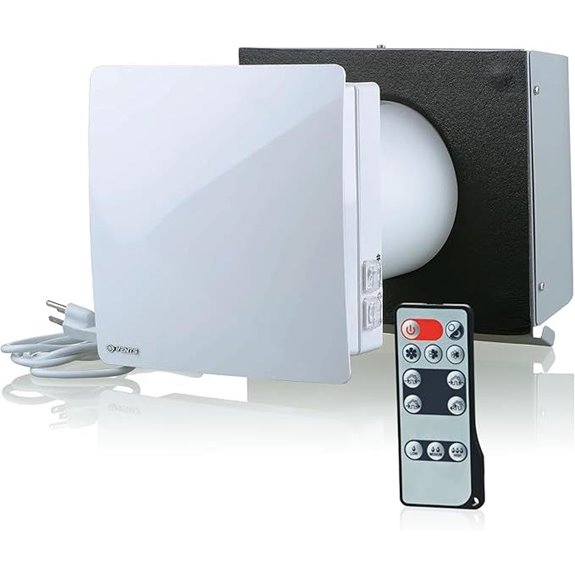 | Best Ductless ERV | Airflow Capacity: Up to 30 CFM | Filtration Type: MERV 5 filters | Control Method: Wireless remote control | VIEW LATEST PRICE | See Our Full Breakdown |
| Aprilaire V22BEC Energy Recovery Ventilator (ERV) | 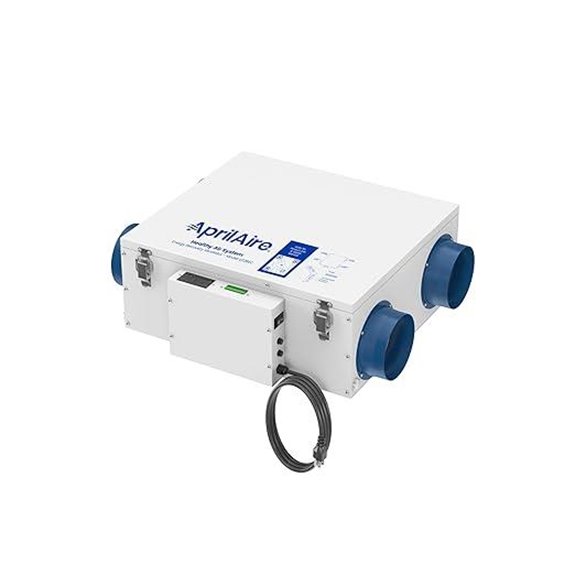 | Whole-House Efficiency | Airflow Capacity: 120 CFM | Filtration Type: Not specified (focus on heat/moisture recovery) | Control Method: Push-button controls | VIEW LATEST PRICE | See Our Full Breakdown |
| Broan B210E75RS Wall/Ceiling ERV with Side Ports | 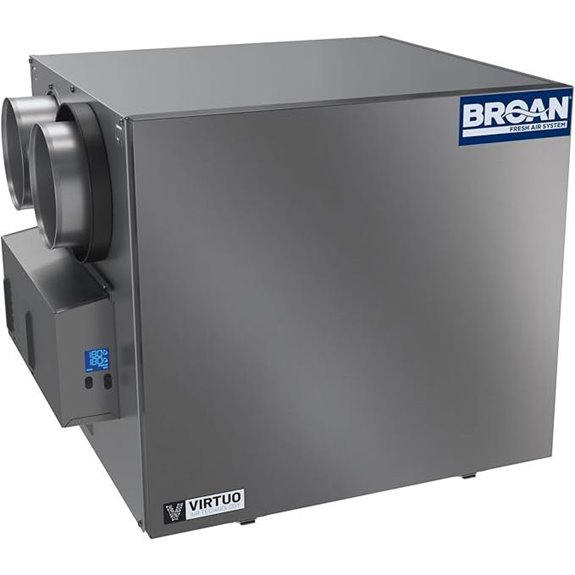 | Flexible Installation | Airflow Capacity: Up to 210 CFM | Filtration Type: MERV 8 with optional HEPA | Control Method: LCD screen with real-time adjustment | VIEW LATEST PRICE | See Our Full Breakdown |
| Wall HEPA Ventilation Fan with WiFi and Remote | 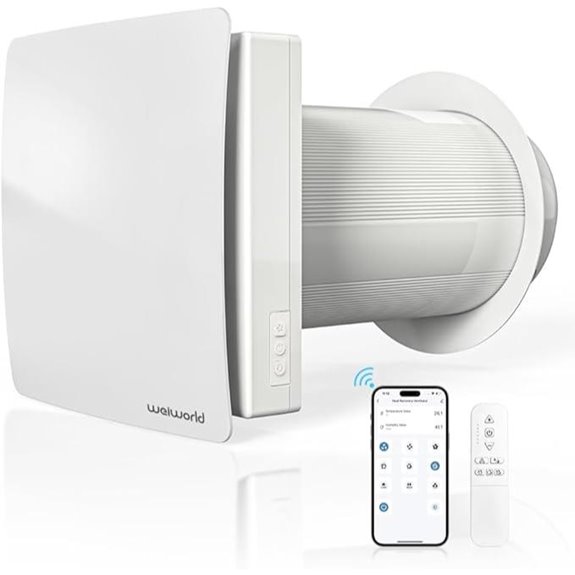 | Smart Filtration | Airflow Capacity: Not specified (suitable for small to medium rooms) | Filtration Type: G4 pre-filter, HEPA, activated carbon | Control Method: WiFi and remote via app | VIEW LATEST PRICE | See Our Full Breakdown |
| VENTS-US Frigate ERV 120s Energy Recovery Ventilator | 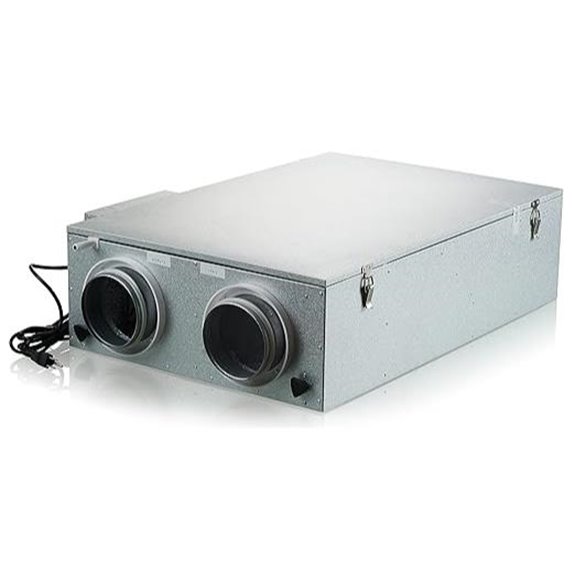 | High Capacity | Airflow Capacity: 162 CFM | Filtration Type: Washable MERV 6 filters | Control Method: Three-speed control (manual) | VIEW LATEST PRICE | See Our Full Breakdown |

More Details on Our Top Picks
-

Aprilaire V22BEC Energy Recovery Ventilator (ERV), 120 CFM Air Exchanger for Homes up to 6,000 Sq. Ft. – Whole-House Fresh Air Ventilation System (HRV/ERV) with Wall, Ceiling, or Floor Mount Bracket
HEALTHY INDOOR AIR – Replaces stale indoor air with fresh outdoor air to improve Indoor Air Quality throughout...
As an affiliate, we earn on qualifying purchases.
TwinFresh Comfo RB1-50-2 Ductless ERV Ventilation Fan
If you’re looking for an energy-efficient ventilation solution for a small to medium-sized room, the TwinFresh Comfo RB1-50-2 is an excellent choice. It delivers up to 30 CFM of filtered, fresh air, ideal for spaces up to 500 sq ft. The system recovers up to 88% of heat or cooling, reducing energy costs and easing the load on your HVAC. Its ductless design makes installation through walls 6-20 inches thick simple and mess-free. With a quiet, efficient DC motor and built-in humidity sensor, it automatically manages moisture and air quality. Plus, the sleek exterior and remote control add convenience and modern appeal.
- Airflow Capacity:Up to 30 CFM
- Filtration Type:MERV 5 filters
- Control Method:Wireless remote control
- Installation Type:Ductless through-the-wall
- Energy Features:Heat recovery, humidity sensor
- Certification & Durability:Not specified
- Additional Feature:Ductless wall installation
- Additional Feature:Quiet operation (as low as 0.2 sones)
- Additional Feature:Built-in humidity sensor
-

Broan B210E75RS AI 206 CFM Wall or Ceiling Mounted Energy Recovery Ventilator with Side Ports and Superior ERV Core Performance - N/A
A leading provider of ventilation and air-quality solutions for homes
As an affiliate, we earn on qualifying purchases.
Aprilaire V22BEC Energy Recovery Ventilator (ERV)
The Aprilaire V22BEC Energy Recovery Ventilator (ERV) is an excellent choice for homeowners seeking an efficient, whole-house ventilation system that supports homes up to 6,000 square feet. It provides 120 CFM airflow and can be mounted on walls, ceilings, or floors using included brackets. This ERV improves indoor air quality by replacing stale air with fresh outdoor air, reducing odors, humidity, and airborne pollutants. Its energy recovery core tempers incoming air with heat and moisture from exhaust, lowering HVAC costs while maintaining consistent temperature and humidity. User-friendly push-button controls make operation simple, ensuring reliable, balanced ventilation for year-round comfort.
- Airflow Capacity:120 CFM
- Filtration Type:Not specified (focus on heat/moisture recovery)
- Control Method:Push-button controls
- Installation Type:Wall, ceiling, or floor-mounted
- Energy Features:Heat and moisture recovery
- Certification & Durability:Not specified
- Additional Feature:Whole-house ventilation coverage
- Additional Feature:Supports wall, ceiling, or floor mounting
- Additional Feature:Balances indoor temperature and humidity
-
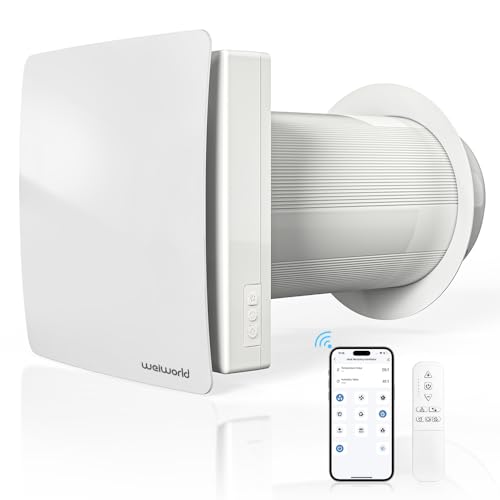
Weiworld Through Wall HEPA Ventilation Fan with WiFi & Remote Control, Ultra Quiet EC Motor Wall Vent, Fresh Air Intake & Air Exchange System for Bedroom, Home Office, Attic
【HEPA Fresh Air Ventilation Fan】Equipped with a 3-stage filtration system (pre-filter, HEPA filter, and activated carbon), this wall-mounted...
As an affiliate, we earn on qualifying purchases.
Broan B210E75RS Wall/Ceiling ERV with Side Ports
Broan’s B210E75RS Wall/Ceiling ERV with Side Ports stands out as an ideal choice for those seeking flexible installation options and efficient indoor air quality improvement. Its VIRTUO technology automates airflow verification, auto-balancing, and self-adjustment, simplifying setup. The universal platform supports top and side port configurations, accommodating various locations, with mounting options for suspended or wall-mount installations. Equipped with a MERV 8 filter—upgradeable to HEPA—it supplies tempered, filtered outdoor air while exhausting stale indoor air. Powered by energy-efficient motors delivering up to 210 CFM, it ensures reliable, long-term performance. The integrated LCD screen makes adjusting airflow and monitoring performance straightforward.
- Airflow Capacity:Up to 210 CFM
- Filtration Type:MERV 8 with optional HEPA
- Control Method:LCD screen with real-time adjustment
- Installation Type:Wall or ceiling with side/top ports
- Energy Features:ECM motors, energy-efficient
- Certification & Durability:Long-lasting, certified at -13 F
- Additional Feature:VIRTUO airflow auto-balancing
- Additional Feature:Compatible with HEPA filters
- Additional Feature:LCD real-time airflow display
Wall HEPA Ventilation Fan with WiFi and Remote
A Wall HEPA Ventilation Fan with WiFi and Remote is an ideal choice for those seeking convenient, hands-free control over indoor air quality. With the Tuya Smart App or included remote, I can easily manage ventilation settings, adjust fan speeds, switch modes, and monitor operation remotely. It offers three versatile modes: Fresh Air Intake, Exhaust, and Air Recirculation, perfect for various needs. The multi-stage filtration system, including a HEPA filter, captures dust, odors, and dirt, ensuring cleaner air. Its quiet, energy-efficient EC motor makes it suitable for bedrooms, offices, and sensitive spaces, providing reliable, low-maintenance ventilation.
- Airflow Capacity:Not specified (suitable for small to medium rooms)
- Filtration Type:G4 pre-filter, HEPA, activated carbon
- Control Method:WiFi and remote via app
- Installation Type:Wall-mounted, easy maintenance
- Energy Features:Low energy EC motor, PWM control
- Certification & Durability:Not specified
- Additional Feature:WiFi and remote control
- Additional Feature:Multiple ventilation modes
- Additional Feature:Magnetic quick-release front panel
VENTS-US Frigate ERV 120s Energy Recovery Ventilator
If you’re looking for a reliable ventilation solution that guarantees continuous, balanced air exchange in your home, the VENTS-US Frigate ERV 120s is an excellent choice. This whole-house system is HVI certified, ensuring consistent performance by supplying fresh air and exhausting stale air efficiently. It delivers up to 162 CFM at just 19 watts on low, with a three-speed control for adaptable operation. Its durable steel casing makes ceiling mounting straightforward. Equipped with electronic anti-frost protection and an advanced enthalpy core, it effectively manages temperature and humidity, enhancing comfort and energy efficiency. Washable filters improve indoor air quality, making this ERV a smart, dependable investment.
- Airflow Capacity:162 CFM
- Filtration Type:Washable MERV 6 filters
- Control Method:Three-speed control (manual)
- Installation Type:Ceiling or wall mounting with brackets
- Energy Features:Energy recovery core, low power consumption
- Certification & Durability:HVI certified, corrosion-resistant steel
- Additional Feature:Electronic anti-frost protection
- Additional Feature:Standard 5-inch duct fittings
- Additional Feature:Certified for performance (HVI)
Factors to Consider When Choosing Through-Wall ERV Ventilator
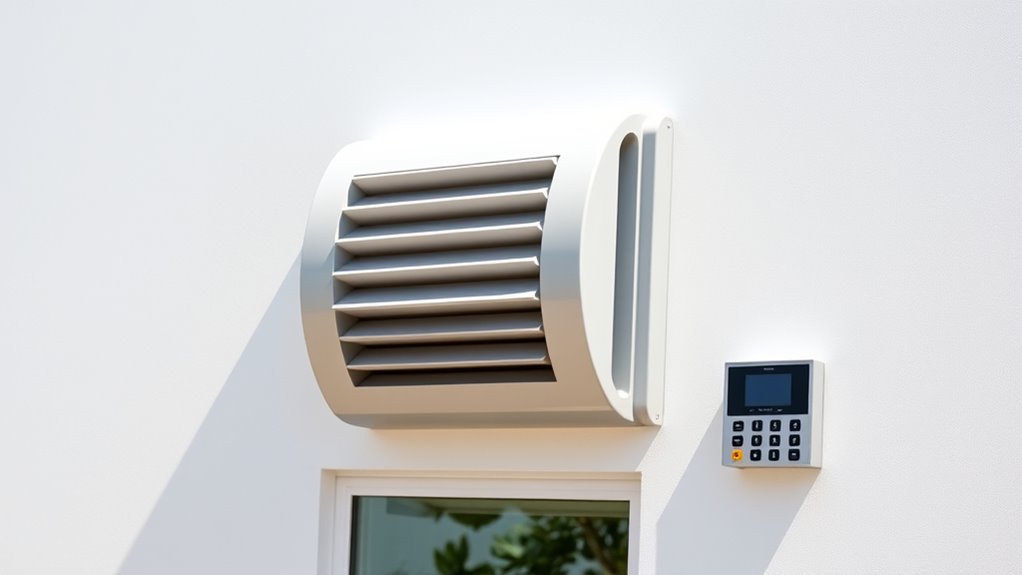
When selecting a through-wall ERV ventilator, I consider key factors like airflow capacity, installation options, and energy efficiency to satisfy specific needs. I also look at air quality features and maintenance requirements to guarantee long-term performance. Let’s explore how these points can help you choose the right unit for your space.
Airflow Capacity Needs
Choosing the right airflow capacity for a through-wall ERV ventilator depends on evaluating your space’s size and occupancy needs. I recommend calculating the required airflow in CFM by considering both room size and how many people typically occupy the space. For small rooms up to 500 sq ft, around 30 CFM usually suffices, but larger areas like whole houses may need 120 CFM or more. It’s essential to account for peak activity times to prevent stale air or excess humidity. Matching the ventilator’s airflow capacity with your building’s air exchange requirements guarantees good indoor air quality. Also, verify that the selected unit meets local building codes and ventilation standards to keep your space safe and healthy.
Installation Flexibility Options
Installation flexibility is essential when selecting a through-wall ERV ventilator, as it determines how easily the unit fits into your space and meets your specific needs. Many models offer side or top port options, giving you choices based on your room layout and space constraints. Some units support universal mounting, allowing installation in various wall thicknesses and orientations, which broadens your options. Features like adjustable port configurations enable customization for ideal duct routing and easier access. Additionally, the ability to install units using suspended chains or brackets offers further adaptability to different structural setups. Ease of installation is also improved by self-adjusting and auto-balancing technologies, ensuring the unit functions properly regardless of wall or mounting conditions.
Energy Efficiency Ratings
Evaluating energy efficiency ratings is essential for selecting a through-wall ERV ventilator that saves both energy and money. These ratings typically include heat recovery efficiency, which can reach up to 88%, showing how well the system conserves energy by transferring heat and moisture between air streams. The effectiveness of the energy recovery core, expressed as a percentage, indicates the device’s ability to maximize heat transfer. Power consumption in watts, often as low as 4.5 watts, reflects how efficiently the unit operates without excessive energy use. Certifications like HVI or SRE provide standardized comparisons of performance and efficiency. Units with high efficiency reduce HVAC load, lowering energy bills and environmental impact, making them a smart choice for long-term savings.
Air Quality Features
When selecting a through-wall ERV ventilator, paying attention to its air quality features can make a significant difference in creating a healthier indoor environment. Look for models with effective filters like MERV 8 or optional HEPA filters, which remove dust, pollen, and odors from incoming air. Many units include built-in humidity sensors that automatically regulate excess moisture, helping prevent mold and maintain comfortable humidity levels. Some systems exchange stale indoor air with fresh outdoor air while recovering heat and moisture, boosting both air quality and energy efficiency. Advanced filtration options with multi-stage filters, including activated carbon, can further reduce odors and airborne pollutants. Additionally, continuous operation and real-time monitoring guarantee consistent air exchange, keeping your indoor air clean and healthy.
Maintenance Requirements
Maintaining a through-wall ERV ventilator requires regular attention to guarantee it operates efficiently and continues to improve indoor air quality. I recommend routinely replacing or cleaning filters, like MERV or HEPA, to prevent dust and allergens from building up. Periodic inspection of the humidity sensors and control components is also crucial to ensure proper operation. Cleaning exterior parts such as grilles and vents prevents obstructions that could hinder airflow. Additionally, performing routine system diagnostics and performance checks helps identify potential issues early, avoiding costly repairs or efficiency loss. Staying on top of these maintenance tasks not only prolongs the lifespan of your ERV but also keeps your indoor environment fresh, healthy, and energy-efficient. Consistent upkeep is essential for peak performance.
Noise Level Considerations
Choosing a through-wall ERV ventilator involves considering how much noise it produces, especially if you’ll place it in bedrooms or quiet spaces. Noise levels are measured in sones or decibels, with lower values indicating quieter operation; many models operate as quietly as 0.2 sones, making them suitable for restful areas. High-efficiency motors, like reversible DC motors, help minimize operational noise. Installation factors such as wall thickness, mounting method, and proximity to living spaces can influence noise levels, so proper setup is vital. Additionally, features like sound insulation or vibration dampening can further reduce noise, enhancing comfort. Paying attention to these factors ensures your ERV operates quietly, maintaining a peaceful environment while providing fresh air.
Frequently Asked Questions
How Do Through-Wall ERVS Compare to Ducted Systems in Efficiency?
Through-wall ERVs are typically more energy-efficient than ducted systems, especially in retrofit applications. I’ve found they minimize duct losses and are easier to install, which saves energy and reduces costs. Ducted systems can be less efficient because of potential leaks and longer duct runs. Overall, through-wall ERVs offer better efficiency in many situations, making them a smart choice for maintaining fresh air while conserving energy.
What Maintenance Is Required for Long-Term Optimal Performance?
To keep my through-wall ERV running efficiently long-term, I regularly clean or replace filters, guarantee the vents and coils are free of dust, and check for any blockages. I also inspect the fan and motor for unusual noises and keep an eye on energy bills for signs of declining performance. Scheduling annual professional maintenance helps me catch issues early and maintain ideal airflow and energy efficiency.
Are Through-Wall ERVS Suitable for All Climate Zones?
Through-wall ERVs work well in most climate zones, but I’d recommend checking their specifications for your specific environment. In extremely cold or hot climates, some models may need additional features or insulation to perform efficiently. I always advise consulting with an HVAC professional to ensure the unit you choose suits your climate. Proper selection guarantees ideal indoor air quality and energy efficiency year-round.
Can They Be Integrated With Existing Smart Home Systems?
Sure, you can integrate through-wall ERV ventilators with your smart home system; it’s like hitting two birds with one stone. Most modern models come with smart capabilities or compatible apps, making control easy. Just check the product specs to guarantee compatibility. With a little setup, you’ll have seamless operation, giving you peace of mind and better air quality without missing a beat in your smart home ecosystem.
What Is the Typical Lifespan of a Through-Wall ERV Ventilator?
A through-wall ERV ventilator typically lasts between 10 to 15 years with proper maintenance. I recommend regular filter changes and inspections to prolong its lifespan. Keep an eye on any unusual noises or decreased efficiency, as these can signal it’s time for repairs or replacement. Investing in a quality unit and routine upkeep ensures your system runs smoothly and lasts as long as possible.
Conclusion
Choosing the right through-wall ERV ventilator is like finding the perfect key to a well-guarded door—trusting that it’ll open up fresh air and peace of mind. Remember, just as Da Vinci combined art and science, combining features and reliability guarantees your home breathes easier. So, weigh your needs carefully, and I’m confident you’ll unlock the best solution for a healthier, more comfortable space. Your perfect airflow awaits—now go ahead and make that choice.