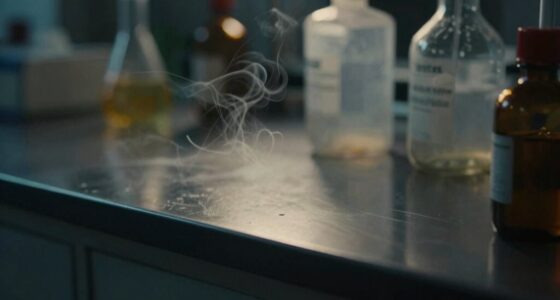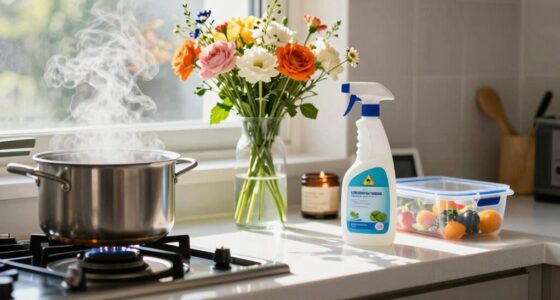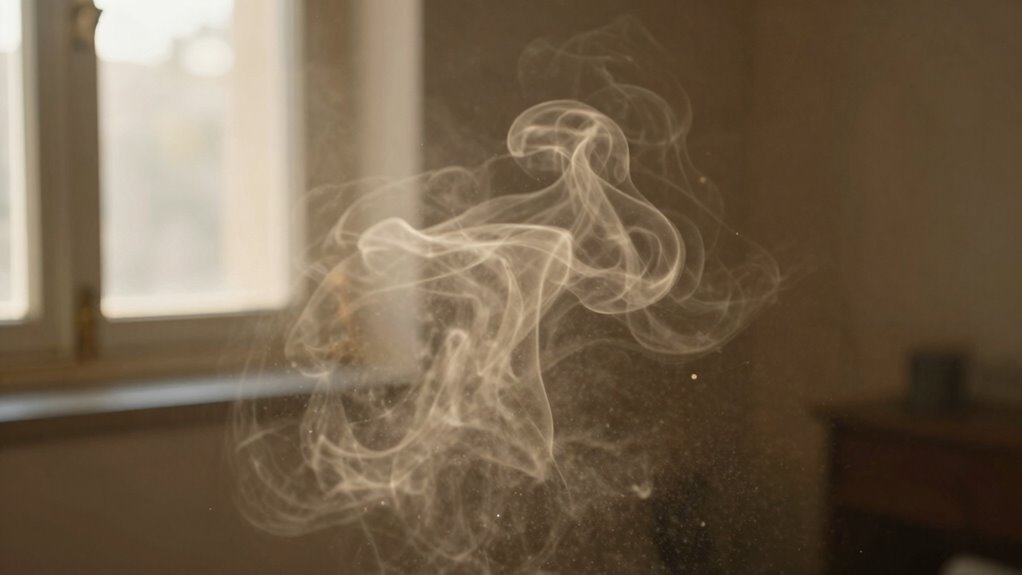

Odors stick around long after their source is gone because their molecules embed into surfaces, fabrics, and porous materials like carpets, upholstery, or drywall, trapping scents deep inside. These tiny molecules cling tightly and can settle into materials where cleaning often doesn’t fully remove them. As a result, the odors linger and can re-emerge even after cleaning. If you want to understand how to get rid of stubborn smells completely, there’s more to explore.
Key Takeaways
- Odor molecules embed into porous surfaces like carpets and drywall, trapping them for extended periods.
- Tiny odor molecules cling tightly to surfaces, making physical removal difficult.
- Surfaces act as reservoirs, slowly releasing embedded odors even after cleaning.
- Inadequate cleaning fails to eliminate odor molecules hidden within materials.
- Poor air circulation prevents dispersal of trapped odors, allowing them to persist.
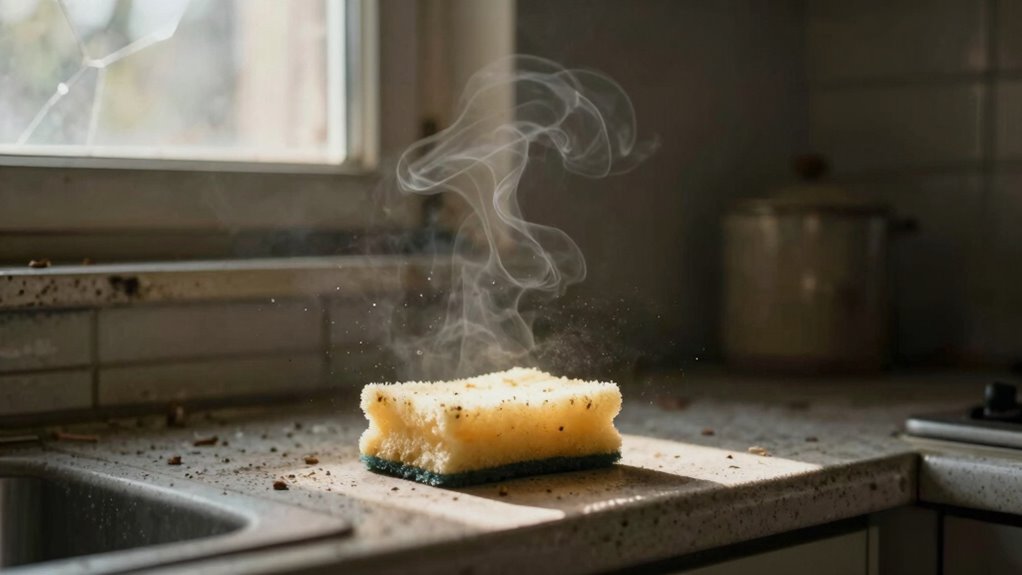
Have you ever noticed an unpleasant smell sticking around long after the source is gone? It’s frustrating when you’ve cleaned, aired out the space, and yet, that persistent odor lingers like an unwelcome guest. The reason is often tied to how odors interact with your environment. Odors don’t just vanish; instead, they embed themselves into surfaces, fabrics, and even the air itself. That’s why, despite removing the obvious cause, the smell continues to haunt the space. To combat this, you can turn to fragrant remedies, which not only mask odors but also help neutralize and absorb them. These solutions work by introducing pleasant scents that compete with the bad smell, creating a more inviting atmosphere. However, for a more lasting fix, odor absorption techniques are essential. These methods involve using materials or substances that trap and hold odor molecules, preventing them from escaping back into the air.
The science behind why smells stick around is rooted in how odor molecules behave. Once released, they settle into porous surfaces like carpets, upholstery, curtains, and even drywall. These molecules are tiny and cling tightly to surfaces, making it difficult for simple cleaning to completely eliminate the smell. That’s where fragrant remedies come into play. Aromatic sprays, essential oils, or scented candles can help cover up the odor temporarily, but for a more permanent solution, you need to focus on odor absorption. Activated charcoal, baking soda, and specific odor-absorbing sprays are great at capturing those pesky molecules. These agents work by attracting and binding odor molecules, effectively removing them from the environment. Additionally, understanding odor molecule behavior can help you make more informed decisions about effective odor removal strategies. Incorporating air circulation and ventilation can also accelerate the process of odor removal by dispersing trapped molecules. Using proper cleaning techniques, such as deep cleaning carpets and upholstery, further enhances odor removal efforts. Recognizing the importance of surface porosity can help you target cleaning efforts more effectively. Moreover, making adjustments to your cleaning routine can significantly reduce the chances of odors returning.
You can also incorporate odor-absorbing materials into your cleaning routine. For instance, sprinkling baking soda on carpets or letting activated charcoal sit in problem areas for a few hours can make a noticeable difference. These natural remedies are affordable, non-toxic, and highly effective. When used consistently, they help prevent odors from settling in deeply and reduce their persistence over time. Combining fragrant remedies with odor absorption creates a balanced approach: one masks the smell temporarily while the other tackles the root cause. This way, you’re not just covering up the odor but actively removing it from your space. In the end, understanding the science behind lingering odors empowers you to choose the right strategies, ensuring your home smells fresh and inviting long after the initial source is gone.

Activated Charcoal Odor Absorber for Strong Odors in Car, Closet, Shoe, Basement. 10 Activated Charcoal Bags Odor Absorbers for Home. Bamboo Charcoals Air Purifying Bag Charcoals Deodorizer Eliminator
CHARCOAL DEODORIZER BAGS WITH HOOKS. Our 3.5oz bamboo charcoal bag musty smell eliminators are the perfect size to…
As an affiliate, we earn on qualifying purchases.
As an affiliate, we earn on qualifying purchases.
Frequently Asked Questions
Can I Completely Eliminate Lingering Odors Without Professional Help?
Yes, you can completely eliminate lingering odors without professional help. Start by thoroughly cleaning the area to remove odor sources. Use odor absorption agents like baking soda or activated charcoal to trap smells. Afterward, apply scent masking products to create a fresh scent. Ventilate the space well, and reapply odor absorbers if necessary. Consistent cleaning and proper odor absorption techniques can help you reclaim a fresh, odor-free environment.
How Long Do Odors Typically Stay Embedded in Fabrics?
Odors typically stay embedded in fabrics for days to weeks, depending on the material and odor strength. You’re dealing with odor molecules that have been absorbed into the fibers, making scent absorption stubborn. To speed up removal, wash the fabric thoroughly, use odor-neutralizing solutions, and air it out in sunlight. For persistent smells, consider professional cleaning or specialized odor eliminators to effectively break down scent absorption.
Are Some Materials More Prone to Retaining Odors Than Others?
Yes, some materials are more prone to retaining odors. Porous surfaces, like wood or fabric, trap odor molecules more easily, making smells linger longer. Synthetic materials, such as polyester or nylon, also tend to hold onto odors because they don’t breathe as well as natural fibers. You’ll find that these materials often require special cleaning or odor-neutralizing treatments to fully eliminate lingering smells.
Can Air Purifiers Permanently Remove Stubborn Odors?
You might think air purifiers can permanently remove stubborn odors, but they have limitations. Odor molecule resilience means some smells cling tightly to surfaces and air, making complete removal difficult. While air purifiers considerably reduce odors, they don’t eliminate them permanently. To truly tackle persistent smells, you need a combination of cleaning, ventilation, and high-quality purifiers designed for odor removal. Don’t rely solely on devices—they can only do so much.
Do Certain Cleaning Products Work Better for Odor Removal?
Yes, certain cleaning products work better for odor removal because they trigger chemical reactions that break down odor-causing molecules. Look for enzymatic cleaners or products with active ingredients like vinegar or baking soda, which neutralize odors effectively. Masking techniques, such as scented sprays, temporarily hide smells but don’t eliminate them. For lasting results, choose cleaners that chemically react with and neutralize the odor instead of just covering it up.

ARM & HAMMER Fridge-n-Freezer Baking Soda Odor Absorber, Helps Keep Food Tasting Fresh, Long-Lasting, Natural & Unscented Deodorizer for Kitchen & Home, 14 Oz, 12 Pack
POP ONE IN, STOP ODOR: Pack of 12 x 14 oz ARM & HAMMER Fridge-n-Freezer Baking Soda Odor…
As an affiliate, we earn on qualifying purchases.
As an affiliate, we earn on qualifying purchases.
Conclusion
Think of odors like stubborn shadows that cling long after the source has vanished. They seep into porous surfaces, hiding in the tiniest cracks, waiting for the right moment to resurface. To truly banish them, you must act like a detective, thoroughly cleaning and neutralizing their hiding spots. Only then can you finally turn off the lingering echoes of unwanted smells, allowing your space to breathe freely again—like waking up from a long, restless night.

Air Purifiers for Home with High Efficiency Filter Up to 1076 Ft² for Pet Hair, Odors, Pollen, Smoke, Compact Air Cleaner with 3 Speeds, Timer, Aroma Quiet 360°Intake Filter, White
Effortless Operation: Simplified control panel with intuitive design makes it easy to operate. No complicated setup—just one tap,…
As an affiliate, we earn on qualifying purchases.
As an affiliate, we earn on qualifying purchases.

Zero Odor Multi-Purpose Odor Eliminator – Eliminate Air & Surface Odor – Patented Technology Best for Bathroom, Kitchen, Fabric, Closet- Smell Great Again, 8oz (Over 1000 Sprays)
Eliminate Odors in Kitchen, Bathroom, Nursery, Basement and more. Smoke, Pet odor eliminator for home Even Skunk Odor
As an affiliate, we earn on qualifying purchases.
As an affiliate, we earn on qualifying purchases.