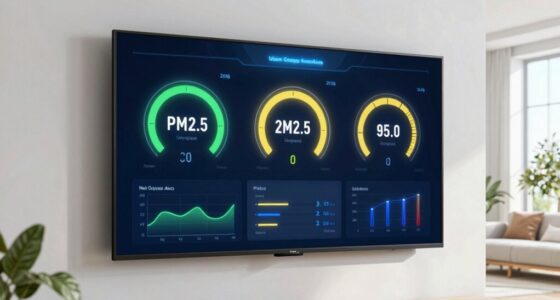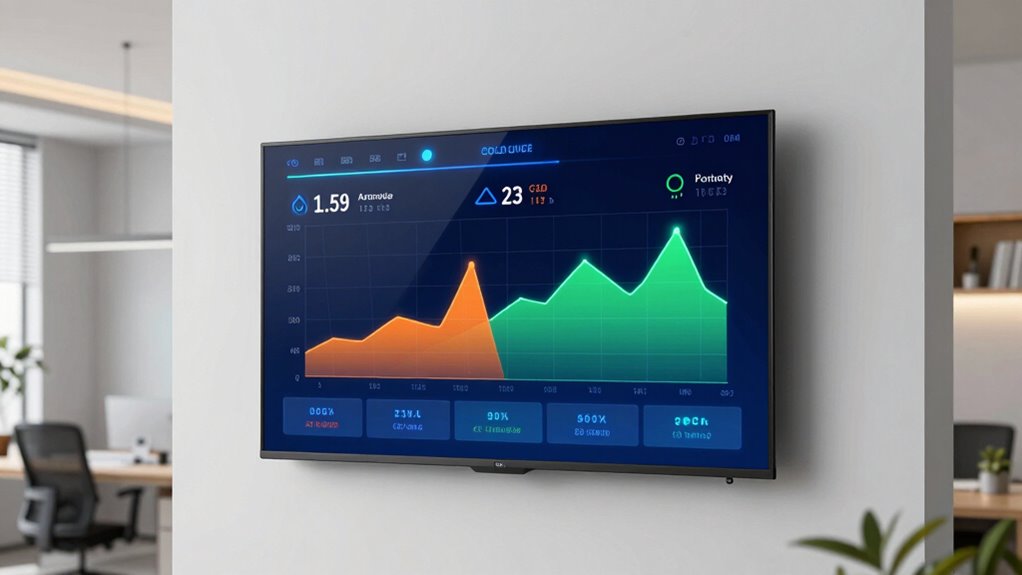
Your indoor air dashboard should provide real-time airflow and ventilation rates to show how well your space is being aired out. It needs to highlight pollutant levels like VOCs, CO₂, and particulates and catch their sources, so you can act quickly. Clear visuals and alerts are essential for spotting issues early, while system integration helps tailor solutions. Keep exploring to discover how these features can help keep your indoor environment healthier.
Play games included with Prime
Start a Prime free trial and play with Amazon Luna on your devices.
As an affiliate, we earn on qualifying purchases.
Key Takeaways
- Real-time airflow and air exchange rates to assess ventilation effectiveness.
- Specific pollutant levels and their sources for targeted mitigation.
- Trend analysis and historical data to identify patterns and issues.
- Alerts and notifications for threshold breaches to enable prompt action.
- Seamless integration with existing systems for comprehensive indoor environmental monitoring.
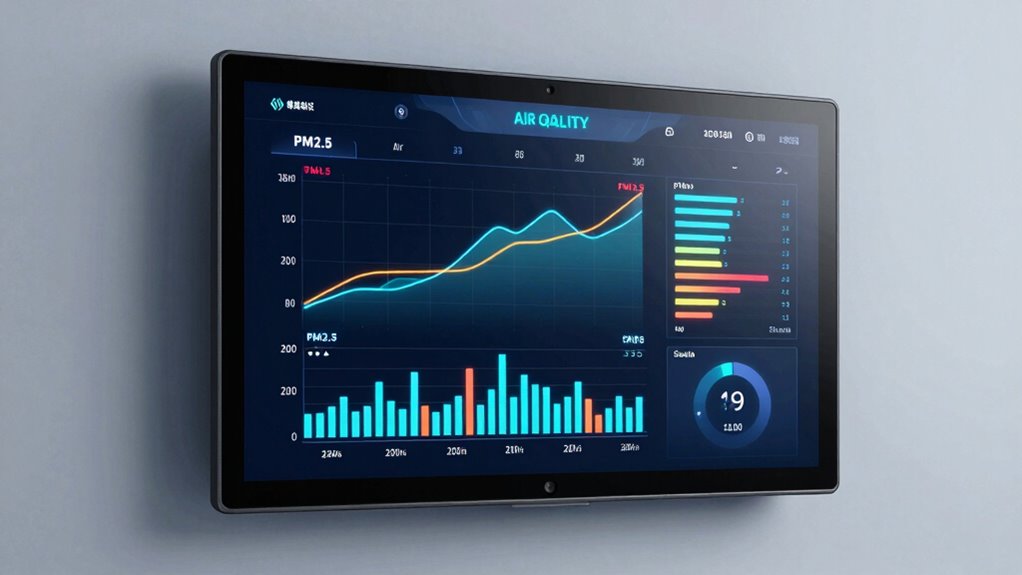
Indoor air dashboards are vital tools for monitoring and improving the air quality inside your spaces. They serve as real-time windows into what’s happening in your environment, helping you identify issues before they become health hazards. At the core, a good dashboard should clearly display ventilation effectiveness, which tells you how well your ventilation system is diluting and removing indoor pollutants. If ventilation efficiency drops, airborne contaminants can accumulate, leading to poor air quality and potential health issues. Thus, the dashboard must show metrics like airflow rates, air exchange rates, and perhaps even occupancy levels, since these influence how effectively fresh air circulates throughout your space.
Another essential aspect your dashboard should reveal is pollutant sources. These sources are varied—think cleaning chemicals, building materials, HVAC systems, or even outdoor pollutants that sneak inside. Your dashboard needs to help you pinpoint where these pollutants originate so you can take targeted actions. This might include sensors that track specific pollutants such as volatile organic compounds (VOCs), particulate matter (PM), or carbon dioxide levels. When these indicators spike, you should immediately know whether it’s due to a specific source or a ventilation shortcoming. Recognizing pollutant sources quickly allows you to implement effective mitigation strategies, whether that’s improving ventilation, adjusting filtration systems, or reducing the use of certain chemicals. Additionally, understanding indoor environmental quality is crucial for creating healthier indoor spaces.
A well-designed dashboard should also offer historical data and trend analysis. This way, you can see patterns over time, such as whether pollutant levels tend to rise during certain hours or after specific activities. With this insight, you can adjust your routines or systems proactively. It’s also helpful if the dashboard visualizes data in a straightforward manner—using color codes or simple graphs—so you can interpret the information at a glance without needing technical expertise. Alerts or notifications are another key feature; if any parameter exceeds safe thresholds, you want to be informed immediately, enabling swift action.
Lastly, your dashboard should integrate seamlessly with your existing building management systems, providing a broad view of indoor air quality. It should be customizable to suit your specific environment, whether it’s an office, school, or healthcare facility. In summary, what indoor air dashboards should show is a clear, actionable picture of ventilation effectiveness and pollutant sources, empowering you to maintain a healthier, safer indoor environment.
indoor air quality monitor with VOC sensor
As an affiliate, we earn on qualifying purchases.
As an affiliate, we earn on qualifying purchases.
Frequently Asked Questions
How Often Should Indoor Air Data Be Updated?
You should update indoor air data at least once every 15 minutes to guarantee accurate readings of air quality metrics. Frequent updates help catch changes in pollutants or humidity quickly. Make sure your sensors are properly calibrated regularly, as sensor calibration impacts data accuracy. By updating often and maintaining calibration, your dashboard provides real-time, reliable insights into indoor air quality, helping you respond swiftly to any issues.
Can Dashboards Predict Future Air Quality Issues?
Yes, dashboards can predict future air quality issues by leveraging predictive analytics. They analyze historical and real-time data to identify patterns indicating potential problems ahead. You’ll receive real-time alerts that warn you of upcoming air quality dips, allowing you to act proactively. This proactive approach helps maintain healthy indoor environments, reduce health risks, and optimize ventilation systems before issues escalate.
Are Dashboards Customizable for Different Building Types?
You’ll be pleased to know that dashboards are quite adaptable, accommodating various building types through building customization features. They can be tailored to match your specific needs and preferences, ensuring you get relevant insights effortlessly. By aligning with user preferences, these dashboards become more intuitive and effective, helping you monitor indoor air quality seamlessly across different environments. This flexibility makes managing diverse spaces more straightforward and precise.
What Are the Privacy Concerns With Air Quality Monitoring?
You should be aware that air quality monitoring raises privacy concerns related to data privacy and user consent. When collecting indoor air data, it’s crucial to guarantee that individuals’ privacy is protected, and you obtain clear user consent before gathering any personal or sensitive information. Transparency about how the data is used, stored, and shared helps build trust and complies with privacy regulations, making your monitoring system ethically sound and user-friendly.
How Do Dashboards Integrate With Existing Building Management Systems?
You might think integrating dashboards with building management systems is a breeze, but it’s often more complex than it looks. Sensor integration requires compatibility, and data visualization needs to be clear and actionable. You’ll need to connect various sensors seamlessly, ensuring real-time data flows smoothly. This integration helps you monitor indoor air quality effectively, but don’t underestimate the effort needed to make the data truly useful for decision-making.
real-time air ventilation dashboard
As an affiliate, we earn on qualifying purchases.
As an affiliate, we earn on qualifying purchases.
Conclusion
Think of an indoor air dashboard as your home’s health dashboard—it should give you clear, actionable insights at a glance. By showing real-time data on pollutants, humidity, and airflow, it becomes your trusted guide through the invisible world of indoor air quality. When you have the right information, you can breathe easier, knowing you’re steering your indoor environment toward health and comfort. Don’t settle for less—let your dashboard be the compass you trust.
air quality sensor for CO2 and particulates
As an affiliate, we earn on qualifying purchases.
As an affiliate, we earn on qualifying purchases.
smart indoor air pollution detector
As an affiliate, we earn on qualifying purchases.
As an affiliate, we earn on qualifying purchases.
NFL season / tailgating Picks
team gear
As an affiliate, we earn on qualifying purchases.