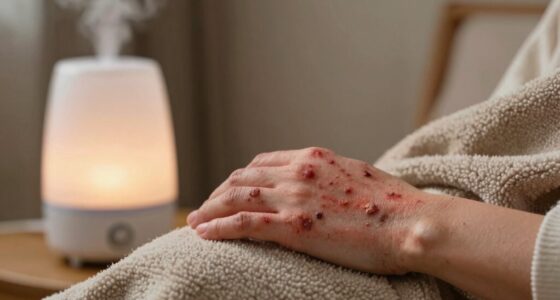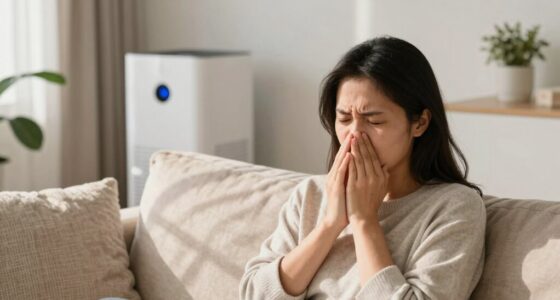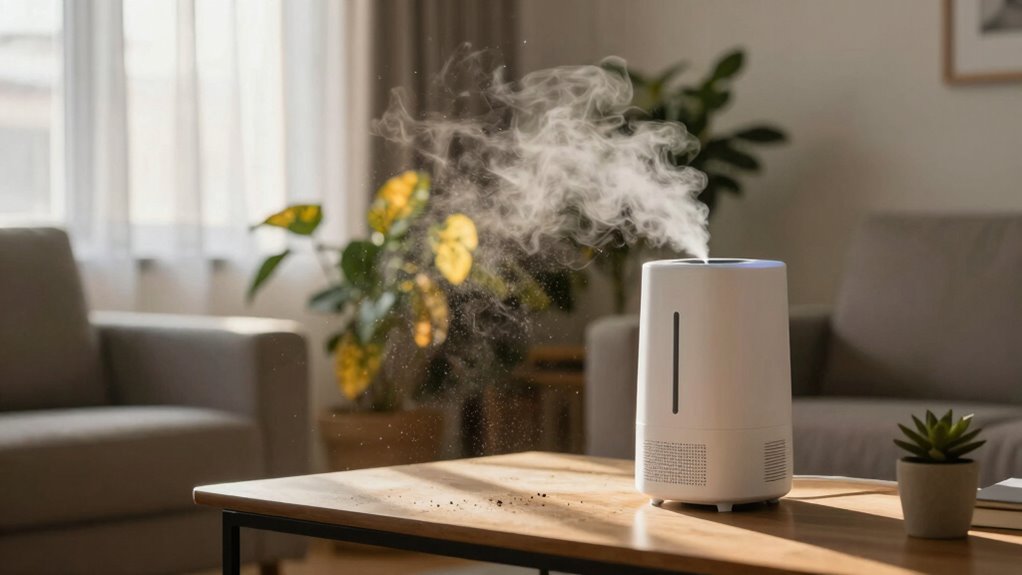

Indoor air triggers behind morning congestion include irritants like dust, pollen, pet dander, mold spores, and airborne chemicals. Poor air quality inflames your nasal passages and disrupts sleep, making congestion worse. Fluctuations in humidity can also irritate nasal tissues or encourage mold and dust mites. To breathe easier each morning, you need to control these indoor factors—stay tuned to learn effective solutions for creating a healthier environment that keeps congestion at bay.
Key Takeaways
- Poor indoor air quality from dust, allergens, and airborne irritants can inflame nasal passages, causing morning congestion.
- Dry or excessively humid indoor environments lead to nasal inflammation and increased congestion.
- Pet dander, mold spores, and airborne chemicals indoors are common triggers that block nasal airflow.
- Lack of proper ventilation traps pollutants indoors, worsening congestion upon waking.
- Chemical cleaning products and smoking indoors introduce irritants that contribute to morning nasal blockage.
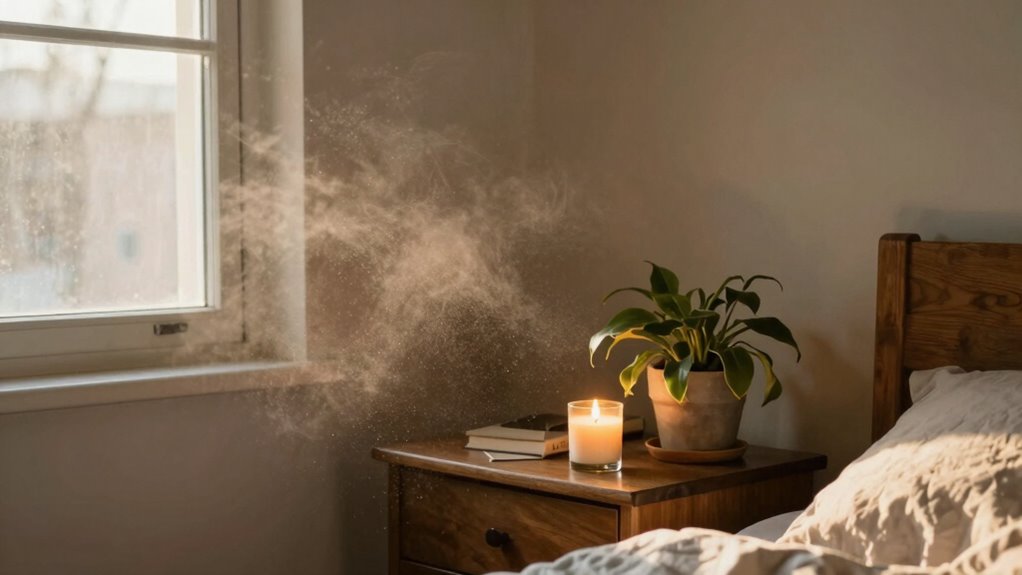
If you find yourself waking up with congestion every morning, indoor air quality might be to blame. Poor air quality can irritate your nasal passages, leading to congestion that disrupts your sleep and leaves you feeling exhausted. One effective way to combat this is by investing in an air purifier. The benefits of using an air purifier extend beyond just removing dust and allergens; they also improve overall air clarity, helping you breathe easier each morning. By filtering out pollen, pet dander, mold spores, and other airborne irritants, an air purifier can considerably reduce the triggers that cause congestion. When choosing one, look for models with HEPA filters, as they are particularly effective at capturing tiny particles that contribute to respiratory problems.
Investing in a HEPA-filter air purifier can significantly reduce airborne irritants and ease morning congestion.
In addition to air purifiers, humidity control solutions play a critical role in managing indoor air quality. Fluctuations in humidity levels—either too dry or too humid—can create an environment ripe for congestion. Dry air often causes your nasal passages to become inflamed and irritated, making congestion worse. Conversely, excessive humidity fosters mold growth and dust mites, which are common allergens. Using a humidifier or dehumidifier helps maintain a balanced humidity level, typically around 40-50%. This balance helps keep your nasal passages moist and less prone to irritation, ultimately reducing morning congestion. Maintaining proper indoor air quality is essential for supporting respiratory health and preventing morning congestion. Additionally, understanding the role of airborne irritants in your environment can help you implement more targeted strategies for better air quality. Incorporating biodiversity-friendly practices, such as choosing natural cleaning products and reducing indoor chemical use, can further improve your indoor environment.
You might also find it helpful to keep your living space clean and well-ventilated. Regular dusting and vacuuming remove accumulated allergens, while opening windows for a few minutes each day can freshen the air and dilute indoor pollutants. Ensuring proper ventilation can significantly reduce the concentration of airborne irritants and improve overall air quality. Creating a routine to reduce indoor chemical exposure by avoiding harsh cleaners can also lessen the burden on your respiratory system. If you have pets, grooming them frequently and cleaning their bedding can cut down on pet dander, a major trigger for congestion. Also, avoiding smoking indoors or using strong chemical cleaners can prevent airborne irritants from aggravating your nasal passages.
Ultimately, understanding the indoor air triggers behind morning congestion empowers you to take control of your environment. Combining the use of air purifier benefits with humidity control solutions creates a healthier living space. These improvements not only help reduce congestion when you wake up but also contribute to better overall respiratory health. Making small adjustments—like maintaining clean air, proper humidity, and good ventilation—can lead to noticeable improvements in your mornings. By prioritizing these changes, you’ll wake up feeling more refreshed and breathe more easily, setting a positive tone for the day ahead.

LEVOIT Air Purifier for Home Allergens Pet Hair in Bedroom, Covers Up to 1073 ft² by 56W High Torque Motor, AHAM VERIFIDE, 3-in-1 Filter with HEPA Sleep Mode, Remove Dust Smoke Odor, Core300-P, White
WHY CHOOSE AHAM VERIFIDE AIR PURIFIERS: AHAM (Association of Home Appliance Manufacturers) is an ANSI-accredited organization that sets…
As an affiliate, we earn on qualifying purchases.
As an affiliate, we earn on qualifying purchases.
Frequently Asked Questions
Can Pets Contribute to Indoor Air Congestion Triggers?
Yes, pets can contribute to indoor air congestion triggers. Pet dander and fur allergens are common culprits that can worsen congestion symptoms, especially when you wake up. When pets shed, their dander circulates in the air, settling on surfaces and becoming airborne again. Regular cleaning, grooming, and using air purifiers can help reduce these allergens, making your mornings more comfortable and less congested.
How Do Cleaning Products Affect Morning Nasal Congestion?
Cleaning products release a storm of chemical fumes that cling to your home’s air, turning your mornings into a battleground. These residual odors seep into your nasal passages, inflaming your sinuses and triggering congestion. As you breathe in the lingering chemicals, your nasal passages swell and block airflow, making mornings miserable. To breathe easier, try eco-friendly cleaners or ventilate thoroughly after cleaning — your nose will thank you.
Are Air Purifiers Effective Against Indoor Allergens?
Yes, air purifiers are effective against indoor allergens. They offer significant air purifier benefits by capturing dust, pet dander, mold spores, and pollen, which can trigger congestion. When you run an air purifier, you reduce allergen levels, leading to clearer breathing, especially in the morning. Regular use helps maintain a cleaner indoor environment, making it easier to breathe and sleep well, especially if you’re allergy-prone.
Do Humidity Levels Influence Morning Congestion?
Humidity levels are like the tide shaping your indoor air; they greatly influence morning congestion. High humidity fosters mold and dust mites, increasing congestion causes, while low humidity dries out nasal passages, making them more sensitive. Maintaining an ideal humidity range (around 40-50%) helps balance moisture, reducing congestion triggers. So, controlling humidity effects can be your first line of defense in easing that uncomfortable morning stuffiness and breathing easier.
Can Mold Growth Be Hidden Behind Walls?
Yes, mold growth can be hidden behind walls. You might not see it, but it often hides within wall insulation or behind drywall. If there’s excess moisture or water damage, mold can thrive out of sight, releasing spores into your indoor air. To detect hidden mold, look for signs like musty odors or discoloration. Consider professional inspections if you suspect mold behind your walls; it’s essential for your health.

DREO Humidifiers for Bedroom, 6L Easy to Fill & Clean, 60H Runtime for Large room, 28 dB Quiet Cool Mist Air Humidifier for Plant, Baby Nursery, Home, Indoor, Night Light, Precise Humidity Control
𝙎𝙖𝙮 𝙂𝙤𝙤𝙙𝙗𝙮𝙚 𝙩𝙤 𝘿𝙧𝙮 𝘿𝙖𝙮𝙨: This humidifier for large room emits a cool, 5 μm ultrafine mist up…
As an affiliate, we earn on qualifying purchases.
As an affiliate, we earn on qualifying purchases.
Conclusion
As dawn breaks and you wake to congestion, think of your indoor air as an unseen fog wrapping around you. By identifying and clearing indoor triggers—like dust, mold, and stale air—you can lift this fog, revealing fresh, breathable mornings. Imagine your home as a clear mountain stream, where every breath feels crisp and invigorating. Take control of your indoor environment, and let the morning air be as fresh as a spring breeze, clearing away congestion.
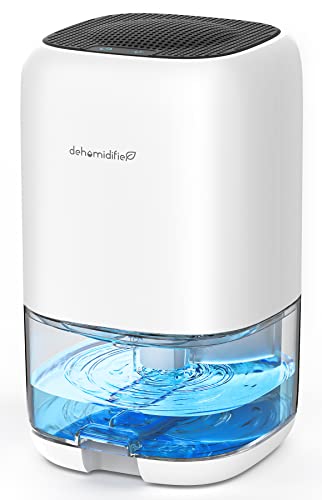
Dehumidifier, 35 OZ Small Dehumidifiers for Bedroom for Home, Quiet with Auto Shut Off, Dehumidifiers for Bedroom (280 sq. ft), Bathroom, RV, Closet, White
High Efficient Dehumidifiers for Home: Still annoyed about the muggy weather? Just Take it easy! have a try…
As an affiliate, we earn on qualifying purchases.
As an affiliate, we earn on qualifying purchases.

The Ecology Works- Plant-Based Dog & Cat Allergy Spray, Dander Remover & Dust Mite Waste Reducer for Relief from Allergies – Cleans Home, Bedding & Furniture Naturally, Fragrance-Free
Fabric Spray and Multi Surfaces- Spray on a variety of surfaces including bedding, fabrics, furniture, upholstery, hard surfaces,…
As an affiliate, we earn on qualifying purchases.
As an affiliate, we earn on qualifying purchases.