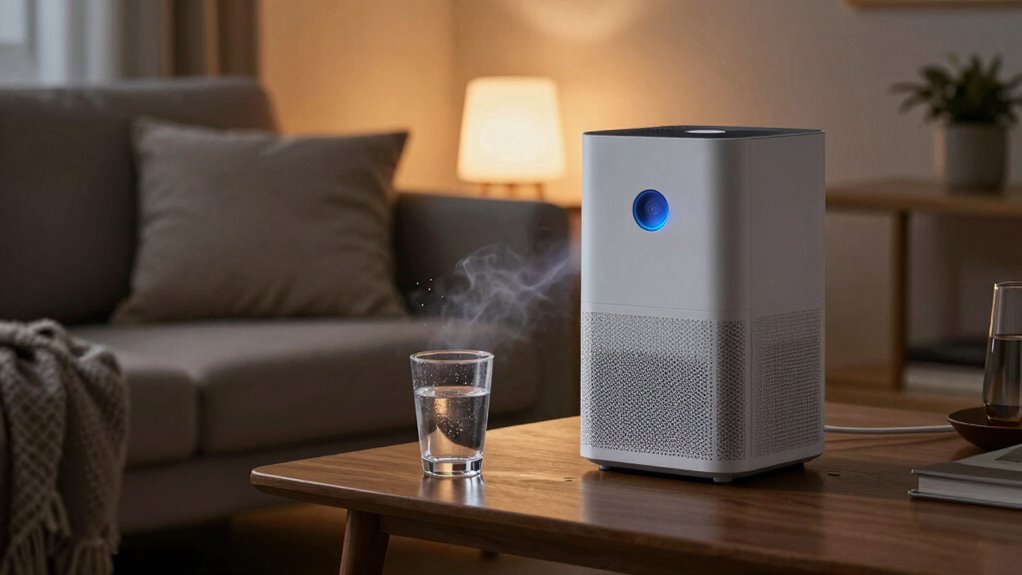
Poor indoor air quality and improper humidity levels can cause dry, sore throats and scratchy mornings. When the air is dry, your throat tissues dry out and become irritated. Too much moisture can also worsen the problem by encouraging mold and dust mites. To improve comfort, maintain indoor humidity between 40-60% and guarantee proper ventilation. Want to find out how to get the best air quality for a healthier morning? Keep going to learn more.

Get health and wellness essentials delivered free with Prime
- Fast, free delivery on millions of items
- Prime Video, Amazon Music and more included
- Member-only deals all year
Key Takeaways
- Dry indoor air dries out throat tissues, causing irritation and scratchiness upon waking.
- Maintaining indoor humidity between 40-60% prevents throat dryness and reduces irritation.
- Poor air circulation and pollutants can exacerbate throat discomfort and scratchy mornings.
- Using humidifiers and air purifiers helps improve air quality, supporting throat health overnight.
- Regular ventilation and air filter maintenance reduce airborne irritants, lessening morning throat irritation.
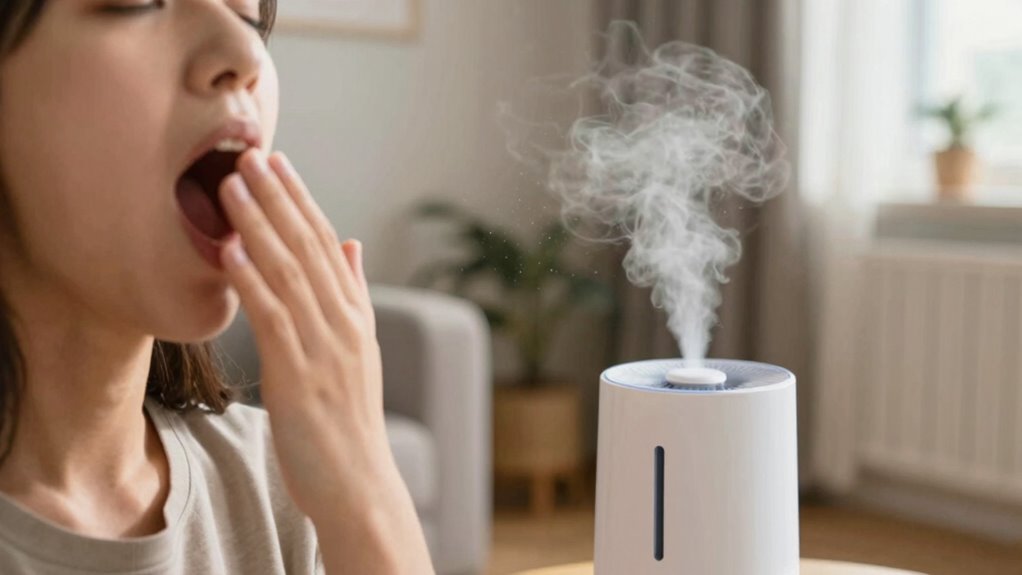
Indoor air quality can considerably impact your throat, especially when it’s dry or poorly circulated. When the air inside your home is dry, you’re more likely to wake up with a scratchy throat or feel irritation throughout the day. Poor air quality isn’t just about dust or allergens; it also involves humidity levels that can either soothe or aggravate your respiratory system. If the air lacks moisture, your throat tissues can become dry and inflamed, making swallowing uncomfortable and causing that persistent scratchiness in the morning. That’s why managing humidity control is vital for maintaining a healthy indoor environment that supports your throat health.
Dry indoor air can irritate your throat; maintaining proper humidity levels supports respiratory comfort and health.
You might not realize it, but the humidity levels in your home directly influence the air quality. Too much moisture can foster mold growth and dust mites, which can trigger allergies and worsen throat irritation. Conversely, low humidity makes the air feel crisp but dries out your mucous membranes, leading to that scratchy sensation you dread. The key is finding a balance that keeps your indoor humidity between 40% and 60%. This range helps keep the air moist enough to prevent dryness without creating a breeding ground for mold or bacteria. Using a humidifier can be an effective way to add moisture to the air, especially during winter months when heating systems tend to dry out indoor spaces. Proper humidity control is essential for maintaining optimal indoor air quality and respiratory comfort. Additionally, monitoring indoor air pollutants can help prevent further irritation and promote overall health. Regularly checking and adjusting your home’s ventilation system can also contribute significantly to improving air quality. Implementing air quality monitoring devices can provide real-time feedback on your indoor environment, allowing you to make timely adjustments. Ensuring that your home is well-ventilated can also help reduce airborne contaminants, which are often overlooked but impactful.
In addition to humidity control, paying attention to your home’s air quality can make a significant difference. Regularly ventilating your space helps circulate fresh air and reduces the buildup of indoor pollutants that can inflame your throat. Clean your air filters and keep dust and pet dander in check, as these can compound the irritation caused by dry air. Consider using air purifiers with HEPA filters to remove airborne particles that contribute to poor air quality. When the air quality improves, your throat feels less strained, and mornings become more comfortable.
Ultimately, maintaining a healthy indoor environment isn’t just about comfort — it’s about protecting your respiratory health. By controlling humidity and improving air quality, you create a space where your throat can rest and heal overnight. This proactive approach minimizes the chances of waking up with that scratchy, irritated feeling and helps you start each day feeling clearer and more refreshed. Your lungs and throat will thank you for it, and you’ll notice a real difference in your overall well-being as your indoor air becomes a supportive, healthy environment.
humidifier for indoor air quality
As an affiliate, we earn on qualifying purchases.
As an affiliate, we earn on qualifying purchases.
Frequently Asked Questions
Can Certain Houseplants Improve Indoor Air Quality?
Yes, certain houseplants can improve your indoor air quality. Air purifying plants like snake plants and peace lilies remove toxins, while others like ferns help with humidity control. By adding these plants to your space, you can reduce dry air that causes dry throat and scratchy mornings. Just make certain you care for them properly, and you’ll create a healthier, more comfortable environment that promotes better breathing and overall well-being.
How Does Humidity Affect Indoor Air and Throat Dryness?
Air humidity directly impacts your indoor air quality and throat irritation. When humidity levels are low, the air becomes dry, which can strip moisture from your throat, leading to irritation and scratchiness, especially in the mornings. Maintaining ideal humidity levels—around 40-60%—helps keep your throat moist and comfortable. Using a humidifier can effectively boost air humidity, reducing dryness and preventing throat discomfort during colder months or in dry environments.
Are Air Purifiers Effective for Preventing Dry Throat?
Air purifiers can help reduce airborne irritants, but they have limitations in preventing dry throat. They don’t add moisture, so if dry air is the main cause, a humidifier is more effective. Also, consider allergy factors—if allergens trigger your dryness, choose an air purifier with HEPA filters. Keep in mind, purifiers alone might not fully prevent dry throat; combining them with humidity control offers better relief.
What Are Common Indoor Air Pollutants Causing Dryness?
Think of indoor air as a silent culprit, quietly stealing moisture from your throat. VOC emissions and mold spores act like invisible villains, sneaking into your space and drying you out. VOCs come from paints and cleaners, while mold spores thrive in damp corners. These pollutants irritate your respiratory system, leaving your throat parched and mornings scratchy. Keeping your air clean and ventilated helps fight this silent dryness.
Does Cleaning Frequency Impact Indoor Air Moisture Levels?
Cleaning frequency can influence indoor air moisture levels, especially when combined with humidity regulation and ventilation strategies. Regular cleaning reduces dust and pollutants that can dry out the air, but over-cleaning might strip moisture. Proper ventilation helps balance humidity, preventing air from becoming too dry or too moist. By maintaining ideal cleaning routines along with effective ventilation strategies, you support a healthier indoor environment and reduce dryness-related discomforts.
air purifier for dust and allergens
As an affiliate, we earn on qualifying purchases.
As an affiliate, we earn on qualifying purchases.
Conclusion
So, next time you wake up with a scratchy throat and wonder why, blame your indoor air—not your questionable sleeping positions. Maybe it’s time to invest in a humidifier or open a window instead of blaming your pillow for all your woes. After all, who knew that the real culprit behind your morning misery was just a little too much indoor “luxury”? Sleep tight, breathe right, and don’t forget to thank your indoor air for the morning gift of dryness.
As an affiliate, we earn on qualifying purchases.
As an affiliate, we earn on qualifying purchases.
Cold & flu season Picks
humidifiers
As an affiliate, we earn on qualifying purchases.