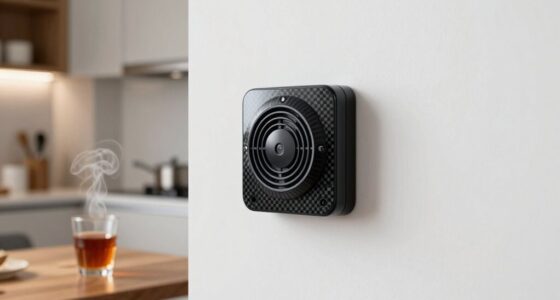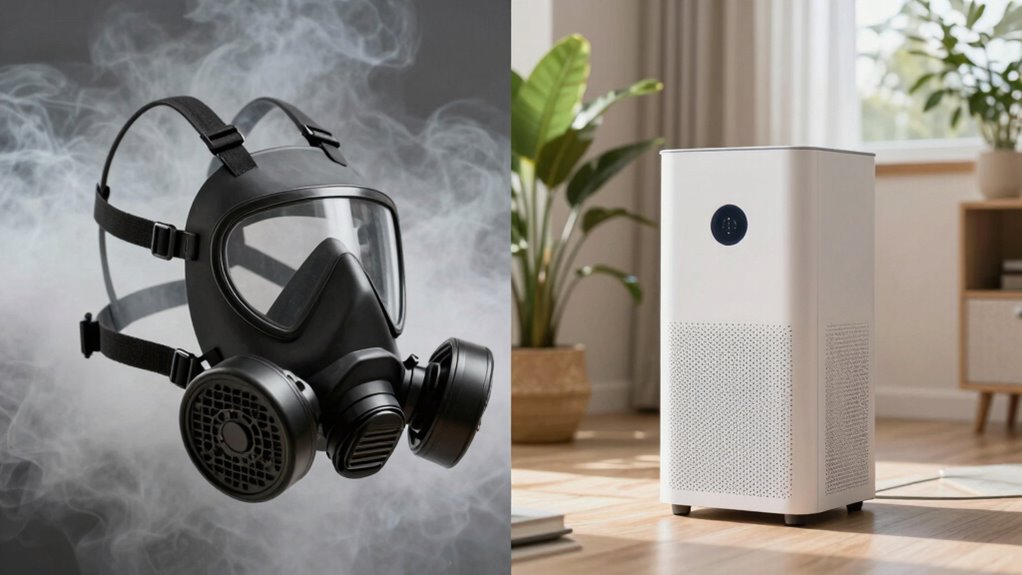

Smoke respirators protect you temporarily during emergencies or hazardous work by filtering out dangerous particles and gases. They’re designed for short-term use and provide instant, reliable protection in risky environments. In contrast, home air solutions continuously improve indoor air quality over time with devices like HEPA filters and UV sterilizers, helping you breathe cleaner air daily. To understand which option suits your needs best and how they differ in purpose, keep exploring the details below.
Open a free Amazon Business account
Business pricing, bulk buying and tax-exempt orders.
As an affiliate, we earn on qualifying purchases.
Key Takeaways
- Smoke respirators provide immediate, short-term protection against high-concentration smoke and toxic gases during emergencies.
- Home air solutions operate continuously to improve indoor air quality by filtering dust, allergens, and pollutants over time.
- Respirators are designed for temporary use in hazardous environments, while home air systems are for everyday, long-term indoor safety.
- Respirators actively filter out dangerous particles and gases, whereas home systems use HEPA, activated carbon, or UV filters for gradual purification.
- Choosing between them depends on exposure risk level; respirators for critical situations, air solutions for routine indoor air management.
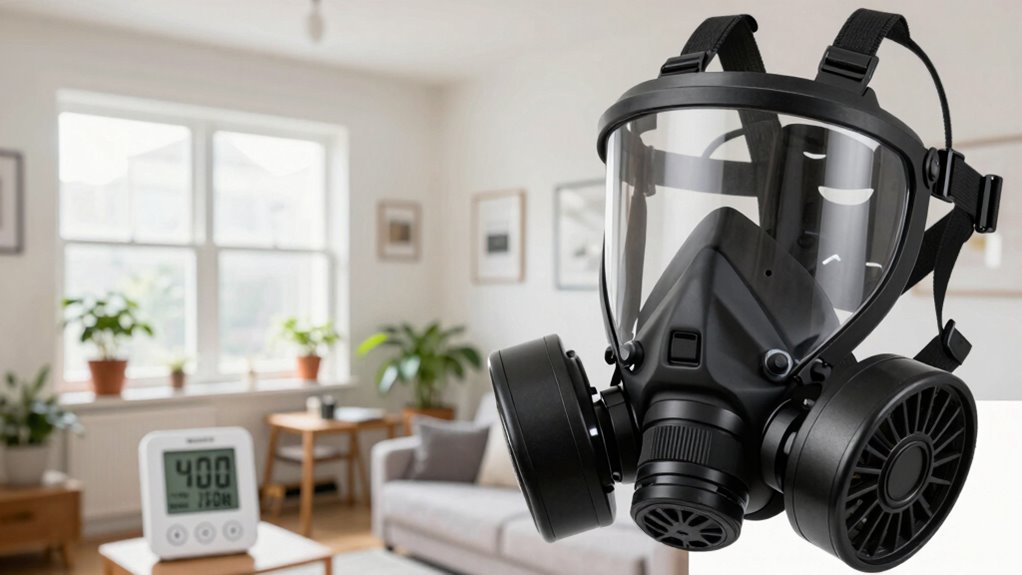
When you wear a smoke respirator, you’re actively shielding your respiratory system from the most severe airborne threats, especially in emergency or industrial safety situations.
On the other hand, home air solutions focus on maintaining cleaner indoor environments over the long term. These systems include air purifiers equipped with HEPA filters, activated carbon filters, or UV sterilization, all aimed at reducing everyday airborne pollutants like dust, pollen, pet dander, and even some bacteria. Unlike respirators, which are worn temporarily during hazardous exposure, home air solutions are built into your living space, working continuously to improve indoor air quality. They use cutting-edge air purification technology to remove pollutants gradually, providing a safer, healthier environment for you and your family. While they might not be as effective against immediate, high-concentration threats as respirators, quality air purifiers can significantly lower your exposure to common indoor pollutants and allergens. Additionally, understanding air purification technology can help you select the most effective device for your needs, especially considering the different filtration methods available. Recognizing the importance of proper air quality management can further enhance your overall health and safety strategies.
Understanding the differences in industrial safety and air purification technology helps you choose the right solution for your situation. If you’re in a high-risk environment or facing an emergency involving smoke or toxic fumes, a respirator provides instant, reliable protection. These devices are engineered to filter out dangerous particles and gases, ensuring your respiratory safety during critical moments. Conversely, for everyday use at home, a well-chosen air purifier can create a healthier living space by continuously removing pollutants from the air you breathe. It’s a passive, ongoing form of protection that enhances your overall well-being without needing to wear equipment. Recognizing these distinctions enables you to make informed decisions based on your specific exposure risks, whether for industrial safety or maintaining a healthy indoor environment.

LEVOIT Air Purifier for Home Allergies and Pets Hair Smokers in Bedroom, H13 True HEPA Filter, 24db Filtration System Cleaner Odor Eliminators, Remove 99.97% Dust Smoke Mold Pollen, Core 300, White
- AHAM Verified for Performance: Independently tested for air quality and efficiency
- Powerful Filtration System: 56W motor with 143 CFM CADR
- Effective for Large Rooms: Cleans 222 sq ft 4.8 times/hour
As an affiliate, we earn on qualifying purchases.
As an affiliate, we earn on qualifying purchases.
Frequently Asked Questions
How Often Should Smoke Respirators Be Replaced?
You should replace your smoke respirator every 6 to 12 months, depending on filter longevity and usage. Always check the manufacturer’s guidelines and adhere to respirator standards for safety. If you notice reduced airflow, difficulty breathing, or visible damage, replace the filters immediately. Regularly inspecting your respirator guarantees it functions properly, providing effective protection during smoke events or fire emergencies.
Are Home Air Solutions Effective Against All Smoke Types?
Home air solutions can improve indoor air quality, but they aren’t effective against all smoke types. Smoke filtration methods vary in their ability to handle different particles and gases, especially from wildfires or industrial sources. You need specialized filters or respirators for certain smoke. While home air purifiers help reduce some pollutants, for all-encompassing protection, consider combining them with advanced smoke filtration methods or professional-grade equipment.
Can Smoke Respirators Be Reused After Exposure?
While smoke respirators can be reused, proper respirator maintenance is vital. After exposure, you should inspect for damage, replace filters, and clean the mask thoroughly to guarantee effective smoke filtration. Reusing a damaged or improperly maintained respirator risks exposure. Unlike home air solutions, which may offer limited protection, a well-maintained respirator provides reliable defense, but only if you follow manufacturer guidelines for reuse and cleaning.
What Is the Cost Difference Between the Two Options?
The cost difference between smoke respirators and home air solutions varies considerably. Smoke respirators typically have a higher initial investment because of specialized air filtration technology and potential replacement filters, but they’re reusable and durable. Home air solutions, like air purifiers, usually cost less upfront and are easier to maintain. When doing a cost comparison, consider long-term expenses, including filter replacements and maintenance, to determine the best fit for your needs.
Do Smoke Respirators Require Professional Fitting or Maintenance?
Smoke respirators usually require professional fitting procedures to guarantee a proper seal and maximum protection. You’ll also need to follow specific maintenance requirements, such as regular inspections, filter replacements, and cleaning, to keep them functioning effectively. Proper fitting and maintenance are essential for safety, so it’s best to have a professional assist with initial fitting and provide guidance on ongoing upkeep.
As an affiliate, we earn on qualifying purchases.
Conclusion
So, whether you’re battling smoke clouds or just aiming for fresh air, understanding the difference could be the life-saving choice you make today. Imagine choosing a tiny mask that can’t handle a blazing inferno versus a full-blown air fortress that keeps you safe from even the deadliest smoke storms. Don’t settle for less—arm yourself with the right solution, because in the fight against dangerous fumes, your safety is the ultimate victory!
As an affiliate, we earn on qualifying purchases.
industrial smoke respirator mask
As an affiliate, we earn on qualifying purchases.
As an affiliate, we earn on qualifying purchases.
Labor Day sales Picks
labor day deals
As an affiliate, we earn on qualifying purchases.