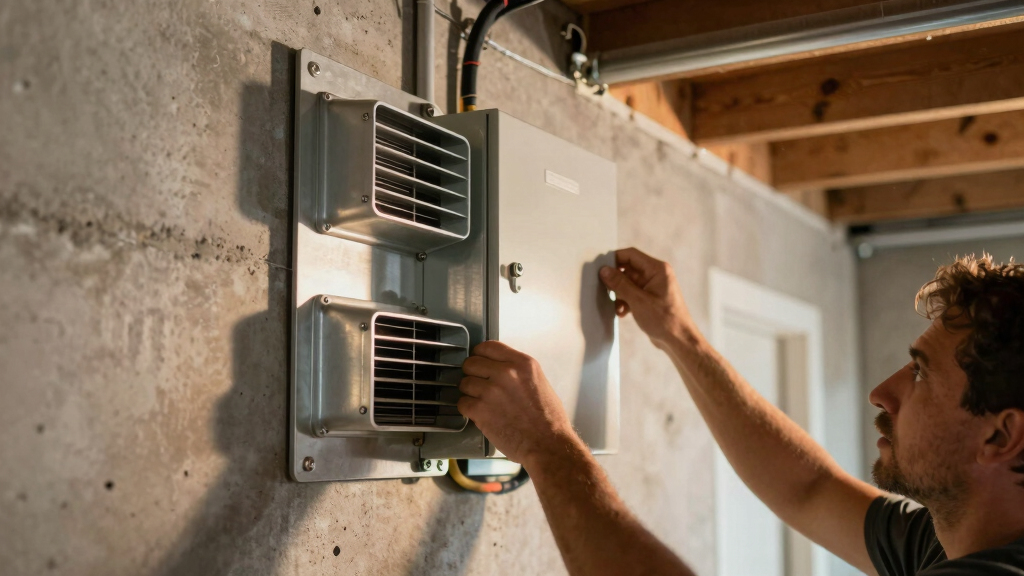

Choosing the best basement ERV system involves balancing energy efficiency, ease of installation, and specific air quality needs. For 2026, the VENTS-US Frigate ERV 150 EC stands out as a reliable, whole-house solution with heat and humidity recovery, ideal for maintaining indoor comfort. In contrast, the VENTS-US VK-AR 200 is tailored for radon mitigation, offering powerful airflow to remove radon gas effectively. While both excel in their roles, they target different priorities: one prioritizes balanced ventilation and moisture control, the other radon removal. Understanding these tradeoffs helps in selecting the right system for your basement’s unique needs.

Get health and wellness essentials delivered free with Prime
- Fast, free delivery on millions of items
- Prime Video, Amazon Music and more included
- Member-only deals all year
Key Takeaways
- The VENTS-US Frigate ERV 150 EC provides balanced ventilation with heat and humidity recovery, ideal for overall indoor comfort.
- The VENTS-US VK-AR 200 focuses on high airflow for radon mitigation, not suited for general ventilation or humidity control.
- Installation complexity varies; ERVs tend to be more complex than inline fans, impacting setup time and cost.
- Energy consumption differs significantly; ERVs use more power but save energy through heat recovery, whereas radon fans are high-capacity but less energy-efficient.
- Choosing the right system depends on whether your priority is general air quality or radon removal.
| VENTS-US Frigate ERV 150 EC Ventilation System – 186 CFM Whole House Fresh Air Intake and Humidity Exhaust with EC Motors for Balanced Indoor Comfort |  | Best Overall ERV for Whole House Ventilation and Comfort | Voltage: 120 Volts | Wattage: 186 watts | Air Flow Capacity: 186 CFM | VIEW LATEST PRICE | See Our Full Breakdown |
| VENTS-US VK-AR 200 8″ Inline Radon Mitigation Fan, High-Pressure Centrifugal Duct Fan, 562 CFM | 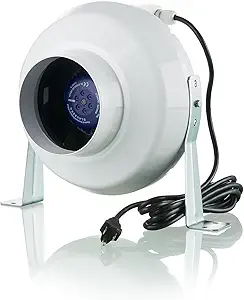 | Best Radon Mitigation Fan for Basements | Model: VK-AR 200 | Diameter: 8 inches | Airflow: 562 CFM at 0″ static pressure | VIEW LATEST PRICE | See Our Full Breakdown |
More Details on Our Top Picks
VENTS-US Frigate ERV 150 EC Ventilation System – 186 CFM Whole House Fresh Air Intake and Humidity Exhaust with EC Motors for Balanced Indoor Comfort
The VENTS-US Frigate ERV 150 EC offers a comprehensive solution for whole-house ventilation, combining heat and humidity recovery with automatic frost protection. Compared with smaller or less feature-rich units, this model emphasizes energy savings through heat recovery and balanced airflow, making it well-suited for maintaining consistent indoor comfort. Its steel construction ensures durability, but the installation process can be complex, requiring some technical skill. While it consumes more power than smaller units, the energy savings from heat recovery offset this over time. Noise levels are higher than in quieter models, which may be noticeable in quiet spaces.
Pros:- Efficient heat and humidity recovery reduces energy bills
- Balanced airflow enhances indoor air quality
- Durable steel construction ensures long-term use
- Automatic frost protection prevents freezing
Cons:- Installation can be complex for non-experts
- Higher power consumption compared to smaller units
- Noise level might be noticeable in very quiet spaces
Best for: Homeowners seeking a reliable, energy-efficient ERV for full-house ventilation, especially in climates with high humidity or temperature swings.
Not ideal for: Buyers who prioritize simple, plug-and-play installation or have very quiet environments where noise is a concern.
- Voltage:120 Volts
- Wattage:186 watts
- Air Flow Capacity:186 CFM
- Material:Steel with anti-corrosion coating
- Recovery Type:Heat & Humidity Recovery
- Frost Protection:Electronic defrost
Bottom line: This ERV excels in providing balanced, energy-efficient ventilation for entire homes, though its installation complexity is a consideration.
VENTS-US VK-AR 200 8″ Inline Radon Mitigation Fan, High-Pressure Centrifugal Duct Fan, 562 CFM
The VENTS-US VK-AR 200 is designed specifically for radon mitigation, offering high airflow capacity suitable for basement environments. Its UV-resistant housing and reliable motor protection make it durable for long-term use in challenging conditions. Compared with general ERVs, this inline fan is more specialized, providing powerful radon removal but lacking features like humidity control or balanced ventilation. Installation is straightforward with included hardware, although it can generate noticeable noise at maximum airflow levels. Its high capacity makes it ideal for basements with radon concerns but overkill for general ventilation needs.
Pros:- High airflow capacity for effective radon removal
- Durable, UV-resistant housing for long-term use
- Easy to install with included hardware
Cons:- Designed solely for radon mitigation, not general ventilation
- Potential noise at high airflow levels
Best for: Homeowners concerned about radon levels in basements or crawl spaces needing effective, high-capacity radon removal.
Not ideal for: Those looking for a versatile ventilation system or a solution focused on humidity and air quality beyond radon mitigation.
- Model:VK-AR 200
- Diameter:8 inches
- Airflow:562 CFM at 0″ static pressure
- Housing Material:UV-resistant UL94 plastic
- Motor:External rotor with ball bearings
- Installation:Includes mounting brackets and power cord
Bottom line: This inline fan provides a powerful, durable solution for radon mitigation, but its specialized role limits use for other ventilation needs.
How We Picked
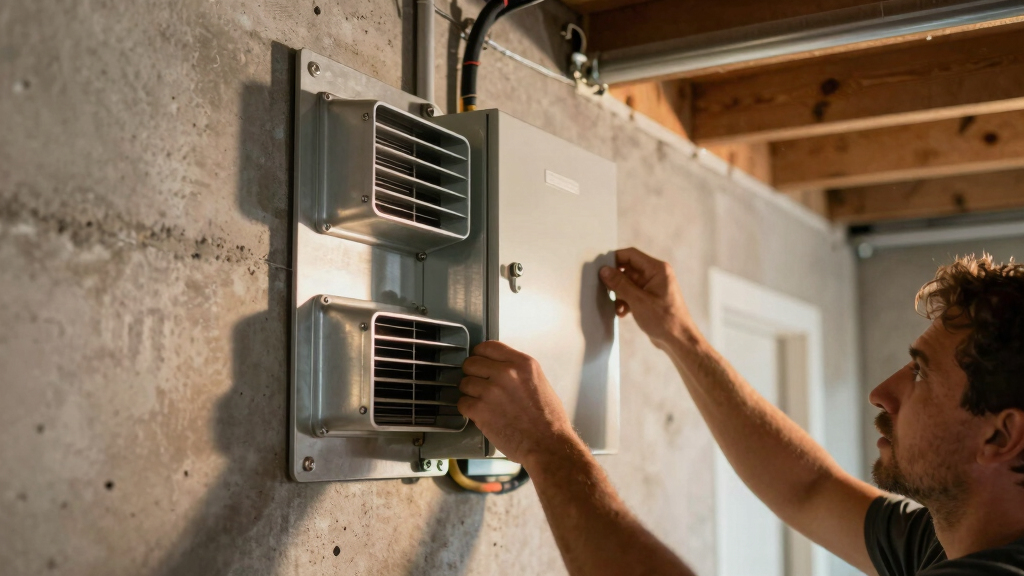
To identify the best basement ERV systems, I evaluated products based on their core function, energy efficiency, ease of installation, durability, and user feedback. I prioritized systems that offer clear advantages for basement environments, considering tradeoffs like noise, power consumption, and specific application focus. I also compared technical specs such as airflow capacity, build quality, and features like frost protection or UV resistance. The selected products stood out for their specialized roles, making it easier for buyers to match their needs with the right system.
Factors to Consider When Choosing Best Basement ERV System
Choosing the right basement ventilation system depends on your primary goal—whether it’s overall indoor comfort, energy efficiency, or radon mitigation. ERVs are ideal for balanced ventilation that recovers heat and humidity, reducing energy costs while maintaining air quality. Inline fans like radon mitigation units excel at removing specific contaminants but are less versatile. Carefully consider your basement’s specific needs, climate, and whether installation complexity or ongoing energy costs are more important to you.
Understanding Your Ventilation Needs
Deciding between an ERV and a specialized inline fan hinges on your goals. If your primary concern is maintaining fresh, balanced air with energy savings, an ERV like the VENTS-US Frigate ERV 150 EC is a strong choice. For basement radon issues, a high-capacity inline fan such as the VK-AR 200 offers targeted removal. Consider your climate, existing air quality, and whether humidity control or radon mitigation takes precedence.
Installation and Maintenance Considerations
ERV systems typically involve more complex installation, often requiring professional help, especially for integrating with existing ductwork. Inline radon fans are generally simpler to install but require placement in suitable duct runs. Maintenance for ERVs includes filter replacement and occasional checks of frost protection, while radon fans need monitoring for noise and vibration. Factor in your willingness to handle ongoing upkeep and installation costs.
Energy Efficiency & Noise Levels
Energy consumption varies significantly: ERVs recover heat to offset their power use, leading to lower operational costs over time. Radon fans often run at high speeds, generating more noise and energy consumption. If quiet operation is a priority, consider models with noise dampening features. Always review decibel ratings and energy specifications to choose a system that balances performance with your comfort.
Frequently Asked Questions
What is the main difference between an ERV and a radon mitigation fan?
An ERV (Energy Recovery Ventilator) provides balanced ventilation by bringing in fresh air and exhausting stale air, recovering heat and humidity to improve indoor air quality efficiently. In contrast, a radon mitigation fan is designed specifically to remove radon gas from basements or crawl spaces, offering high airflow capacity but without humidity or temperature recovery features. They serve different purposes—one for overall air quality, the other for specific radon concerns.
Can I use a radon mitigation fan as my primary basement ventilation system?
While technically possible, a radon mitigation fan is not ideal as a primary ventilation source because it lacks humidity control, airflow balancing, and energy recovery features. Its high capacity is suited for radon removal, but it won’t provide the balanced, consistent indoor air quality that an ERV offers. Using it solely for ventilation could lead to humidity issues or inefficient energy use.
How difficult is it to install an ERV in a basement?
Installing an ERV like the VENTS-US Frigate ERV 150 EC can be complex, often requiring professional HVAC expertise to properly connect ductwork, set up electrical components, and ensure optimal operation. It involves more steps than installing a simple inline fan, which makes it potentially more costly and time-consuming. However, proper installation ensures long-term efficiency and performance.
What should I consider regarding noise when choosing a basement ventilation system?
Noise levels are an important factor, especially if your basement is used as a living or working space. ERVs tend to produce more noise than inline fans, with some models reaching nearly 2 sones. If quiet operation matters, look for units with sound dampening features or lower decibel ratings. Inline radon fans may be noisier at high speeds, so placement and vibration isolation are also worth considering.
Are energy-efficient ERVs worth the investment?
Yes, energy-efficient ERVs typically recover a significant portion of heat and humidity, reducing heating and cooling costs over time. Although they may have higher upfront costs, their ability to maintain indoor comfort while saving energy makes them cost-effective in the long run. Their efficiency is especially beneficial in climates with large temperature swings or high humidity.
Conclusion
For homeowners prioritizing comprehensive, energy-efficient ventilation and humidity control, the VENTS-US Frigate ERV 150 EC makes a compelling choice, despite its installation complexity. Those focused on radon mitigation or dealing with radon concerns should opt for the VENTS-US VK-AR 200, which offers powerful airflow for radon removal but isn’t suited for general ventilation. Consider your specific needs, climate, and willingness to handle installation and maintenance when making your decision.
Halloween Picks
halloween
As an affiliate, we earn on qualifying purchases.