
TL;DR
Open a free Amazon Business account
Business pricing, bulk buying and tax-exempt orders.
As an affiliate, we earn on qualifying purchases.
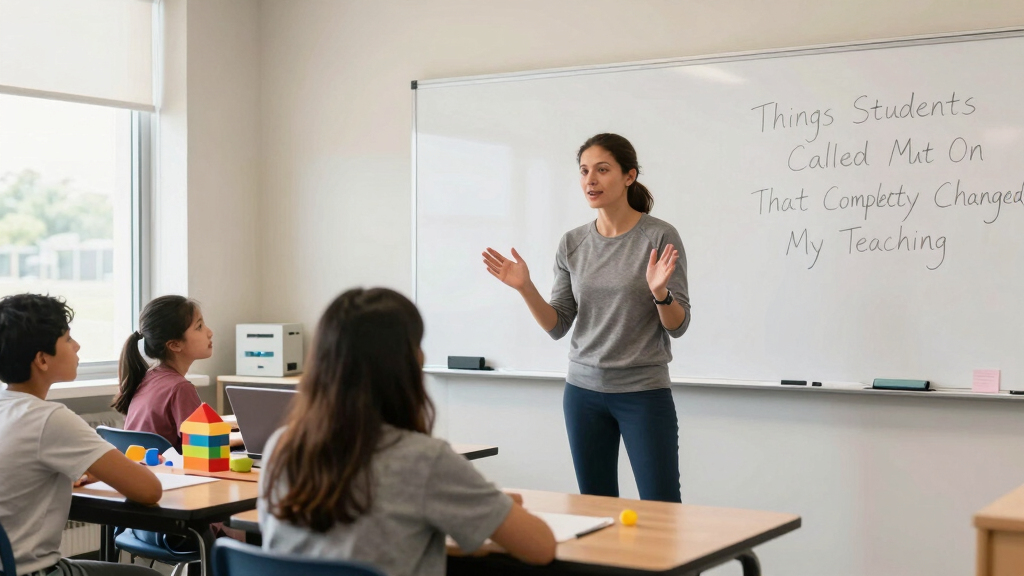
A yoga teacher reflects on 12 student comments that led to significant changes in her teaching methods. These insights improved communication, inclusivity, and responsiveness in her classes.
A yoga instructor with nearly 20 years of experience shares 12 key comments from students that prompted her to adapt and improve her teaching methods, highlighting the importance of listening and flexibility.
The instructor initially struggled with student feedback, often feeling caught off guard by their questions and criticisms. Over time, she recognized that these comments revealed important insights into how students experience her classes and how her teaching could evolve.
Among the most impactful feedback was a student’s comment that she couldn’t hear the instructor, prompting her to work on projecting her voice. Another student’s question about not being able to do certain poses led her to offer more options, fostering greater inclusivity. A revelation that a student knew more about the nervous system than she did shifted her perspective on her role, encouraging her to see students as collaborators rather than mere recipients of instruction.
Other comments, such as a student asking why certain poses were taught or expressing discomfort with props, taught her to clarify her teaching purpose and to be more attentive to individual needs. Feedback about anxiety with eyes closed or pain from adjustments highlighted the importance of sensitivity and adapting cues. These insights collectively transformed her approach from a rigid instructor to a more responsive and empathetic teacher.
Why It Matters
This story illustrates how active listening to student feedback can significantly improve teaching effectiveness and inclusivity. For yoga teachers and educators in general, it underscores the value of humility, adaptability, and ongoing learning—traits that enhance student safety, engagement, and trust.
yoga instructor voice projection microphone
As an affiliate, we earn on qualifying purchases.
As an affiliate, we earn on qualifying purchases.
Background
The instructor’s reflections span nearly two decades of teaching, during which she encountered various student comments that challenged her assumptions and methods. Her initial training emphasized speaking and demonstration, but student interactions revealed the need for more listening and personalized adjustments. These insights align with broader trends in education that prioritize student-centered approaches.
“Listening to my students’ feedback has been more transformative than any formal training.”
— Yoga instructor
“When a student told me she felt more anxious with her eyes closed, I realized I needed to be more sensitive to individual experiences.”
— Yoga instructor
adjustable yoga props for inclusivity
As an affiliate, we earn on qualifying purchases.
As an affiliate, we earn on qualifying purchases.
What Remains Unclear
It is not yet clear how widespread these insights are among other yoga teachers or in different teaching contexts. The long-term impact of these changes on student outcomes remains to be studied.
As an affiliate, we earn on qualifying purchases.
What’s Next
The instructor plans to continue soliciting and reflecting on student feedback, integrating more personalized and inclusive practices. She also aims to share her experiences through workshops and teacher training to encourage others to adopt similar listening-based approaches.
As an affiliate, we earn on qualifying purchases.
Key Questions
How can teachers effectively gather student feedback?
Teachers can ask open-ended questions during or after class, create anonymous surveys, or foster a classroom environment where students feel comfortable sharing their thoughts openly.
What if student feedback conflicts with teaching standards?
In such cases, teachers should balance individual needs with safety and instructional integrity, adapting cues when possible while maintaining core principles.
Are these insights applicable outside yoga teaching?
Yes, the principles of active listening and responsiveness are valuable across educational and training contexts, promoting more effective and empathetic teaching.
Will these changes impact class structure or content?
They may lead to more flexible class formats, with increased emphasis on individual needs, modifications, and open dialogue.
Source: Yoga Journal
Fall Picks
fall essentials
As an affiliate, we earn on qualifying purchases.