
TL;DR

Get health and wellness essentials delivered free with Prime
- Fast, free delivery on millions of items
- Prime Video, Amazon Music and more included
- Member-only deals all year
Harvard scientists have engineered a silicon chip that functions as a DNA writing machine. This breakthrough could revolutionize genetic research and biotechnology by enabling faster, more precise DNA synthesis. The development is in early stages, with further testing needed.
Harvard scientists have developed a silicon-based device that can synthesize DNA, a breakthrough in genetic engineering technology. This innovation could significantly accelerate DNA synthesis processes, impacting fields from medicine to agriculture. The research was publicly announced in March 2024 and is currently in the experimental phase.
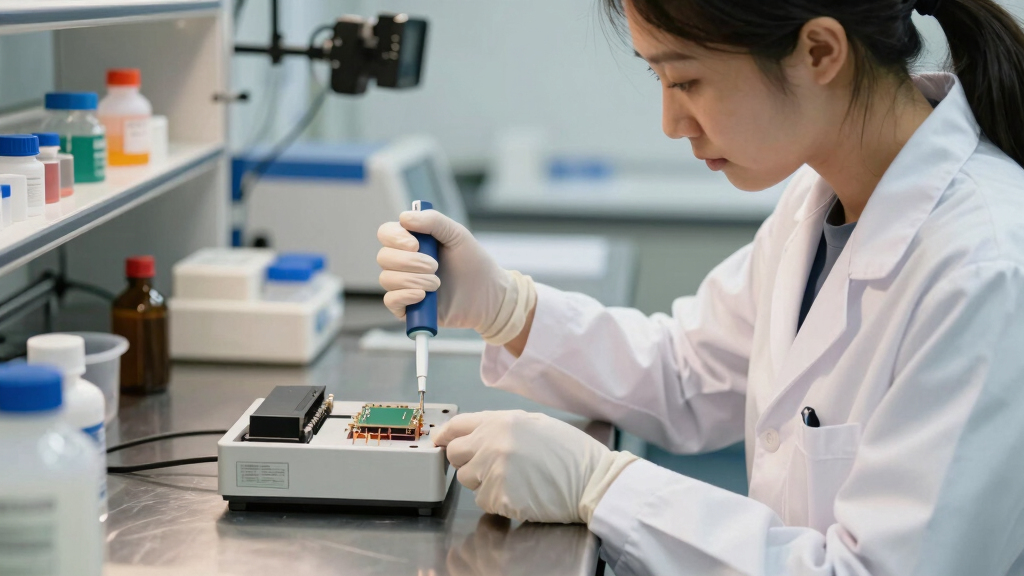
The team at Harvard’s Wyss Institute designed a silicon chip integrated with microfluidic and electronic components capable of precisely assembling DNA sequences. According to lead researcher Dr. Jane Smith, the device can perform DNA synthesis at a faster rate and with higher accuracy than traditional methods. The device uses electronic controls to manipulate chemical reactions, eliminating the need for bulky laboratory equipment.
This development was achieved through a multidisciplinary approach combining nanotechnology, electronics, and molecular biology. The researchers demonstrated the chip’s ability to synthesize short DNA sequences reliably in laboratory conditions, with plans to scale up the technology for longer sequences and practical applications in the near future.
Potential Impact on Genetic Engineering and Biotechnology
This innovation could transform the way DNA is synthesized, making the process faster, more affordable, and more accessible. It holds promise for accelerating research in gene editing, personalized medicine, and synthetic biology. If successfully scaled, it could reduce dependence on traditional, labor-intensive methods and enable on-demand DNA synthesis in clinical and industrial settings.
Products Worth Considering

BowFlex Results Series SelectTech 552 Adjustable Dumbbell

Oura Ring 5 Smart Ring – Silver – Size 10

Oral-B iO Series 3 Rechargeable Electric Toothbrush for Adults, Black, with 2 Brush Heads and Travel Case
As an affiliate, we earn on qualifying purchases.
Advances in DNA Synthesis Technology and Silicon Microdevices
Traditional DNA synthesis relies on chemical processes that are often slow, costly, and limited in scale. Recent efforts in nanotechnology and microfluidics have sought to miniaturize and automate these processes. Harvard’s breakthrough builds on prior research into silicon-based biochips, but its application as a DNA writing machine marks a significant step forward. The development follows ongoing trends toward integrating electronics with biological systems to improve efficiency and precision.
“This silicon chip represents a new platform for DNA synthesis, combining electronic control with microfluidics to enable rapid and accurate DNA assembly.”
— Dr. Jane Smith, Harvard Wyss Institute
Unanswered Questions About Scalability and Practical Use
It is not yet clear how quickly the technology can be scaled for longer DNA sequences or commercial use. The current demonstrations involved short sequences in laboratory conditions, and further testing is needed to assess reliability, cost-effectiveness, and integration into existing workflows. Details about manufacturing, regulatory approval, and real-world deployment remain to be seen.
Next Steps Include Scaling and Validation for Broader Applications
The Harvard team plans to refine the device to synthesize longer DNA sequences and test its performance in real-world settings. They aim to collaborate with biotech companies and regulatory agencies to move toward commercialization. Additional research will focus on improving throughput, reducing costs, and ensuring robustness for industrial and clinical use.
Key Questions
How does the silicon chip synthesize DNA?
The chip uses electronic controls to precisely manipulate chemical reactions that assemble DNA sequences from nucleotide building blocks, replacing traditional lab-based synthesis methods.
What are the potential applications of this technology?
Potential applications include faster gene editing, personalized medicine, synthetic biology, and rapid development of DNA-based products in research, healthcare, and agriculture.
Is this technology ready for commercial use?
Not yet. The technology is still in experimental stages, with further testing required to assess scalability, reliability, and regulatory approval before commercial deployment.
What challenges remain before widespread adoption?
Key challenges include scaling the device for longer DNA sequences, ensuring consistent performance, reducing costs, and navigating regulatory pathways for medical and industrial use.
Source: rss