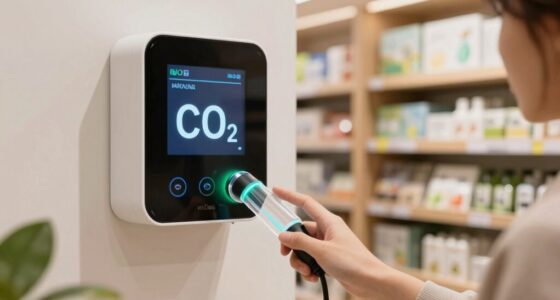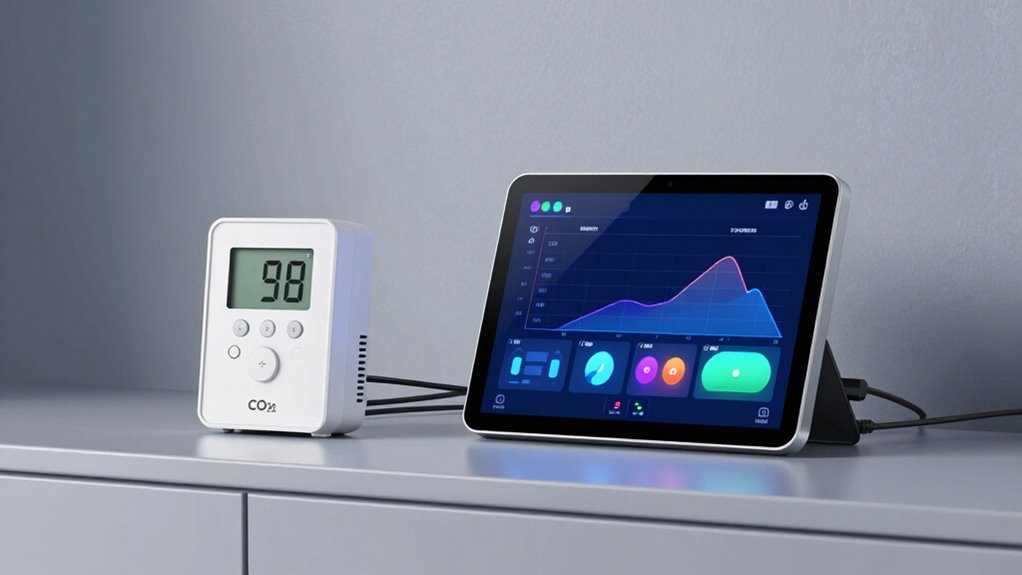
Basic CO2 monitors focus solely on measuring carbon dioxide levels and offer simple displays and alerts. Smarter setups, however, incorporate multiple sensors like humidity, VOCs, and particulate matter, providing an all-encompassing view of indoor air quality. They connect to apps and automation systems, enabling you to respond proactively and optimize your environment. If you want to discover how these advanced features can improve your space, keep exploring the differences in more detail.

Get health and wellness essentials delivered free — and shop member deals
- Fast, free delivery on millions of items
- Access to Prime Big Deal Days deals on October 6–7
- Prime Video, Amazon Music and more included
Key Takeaways
- Basic CO2 monitors measure only CO2 levels, while smarter setups include multiple sensors like humidity, VOCs, and particulate matter.
- Smarter systems offer real-time data, connectivity, and integration with apps and automation for proactive indoor air quality management.
- Basic monitors have limited accuracy and reliability, whereas smarter setups use advanced sensors and calibration for precise readings.
- Smarter setups enable automated responses, such as activating air purifiers, unlike basic monitors with simple threshold alerts.
- Smarter systems provide comprehensive environmental insights, supporting informed decisions and healthier indoor environments.
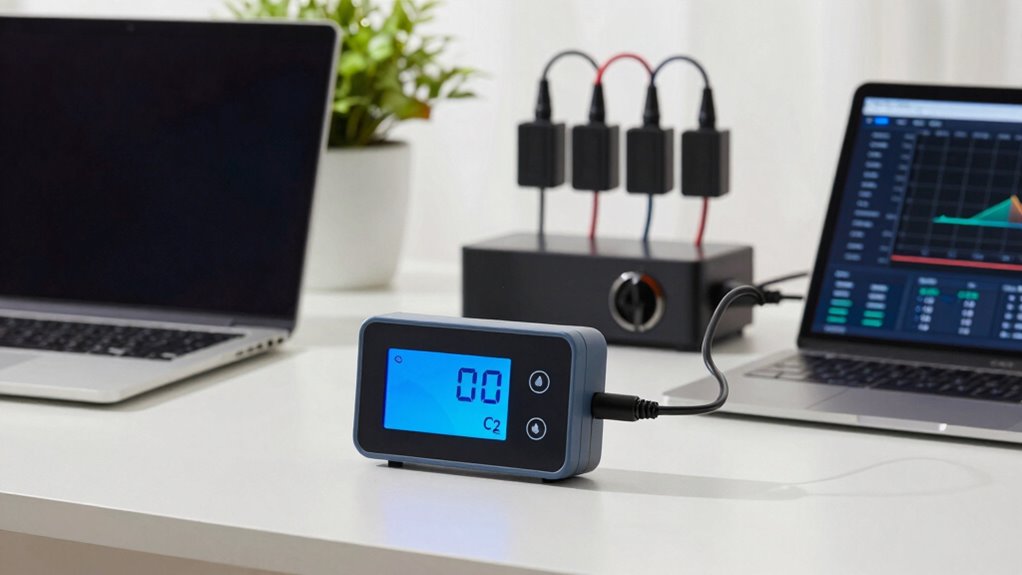
When it comes to monitoring indoor air quality, understanding the differences between basic CO2 monitors and smarter setups can help you make better decisions for your space. Basic CO2 monitors typically measure carbon dioxide levels to give you a general sense of air quality. They’re straightforward devices that often feature simple displays showing current levels, alerting you when CO2 reaches a threshold that might indicate poor ventilation. While these monitors can be useful for basic purposes, their sensor accuracy varies, and they may not provide a comprehensive picture of overall air quality. You might see readings that seem reliable, but factors like sensor calibration, placement, and device quality can influence how precise these measurements are. As a result, relying solely on these devices could lead you to overlook other important aspects of air quality, such as humidity, particulate matter, or volatile organic compounds (VOCs).
In contrast, smarter setups integrate multiple sensors and advanced technology to deliver a more complete view of your indoor environment. These systems often include not just CO2 sensors but also sensors for humidity, temperature, VOCs, and particulate matter. The key advantage here is sensor accuracy—more sophisticated sensors tend to provide more reliable, precise readings. This accuracy helps you better understand how different factors impact your air quality and adjust your ventilation or air purification strategies accordingly. For example, if a smart setup detects rising VOC levels alongside increasing CO2, you can take targeted actions to improve air freshness, rather than reacting to a single metric. Additionally, these advanced systems often utilize sensor calibration techniques that ensure data consistency over time, enhancing overall reliability. Incorporating comprehensive monitoring can also help identify patterns and sources of indoor pollution, enabling more effective interventions. A real-time data connection to your devices further enhances your ability to respond swiftly to changes in air quality. Moreover, these systems can often integrate with other home devices, creating a more connected and automated environment for air quality management. This integration can also contribute to a more efficient and energy-saving indoor environment by optimizing ventilation based on actual air quality data.
Furthermore, smarter setups often connect to apps or home automation systems, giving you real-time data at your fingertips. This connectivity allows for continuous monitoring, alerts, and even automation, such as turning on an air purifier when certain thresholds are reached. This proactive approach ensures you’re constantly managing your indoor air quality, rather than waiting for noticeable discomfort or symptoms. So, if your goal is to maintain optimal air quality and ensure sensor accuracy, investing in a smarter setup offers clear benefits. It provides more detailed, reliable data, and empowers you to make better-informed decisions about ventilation, air purification, and overall indoor environment management. Ultimately, understanding these differences helps you choose a monitoring system that aligns with your needs, ensuring healthier, safer indoor spaces.
smart indoor air quality monitor
As an affiliate, we earn on qualifying purchases.
As an affiliate, we earn on qualifying purchases.
Frequently Asked Questions
Can Basic CO2 Monitors Be Calibrated Easily at Home?
Yes, you can calibrate basic CO2 monitors at home, but it’s often tricky. You’ll need DIY calibration methods and proper calibration tools, like a calibration gas or reference standards. Follow the manufacturer’s instructions carefully, and guarantee your tools are accurate. Keep in mind, though, that some basic monitors may not be designed for easy calibration, so investing in a smarter setup could save you time and ensure more reliable readings.
How Long Do Smart CO2 Monitors Typically Last Before Needing Replacement?
Smart CO2 monitors typically last around 3 to 5 years before needing replacement, depending on sensor accuracy and battery life. You should monitor the device’s performance regularly, as declining accuracy or decreasing battery life signals it’s time for a replacement. Proper maintenance and occasional calibration can extend their lifespan, but eventually, sensor degradation will require you to upgrade to guarantee reliable CO2 level readings.
Are There Any Health Risks Associated With Low or High CO2 Levels?
High CO2 levels can cause headaches, dizziness, and fatigue, while low levels generally pose minimal health risks. Poor indoor air quality impacts your health, making it essential to monitor CO2 concentrations. Elevated CO2 indicates inadequate ventilation, which can worsen respiratory issues. Conversely, extremely low CO2 might suggest over-ventilation, wasting energy. Staying aware of indoor air quality helps safeguard your health, ensuring a comfortable, safe environment.
Do Smarter Setups Require Professional Installation or Setup?
Smarter setups often require professional installation because of setup complexity. While basic monitors are simple to install and operate, more advanced systems involve integrating sensors, alarms, and sometimes HVAC controls, which can be tricky without technical knowledge. Hiring a professional guarantees proper setup, calibration, and troubleshooting, giving you peace of mind. If you’re comfortable with technical tasks, some smarter setups may be manageable on your own, but expert help is usually recommended.
Can Smart CO2 Monitors Connect to Other Smart Home Devices?
Yes, smart CO2 monitors can connect to other smart home devices. They often feature device integration, allowing you to sync them with lighting, HVAC, or security systems. This enables automation features, like adjusting ventilation or alerting you when CO2 levels rise. You can control and monitor these devices via a central app, making your home safer and more efficient without needing complex setups or professional installation.
CO2 VOC particulate sensor system
As an affiliate, we earn on qualifying purchases.
As an affiliate, we earn on qualifying purchases.
Conclusion
Ultimately, choosing between a basic CO2 monitor and a smarter setup depends on your needs. While basic models give you quick readings, smarter systems offer detailed insights and automation. It’s like the difference between checking your phone and having a personal assistant. Don’t just assume more tech is unnecessary—investing in smarter setups can guarantee a healthier, more comfortable space. After all, understanding your environment better can make all the difference in your daily life.
connected air quality monitor with app
As an affiliate, we earn on qualifying purchases.
As an affiliate, we earn on qualifying purchases.
automated air purifier controller
As an affiliate, we earn on qualifying purchases.
As an affiliate, we earn on qualifying purchases.
Fall Picks
fall essentials
As an affiliate, we earn on qualifying purchases.