
TL;DR

Get health and wellness essentials delivered free with Prime
- Fast, free delivery on millions of items
- Prime Video, Amazon Music and more included
- Member-only deals all year
A University of Lancashire program places first-year medical students in care homes to get to know residents through conversation rather than clinical assessment. Student reflections describe learning to listen and adapt, but the project did not formally measure empathy or establish whether any changes last.
The University of Lancashire has introduced a compulsory care-home placement for first-year medical students, asking them to learn about residents through conversation rather than take histories or make diagnoses. The program is intended to give students early experience listening to older people, while reflections collected so far show what some students felt they learned—not whether their empathy or clinical practice changed over time.
Called The Person Before the Patient, the placement was piloted during the 2023/24 academic year and became compulsory for first-year medical students in 2024/25. It operates across 11 care homes. During a four-week placement, students meet residents, some of whom live with dementia, frailty or long-term conditions, and talk about their interests and life experiences.
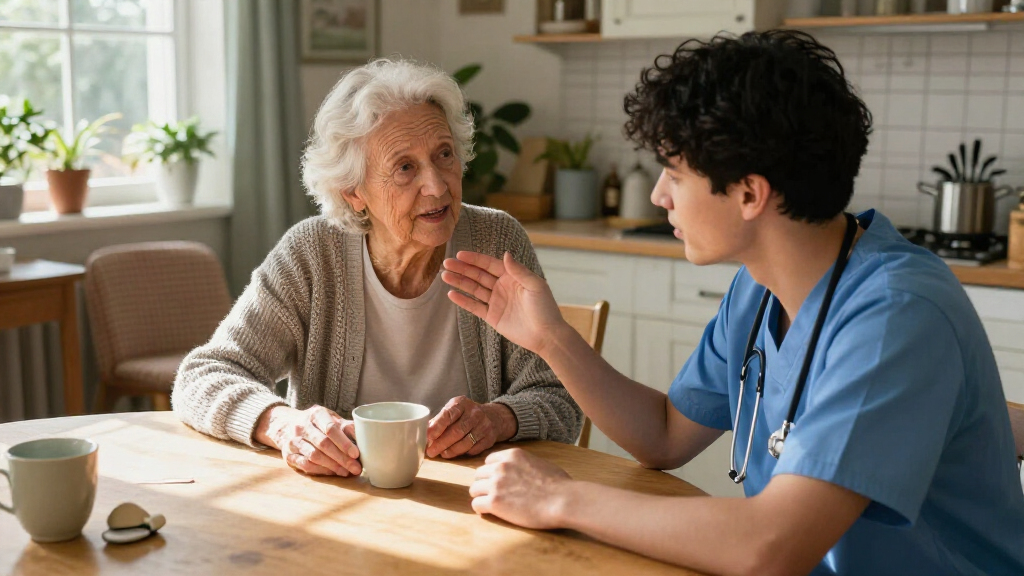
The task differs from a clinical consultation: students are not there to assess medical needs. They may prepare questions, but are expected to follow what residents choose to discuss. One student wrote that they learned to listen more, let the resident lead and allow silence while someone searched for words. The student also described paying closer attention to facial expressions and gestures.
Of 281 students who completed the placement, 157 voluntarily submitted written reflections for the project. Those accounts describe students’ impressions, including one student’s view that conversations with residents made empathy feel more real than practice with simulated patients. The report says the project did not formally measure empathy, and voluntary responses may not represent students who did not submit reflections.
Listening Beyond the Clinical Checklist
The placement addresses a tension in medical education: students need to learn how to manage clinical demands, but should also attend to the person experiencing illness. The report notes that research on empathy during medical training is mixed. Some studies suggest empathy declines, particularly as students enter clinical settings; other findings do not show the same pattern.
Conversation at a resident’s pace offers students practice in responding to individual communication needs, rather than relying only on a prepared script. That may be relevant when speaking with people who have memory difficulties or hearing loss. NICE dementia guidance recommends adapting communication and taking account of a person’s history and preferences. The placement gives students time to practice these principles, though the report does not show that the program improves later clinical outcomes.
There is also a question of how residents experience the visits. They are participants, not simply teaching resources, and should be able to choose whether to take part and what to share. The report says some residents and care-home staff discussed hosting students and how placement funding would be used. Care-home managers reported that many residents enjoyed the visits and looked forward to students returning; these are managers’ observations, not a formal assessment of resident outcomes.
medical communication training tools
As an affiliate, we earn on qualifying purchases.
As an affiliate, we earn on qualifying purchases.
A Placement Before Clinical Training
The University of Lancashire project introduces care-home conversations early in medical school, before students’ interactions become primarily centered on clinical assessment. The premise is that listening to a person’s experiences can complement communication exercises with actors, which help students rehearse consultations but do not replicate every aspect of speaking with someone about their own life.
Other research provides useful but limited comparisons. An Australian study of 61 fifth-year medical students found that five-day care-home placements improved dementia knowledge and attitudes toward working with older people, although some students questioned the educational value. A New Zealand analysis of reflections from five students involved in nursing-home caregiving described both recognition of residents as individuals and experiences that students found overwhelming. That study concerned hands-on care, not the conversation-based Lancashire placement.
The report also points to a possible influence called the hidden curriculum: attitudes students pick up from clinical environments alongside formal instruction. A 2023 review of 16 studies identified heavy workloads and poor role models among factors that may encourage emotional detachment. These findings provide context for the placement’s aims, but do not establish that this particular program counters those influences.
“I had to adapt my communication style. This meant listening more and allowing the resident to lead the conversation, rather than relying on prepared questions.”
— A first-year medical student reflecting on the placement
As an affiliate, we earn on qualifying purchases.
What the Reflections Cannot Show
The project has not formally measured whether students became more empathetic, changed their clinical behavior or retained any learning after entering clinical training. Its evidence so far is based on voluntary written reflections from 157 of 281 students, leaving open whether respondents had more positive experiences than nonrespondents.
Evidence from other programs also cautions against equating positive impressions with sustained effects. A UK evaluation of Time for Dementia found improvements in students’ knowledge and attitudes but no significant difference in measured empathy compared with other students. A review of long-term empathy training found little evidence that gains persist. The Lancashire report says its early findings are an encouraging starting point, not proof of lasting impact.
The available account also does not provide a formal evaluation of residents’ experiences or a detailed breakdown of how many chose to participate. Managers reported that many residents enjoyed visits, but the extent and consistency of those benefits remain unclear. Residents’ ability to opt in and decide what to share remains central to the project’s ethical approach.
empathy development tools for medical students
As an affiliate, we earn on qualifying purchases.
As an affiliate, we earn on qualifying purchases.
A Longer-Term Program Evaluation
The report says a fuller evaluation would need to follow students over time, including after they begin clinical training, rather than rely only on immediate reflections. That would help establish whether reported communication lessons persist and whether they affect how students interact with patients.
Further assessment would also need to distinguish students’ perceptions from measured changes and gather residents’ own views of the visits. The source does not set out a timetable for that work or report a planned follow-up study. For now, the placement is operating across 11 homes, and its longer-term educational and resident outcomes have not been established.
care home resident conversation guides
As an affiliate, we earn on qualifying purchases.
As an affiliate, we earn on qualifying purchases.
Key Questions
What do students do during the care-home placement?
They spend four weeks meeting residents and learning about their interests and experiences. They are not assigned to diagnose residents or assess their medical needs.
When did the program begin?
The University of Lancashire piloted The Person Before the Patient in 2023/24 and made it compulsory for first-year medical students in 2024/25.
Has the project proved that it improves empathy?
No. Some students described learning about empathy in their reflections, but the project did not formally measure empathy or establish lasting effects on clinical behavior.
Do care home residents benefit from the visits?
Care-home managers reported that many residents enjoyed the visits and looked forward to students returning. The report does not provide a formal assessment of resident outcomes, and residents should be able to choose whether to participate.
Source: rss
Halloween Picks
halloween
As an affiliate, we earn on qualifying purchases.