Airflow measures how much air moves through a space, usually in CFM, but it doesn’t tell you about air quality. Clean air delivery combines the airflow with filtration efficiency, showing how much contaminant-free air actually reaches occupants. So, high airflow alone isn’t enough if filters are poor. Understanding the difference helps you evaluate ventilation effectiveness better. If you want to learn how to optimize both for healthier indoor environments, keep exploring these concepts further.
Key Takeaways
- Airflow measures the volume of air moving through a space, while clean air delivery accounts for both airflow and filtration efficiency.
- High airflow alone doesn’t guarantee good indoor air quality without effective filtration.
- Clean air delivery provides a more accurate measure of contaminant-free air reaching occupants.
- Proper assessment requires considering both airflow rates and filtration efficiencies, not just one metric.
- Optimizing both airflow and filtration ensures healthier indoor environments and effective ventilation performance.
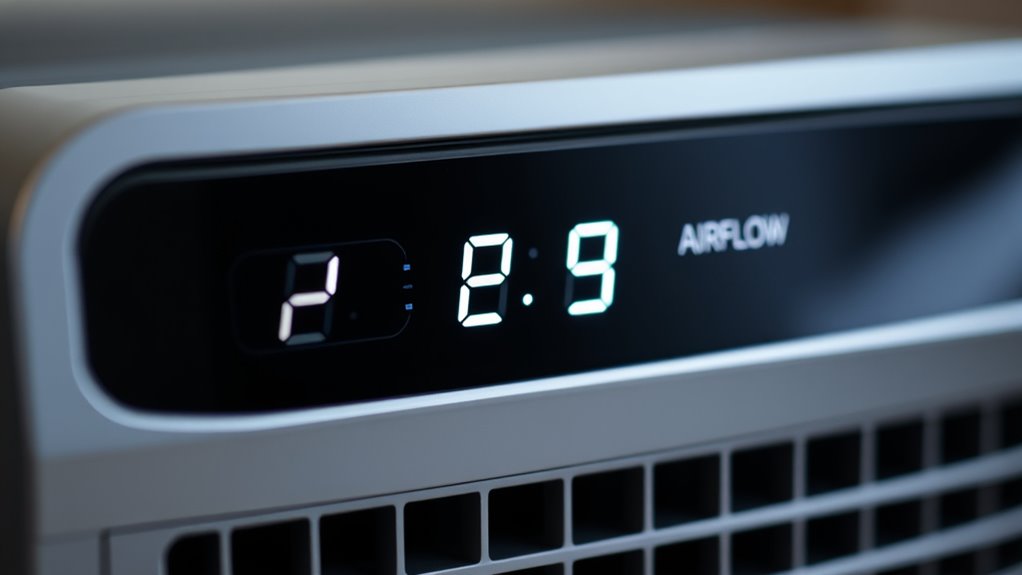
When evaluating ventilation systems, understanding the difference between clean air delivery and airflow is essential. These two metrics often get mixed up, but they serve distinct purposes in appraising how well a system performs. Airflow generally refers to the volume of air moving through a space over a certain period, usually measured in cubic feet per minute (CFM). It tells you how much air is circulating, but not necessarily how clean that air is. You might have high airflow rates, but if the air isn’t properly filtered or purified, you’re not improving indoor air quality. Conversely, clean air delivery focuses on how much filtered, contaminant-free air actually reaches the occupied spaces. It combines airflow with filtration efficiency, giving you a more accurate picture of the system’s effectiveness in providing healthy indoor air.
If you’re looking at a ventilation system, relying solely on airflow numbers can be misleading. A high airflow rate might seem desirable, but if the system’s filters are inefficient or poorly maintained, the air delivered could still contain harmful pollutants. That’s why clean air delivery is a more meaningful metric—it accounts for both the quantity of air and its quality. For example, a system might have an airflow of 500 CFM, but if its filters only remove 50% of airborne particles, the actual clean air delivery might be far less than expected. On the other hand, a system with a lower airflow rate but highly efficient filtration could deliver cleaner air to occupants, making it more effective at improving indoor air quality.
Understanding this distinction helps you make better decisions when selecting or evaluating ventilation solutions. If your main goal is to reduce airborne contaminants, you need to focus on clean air delivery rather than just airflow numbers. This means paying attention to the specifications of filters, HEPA ratings, and how well the system maintains its filtration efficiency over time. Keep in mind, a system with excellent airflow but poor filtration won’t provide the healthy environment you’re after. Conversely, a system designed to deliver high-quality, filtered air at an adequate rate ensures that the air people breathe is genuinely cleaner and safer. Knowing these differences empowers you to prioritize the right features, optimize your ventilation setup, and ultimately create a healthier indoor space.

KNKA Air Purifier for Home Bedroom Large Room Up to 1,695 Ft² in 1 Hr, HEPA Air Cleaner with Washable Pre-Filter, AHAM VERIFIDE, AQI Display, ECO Mode, Pet Mode for Pets, Dust, Pollen, APH4000
𝐀𝐇𝐀𝐌 𝐕𝐞𝐫𝐢𝐟𝐢𝐞𝐝 & 𝐇𝐢𝐠𝐡 𝐂𝐀𝐃𝐑 𝐕𝐚𝐥𝐮𝐞: Certified by the Association of Home Appliance Manufacturers, this air purifier provides…
As an affiliate, we earn on qualifying purchases.
As an affiliate, we earn on qualifying purchases.
Frequently Asked Questions
How Do I Calculate the Ideal Air Purifier for My Room Size?
To find the ideal air purifier for your room, determine the room’s square footage and multiply it by 0.75 to 1.5. This gives you the recommended Clean Air Delivery Rate (CADR). For example, if your room is 200 sq ft, look for a purifier with a CADR between 150 and 300. Make sure the purifier’s airflow capacity matches or exceeds this range for effective air cleaning.
What Maintenance Is Required to Ensure Accurate Airflow Measurements?
To guarantee accurate airflow measurements, you should regularly clean or replace filters according to the manufacturer’s instructions, as dirt and debris can obstruct airflow. Check for any blockages or dust buildup in vents and fans, and keep the area around the purifier clear. Also, calibrate the device if possible, and monitor performance over time to spot any declines that might indicate maintenance issues. Consistent upkeep keeps measurements precise.
Can High Airflow Compromise Air Quality?
Imagine a river rushing fiercely, carrying debris and pollutants along its current. High airflow can indeed compromise air quality if it pushes contaminants into your space or disrupts proper filtration. When airflow exceeds designed levels, filters may not trap pollutants effectively, increasing indoor pollutants. To prevent this, make certain your ventilation system is well-maintained, calibrated, and operating within recommended parameters. Proper airflow management keeps your environment safe and clean, like a steady, clear stream.
How Does Room Temperature Affect Clean Air Delivery?
Room temperature can impact clean air delivery because warmer air tends to hold more moisture and particles, which can hinder filtration efficiency. As temperatures rise, your air purifier might work harder to remove pollutants, possibly reducing its effectiveness. Conversely, cooler air often allows for better filtration. To maintain ideal air quality, make certain your purifier is properly rated for your room temperature and keep the environment within recommended ranges.
Are There Industry Standards for Measuring Clean Air Delivery?
Yes, industry standards do exist for measuring clean air delivery, but they can be tricky to navigate. You should look for certifications like AHAM or CADR ratings, which provide standardized benchmarks. These ratings tell you how effectively a purifier delivers clean air into your space. Keep in mind, standards can vary by region and device type, so always compare these metrics carefully to make certain you’re making the best choice for your needs.

Weiworld 4 Inch Square Passive Air Vent, Adjustable Airflow Ventilation Kit with Extendable Duct – Natural Fresh Air Exchange for Home, Bedroom, Attic (No Motor)
Passive Fresh Air Ventilation – No electricity required, helping reduce energy use and operating costs. Ideal for basements,…
As an affiliate, we earn on qualifying purchases.
As an affiliate, we earn on qualifying purchases.
Conclusion
Understanding the difference between clean air delivery and airflow helps you make smarter choices for your space. Don’t fall for the myth that higher airflow always means cleaner air; quality matters more. Focus on how effectively your system delivers purified air, not just moving large volumes of air around. When you grasp this, you’ll see through the confusion and choose equipment that truly improves your air quality, not just inflates numbers.

Air Purifier for Large Room, Cleans 2,400 ft² in 30 Mins, 3-Stage True HEPA, 360° Airflow, Large Touch Display Control, Real-Time Air Quality (PM2.5) Display, Ultra-Quiet 20dB Sleep Mode, HAP602 White
Air Quality Monitoring: This air purifier is designed with a built-in PM2.5 sensor and real-time display, eliminating the…
As an affiliate, we earn on qualifying purchases.
As an affiliate, we earn on qualifying purchases.

LEVOIT Air Purifiers for Home Large Room Up to 1875 Ft² with Washable Pre-Filter, AHAM VERIFIDE, Air Quality Monitor, HEPA Sleep Mode for Allergies, Pet Hair in Bedroom, Vital 200S-P, White
𝐖𝐇𝐘 𝐂𝐇𝐎𝐎𝐒𝐄 𝐀𝐇𝐀𝐌 𝐕𝐄𝐑𝐈𝐅𝐈𝐃𝐄 𝐏𝐑𝐎𝐃𝐔𝐂𝐓𝐒: AHAM (Association of Home Appliance Manufacturers) is an ANSI-accredited organization that sets strict…
As an affiliate, we earn on qualifying purchases.
As an affiliate, we earn on qualifying purchases.