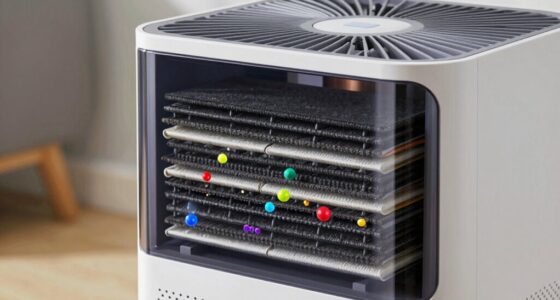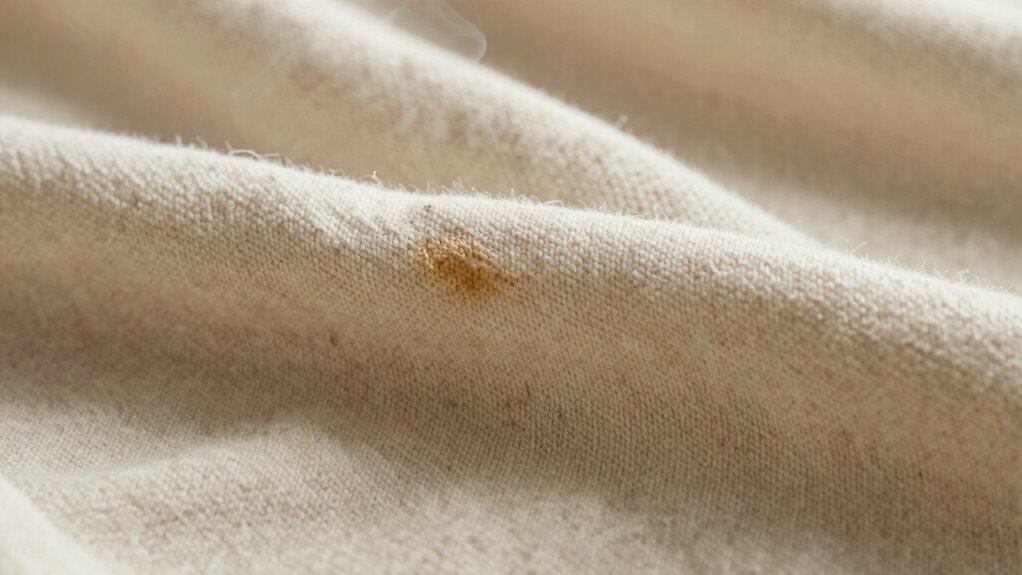

Fabrics trap odors deep within their fibers because they’re porous and absorb particles like sweat, oils, and dirt. Bacteria and mold thrive in damp conditions, making smells even harder to remove. Even after washing, odors can linger if they’re embedded inside fibers. To effectively get rid of these smells, you need to use specific cleaning methods like vinegar, baking soda, or sunlight exposure. Keep going, and you’ll discover how to freshen fabrics more effectively.
Key Takeaways
- Fabrics are porous, absorbing odors and trapping particles like sweat, oils, and bacteria deep within fibers.
- Moisture promotes microbial growth, which produces persistent, foul odors that are hard to remove.
- Synthetic fabrics trap odors more effectively due to tighter weaves, making odors stick longer.
- Regular cleaning with odor-neutralizing agents and sunlight exposure can help break down and eliminate embedded smells.
- Ensuring fabrics are thoroughly dried and stored in dry conditions prevents microbial growth and odor recurrence.
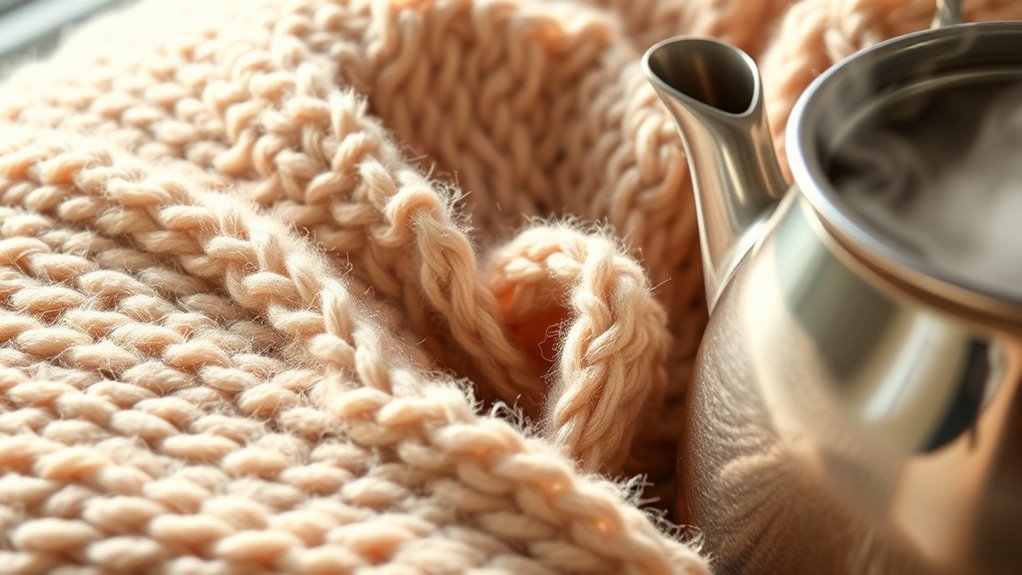
Fabrics can easily trap odors from everyday activities, making your clothes, furniture, and linens smell unpleasant over time. When you wear clothes or sit on a sofa, tiny particles like sweat, oils, and dirt settle into the fibers. These particles carry smells, especially if they’re combined with bacteria or mold, which thrive in warm, damp environments. Since fabrics are porous, they absorb these odors rather than just covering them up. That’s why, even after washing, some smells linger—because they’ve become embedded deep within the fibers.
Fabrics trap odors deep within fibers, making smells linger even after washing.
The porous nature of fabric means that odors don’t just stay on the surface. Instead, they penetrate into the fibers, making them difficult to remove with regular washing alone. For instance, sweat and body oils seep into the fabric, creating a breeding ground for bacteria that produce their own foul smells. Similarly, cooking fumes or pet odors can seep into upholstery or curtains, embedding themselves beyond what’s visible or initially noticeable. Over time, these smells become stronger and more persistent, especially if the fabric isn’t cleaned properly or if it’s exposed to repeated sources of odor.
Another reason odors stick is that fabrics can trap moisture, which encourages microbial growth. When fabrics stay damp or humid, bacteria and mold spores flourish, creating a persistent musty smell. This is common with items that aren’t dried thoroughly or are stored in damp environments. Synthetic fabrics tend to trap odors more than natural ones because their tightly woven fibers don’t breathe as well. As a result, they hold onto smells longer and sometimes more intensely.
To combat odors that have set into fabrics, you need to take specific steps. Regular washing is essential, but you should also consider adding odor-neutralizing agents like baking soda or specialized laundry boosters. For stubborn smells, soaking fabrics in a solution of vinegar or using enzymatic cleaners can help break down odor-causing molecules. When dealing with upholstery or curtains, a thorough cleaning with fabric-safe disinfectants can eliminate deep-seated odors. Additionally, airing out fabrics frequently in sunlight helps because UV rays and fresh air naturally kill bacteria and mold spores. Ensuring fabrics are completely dry before storing them prevents lingering moisture that can foster microbial growth. Using proper cleaning methods tailored to the type of fabric can further improve odor removal and maintain freshness.
In essence, odors cling to fabrics because of their porous and moisture-retentive qualities. Addressing this problem involves not just cleaning but also understanding how odors embed themselves and taking proactive steps to prevent their recurrence. Proper washing, drying, airing, and using targeted odor removers will help you keep your fabrics fresh and odor-free over time.

LEVOIT Air Purifiers for Home Large Room Up to 1875 Ft² with Washable Pre-Filter, AHAM VERIFIDE, Air Quality Monitor, HEPA Sleep Mode for Allergies, Pet Hair in Bedroom, Vital 200S-P, White
𝐖𝐇𝐘 𝐂𝐇𝐎𝐎𝐒𝐄 𝐀𝐇𝐀𝐌 𝐕𝐄𝐑𝐈𝐅𝐈𝐃𝐄 𝐏𝐑𝐎𝐃𝐔𝐂𝐓𝐒: AHAM (Association of Home Appliance Manufacturers) is an ANSI-accredited organization that sets strict...
As an affiliate, we earn on qualifying purchases.
Frequently Asked Questions
Can Certain Fabrics Resist Odor Absorption Better Than Others?
Yes, certain fabrics resist odor absorption better than others. Natural fibers like wool and silk tend to trap fewer odors because their structure doesn’t hold onto smells as much as synthetic fabrics like polyester or nylon. You can choose these natural options for clothing or upholstery if you want to reduce lingering odors. Regular cleaning and proper ventilation also help keep fabrics fresh and odor-free longer.
How Long Do Odors Typically Stay Embedded in Fabrics?
Odors can cling to fabrics for days, weeks, or even months if left untreated. The duration depends on fabric type, odor strength, and exposure time. Natural fibers like cotton tend to absorb smells more deeply, making odors stick longer. If you don’t act promptly, the scent seeps further, settling deeper into the fibers. To combat this, you need to clean, deodorize, and sometimes rewash fabrics to banish stubborn smells effectively.
Do Natural Fabrics Hold Odors Longer Than Synthetic Ones?
Natural fabrics tend to hold odors longer than synthetic ones because they’re more porous, allowing odor molecules to penetrate deeply. You might notice that linen or cotton fabrics trap smells more than polyester or nylon, which are less absorbent. To combat this, you can wash natural fabrics with odor-neutralizing solutions and air them out regularly. Proper care helps keep your natural fabrics fresh and free from lingering odors.
Are There Specific Detergents Best for Odor Removal?
You should pick detergents formulated for odor busting, like those with enzymes or activated charcoal. These powerful allies dive deep into fabric fibers, breaking down odor-causing molecules, much like a detective solving a mystery. Avoid milder formulas that only mask smells. For best results, use hot water when safe, and consider adding a splash of white vinegar or baking soda to boost odor elimination. Your fabrics will smell fresh and inviting once you choose the right detergent.
Can Environmental Factors Affect Odor Retention in Fabrics?
Environmental factors can definitely affect how odors linger in fabrics. Humidity, for example, traps moisture that helps odors settle in deeper fibers, making them harder to remove. Pollution and smoke can also settle on fabrics, causing persistent smells. Exposure to sunlight can sometimes help break down odor-causing molecules, but prolonged exposure might weaken fabric fibers. To keep odors at bay, store your fabrics in dry, well-ventilated areas away from pollutants.

KNKA Air Purifier for Home Bedroom Large Room Up to 1,695 Ft² in 1 Hr, HEPA Air Cleaner with Washable Pre-Filter, AQI Display, ECO Mode, Sleep Mode, Pet Mode for Pets, Dust, Pollen, APH4000
𝐇𝐢𝐠𝐡 𝐂𝐀𝐃𝐑 𝐕𝐚𝐥𝐮𝐞: This air purifier provides reliable performance with a Smoke/Dust/PM2.5 CADR of 226 CFM (384 m³/h)...
As an affiliate, we earn on qualifying purchases.
Conclusion
Did you know that odors can cling to fabrics for up to 50 times longer than they stay in the air? Now that you understand how odors stick, you’re better equipped to tackle stubborn smells. Remember, regular washing and proper drying can markedly reduce lingering odors. So next time a bad smell lingers, you’ll know it’s not just in your head—you’ve got the power to unstick it and keep your fabrics fresh and clean!

LEVOIT Air Purifier for Home Large Room Up to 1073Ft² with Air Quality Monitor, AHAM VERIFIDE, Smart WiFi, Washable Pre-Filter, HEPA Sleep Mode for Pets, Allergies, Dust, Pollen, Vital 100S-P, White
𝐖𝐇𝐘 𝐂𝐇𝐎𝐎𝐒𝐄 𝐀𝐇𝐀𝐌 𝐕𝐄𝐑𝐈𝐅𝐈𝐃𝐄 𝐀𝐈𝐑 𝐏𝐔𝐑𝐈𝐅𝐈𝐄𝐑𝐒: AHAM (Association of Home Appliance Manufacturers) is an ANSI-accredited organization that sets...
As an affiliate, we earn on qualifying purchases.

LEVOIT Air Purifier for Home Allergens Pet Hair in Bedroom, Covers Up to 1073 ft² by 56W High Torque Motor, AHAM VERIFIDE, 3-in-1 Filter with HEPA Sleep Mode, Remove Dust Smoke Odor, Core300-P, White
WHY CHOOSE AHAM VERIFIDE AIR PURIFIERS: AHAM (Association of Home Appliance Manufacturers) is an ANSI-accredited organization that sets...
As an affiliate, we earn on qualifying purchases.