
Activated carbon doesn’t work instantly because it needs enough contact time to effectively adsorb pollutants. Rushing the process prevents the carbon from capturing impurities fully, as adsorption requires pollutants to migrate to the carbon’s surface over time. Factors like flow rate and pollutant type influence how long this takes. If you want to maximize purification, patience is key—and the details behind this process can help you improve your system’s efficiency.
Key Takeaways
- Adsorption requires sufficient contact time; instant placement doesn’t guarantee immediate purification.
- Longer contact times allow activated carbon to adsorb more pollutants before saturation occurs.
- Flow rate and pollutant type influence how quickly contaminants are removed, affecting process efficiency.
- Saturated carbon loses effectiveness; timely replacement or regeneration is essential for optimal results.
- Patience and proper process management maximize activation carbon’s pollutant removal capabilities.
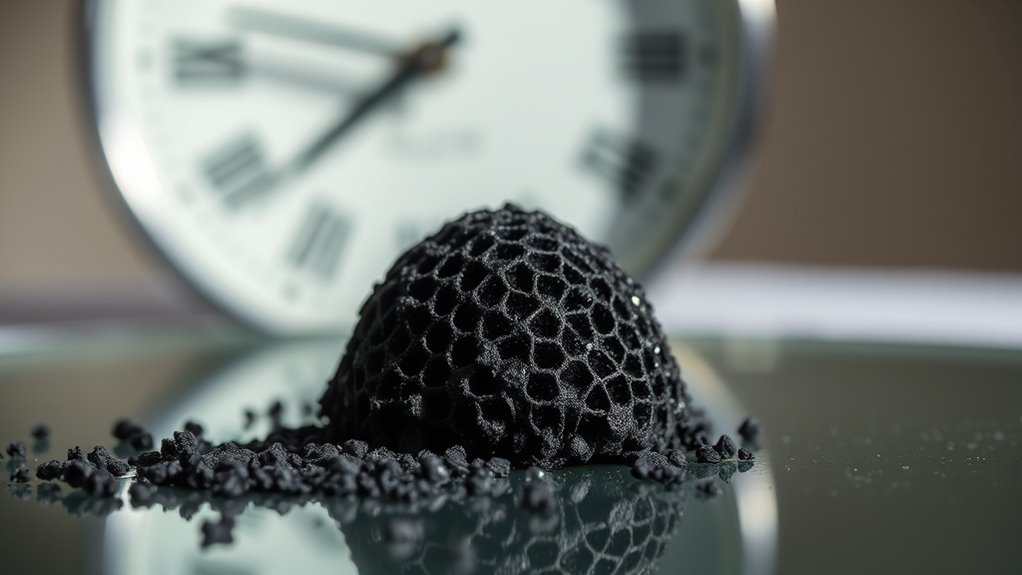
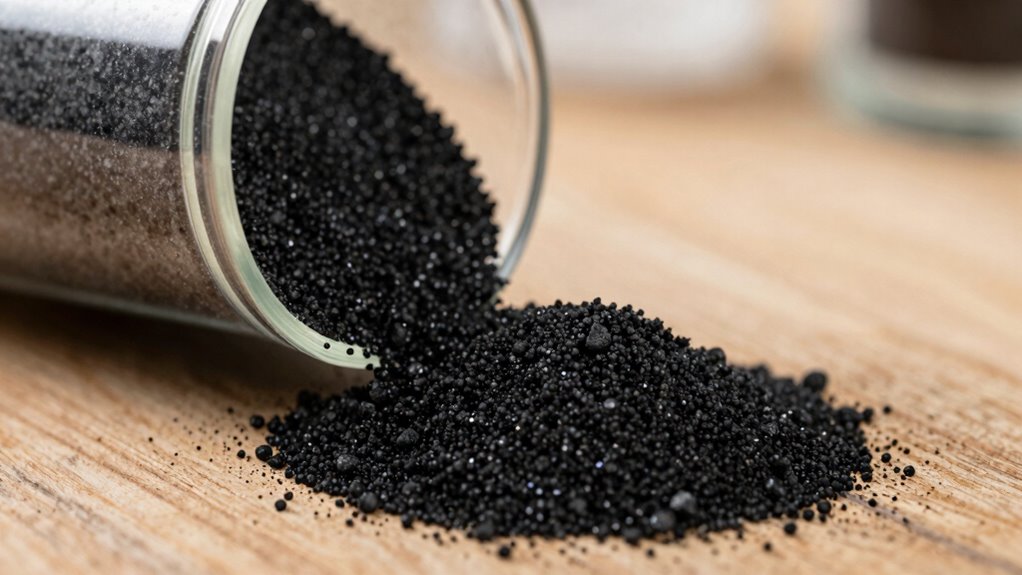
Activated carbon is a powerful material known for its ability to adsorb pollutants and impurities, but its effectiveness also depends on time. When you introduce activated carbon into a water or air system, you might expect it to work immediately, but that’s not quite how it functions. Adsorption, the process by which activated carbon captures contaminants, requires a specific amount of time to reach ideal efficiency. If you rush the process or don’t give it enough time, you may not achieve the purification levels you expect.
Think of activated carbon as a sponge that slowly soaks up impurities. The greater the contact time between the carbon and the pollutants, the more contaminants it can adsorb. Immediately after placing activated carbon in your system, it begins working, but its maximum potential isn’t realized instantly. You need to allow sufficient time for the pollutants to migrate from the water or air to the surface of the carbon. This process depends on factors like the flow rate, pollutant concentration, and the surface area of the activated carbon particles. Faster flow rates might mean less contact time, reducing adsorption efficiency. Conversely, slower flow gives contaminants more opportunity to bind with the carbon.
It’s also important to understand that adsorption isn’t a one-and-done situation. As the activated carbon captures pollutants, it becomes less effective over time. Initially, it might remove a high percentage of contaminants, but as the available adsorption sites fill up, its capacity diminishes. That’s why monitoring and replacing or regenerating the carbon are essential steps in maintaining ideal performance. Waiting too long to replace the activated carbon after it becomes saturated will result in diminished purification effectiveness and could allow impurities to slip through.
Furthermore, the composition of activated carbon can influence its adsorption rate and capacity, making it crucial to select the appropriate type for your specific application. Different pollutants require different contact times to be effectively adsorbed. Some contaminants are captured quickly, within minutes, while others need hours of contact. For example, certain organic compounds are adsorbed rapidly, but heavy metals and some chemicals might take longer. This variability underscores the importance of understanding your specific application and adjusting your process accordingly. Simply put, patience is essential. Rushing the process doesn’t speed up adsorption; it only reduces the amount of impurities removed.

LEVOIT Air Purifier for Home Allergies and Pets Hair Smokers in Bedroom, H13 True HEPA Filter, 24db Filtration System Cleaner Odor Eliminators, Remove 99.97% Dust Smoke Mold Pollen, Core 300, White
- AHAM Verified for Performance: Independently tested for air quality and efficiency
- Powerful Filtration System: 56W motor with 143 CFM CADR
- Effective for Large Rooms: Cleans 222 sq ft 4.8 times/hour
As an affiliate, we earn on qualifying purchases.
Frequently Asked Questions
How Long Does Activated Carbon Take to Reach Full Effectiveness?
It typically takes about 24 to 48 hours for activated carbon to reach full effectiveness after installation or activation. During this time, the carbon’s pores fill with contaminants, maximizing its filtration capacity. You should allow sufficient contact time for the carbon to adsorb impurities thoroughly. Rushing the process might leave your filtration less effective, so patience guarantees you get the best results from your activated carbon.
Does the Contact Time Affect Activated Carbon’s Ability to Adsorb Contaminants?
You might be surprised to learn that increasing contact time boosts activated carbon’s adsorption efficiency by up to 30%. Yes, contact time directly affects its ability to trap contaminants; longer exposure allows more pollutants to bind to the surface. So, if you want ideal results, make sure to give the carbon enough time to work. Rushing the process can considerably reduce its effectiveness in purifying water or air.
Can Shorter Exposure Times Improve Activated Carbon’s Performance?
Shorter exposure times generally don’t improve activated carbon’s performance. In fact, they often reduce its ability to adsorb contaminants effectively because the process needs enough contact time for maximum adsorption. If you rush the process, contaminants might not fully adhere to the carbon, leaving impurities in your water or air. To get the best results, guarantee adequate contact time, allowing the activated carbon to do its job thoroughly.
How Can I Tell When Activated Carbon Has Become Saturated?
Imagine a sponge soaked so full that it can’t hold another drop—that’s how you’ll see activated carbon once it’s saturated. You can tell by monitoring the change in water quality or air odor. When odors persist or contaminants break through, it’s a sign the carbon’s worn out. Regular testing and visual cues like dust buildup also help you catch saturation early, ensuring peak performance.
Does Agitation or Stirring Speed Influence Activated Carbon’s Adsorption Rate?
Yes, agitation or stirring speed can influence the adsorption rate of activated carbon. Faster stirring helps distribute contaminants more evenly, increasing contact between the carbon and pollutants. However, too much agitation might cause particle breakage or create turbulence that reduces contact efficiency. Find a balance where stirring is sufficient to maximize contact without disrupting the process. Consistent, gentle agitation usually yields the best results for adsorption efficiency.

MOOKA Air Purifier for Bedroom Home Dorm 430 Ft², Compact HEPA Air Cleaner
- True HEPA Filter with 360° Air Intake: Removes dust, smoke, pollen, pet dander
- Compact & Portable Design: Powered via USB for versatile use
- Universal Voltage Compatibility: Works with 110-240V power sources
As an affiliate, we earn on qualifying purchases.
Conclusion
Remember, activated carbon isn’t a magic wand; it’s more like a patient gardener tending to your needs. Give it time, and it’ll work quietly, like a gentle river carving out a canyon. Rushing the process is like trying to hurry a sunrise—you miss the beauty unfolding. Trust in the slow, steady dance of activated carbon, and you’ll find your efforts bloom into pure, fresh clarity. Patience transforms the ordinary into the extraordinary.
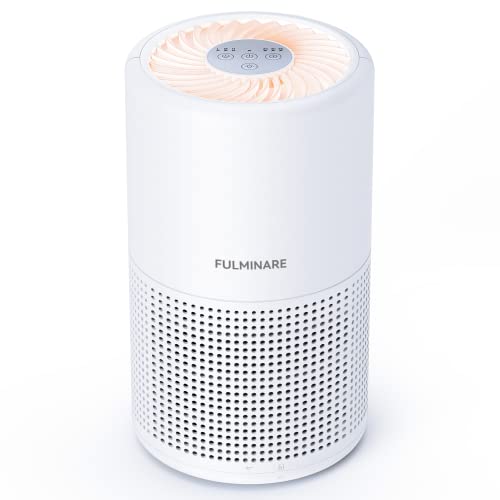
Air Purifiers for Bedroom, FULMINARE H13 True HEPA Filter
- Efficient Particle Filtration: H13 HEPA filter for clean air
- High Circulation Rate: 360° air outlet, refreshes 5x/hour
- Suitable for 215 sq ft rooms: Effective in small to medium rooms
As an affiliate, we earn on qualifying purchases.

VOOPNU Air Purifiers for Bedroom, High Efficiency Filter, 1076 Ft², Black
- Easy-to-Use Control Panel: Intuitive design for simple operation
- Compact and Powerful: Covers 1076 ft² in a small size
- 360° Airflow Design: Ensures even air purification
As an affiliate, we earn on qualifying purchases.