
A whole-house air purifier for HVAC treats air as it circulates through your ductwork, but the right choice depends on whether you want particle filtration, UV-based treatment, or another approach. My best overall pick is the Aprilaire 1410 for its straightforward MERV 11 filter and familiar maintenance needs. The Air Health Haven Plus stands out for combining UV-C, PCO, and carbon filtration, while the APCO Carbon Cell Matrix offers a different mix of carbon-cell and UV technology. The main tradeoffs are filtration strength, compatibility with your system, upkeep, and how much installation complexity you’re willing to take on. Read on for the full breakdown and guidance on matching a system to your home.

Get health and wellness essentials delivered free with Prime
- Fast, free delivery on millions of items
- Prime Video, Amazon Music and more included
- Member-only deals all year
Complete the kit


Key Takeaways
- The Aprilaire 1410 is the clearest fit for particle filtration: its MERV 11 filter gives this roundup’s most conventional, easy-to-explain approach to capturing airborne particles.
- Combination systems serve a different purpose from filter-only cleaners: the Air Health Haven Plus pairs UV-C with PCO and carbon filtration, adding treatment methods but also adding components to assess and maintain.
- UV-C products are not interchangeable: the listed options range from a 26-watt model to a 90-watt light, but wattage alone does not establish performance in a specific duct system.
- Installation and compatibility separate many of these picks: voltage, available duct space, airflow, and whether the system needs a control or air switch can matter more than a product’s feature list.
- The best choice depends on the problem you want to address: a filter-focused buyer may prefer the Aprilaire, while buyers seeking UV-based or carbon-cell treatment may prefer a different system from the lineup.
| In-Duct UV-C Air Purifier for HVAC Systems, with Two Replacement Bulbs |  | Best UV-C Pick for Broad HVAC Capacity | System capacity: 1–5 tons | Bulb type: Germicidal UV-C | UV wavelength: 253.7 nm | VIEW ON AMAZON | See Our Full Breakdown |
| Aprilaire 1410 Whole-Home Air Cleaner with MERV 11 Filter, 16 x 25 in |  | Best for Particle Filtration | Model: 1410 | Filter class: MERV 11 | Filter type: Pleated | VIEW ON AMAZON | See Our Full Breakdown |
| Qualirey 26W HVAC UV Light Air Purifier for Whole-House HVAC Systems |  | Best UV-C Kit for Compact Duct Openings | Power: 26 W | Voltage: 110 V | UV wavelength: 253.7 nm | VIEW ON AMAZON | See Our Full Breakdown |
| iWave-R Residential IAQ Ion Generator |  | Best Ion-Generator Alternative | Brand: iWave | Product type: Residential IAQ ion generator | Special feature: Portable | VIEW ON AMAZON | See Our Full Breakdown |
| Air Health Haven Plus HVAC Air Purifier with 16-Inch UV-C Light, PCO Technology, and Carbon Filtration |  | Best Multi-Technology HVAC System | UV-C lamp: 16 inches, 30 W | UV-C wavelength: 253.7 nm | Technologies: UV-C, PCO, carbon filtration | VIEW ON AMAZON | See Our Full Breakdown |
| 90-Watt UV-C Light for HVAC Ducts | 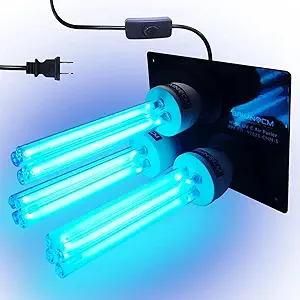 | Best Simple Retrofit | Light type: UV-C | Power: 90 watts | Bulb description: HO bulb; 25-watt size, 30-watt high output | VIEW ON AMAZON | See Our Full Breakdown |
| RGF REME Halo LED Whole-Home In-Duct Kit with Air Switch |  | Best LED Kit with Air Switch | Included components: REME-LED unit and HLED-AS air switch | Power source: Corded electric | Voltage: 120 volts | VIEW ON AMAZON | See Our Full Breakdown |
| REKO Lighting R2000 UV-C Air Purifier for HVAC Ducts |  | Best for Broad HVAC Compatibility | Model: R2000 | Light type: UV-C | Wavelength: 253.7 nm | VIEW ON AMAZON | See Our Full Breakdown |
| APCO Carbon Cell Matrix HVAC UV Air Purifier (18-32 VAC Series) |  | Best Premium Carbon-and-UV System | Technology: Activated carbon cell matrix and UV-C light | Voltage: 18–32 VAC | Frequency: 60 Hz | VIEW ON AMAZON | See Our Full Breakdown |
| whole house air purifier for hvac | Voltage |
|---|---|
| In-Duct UV-C Air Purifier for | — |
| Aprilaire 1410 Whole-Home Air | — |
| Qualirey 26W HVAC UV Light Air | 110 V |
| iWave-R Residential IAQ Ion Ge | 260 V |
| Air Health Haven Plus HVAC Air | — |
| 90-Watt UV-C Light for HVAC Du | — |
| RGF REME Halo LED Whole-Home I | 120 volts |
| REKO Lighting R2000 UV-C Air P | 120 V |
| APCO Carbon Cell Matrix HVAC U | 18–32 VAC |
More Details on Our Top Picks
In-Duct UV-C Air Purifier for HVAC Systems, with Two Replacement Bulbs
This dual-lamp unit suits homeowners who want UV-C treatment inside existing ductwork rather than a particle-filter cabinet. Its stated 1–5 ton range covers a broad set of residential systems, and the four included bulbs provide spares beyond the two installed lamps. A sight glass and electronic ballast offer useful status and operating details, while ozone-free operation is a clear distinction from products whose ozone performance is not specified here. Compared with the Qualirey 26W HVAC UV Light, this model has a longer 9-foot cord, but its installation requires two larger 1.75-inch duct openings. It targets germicidal UV-C, not dust or pollen capture, so it is better treated as a complement to filtration than a replacement for a whole-home air cleaner.
Pros:- Ozone-free operation
- Four bulbs included, providing two replacements
- Sight glass and electronic ballast help indicate and manage lamp operation
- Installation template and hardware are included
Cons:- Installation requires cutting two 1.75-inch holes in the duct
- Compatible only with HVAC systems rated from 1 to 5 tons
- UV-C treatment does not replace a filter for dust, pollen, or pet dander
Best for: Homeowners with a 1–5 ton HVAC system who want an ozone-free in-duct UV-C unit and prefer to have spare bulbs included.
Not ideal for: Buyers seeking particulate filtration or a no-cut installation; this unit requires two 1.75-inch duct holes and does not capture dust like the Aprilaire 1410.
- System capacity:1–5 tons
- Bulb type:Germicidal UV-C
- UV wavelength:253.7 nm
- Power:120 V, 50/60 Hz
- In-duct dimension:8 inches
- Power cord length:9 feet
- Bulb length:7.5 inches
- Bulbs included:4 total
Our verdict“Choose this model for in-duct UV-C across a broad residential system range, provided you are comfortable modifying the duct and already have particle filtration.”
Aprilaire 1410 Whole-Home Air Cleaner with MERV 11 Filter, 16 x 25 in
Unlike the UV-C units in this roundup, the Aprilaire 1410 captures airborne particles as HVAC air passes through its MERV 11 pleated filter. That makes it the more direct fit for households focused on dust, pollen, pet dander, and smoke rather than adding UV treatment to the duct. Its SelfSeal design helps limit air bypass around the filter, so more of the passing airflow is directed through the media. Compared with the Air Health Haven Plus, it has no stated UV-C, PCO, or carbon stage for microorganisms, VOCs, or odors; its strength is filtration, not a multi-technology approach. The tradeoff is ongoing filter replacement, recommended about once a year, and the supplied MERV 11 level is lower than the separately available MERV 13 option.
Pros:- MERV 11 pleated filter targets common household particles
- SelfSeal design helps reduce unfiltered air bypass
- Silent operation
- Filter replacement is straightforward and recommended about once a year
Cons:- Requires periodic replacement filters
- MERV 13 is a separate filter option, not the included class
- Does not provide the UV-C, PCO, or carbon stages offered by the Air Health Haven Plus
Best for: Households prioritizing routine capture of dust, pollen, pet dander, and smoke through their central HVAC system.
Not ideal for: Buyers focused on UV-C treatment, VOC reduction, or odor control; the Aprilaire is a particle filter, not a UV or carbon-based purifier.
- Model:1410
- Filter class:MERV 11
- Filter type:Pleated
- Filter area:28.3 square feet
- Particle retention size:1 micron
- Cabinet width:6.75 inches
- Weight:17.4 pounds
- Certification:UL Certified
Our verdict“Pick the Aprilaire 1410 when particle capture matters more than UV-C treatment, VOC reduction, or odor control.”
Qualirey 26W HVAC UV Light Air Purifier for Whole-House HVAC Systems
The Qualirey is a straightforward 26W UV-C option for 1–5 ton systems, with installation materials and spare bulbs included. Its two status LEDs give a quick indication of lamp operation, while the 4.6-foot cord may suit installations where the power connection is close to the duct. Compared with the In-Duct UV-C Air Purifier in this lineup, it calls for smaller 1-inch installation holes, but its cord is shorter and its bulbs have a stated 8–10 month replacement interval. Like other UV-C-only picks, it targets treatment within the HVAC system rather than filtering particles from the air; it does not offer the Aprilaire 1410’s MERV-rated capture. Buyers should plan for periodic lamp changes and take care during installation to avoid direct eye exposure to UV light.
Pros:- Compatible with HVAC ducts or furnaces serving 1–5 ton systems
- Four bulbs included, including two replacements
- Two indicator LEDs show lamp status
- Installation template and mounting materials are included
Cons:- Bulbs are recommended for replacement every 8–10 months
- Requires two 1-inch holes in the duct
- Direct eye contact with the UV light must be avoided
Best for: Homeowners with a 1–5 ton system seeking a UV-C kit with spare bulbs, status LEDs, and smaller duct openings.
Not ideal for: People who want particle capture, long service intervals, or a longer power cord; this unit needs bulb replacement every 8–10 months and has a 4.6-foot cord.
- Power:26 W
- Voltage:110 V
- UV wavelength:253.7 nm
- Compatible air system capacity:1–5 tons
- Installation location:HVAC ducts or furnaces
- Bulbs included:4 total, including 2 replacement bulbs
- Indicator lights:2 LEDs
- Power cord length:4.6 feet
- Recommended bulb replacement:Every 8–10 months
Our verdict“Choose the Qualirey if smaller installation holes and included spare bulbs matter more than a longer cord or particle filtration.”
iWave-R Residential IAQ Ion Generator
The iWave-R stands apart from the duct-mounted UV-C lamps and the Aprilaire filter: it is described as a residential ion generator, not as a UV-C device or a MERV-rated particle filter. That different approach may interest buyers who specifically want an ion-generation product for residential indoor air quality, but the supplied product information is sparse. It gives no treatment capacity, installation details, particle-capture rating, or maintenance schedule, making it harder to compare its likely fit with the Air Health Haven Plus, which specifies UV-C, PCO, and carbon filtration. The listing also describes it as portable, despite positioning it as a residential IAQ product, so buyers should confirm the intended installation and electrical requirements before choosing it for a central HVAC system. I would not treat it as a substitute for documented filtration without more specifications.
Pros:- Designed for residential indoor air quality
- Uses residential power, according to the product description
- Portable design is stated
Cons:- Product data does not specify HVAC system capacity or installation method
- No particle filtration rating or detailed treatment performance is provided
- The listed 260-volt specification warrants confirmation before purchase
Best for: Buyers specifically seeking a residential ion generator who can verify its HVAC compatibility, installation method, and operating requirements with the seller or installer.
Not ideal for: Shoppers who need clear duct-fit guidance, a stated filtration rating, or documented UV-C and carbon features; those details are not provided here.
- Brand:iWave
- Product type:Residential IAQ ion generator
- Special feature:Portable
- Power source type:Residential
- Voltage:260 V
- Engine type:4 Stroke
Our verdict“Consider the iWave-R only if you specifically want an ion generator and can confirm its HVAC fit and electrical requirements before buying.”
Air Health Haven Plus HVAC Air Purifier with 16-Inch UV-C Light, PCO Technology, and Carbon Filtration
The Haven Plus offers the broadest stated treatment mix in this group: UV-C, PCO technology, and permanent carbon filters are intended to address microorganisms, VOCs, and household odors as air circulates through the duct system. That gives it a different role from the Aprilaire 1410, which is the clearer choice for MERV-rated particle capture, and from the In-Duct UV-C unit, which focuses on UV-C alone. The kit includes a hole saw, mounting plate, and hardware for metal or duct-board installation, and the stated installation time is about 15 minutes. Its ozone-free design and 10-year limited unit warranty are useful differentiators, but the lamp warranty lasts only 90 days. It still requires duct installation, and the product data does not state a MERV rating or particle-size capture level.
Pros:- Combines UV-C, PCO technology, and carbon filtration
- Designed to reduce VOCs and household odors
- Includes installation parts for metal or duct-board systems
- Designed not to produce ozone and includes a 10-year limited unit warranty
Cons:- Requires installation in an HVAC duct system
- UV-C lamp warranty is limited to 90 days
- No MERV rating or particle-retention size is specified
Best for: Homeowners seeking a duct-installed combination of UV-C, PCO, and carbon filtration to address odors and VOCs alongside microorganisms.
Not ideal for: Buyers whose main need is rated particle capture or those unwilling to modify ductwork; the Haven Plus lists no MERV rating and requires HVAC installation.
- UV-C lamp:16 inches, 30 W
- UV-C wavelength:253.7 nm
- Technologies:UV-C, PCO, carbon filtration
- Installation time:About 15 minutes
- Ozone production:Does not produce ozone
- Unit warranty:10 years limited
- Lamp warranty:90 days
- Included components:Manifold, ballast, UVC lamp, permanent carbon filters, hole saw, mounting plate, and hardware
Our verdict“Choose the Haven Plus for a multi-stage duct system aimed at odors and VOCs, but choose the Aprilaire 1410 instead when rated particle capture is the priority.”
90-Watt UV-C Light for HVAC Ducts
This is a straightforward choice for homeowners who want an ozone-free UV-C lamp fitted inside a duct or furnace, rather than a filter-based whole-home cleaner. Its included template and 6-foot cord support a relatively simple installation, though the advertised 15-minute timeframe does not remove the need to cut two holes in the ductwork. Compared with the REKO Lighting R2000, this model has a shorter cord and less clearly documented bulb details; the R2000 also specifies its UV-C wavelength and HVAC capacity range. A significant information gap here is the bulb description, which lists a 25-watt size and 30-watt high output despite the product’s 90-watt title. I would choose it only if the installation fit and ozone-free design matter more than detailed performance documentation.
Pros:- Designed for installation in an HVAC duct or furnace
- Ozone-free UV-C light
- Includes an installation template and 6-foot power cord
- Advertised installation time is 15 minutes or less
Cons:- Installation requires cutting two holes in the ductwork
- Bulb wattage details conflict with the 90-watt product title
- Does not specify the UV-C wavelength or a compatible HVAC capacity range
Best for: Homeowners seeking an ozone-free UV-C duct or furnace retrofit who can verify the lamp specifications before installation
Not ideal for: Buyers who want clearly stated bulb output, a longer cord, or an option that avoids cutting the ductwork
- Light type:UV-C
- Power:90 watts
- Bulb description:HO bulb; 25-watt size, 30-watt high output
- Ozone:Ozone-free
- Installation location:HVAC duct or furnace
- Installation requirement:Two holes cut in ductwork
- Power cord:6 feet
- EPA establishment number:97826-CHN-1
Our verdict“Choose this for a basic ozone-free duct-lamp retrofit if you are comfortable resolving the conflicting bulb specifications first.”
RGF REME Halo LED Whole-Home In-Duct Kit with Air Switch
The REME Halo kit stands apart from basic UV-C duct lamps by pairing a 17-watt LED unit with an included HLED-AS air switch for whole-home in-duct installation. That bundled control component may suit buyers coordinating a more complete HVAC installation, but it is not a plug-in shortcut: the manufacturer recommends a licensed electrical or HVAC professional. Compared with the REKO Lighting R2000, which uses dual UV-C bulbs and provides a 10-foot cord, this kit’s selling point is its LED-based system and included air switch, not easy DIY mounting. There are also important support and wiring limits: it must not be wired directly to the EAC terminal, and the supplied information says RGF does not provide manufacturer warranty support. I would confirm the installer and support path before choosing it.
Pros:- Designed for whole-home in-duct installation
- Includes the REME-LED unit and HLED-AS air switch
- Uses a 17-watt LED light source
- Operates on 120 volts
Cons:- Professional electrical or HVAC installation is recommended
- Direct wiring to the EAC terminal can damage the unit and void the warranty
- RGF manufacturer warranty support is not provided
Best for: Homeowners arranging professional HVAC work who want an in-duct LED system supplied with its air switch
Not ideal for: DIY installers or buyers who need direct EAC-terminal wiring or manufacturer warranty support from RGF
- Included components:REME-LED unit and HLED-AS air switch
- Power source:Corded electric
- Voltage:120 volts
- Wattage:17 watts
- Light source:LED
- Light color:Cool white
- Material:Aluminum
- Installation guidance:Licensed electrical or HVAC professional recommended
Our verdict“Pick this LED-and-air-switch kit when a qualified installer is already involved and you have confirmed wiring and warranty support arrangements.”
REKO Lighting R2000 UV-C Air Purifier for HVAC Ducts
The R2000 is a practical fit for buyers whose first question is whether a UV-C unit suits their system: it is specified for 1-to-5-ton HVAC systems and uses dual bulbs emitting 253.7 nm UV-C light. Its 10-foot cord offers more reach than the 6-foot cord on the 90-Watt UV-C Light for HVAC Ducts, while the included template and self-drilling screws support a relatively direct retrofit. Still, it is not a no-cut solution; installation calls for two 1.75-inch holes in the duct. The product data also gives no bulb replacement interval or cost, which makes ongoing upkeep harder to plan than the stated one-year lamp cycle of the APCO Carbon Cell Matrix. I’d favor the R2000 for a clearly described UV-C setup and wide system-size range, provided you are prepared to check replacement needs.
Pros:- Specified for HVAC systems from 1 to 5 tons
- Dual European-made bulbs emit 253.7 nm UV-C light
- Includes a 10-foot power cord
- Template and self-drilling screws support installation
Cons:- Requires two 1.75-inch holes in the duct
- Bulb replacement frequency and cost are not specified
- Does not include the carbon-cell approach used by the APCO Carbon Cell Matrix
Best for: Homeowners with a 1-to-5-ton HVAC system who want a duct-mounted UV-C unit with a long power cord and stated wavelength
Not ideal for: Buyers unwilling to cut duct openings or those who want clear bulb replacement timing and maintenance costs
- Model:R2000
- Light type:UV-C
- Wavelength:253.7 nm
- Voltage:120 V
- Frequency:50/60 Hz
- Power cord length:10 feet
- HVAC capacity:1 to 5 tons
- Duct installation:Two 1.75-inch holes required
- EPA establishment number:96373-FL-1
Our verdict“Choose the R2000 if your system falls within its stated capacity range and you want a UV-C retrofit with more installation reach than the 90-watt lamp.”
APCO Carbon Cell Matrix HVAC UV Air Purifier (18-32 VAC Series)
Unlike the REKO Lighting R2000 and the 90-watt UV-C lamp, the APCO combines activated carbon cells with UV-C light, aiming to address odors and VOCs alongside biological contaminants. Its description also focuses on the HVAC equipment itself: it is designed to limit biofilm buildup on AC coils, while the carbon cells are described as self-cleaning. That broader approach and the included one-year shielded UV-C lamp make it the most involved option in this group, but it also requires a licensed contractor and a replacement lamp after the first year. The system runs on 18–32 VAC, so compatibility should be checked with the furnace or air-handler setup before purchase. I’d favor it over a simple UV-C-only retrofit when the carbon-cell feature and coil-focused maintenance goals justify professional installation.
Pros:- Combines activated carbon cells with UV-C light
- Designed to address VOCs and odors as well as other airborne pollutants
- Aims to limit biofilm buildup on AC coils
- Includes a one-year water-resistant shielded UV-C lamp
Cons:- Licensed contractor installation is required
- UV-C lamp requires replacement after one year
- Requires compatibility with an 18–32 VAC power supply
Best for: Homeowners seeking an in-duct carbon-and-UV system and willing to arrange licensed installation and yearly lamp replacement
Not ideal for: DIY buyers, households seeking a simple plug-in UV-C lamp, or anyone who cannot confirm 18–32 VAC compatibility
- Technology:Activated carbon cell matrix and UV-C light
- Voltage:18–32 VAC
- Frequency:60 Hz
- Current:0.68 amps
- Power:16 VA
- Included lamp:One-year water-resistant shielded UV-C lamp
- Installation:Licensed contractor required
- Lamp replacement:After one year
Our verdict“Choose the APCO if you want carbon cells and UV-C in one contractor-installed system and accept annual lamp replacement.”

How We Picked
I ranked these products by how clearly their stated design matches a common whole-home air-treatment need, then weighed the practical work involved in fitting and maintaining each one. The comparison covers filtration type, treatment approach, system compatibility, installation requirements, and ongoing upkeep. A conventional MERV filter earns a strong place when a buyer wants a familiar method of removing particles; UV-C, PCO, ionization, and carbon-based products are judged by the distinct role they claim to fill, not treated as direct substitutes for particle filters.
The Aprilaire 1410 ranks first because its MERV 11 filtration gives buyers a clear, practical starting point. The Air Health Haven Plus and APCO Carbon Cell Matrix follow for shoppers who want additional treatment technologies, while the remaining UV-C and ionization options suit more specific installation or treatment preferences. I do not treat wattage, technology labels, or the phrase “whole-house” as proof of performance: homeowners should confirm fit with their HVAC equipment and check manufacturer guidance before buying. Product details provided here do not establish independent performance testing or universal system compatibility.
Factors to Consider When Choosing Whole House Air Purifier For Hvac
Choosing a whole-house system starts with the air concern and the HVAC equipment you already have, not with the longest list of technologies. These factors can help you avoid buying a device that does not fit your ductwork or solve the problem you actually want to address.
Match the treatment method to your goal
A filter and a UV-C lamp do different jobs, so do not assume one replaces the other. Filters are the more direct choice when your priority is capturing particles from moving air; UV-C and other treatment technologies are intended for different uses and depend on installation conditions. Some products combine methods, but added technologies can mean added parts to inspect or replace. Identify the main concern you want the HVAC system to address before comparing product names. If you need particle capture, check the filter specification rather than relying on broad claims about purification. Ask the installer or manufacturer what the device is designed to treat and what it does not address.
Check HVAC compatibility before choosing a model
Whole-house products need to work with the actual air handler, duct layout, and controls in your home. Confirm dimensions, voltage, mounting requirements, and any need for an air switch or other control before ordering. A listed voltage range or a product label that says “HVAC” does not guarantee a simple fit with every system. Ask whether the device belongs in the return or supply side, and whether its placement affects access for service. If a qualified installer cannot confirm compatibility from the available documentation, pause rather than guessing. A correct fit can matter more than choosing a model with more features.
Account for airflow and filter resistance
Filters can affect airflow, so the filter’s rating should be considered alongside what your HVAC system can handle. A more restrictive filter is not automatically a better choice if the equipment is not designed for it. Check the system manufacturer’s recommended filter range and have a technician assess static pressure if you plan to change filter type or thickness. Also confirm the cabinet size: a 16-by-25-inch listing only helps if that size matches your installation. Avoid forcing an ill-fitting filter or assuming a retrofit cabinet will work without measuring. This check helps protect comfort and system operation while setting realistic expectations about filtration.
Compare replacement needs, not just installation effort
Every treatment method has its own maintenance pattern, including filter changes, lamp replacement, and inspection of installed components. Before buying, find the replacement part numbers and the manufacturer’s recommended service interval. A product supplied with extra bulbs may provide a spare, but it does not remove the need to track future replacements. Systems with multiple technologies may ask for more than one kind of upkeep. Consider who will perform the maintenance and whether the components are easy to access in your ductwork. A system that fits your household’s maintenance habits may serve you better than one with a more elaborate feature set.
Treat technology claims and safety as separate questions
Terms such as UV-C, PCO, ion generator, and carbon cell describe different mechanisms; they are not a common performance scale. Ask for product-specific documentation about intended use, installation location, and any byproducts or safety precautions relevant to that device. For UV-C systems, installation should follow the manufacturer’s instructions so the lamp is contained as designed and service can be done safely. Do not infer a product’s effectiveness from wattage alone, because placement, exposure, and airflow also matter. If a claim is central to your purchase decision, request supporting documentation rather than relying on a broad label. This is especially useful when comparing a single-method unit with a combination system.
Decide when a professional installation is worthwhile
Some buyers may be comfortable with a simpler retrofit, while electrical connections, duct modifications, or control wiring can call for an HVAC professional. Ask what installation includes and whether the work affects existing warranties or service access. The lowest-effort product on paper may still be a poor fit if your duct configuration makes maintenance difficult. A professional can also check airflow and confirm that a filter cabinet or lamp location suits the system. Get that advice before purchase if your equipment has unusual dimensions, limited space, or unclear wiring. Paying for a compatibility check can prevent a return or an installation that does not work as intended.
Frequently Asked Questions
Can an HVAC UV-C purifier replace a MERV filter?
No. A UV-C device and a MERV filter use different methods, so a UV-C lamp should not be treated as a substitute for particle filtration. If capturing airborne particles is your priority, confirm that your HVAC system has an appropriately sized filter and that it meets the equipment maker’s recommendations. A UV-C product may be considered for a separate treatment goal, subject to its documentation and installation requirements. Some homeowners choose to use both, but their compatibility should be checked. Ask an HVAC professional before removing or changing a filter as part of a new installation.
Is a higher-wattage UV-C light automatically the better HVAC choice?
No. Wattage alone does not show how well a UV-C unit will work in your specific duct system. Placement, airflow, exposure, lamp design, and the manufacturer’s intended application all affect how to interpret the specification. Compare product documentation rather than ranking models by wattage alone. Also verify that the lamp can be installed in the recommended location and serviced safely. If the product materials do not explain its fit for your system, ask the manufacturer or an HVAC professional before choosing it.
Should I choose a combination purifier or a simpler filter-only system?
Choose based on the job you want the system to do and how much maintenance you are prepared to manage. A filter-focused unit, such as the Aprilaire 1410 in this roundup, offers a clear route for buyers prioritizing particle filtration. Combination systems like the Air Health Haven Plus add technologies such as UV-C, PCO, and carbon filtration, but their extra components may require additional checks or replacements. More features do not automatically mean a better match for every home. Compare the documented purpose of each method with your needs, then confirm compatibility with your HVAC system.
What should I confirm before buying an in-duct purifier?
Start with the unit’s dimensions, your duct or air-handler space, voltage, control requirements, and the manufacturer’s approved installation location. Check whether the product needs an air switch or additional wiring, and make sure routine service will remain accessible. If you are considering a filter, confirm the cabinet size and your HVAC manufacturer’s filter guidance as well. Product names and broad compatibility language do not confirm fit for a particular installation. When specifications are unclear, share them with an HVAC technician before ordering.
Do whole-house HVAC purifiers need professional installation?
Not every product has the same installation demands, but electrical connections, wiring, or duct modifications can make professional installation the safer and more practical option. Check the product instructions to see what work is required and whether the installation calls for a qualified technician. A professional can verify fit, placement, and access for future maintenance rather than relying on dimensions alone. If your system has limited duct space or unfamiliar controls, get advice before buying. This can help prevent a mismatch and clarify what ongoing service the product will need.
Conclusion
For most buyers who want a clear, filter-based starting point, I recommend the Aprilaire 1410 as the best overall in this lineup. It is also the best value for shoppers who prefer a familiar MERV-filter approach over added treatment components, though the right filter must match the HVAC system. For buyers seeking multiple treatment methods, the Air Health Haven Plus is the best premium-style choice among these picks, while the Aprilaire is the easiest recommendation for beginners who want a more straightforward filtration concept. For UV-C-focused needs, compare the In-Duct UV-C, Qualirey 26W, and 90-Watt options by fit and product documentation rather than wattage alone; the APCO Carbon Cell Matrix and RGF REME Halo LED suit buyers looking at carbon-cell or LED-based approaches. Choose the iWave-R only if its ion-generation approach matches your goal and you have reviewed its product-specific guidance. Before purchasing any model, confirm compatibility and installation needs for your HVAC system.