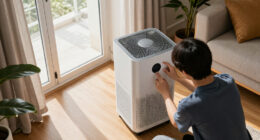

In just 10 minutes, you can spot indoor air issues by opening windows and feeling for airflow, checking vents for dust or mold, and listening for strange noises. Look for lingering odors or signs of poor circulation around vents and filters. Note how symptoms like headaches or dizziness improve when you ventilate. A quick visual and sensory check helps identify problems fast. Keep going to discover more tips on keeping your air clean and healthy.

Get health and wellness essentials delivered free with Prime
- Fast, free delivery on millions of items
- Prime Video, Amazon Music and more included
- Member-only deals all year
Key Takeaways
- Open windows and doors to check if airflow improves, indicating ventilation adequacy.
- Visually inspect vents and filters for dust, mold, or debris that signal poor air quality.
- Listen for unusual sounds or feel for weak airflow to identify mechanical or obstructions issues.
- Observe symptoms like headaches or allergies that improve with ventilation, highlighting airflow problems.
- Perform a quick walk-through to identify odors, lingering smells, or signs of stagnant air.
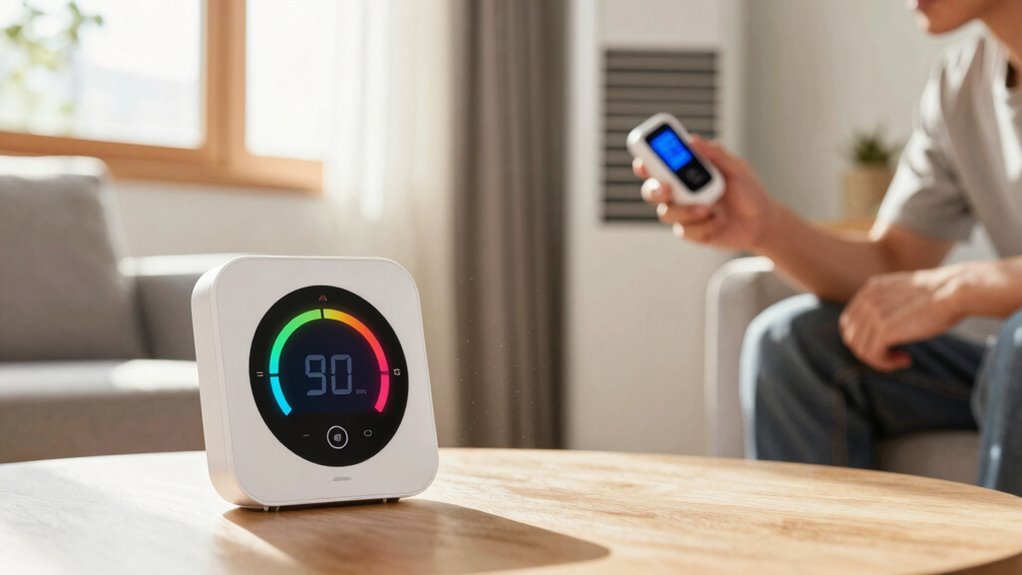
When you suspect indoor air quality issues, a quick and effective assessment can save you time and money. In just ten minutes, you can identify key signs of poor air quality and determine whether your ventilation system needs attention. Start by opening windows and doors to increase airflow. If fresh air doesn’t seem to improve the environment quickly, it suggests that your ventilation system may not be functioning properly or isn’t enough to circulate air effectively. Pay attention to lingering odors, which can indicate stagnant air or the buildup of pollutants inside your space. If smells persist despite ventilation efforts, this is a clear sign that airflow isn’t meeting your needs.
Next, check for visible signs of dust, mold, or other debris around vents, air filters, and returns. Dust accumulation on vents or a musty smell around the HVAC system points to poor filtration or inadequate ventilation. If your vents are dusty or moldy, your air quality is compromised, and your system might be spreading allergens or pollutants throughout your space. Also, take a quick look at the air filters; clogging or discoloration indicates they’re overdue for replacement. Clean filters are essential for maintaining good air quality and ensuring your ventilation system works efficiently. Regular air filtration is a key part of maintaining healthy indoor air, especially in enclosed environments. Proper air quality management involves not only filtration but also regular inspection and maintenance of your ventilation components.
Check vents and filters for dust, mold, or discoloration to ensure your indoor air remains clean and healthy.
Listen for unusual noises coming from your ventilation system, such as rattling, banging, or whistling. These sounds often signal mechanical issues or blockages that hinder airflow. If your system sounds strained or inconsistent, it might be struggling to circulate fresh air properly, which impacts overall air quality. Feel the airflow from vents—if it’s weak or uneven, your ventilation system isn’t doing its job effectively. Adjust your vents to ensure air is distributed evenly across the space, but if airflow remains weak, it’s time to inspect or call a professional. Additionally, poor airflow can sometimes be caused by obstructions or ventilation blockages, which should be addressed promptly to restore proper circulation. Regular ventilation system inspection can help identify these issues early and prevent further deterioration.
Finally, observe how you feel in the space. Frequent headaches, dizziness, or allergy symptoms can be telltale signs of poor indoor air quality. If these symptoms improve with increased ventilation or outside air, it confirms that your indoor environment needs better airflow management. Ensuring your ventilation system is functioning properly can greatly improve air quality and comfort. If you notice these signs and your ventilation system is outdated or malfunctioning, scheduling a professional evaluation ensures you address underlying issues before long-term health problems develop. In just ten minutes, you can gather enough clues to determine if your air quality is compromised and whether your ventilation system requires repairs or upgrades. This quick walkthrough empowers you to take actionable steps toward creating a healthier indoor environment.
As an affiliate, we earn on qualifying purchases.
Frequently Asked Questions
Can This Walkthrough Detect All Types of Air Quality Issues?
No, this walkthrough can’t detect all types of air quality issues. It mainly identifies common signs of indoor pollutants, such as odors, visible dust, or mold. However, it doesn’t measure specific contaminants or airborne particles that require specialized air filtration or testing equipment. For thorough detection, you’d need professional testing and advanced air filtration systems, but this walkthrough offers a quick way to spot potential problems early.
Do I Need Special Equipment to Perform the Walkthrough?
Think of your DIY assessment as a health check-up for your home’s air. You don’t need special equipment—just your senses and a few simple tools like a flashlight or a carbon dioxide meter. The equipment requirements are minimal, making this walkthrough accessible and easy. With basic tools, you can spot potential issues quickly, ensuring your home’s air quality stays healthy without the need for professional gear.
How Often Should I Repeat This Air Assessment?
You should repeat the air assessment every few months or anytime you notice changes in air quality, like odors or dust. Don’t rely on air quality myths that say assessments aren’t necessary often enough—regular checks help you catch problems early. Frequent assessments guarantee your indoor air remains safe and healthy, especially if you’ve made recent renovations or experienced weather changes that could affect ventilation and air circulation.
Is This Method Safe for Individuals With Respiratory Conditions?
You should prioritize health safety and consult a healthcare professional before using this method if you have respiratory concerns. Notably, nearly 15% of the population has some form of respiratory condition, making safety vital. While the walkthrough is generally safe for healthy individuals, it might pose risks to those with asthma or COPD. Always guarantee proper precautions and professional guidance to protect vulnerable individuals from potential air quality issues.
Can the Walkthrough Identify Hidden Sources of Indoor Pollution?
Yes, during the walkthrough, you can spot hidden sources of indoor pollution, like indoor allergens and mold. By checking common trouble spots—such as damp areas, vents, and hidden corners—you’ll identify mold growth and allergen buildup that aren’t obvious at first glance. This quick inspection helps prevent health issues, especially for those sensitive to indoor allergens, ensuring your home stays safer and healthier.
As an affiliate, we earn on qualifying purchases.
Conclusion
Now that you’ve completed this quick walkthrough, you’re closer than ever to catching air trouble before it spirals. But beware—some signs hide just beneath the surface, waiting to surprise you later. Keep your eyes sharp and your senses alert, because the tiniest clue could be the key to preventing a bigger problem. Are you ready to stay one step ahead? The next step is yours—trust what you’ve learned, and stay vigilant.
As an affiliate, we earn on qualifying purchases.
As an affiliate, we earn on qualifying purchases.
Halloween Picks
halloween
As an affiliate, we earn on qualifying purchases.