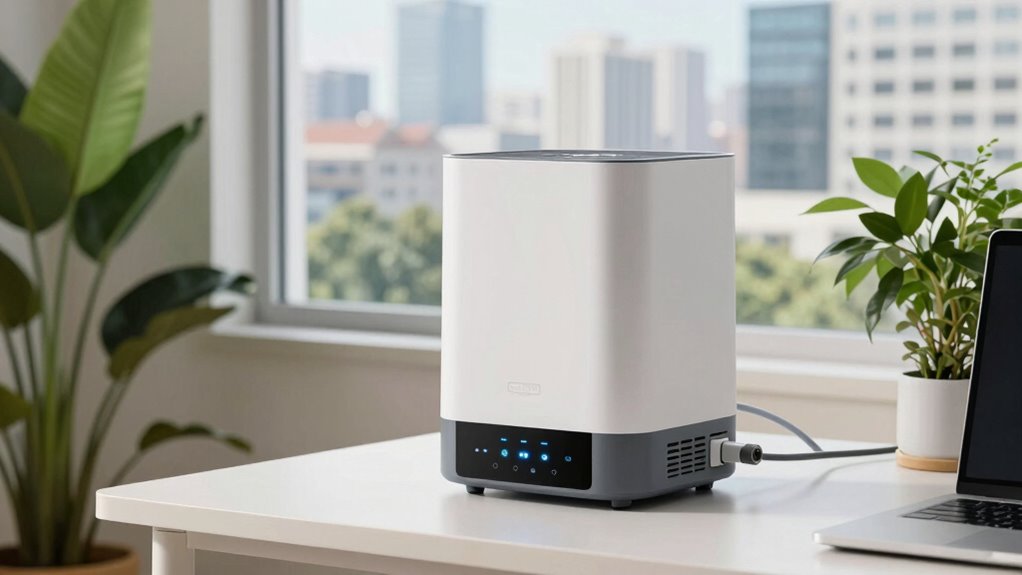

At Breathe Atlas, treating air problems as systems instead of relying on gadgets helps you achieve long-lasting, effective solutions. When you see air quality as a connected system—covering ventilation, building design, and human behavior—you can address root causes rather than just symptoms. This approach leads to healthier, more resilient environments. If you want to discover how understanding these connections can transform your space, there’s much more to explore beyond simple fixes.
Listen free for 30 days with Audible
Thousands of audiobooks and originals — cancel anytime.
As an affiliate, we earn on qualifying purchases.
Key Takeaways
- Addressing air problems holistically ensures solutions target root causes rather than temporary fixes.
- System-based approaches integrate ventilation, filtration, and building design for sustainable air quality.
- Relying on gadgets overlooks the interconnected nature of environmental, structural, and behavioral factors.
- Considering air issues as systems promotes resilient solutions adaptable to changing environmental conditions.
- A systemic focus enhances long-term health benefits and reduces reliance on short-term, ineffective gadgets.

Have you ever considered that air problems aren’t isolated issues but interconnected systems? When you think about air quality, it’s not just about filtering out pollutants with a simple gadget. Instead, it’s about understanding how various elements—ventilation, pollution sources, building design, and even human behavior—work together within a complex system. Breathe Atlas should recognize this interconnectedness because tackling air problems effectively requires a holistic approach rooted in proper system design, not just quick fixes with gadgets. Viewing air quality as a system allows you to identify root causes rather than just symptoms, leading to sustainable solutions that improve health and comfort over time.
When you see air problems as systems, you start to appreciate how different components influence each other. For example, poor ventilation can trap indoor pollutants, making air quality worse even if you use a decent purifier. Conversely, a well-designed ventilation system can bring in fresh air, dilute contaminants, and prevent the buildup of harmful substances. This interconnected approach emphasizes the importance of integrating multiple elements—like filtration, airflow management, and building materials—into a cohesive design. It’s not enough to rely on a gadget that filters air; you need a system that considers how air moves through a space, how pollutants enter, and how to mitigate those factors effectively. Recognizing air systems interconnectedness is essential to developing truly effective solutions. Additionally, understanding how each component interacts helps in designing more resilient and adaptable air quality solutions. Incorporating system thinking into air quality management allows for more comprehensive and sustainable strategies.
Focusing on system design means you’re looking at the bigger picture. It involves evaluating environmental factors, understanding how different systems interact, and creating solutions that work together seamlessly. When you treat air problems as systems, you’re more likely to identify vulnerabilities—such as leaks, inadequate insulation, or poor exhaust systems—that compromise air quality. Instead of patching these issues with gadgets, you address the root causes through thoughtful design. This approach not only enhances air quality but also improves energy efficiency and reduces long-term costs. Recognizing the interconnectedness of air systems enables more resilient and sustainable solutions. Moreover, a systemic approach encourages ongoing assessment and adjustments, ensuring that the environment remains healthy over time. Implementing systematic design principles can lead to innovative solutions that are both effective and environmentally friendly. This mindset shift can lead to innovative solutions that are both effective and environmentally friendly.
Breathe Atlas should prioritize this systemic perspective because it aligns with how real-world air problems unfold. Gadgets might offer quick relief, but they often fail to tackle the underlying system flaws. By shifting focus toward extensive system design, you can develop smarter, more resilient solutions. This way, you’re not just reacting to air quality issues as they arise but proactively creating environments that naturally promote healthier air. Understanding the interconnected systems that influence air quality empowers you to make informed decisions, ensuring healthier spaces that stand the test of time.

Quietcool QC CL-3100 RF Classic Advanced Whole House Fan with Wireless Control – Up to 3126 CFM – Two Speed – Covers up to 1,608 SQFT – 10 Year Warranty – Removable Grille
- Brand and Model: Quietcool QC CL-3100 RF
- Cooling Capacity: Up to 3126 CFM
- Coverage Area: Up to 1,608 sq ft
As an affiliate, we earn on qualifying purchases.
As an affiliate, we earn on qualifying purchases.
Frequently Asked Questions
How Do Air Systems Impact Overall Health Beyond Individual Gadgets?
Air systems impact your overall health by managing air circulation and controlling pollutant sources. When these systems work together, they reduce indoor pollutants, prevent mold growth, and improve airflow, which helps you breathe easier and stay healthier. Relying solely on individual gadgets misses the bigger picture, as effective health depends on a well-designed system that continually filters and circulates clean air, rather than isolated devices.
What Are Common Misconceptions About Treating Air Problems With Gadgets?
You might believe gadgets alone solve air problems, but that’s a myth—over 60% of indoor air quality issues persist despite individual gadgets. Many think these devices are sufficient, yet they often overlook the limitations of gadgets that only target specific pollutants. Treating air problems as isolated gadgets ignores the complex system involved, and without a holistic approach, you’re missing the bigger picture of true air quality improvement.
How Can System-Level Approaches Improve Air Quality More Effectively?
You can improve air quality more effectively by adopting integrated solutions and holistic approaches. These strategies address multiple factors influencing air quality, such as ventilation, pollution sources, and indoor environments, rather than relying on single gadgets. By viewing air problems as interconnected systems, you guarantee thorough solutions that resolve root causes, leading to healthier indoor air. This systemic thinking results in more sustainable, long-term improvements, rather than temporary fixes.
Are There Specific Industries That Benefit Most From System-Based Air Solutions?
You’ll find industries like manufacturing and healthcare benefit most from system-based air solutions. Think of it as hitting two birds with one stone—by integrating industrial automation and HVAC systems, you optimize air quality and energy efficiency simultaneously. This holistic approach guarantees cleaner, healthier environments, reducing downtime and maintenance costs. Embracing these systems means you’re not just patching problems but solving them at their core, creating a safer, more efficient workspace.
What Long-Term Benefits Come From Viewing Air Problems as Interconnected Systems?
By viewing air problems as interconnected systems, you gain long-term benefits like improved systemic health and more effective solutions. You can implement integrated solutions that address root causes rather than just symptoms. This approach reduces recurring issues, saves costs, and enhances indoor air quality over time. Ultimately, it creates healthier environments, boosts productivity, and guarantees sustainable air management, making your spaces safer and more comfortable for everyone.
As an affiliate, we earn on qualifying purchases.
Conclusion
By viewing air problems as systems rather than isolated gadgets, you can address the root causes more effectively. It’s like tending a garden—you don’t just water a single plant and ignore the soil and sunlight; you nurture the whole environment. Breathe Atlas’s approach helps you see the bigger picture, ensuring that solutions are sustainable and all-encompassing. Embrace this mindset, and you’ll breathe easier, knowing you’re tackling air issues at their core, not just their surface.
As an affiliate, we earn on qualifying purchases.
HVAC system for healthy indoor air
As an affiliate, we earn on qualifying purchases.
As an affiliate, we earn on qualifying purchases.
Pool season Picks
robotic pool cleaners
As an affiliate, we earn on qualifying purchases.