
TL;DR

Get health and wellness essentials delivered free with Prime
- Fast, free delivery on millions of items
- Prime Video, Amazon Music and more included
- Member-only deals all year
This article explains how a single video can generate an entire publishing kit—captions, clips, metadata—using local AI tools. It highlights privacy, speed, and ownership benefits, making workflows faster and more controlled. You can automate without sacrificing security or control.
You finish a video. The real work begins. Titles, descriptions, clips, social posts—each needs to be crafted, optimized, and uploaded. It’s hours of work that eats into your creative flow. But what if one video could kickstart your entire publishing process—without sending your files to the cloud?
This isn’t just about automation. It’s about reclaiming control over your content, speeding up your workflow, and keeping everything private on your machine. In this article, I’ll show you how a local-first tool can turn a single video into a full publishing kit—ready for every platform, every format, every audience.
Key Takeaways
- Local AI tools can transform one raw video into a complete set of publishing assets—titles, clips, transcripts, social posts—without cloud dependence.
- Processing locally keeps your content private, reduces costs, and speeds up your workflow—ideal for sensitive or high-volume creators.
- High-quality source videos yield the best outputs; expect some human review and editing before final publishing.
- This approach is perfect for solo creators, educators, marketers, or teams prioritizing control and privacy over cloud convenience.
- Future tools will automate multi-format content creation, making your publishing process faster and more versatile.
As an affiliate, we earn on qualifying purchases.
How a Single Video Can Spawn a Full Publishing Kit (Step-by-Step Breakdown)
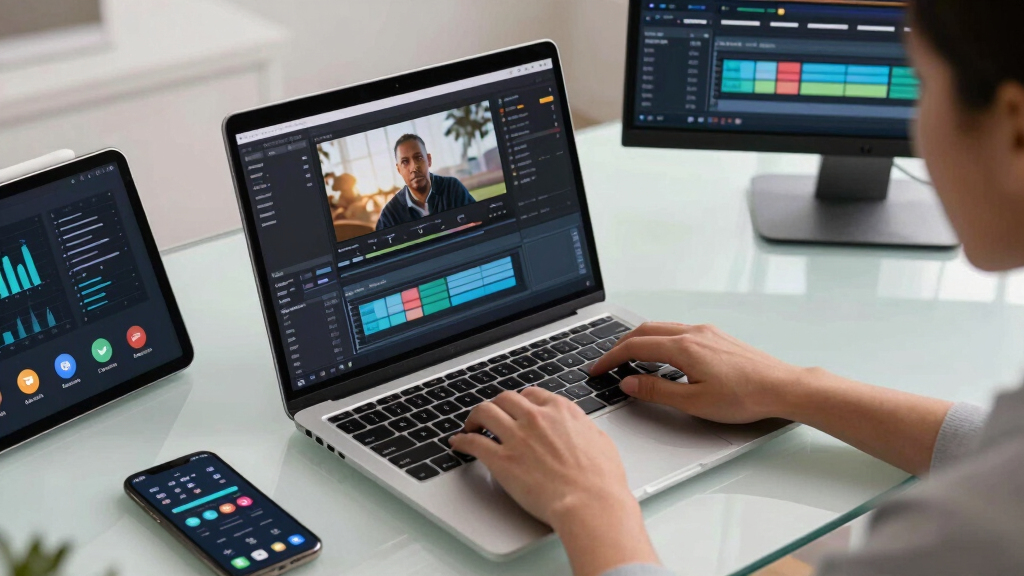
Imagine dropping your raw video file into a tool that reads every layer—audio, visuals, on-screen text—and then automatically generates everything you need to publish. It’s like a mini production line in your computer.
First, the AI transcribes the audio with speaker tags and timestamps. This transcription isn’t just a text; it forms the foundation for accessible content, SEO, and further editing. Accurate transcripts ensure your captions are synchronized and that your content is discoverable, especially for audiences relying on subtitles. Then, it analyzes scenes, detects on-screen text, and describes visual content—providing a detailed understanding of the video’s structure and key moments. It fuses these streams into a synchronized log, which serves as a comprehensive blueprint of your video. From there, it extracts key topics and moments, creating drafts for titles, descriptions, and clips. This step helps you identify the most engaging parts, ensuring your promotional material resonates with your audience.
Next, it generates social media posts, blog drafts, and metadata—all tailored to each platform’s quirks. This customization saves you time and ensures your content fits each channel’s style and constraints. Finally, it packages everything into a neat bundle—your full publishing kit—ready for review and release. This process not only accelerates your workflow but also minimizes manual errors, giving you more time to focus on creative decisions.

privacy-focused video transcription tools
As an affiliate, we earn on qualifying purchases.
As an affiliate, we earn on qualifying purchases.
What ‘Without the Cloud’ Really Means for Your Workflow
When I say ‘without the cloud,’ I mean all processing happens on your local machine. No cloud servers, no third-party storage—just your hardware doing the heavy lifting. This isn’t just a technical choice; it’s a fundamental shift in how you control your content. Processing locally means you retain full ownership and oversight of your files, which is critical when handling sensitive or proprietary material. It also means that your workflow isn’t dependent on internet stability—so even in low-bandwidth environments or during outages, your productivity remains uninterrupted.
This approach keeps your content private, avoids monthly fees, and aligns with at-home wellness technology principles. For example, a creator editing a sensitive product demo can analyze and prepare assets without ever uploading the raw footage to a server. This reduces the risk of data leaks and ensures compliance with privacy standards, which is especially important for corporate or confidential projects.
According to recent trends, local AI workflows are gaining popularity precisely because they offer speed, control, and privacy—especially as creators become more aware of data security issues [3]. The ability to process everything on your own hardware means you can tailor the workflow to your needs, add custom steps, and avoid vendor lock-in—giving you long-term flexibility and peace of mind.

video metadata and caption generator
As an affiliate, we earn on qualifying purchases.
As an affiliate, we earn on qualifying purchases.
The Real Benefits: Privacy, Speed, and Cost Savings
| Aspect | Cloud-Based Workflow | Local Workflow |
|---|---|---|
| Privacy | Files stored on external servers, risk of data leaks | All data stays on your machine, full control |
| Speed | Dependent on internet speed; delays possible | Instant processing; no upload/download lag |
| Cost | Monthly subscriptions, cloud storage fees | One-time purchase, no recurring fees |
Beyond the basic differences, choosing a local workflow impacts your entire production mindset. With local processing, you’re not just avoiding costs—you’re reducing the latency between idea and execution. This immediacy allows for rapid iteration, experimentation, and refinement, which can be a game-changer in fast-paced content environments. Additionally, the security advantage isn’t just about privacy but also about resilience: if cloud services experience outages or breaches, your local setup remains unaffected. Over time, these benefits compound, creating a more robust, cost-effective, and secure pipeline that adapts to your evolving needs.

offline social media content creator
As an affiliate, we earn on qualifying purchases.
As an affiliate, we earn on qualifying purchases.
Who Benefits Most From a Local Publishing Kit? Real-World Examples
Think of a small educational YouTuber with a tight schedule. They upload a 20-minute explainer, then let the AI analyze it. Instantly, they get captions, a blog draft, social snippets, and clips—ready for posting in minutes. This rapid turnaround enables them to stay relevant and consistent without sacrificing quality or privacy. For a solo creator, this means more control over branding and messaging, as they can tweak assets directly without waiting for cloud processing or external vendors.
Or a marketing team handling sensitive client videos. They process everything on-site, avoiding any data leaks, and generate multiple assets to hit multiple channels—fast and secure. This setup reduces the risk of accidental exposure and ensures compliance with data protection standards, which is critical in regulated industries like healthcare or finance. The ability to produce a variety of assets from one raw video also streamlines content calendars, freeing up resources for creative strategy rather than technical bottlenecks.
Even independent podcasters can use this workflow to produce show notes, audiograms, and social media posts—all from one raw recording, without relying on cloud services. This keeps their content pipeline lean, secure, and adaptable, especially when working in environments with limited internet access or strict privacy requirements.

How Accurate and Human-Editable Are the AI Outputs?
AI-generated assets are a huge time-saver but aren’t perfect. Transcripts might need a quick fix, and titles could be tweaked for punch. That’s expected. The key is understanding the tradeoff: automation speeds up initial drafts but doesn’t replace human judgment. This means you get a solid starting point, which you can refine quickly—saving hours of manual work.
For example, an educator reviewing AI captions might find a typo or a misheard term. A short review and edit, and it’s good to go. The importance of human oversight cannot be overstated; it ensures the final assets align with your voice, brand, and accuracy standards. Relying solely on AI without review risks misrepresentation or errors that could undermine your credibility. Therefore, these tools are best viewed as assistants—enhancing your efficiency but not replacing your expertise.
According to Adobe’s guidance on video assets, the highest quality input yields the best output—so start with good footage, and review everything before publishing [2]. This human-in-the-loop approach guarantees quality and consistency, especially for professional or high-stakes content.

Limitations and Setup Requirements You Need to Know
This system works best with high-quality source videos. Heavily compressed or low-res footage can lead to poorer outputs. Think of it like cooking—better ingredients make a better dish. If your source material isn’t clear or detailed, the AI’s ability to generate accurate transcripts, clips, and metadata diminishes, which may require additional manual correction. Understanding this tradeoff helps set realistic expectations and guides you in preparing optimal input files.
Setting up requires a decent local machine: a powerful enough CPU, ample storage, and a good graphics card. The software runs smoothly on modern hardware, but very old computers might struggle. For instance, processing 4K videos demands more processing power and memory, which can slow down your workflow or cause crashes if your hardware isn’t up to par. Planning your setup accordingly ensures smooth operation and faster turnaround times. Investing in a capable machine is a worthwhile tradeoff for the control, speed, and security benefits of a fully local workflow.

How Does This Compare to Cloud-First Publishing Tools?
Cloud tools like Laterpress or cloud-based video editors automate much but rely heavily on internet and subscription plans. They are user-friendly and require minimal setup, but the tradeoff is giving up control over your data and workflow. You depend on third-party servers for processing, which introduces privacy concerns and potential delays if servers are busy or encounter outages. Additionally, subscription costs can accumulate over time, making long-term use more expensive.
Local workflows might require initial setup but offer ongoing benefits: no recurring fees, faster turnaround, and total data ownership. You control every aspect—processing speed, storage, and security—without external dependencies. This autonomy is especially valuable for creators with sensitive content or those seeking a more resilient and customizable pipeline. Think of it as the difference between driving your own car versus relying on a rideshare—both get you there, but one offers more control and peace of mind.

Future Trends: Smarter Clips, Auto-Chapters, and Multi-Format Publishing
Tools are evolving fast. Expect smarter auto-clipping, chapter markers, and summaries—making your videos more discoverable and engaging. These advancements will allow creators to generate segmented content that highlights key moments, making it easier for viewers to find relevant sections. Multi-format publishing will become seamless, with assets automatically optimized for social media, blogs, podcasts, and even virtual reality experiences.
Imagine a future where uploading one video instantly creates a full suite of content—ready to post on TikTok, embed in a newsletter, or turn into a podcast—without ever touching a cloud server. This evolution is driven by the need for more efficient, privacy-conscious workflows that adapt to diverse publishing channels. As local AI tools become more sophisticated, creators will gain unprecedented control over their content lifecycle, enabling faster, more tailored distribution strategies that keep them ahead of the competition.
This shift toward local, automated, multi-format workflows will keep you ahead of the game, with more control and less hassle.
Frequently Asked Questions
What exactly does ‘one video in, a whole publishing kit out’ generate?
It produces transcripts, captions, short clips, social media posts, blog drafts, metadata, thumbnails, and even scheduled publishing assets—all tailored to your platforms. It automates much of the repetitive work, saving you hours.
Does this process still use any cloud services?
No, the core processing is entirely local. Files stay on your machine, and no cloud uploads are needed— preserving privacy and reducing reliance on internet speed.
Is it suitable for all creators or only big teams?
It works well for solo creators, educators, marketers, and small teams. If you produce a lot of video content and want to speed up your workflow while keeping control, it’s a perfect fit.
How accurate are the AI-generated assets, and can I edit them?
The outputs are drafts—generally accurate but not perfect. Expect to review and tweak captions, titles, and posts. Human oversight remains essential for best results.
What are the main limitations or setup hurdles?
High-quality source videos yield better results. You need a reasonably powerful local machine, and very old computers might struggle. Expect some initial setup time and a learning curve.
Conclusion
Turning one video into a full publishing kit on your machine isn’t just a dream—it’s becoming a reality. It offers speed, privacy, and control that cloud-dependent tools can’t match. If you want to reclaim your workflow and keep your content under your thumb, this is the way forward.
Remember, the best workflows are simple, fast, and private. Your next project could be the first step toward a fully local, automated publishing system—where one video fuels every platform, all without leaving your computer.
Cold & flu season Picks
humidifiers
As an affiliate, we earn on qualifying purchases.