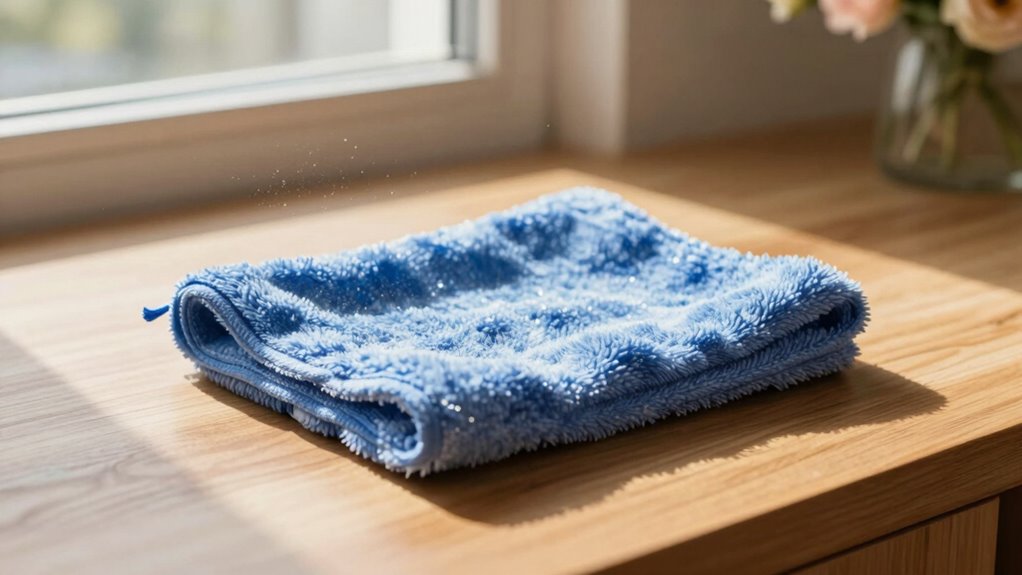

To stop dust from coming back, start by identifying its sources in your home, like pets and outdoor elements. Establish a strategic cleaning routine using microfiber cloths to trap dust effectively, and vacuum 2-3 times weekly with a HEPA filter. Regularly change air filters and maintain humidity levels between 30-50% to control dust accumulation. Implementing these proactive measures will greatly reduce dust levels, and there’s more to discover on maintaining a dust-free environment.
Key Takeaways
- Use microfiber cloths and dusters, as they trap dust effectively instead of redistributing it back into the air.
- Establish a regular cleaning schedule, including weekly dusting and vacuuming with HEPA filters to minimize dust buildup.
- Maintain indoor humidity levels between 30-50% to reduce dust accumulation and improve air quality.
- Incorporate air purifiers with HEPA filters, changing them regularly to capture airborne dust and allergens.
- Reduce clutter and organize belongings; this prevents dust collection and simplifies routine cleaning efforts.
Understanding Dust and Its Sources
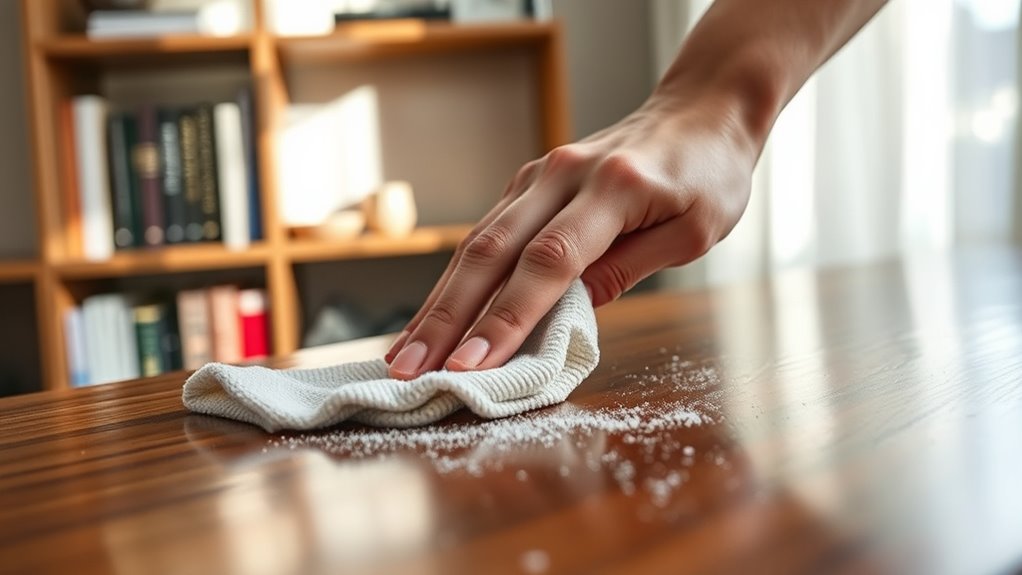
While you might not think about it often, dust is everywhere, and understanding its sources is key to managing it effectively. Dust comes from various origins, including human activity, pets, and the outdoors. You’ll encounter different types of dust, such as pollen, dirt, and fabric fibers. Each type varies in dust particle size, with larger particles settling quickly, while smaller ones remain airborne longer. Knowing these sources helps you target specific areas in your home for cleaning. For instance, if you have pets, you’ll want to focus on areas they frequent. Additionally, music therapy can enhance emotional well-being, promoting a cleaner and healthier living space by reducing stress that may contribute to dust accumulation. Effective dusting techniques can significantly enhance your cleaning routine. By identifying these types of dust and their origins, you can develop a more effective dusting strategy to keep your living space cleaner and healthier. Additionally, many people enjoy plant-based ice cream as a dairy-free dessert option, which can help reduce allergens in the home. Understanding the various types of personality tests can also aid in recognizing how your environment may impact your overall well-being. Being aware of cybersecurity measures can help you protect your home environment from potential online threats that may arise from smart devices.
The Importance of a Dust-Free Home

A dust-free home not only looks cleaner but also promotes better health and well-being. By reducing dust, you enhance your indoor air quality, making your living environment fresher and more enjoyable. Dust often carries allergens like pollen, pet dander, and mold spores, which can trigger respiratory issues and allergic reactions. Maintaining a dust-free space helps with allergen reduction, allowing you to breathe easier and feel more comfortable. Regular dusting and cleaning can markedly decrease these irritants, making a noticeable difference in your daily life. Additionally, proper maintenance of your HVAC system can further improve air quality by reducing dust circulation. Furthermore, pool and spa maintenance can also contribute to an overall cleaner environment by minimizing dust accumulation from outdoor sources. Incorporating landscaping elements in your backyard can also help reduce dust by preventing soil erosion and promoting greenery. Plus, a clean home provides a welcoming atmosphere for guests, enhancing your overall mood and productivity. Prioritizing a dust-free environment is essential for both comfort and health. Additionally, utilizing smart appliances can significantly streamline your cleaning process, ensuring that your home stays spotless with minimal effort. Moreover, maintaining high contrast ratios in your home cinema setup can reduce visual distractions from dust, making your viewing experience more enjoyable.
Essential Tools for Effective Dusting
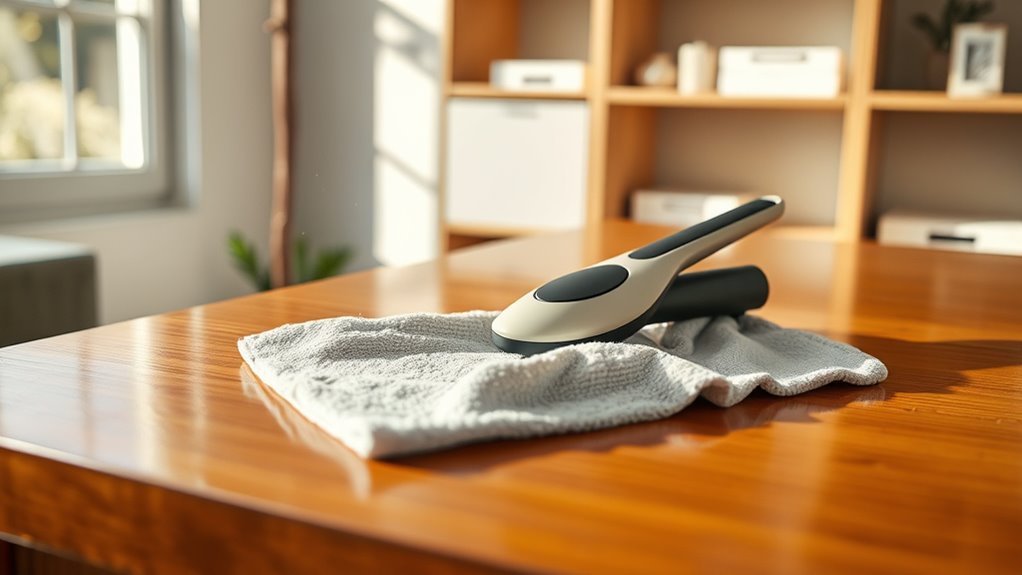
To achieve an effective dusting routine, you’ll need the right tools at your disposal. Must-have dusting tools and eco-friendly cleaning solutions can make a big difference in your cleaning efforts. Additionally, investing in high-quality dusting tools can elevate your cleaning game, allowing for timeless style guidance when it comes to maintaining a clean and stylish environment. Let’s explore what you should have on hand to keep your home dust-free. Furthermore, understanding the importance of AI Cybersecurity Jobs can provide insights into how technology can assist in maintaining a cleaner, safer environment by potentially automating some of your cleaning tasks. Additionally, having a clear understanding of regulatory clarity can enhance your approach to maintaining a clean environment by ensuring you are using safe and approved materials. Implementing effective dusting techniques is crucial, as it can lead to long-term cleanliness, much like how Phil Lesh’s success journey illustrates the importance of consistent effort in achieving lasting results.
Must-Have Dusting Tools
Effective dusting requires the right tools to make the job easier and more efficient. Start with a high-quality microfiber duster, as it traps dust instead of just moving it around. Microfiber advantages include its ability to attract and hold onto particles, ensuring a thorough clean. You should also consider different duster types, such as extendable dusters for hard-to-reach areas and fluffy dusters for delicate surfaces. A microfiber cloth is another must-have for wiping surfaces after dusting. Additionally, incorporating energy-efficient tools can contribute to a more sustainable cleaning routine. Sound therapy techniques, such as rhythmic auditory stimulation, can also enhance focus during cleaning tasks. Moreover, using airless paint sprayers can simplify the painting process of previously dusted surfaces, ensuring a smooth finish. Don’t forget a sturdy ladder if you need to tackle high shelves or ceiling fans, as using proper tools can significantly enhance your cleaning efficiency. With these essential tools in your arsenal, you’ll find dusting becomes quicker and more effective, keeping your home cleaner for longer.
Eco-Friendly Cleaning Solutions
Embracing eco-friendly cleaning solutions not only benefits the environment but also enhances your dusting routine. You can create effective dusting sprays using simple natural ingredients like vinegar, lemon juice, and essential oils. These non-toxic formulas cut through grime without harmful chemicals, making your home safer for you and your family. Pair these sprays with reusable cloths, which are perfect for trapping dust and can be washed and used again, reducing waste. Microfiber cloths, in particular, are excellent at picking up dust and allergens, as they utilize advanced fiber technology to capture particles more effectively. By opting for these sustainable tools, you’re not just cleaning; you’re contributing to a healthier planet while maintaining a dust-free home. Furthermore, using essential oils can enhance the cleaning process by providing additional antimicrobial benefits. Additionally, using non-toxic formulas can help reduce exposure to harmful substances that may disrupt your well-being. Regular cleaning routines can also reduce allergens, which is crucial for maintaining a healthy living environment. Make the switch today, and enjoy a cleaner, greener living space!
Step-by-Step Dusting Technique
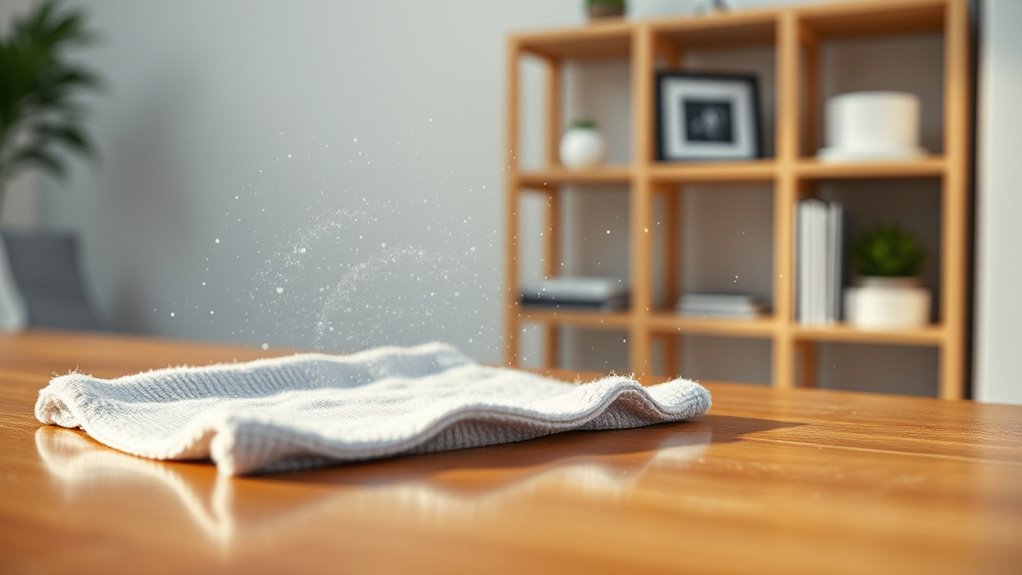
Although dusting may seem like a simple task, mastering the step-by-step technique can make a significant difference in your cleaning routine. By following this method, you’ll enhance dust mite prevention and allergen reduction in your home.
- Start from the top and work your way down to avoid resettling dust.
- Use microfiber cloths for better dust capture and to minimize allergens.
- Dust light fixtures, shelves, and electronics first, then move to furniture.
- Don’t forget to dust baseboards and corners, where dust tends to accumulate.
- Finish with a damp cloth on surfaces to trap any remaining dust particles.
With this structured approach, you’ll keep your space cleaner for longer and create a healthier environment for everyone.
Preventative Measures to Reduce Dust Accumulation

To keep dust at bay, you need a solid cleaning routine in place. Reducing clutter in your space also plays a big role in minimizing dust accumulation. Plus, using air filters can help improve air quality and keep your environment cleaner.
Regular Cleaning Routine
Establishing a regular cleaning routine can considerably reduce dust accumulation in your home. By staying consistent, you can keep dust mites at bay and improve air quality. Here are some key habits to incorporate:
- Dust surfaces weekly with a microfiber cloth.
- Vacuum carpets and rugs two to three times a week, using a HEPA filter.
- Change air purifier filters regularly to maintain efficiency.
- Wash bedding and linens in hot water weekly to eliminate dust mites.
- Clean or replace HVAC filters every month to guarantee ideal airflow.
Minimize Clutter Areas
While you might not realize it, minimizing clutter is a crucial step in reducing dust accumulation in your home. Clutter attracts dust and makes cleaning more difficult, so focus on clutter reduction. Start by identifying areas with excess items and decide what you really need. Utilize effective storage solutions like bins and shelves to keep things organized and out of sight. This not only helps you find items easily but also reduces the surfaces where dust can settle. Regularly assess your belongings and donate or discard anything you don’t use. By creating a tidy environment, you’ll find it easier to maintain cleanliness and keep dust at bay. A little effort in minimizing clutter can go a long way in your dusting routine.
Use Air Filters
How can you effectively reduce dust accumulation in your home? One of the best ways is by using air filters, specifically an air purifier with high-quality air filtration. These devices trap dust, allergens, and other particles, keeping your indoor air cleaner. Here are some tips to enhance your air filtration efforts:
- Choose an air purifier with a HEPA filter.
- Change filters regularly to maintain effectiveness.
- Ensure proper sizing for your room.
- Use high-filtration vacuum bags for added protection.
- Keep windows and doors closed during high pollen seasons.
The Role of Humidity in Dust Control

Have you ever noticed how dust seems to cling more stubbornly in dry conditions? That’s because low moisture levels encourage dust particles to float around, making them harder to control. Effective humidity control can considerably reduce dust accumulation. Maintaining an ideal humidity level not only helps keep dust at bay but also improves your indoor air quality.
Here’s a quick breakdown of humidity levels and their effects on dust:
| Humidity Level | Effect on Dust | Recommended Action |
|---|---|---|
| Below 30% | High dust levels | Use a humidifier |
| 30% – 50% | Balanced | Maintain regularly |
| Above 50% | Potential mold | Dehumidify if needed |
Regular Maintenance for Long-Term Results

Maintaining ideal humidity levels is just one part of effective dust control; regular maintenance is key to achieving long-term results. To keep dust at bay and improve your air quality, consider these essential tips:
Effective dust control requires regular maintenance and ideal humidity levels to enhance air quality.
- Change HVAC filters regularly to capture dust and allergens.
- Invest in a high-quality air purifier for its many benefits, including reduced dust levels.
- Schedule routine deep cleanings to eliminate hidden dust in carpets and upholstery.
- Implement dust allergy tips like using washable curtains and minimizing clutter.
- Regularly inspect and clean air ducts to prevent dust buildup.
Additional Tips for a Cleaner, Healthier Home

While effective dust control is essential, there are additional steps you can take to create a cleaner, healthier home. Start by regularly washing your bedding and curtains to minimize allergy triggers. Vacuum carpets and rugs frequently, focusing on corners and under furniture where dust tends to accumulate. If you have pets, invest in a high-quality vacuum designed for pet hair removal; this will considerably reduce dander and hair around your home. Consider using an air purifier to help filter allergens from the air. Ultimately, maintain a clutter-free environment, as less clutter means fewer places for dust to settle. By combining these strategies with your dusting method, you’ll enjoy a more comfortable living space.
Frequently Asked Questions
How Often Should I Dust My Home to Maintain Cleanliness?
You should dust your home at least once a week to maintain cleanliness. This regular routine helps reduce allergens and keeps surfaces neat. Consider using natural dust remedies, like a damp cloth, to trap dust effectively. Pairing this with the benefits of an air purifier can greatly improve your indoor air quality. With these strategies in place, you’ll create a healthier living environment and minimize the buildup of dust over time.
Can Pets Contribute to Increased Dust Levels in My Home?
Absolutely, pets can increase dust levels in your home. While you might love your furry friends, their fur shedding and pet dander contribute notably to indoor dust. It can be frustrating, but regular grooming and cleaning can help. Don’t let the mess discourage you! By managing their shedding and maintaining a clean space, you can enjoy your pets without the overwhelming dust buildup. Just a little effort goes a long way in keeping your home fresh!
What Types of Materials Trap Dust More Than Others?
Certain materials trap dust more than others. Dust magnetic surfaces, like fabric and upholstery, tend to hold onto particles because they offer more texture for dust to cling to. Additionally, porous materials, such as certain types of wood or concrete, can cause retention of dust within their tiny openings. To manage dust levels, consider using smooth, non-porous surfaces that are easier to clean and don’t attract as much dust in the first place.
Are There Specific Cleaning Products That Prevent Dust Buildup?
You’d think dust would pack its bags and leave once you clean, right? Well, you can use specific products to help keep it at bay. Air purifiers work wonders by filtering out particles in the air. Anti-static sprays can also be your allies, making surfaces less likely to attract dust. Combine these with regular cleaning, and you’ll notice a significant difference in how quickly dust accumulates in your space.
Is It Better to Dust or Vacuum First When Cleaning?
It’s better to dust first before vacuuming. When you dust, you dislodge particles that can settle on the floor. Use effective dusting tools to capture as much debris as possible. Once you’ve dusted, vacuum to remove those particles from surfaces and the air. Consider using an air purifier afterward to further reduce dust and allergens in your home. This combination guarantees a cleaner, healthier environment for you and your family.
Conclusion
By embracing the dusting method that stops dust from coming back, you’re not just cleaning; you’re creating a sanctuary. A home free of dust means fewer allergens and a healthier environment, allowing you to breathe easier and enjoy your space more. While the effort may seem small, the results are monumental. So, don’t let dust settle in your home, or on your peace of mind—take action now for a lasting impact. Your cleaner, healthier home awaits!