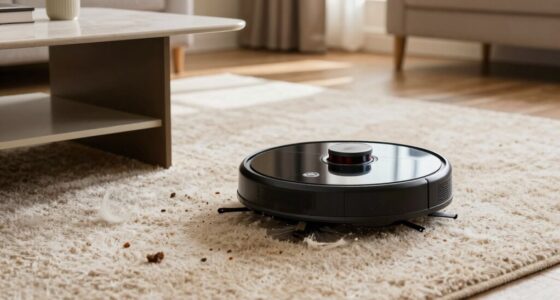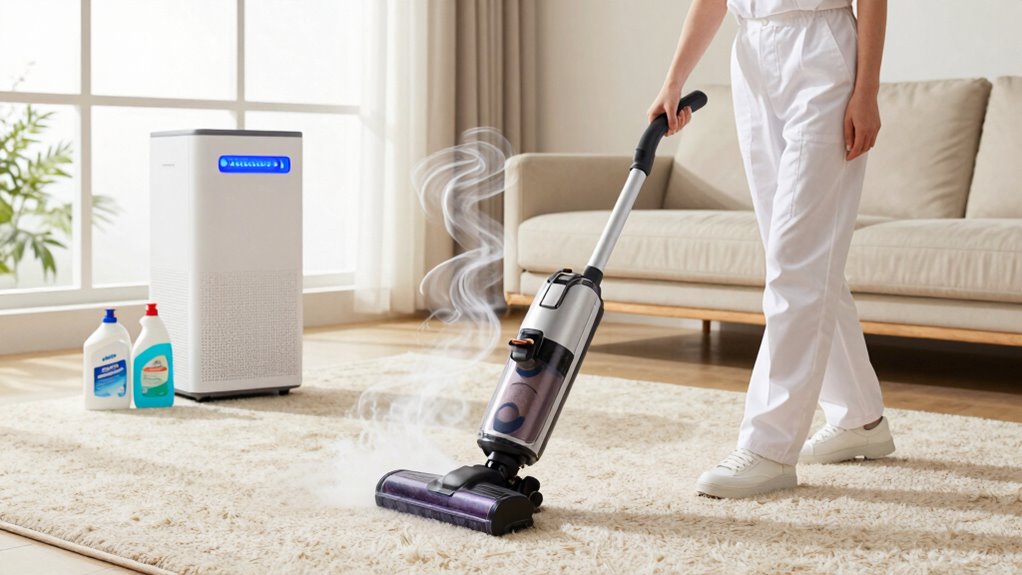

To make indoor air recovery faster, start by removing dust and debris from ceilings, fans, and hard surfaces to prevent spread. Then, check and replace HVAC filters, and address any mold issues. Next, vacuum carpets and upholstery with HEPA filters, and wipe down surfaces with damp cloths to trap remaining allergens. Finally, use air purifiers and guarantee proper ventilation. Following this systematic approach helps restore fresh air quickly—continue to discover more effective tips for cleaner indoor air.
Listen free for 30 days with Audible
Thousands of audiobooks and originals — cancel anytime.
As an affiliate, we earn on qualifying purchases.
Key Takeaways
- Begin with dust and debris removal from ceilings, fans, and surfaces to prevent spread during subsequent cleaning steps.
- Inspect and replace HVAC filters early to reduce circulating pollutants and mold spores.
- Vacuum carpets, upholstery, and hard surfaces with HEPA filters to trap fine particles and allergens.
- Use air purifiers with HEPA filters and ensure proper ventilation during and after cleaning.
- Follow a systematic cleaning order: dust first, then HVAC maintenance, surface cleaning, and air purification.
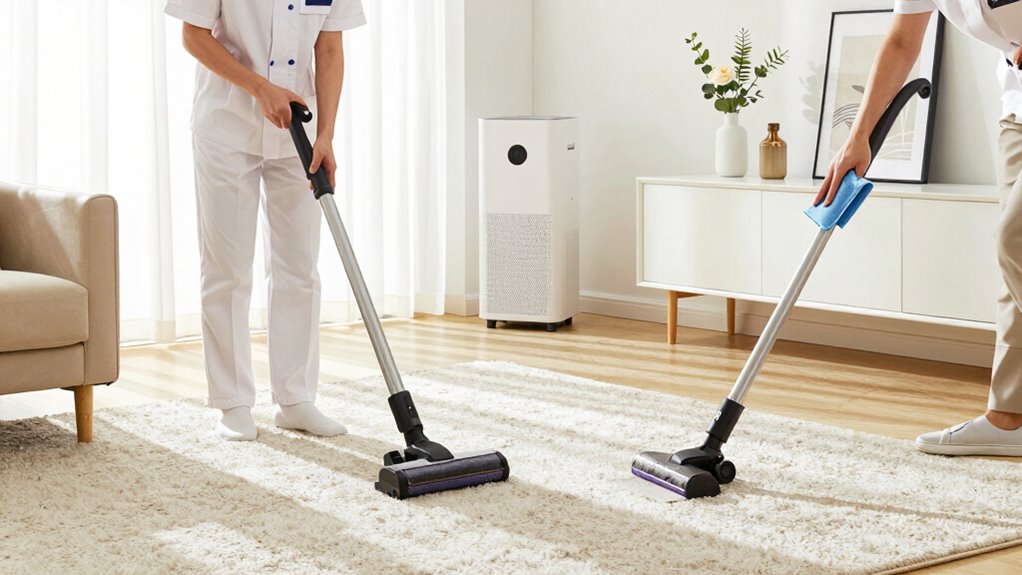
When aiming to restore indoor air quality quickly, the order in which you clean matters. Starting with the right sequence ensures you remove contaminants efficiently and prevent cross-contamination. Your first step should always be to address the source of dirt, dust, and mold. Dust and debris can circulate through your HVAC system, spreading pollutants and worsening air quality if not handled properly. To prevent this, begin by cleaning surfaces that harbor dust—like ceilings, fans, vents, and air vents—before tackling floors or upholstery. This way, any dust disturbed during cleaning won’t settle back into your air system.
Start cleaning by removing dust from ceilings, fans, and vents to prevent spreading pollutants through your air system.
Next, focus on your HVAC system itself. A thorough inspection and filter change are crucial because your HVAC system plays a significant role in indoor air quality. Dirty filters can circulate mold spores, allergens, and other pollutants throughout your home. Replacing or cleaning the filters early in your cleaning process helps prevent mold growth and ensures your system isn’t redistributing contaminants. If your HVAC system has a mold problem, it’s essential to address it immediately to avoid mold spores dispersing into the air. Consider professional cleaning if mold is present, as DIY efforts might not be enough to fully eradicate it. Regular maintenance of your HVAC system can also help reduce the buildup of airborne pollutants over time.
After dealing with the HVAC system, it’s time to clean surfaces. Vacuum carpets, rugs, and upholstery with a HEPA filter vacuum to trap fine particles and prevent them from recirculating. Wipe down hard surfaces like countertops, shelves, and window sills using damp cloths to trap dust and allergens. Pay special attention to areas prone to moisture, as these are prime spots for mold growth. In this stage, mold prevention becomes a priority—use mold-inhibiting cleaners on susceptible surfaces to inhibit future mold development. Additionally, using proper cleaning techniques can further reduce airborne contaminants and improve overall air quality. Regularly inspecting and maintaining ventilation systems can also help prevent the accumulation of indoor pollutants and promote continuous air quality improvement. Incorporating air quality testing can also help identify remaining pollutants and guide your cleaning efforts more effectively. Regular maintenance of your home’s ventilation system is also essential for ongoing indoor air quality.
Finally, focus on the air itself. Replace or clean air filters, and consider using air purifiers with HEPA filters to capture airborne particles that cleaning might have stirred up. Ensuring good ventilation during and after cleaning helps disperse any residual dust and mold spores, further improving indoor air quality. Remember, the key to faster indoor air recovery isn’t just about cleaning thoroughly but also about cleaning smartly. By following this order—starting with dust removal, addressing your HVAC system, then cleaning surfaces, and finally purifying the air—you minimize the spread of contaminants and speed up the process of restoring fresh, healthy indoor air.
HEPA air purifier for indoor air quality
As an affiliate, we earn on qualifying purchases.
As an affiliate, we earn on qualifying purchases.
Frequently Asked Questions
How Often Should I Follow This Cleaning Order?
You should follow this cleaning schedule at least once every two weeks to maintain ideal air quality. Regular cleaning helps remove dust, allergens, and pollutants that can linger indoors. If you have pets or allergy sufferers in your home, consider cleaning weekly. Staying consistent with your cleaning order guarantees your indoor air recovers faster and stays healthier, reducing airborne contaminants and improving overall air quality.
Can I Use DIY Cleaning Solutions for This Process?
Did you know that DIY solutions can be surprisingly effective? Yes, you can use DIY cleaning solutions for this process, but focus on ingredients like vinegar, baking soda, or lemon to guarantee cleaning effectiveness. These natural solutions help eliminate dirt and odors without introducing harsh chemicals, making your indoor air recovery faster. Just make certain you follow proper cleaning techniques, and always test a small area first to avoid damage.
Does Air Purifier Placement Affect Recovery Speed?
Yes, air purifier placement greatly influences recovery speed. To maximize airflow enhancement and purifier effectiveness, position the device in a central location away from walls or obstructions. Keep it elevated if possible, and avoid corners to guarantee even air circulation. Proper placement helps the purifier catch airborne contaminants more effectively, speeding up indoor air recovery. Regularly adjust its location if needed to maintain ideal airflow and performance.
Are There Specific Cleaning Tools Recommended?
You should use HEPA-filtered vacuum cleaners and microfiber cloths for effective cleaning, as they trap fine particles and allergens better. Regular tool maintenance, like replacing filters and cleaning brushes, guarantees their efficiency. Investing in specialized cleaning equipment, such as air duct brushes or electrostatic dusters, can speed up indoor air recovery. Properly maintained tools make your cleaning more thorough, helping your home’s air quality improve faster and stay healthier longer.
Is This Cleaning Order Effective for All Indoor Spaces?
Yes, this cleaning order is effective for all indoor spaces because it incorporates ventilation strategies and consistent cleaning frequency. By prioritizing air circulation before cleaning surfaces, you help remove airborne pollutants quickly. Regular cleaning maintains air quality, while proper ventilation guarantees fresh air exchange. This combined approach accelerates indoor air recovery across various environments, making your space healthier and more comfortable regardless of the room size or usage.
As an affiliate, we earn on qualifying purchases.
Conclusion
By following this cleaning order, you’ll notice your indoor air recovers faster, making your space fresher and healthier. It’s funny how the simple act of cleaning in the right sequence can speed up air recovery — almost like a coincidence. The next time you clean, remember that a little planning can lead to big improvements. So, start your routine today and enjoy the cleaner, fresher air that naturally follows, almost as if it’s waiting just for you.
As an affiliate, we earn on qualifying purchases.
As an affiliate, we earn on qualifying purchases.
NFL season / tailgating Picks
team gear
As an affiliate, we earn on qualifying purchases.