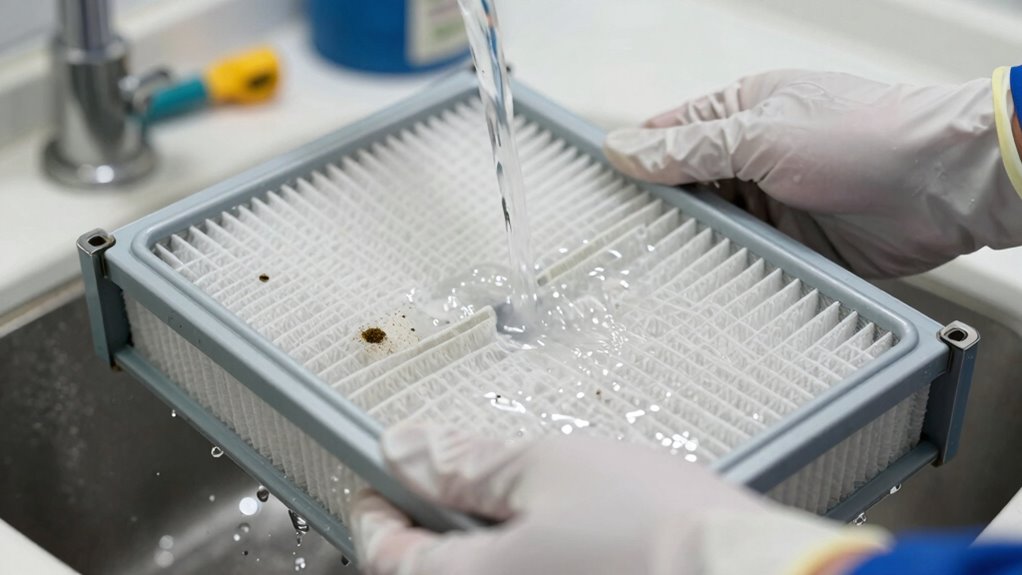

Pre-filter washing helps extend your main filter’s life and boosts system performance by removing debris and buildup. Wash your pre-filter when you notice reduced water flow, pressure drops, or visible dirt. However, over-cleaning or using harsh methods can damage delicate fibers, shorten the filter’s lifespan, or cause tears. Using gentle rinses and following manufacturer guidelines is key. Want to learn the best tips to clean effectively without risking damage? Keep exploring for detailed advice.
Open a free Amazon Business account
Business pricing, bulk buying and tax-exempt orders.
As an affiliate, we earn on qualifying purchases.
Key Takeaways
- Pre-filter washing helps extend filter life, improve water flow, and maintain system efficiency when debris or algae accumulation is visible.
- Washing is beneficial when water pressure or flow rate drops, indicating clogged filters needing cleaning.
- Over-washing or using harsh methods can damage filter fibers, shorten lifespan, and reduce filtering effectiveness.
- Follow manufacturer guidelines for cleaning frequency and use gentle rinsing to prevent filter damage.
- Proper drying after cleaning is essential to prevent mold growth and ensure optimal filter performance.

Have you ever wondered how to keep your filtration system running efficiently? One key aspect often overlooked is pre-filter washing. Regularly cleaning your pre-filter can substantially extend the life of your main filter and improve overall system performance. When your pre-filter becomes clogged with dirt, debris, or algae, it hampers water flow, forcing your pump to work harder and increasing energy consumption. Washing it promptly can restore proper flow, prevent unnecessary strain, and ensure your system functions smoothly. Proper maintenance also involves understanding filter lifespan and replacement schedules to keep your system operating optimally.
Regular pre-filter cleaning extends filter life and boosts system efficiency.
However, knowing when to wash your pre-filter is just as important as how to do it. Typically, if you notice a drop in water pressure or flow rate, it’s a strong sign your pre-filter is dirty and needs cleaning. Visual inspection is also helpful—if the filter appears visibly coated with debris or algae, it’s time to wash. Regular maintenance schedules can prevent unexpected issues, but avoid washing too frequently. Over-cleaning can cause more harm than good, especially if you’re using harsh methods or damaging the filter material.
When it’s the right time to wash, use gentle methods to avoid damaging the filter media. Rinsing with clean water is usually sufficient; avoid using harsh chemicals or abrasive tools that can tear or degrade the filter material. Many pre-filters are designed to be rinsed and reused multiple times, but always check manufacturer instructions first. If the filter is heavily soiled or clogged, consider soaking it briefly in a mild cleaning solution before rinsing thoroughly. After washing, make sure the filter is completely dry before reinstalling to prevent mold or bacteria growth.
It’s equally important to recognize when washing can do more harm than good. For instance, if you’re using high-pressure water or scrubbing too aggressively, you risk damaging the delicate fibers, reducing the filter’s effectiveness and lifespan. Some filters are more fragile than others and require gentle handling. Additionally, frequent washing without proper drying can introduce bacteria or mold, which can compromise water quality and harm your system. Always follow the manufacturer’s guidelines for cleaning frequency and methods to avoid accidental damage.
In essence, pre-filter washing is an essential part of system maintenance—helpful when done correctly, but potentially damaging if mishandled. Keep an eye on system performance, inspect the filter regularly, and clean it with care when necessary. This way, you’ll maintain ideal flow, extend your filter’s life, and ensure your filtration system continues to operate efficiently without unnecessary repairs or replacements.
Frequently Asked Questions
How Often Should Pre-Filters Be Washed for Optimal Performance?
You should wash your pre-filters every 2 to 4 weeks for ideal performance. If you notice a significant decrease in airflow or increased dirt buildup, consider washing them sooner. Regular cleaning prevents clogging and maintains efficiency. However, avoid over-washing, as it can damage the filter material. Keep an eye on usage conditions and environmental factors to adjust cleaning frequency accordingly, ensuring your system stays effective.
Can Washing Damage the Pre-Filter’s Delicate Components?
Sure, washing your pre-filter can damage its delicate parts if you’re a reckless amateur. Harsh scrubbing or using the wrong cleaning agents might tear or warp those fragile components. So, if you want your filter to keep working, treat it with care—gentle rinses, mild detergents, and proper drying. Otherwise, you might just turn a simple cleaning task into an expensive, ruined disaster.
What Cleaning Agents Are Safe for Pre-Filter Washing?
You should use mild, non-abrasive cleaning agents for pre-filter washing, like gentle soap or specialized filter cleaners. Avoid harsh chemicals, bleach, or solvents, as they can damage the filter’s delicate components. Always check the manufacturer’s instructions before cleaning, and if in doubt, opt for water and a soft brush. This approach guarantees effective cleaning without risking damage to your pre-filter.
Does Washing Extend or Shorten the Lifespan of the Pre-Filter?
Washing your pre-filter can extend its lifespan like a well-tuned engine, keeping it functioning smoothly longer. Regular cleaning removes dirt and debris that can cause wear and tear, helping it last longer. However, too much or improper washing might damage the filter material, shortening its life. So, if done correctly and at appropriate intervals, washing can be a helpful maintenance step, boosting your filter’s durability and performance.
Are There Specific Signs Indicating When to Wash a Pre-Filter?
You should wash your pre-filter when you notice a significant reduction in airflow or a visible buildup of dirt and debris. If the filter looks visibly dirty or clogged, it’s time to clean it. Avoid waiting until the filter is completely covered, as this can strain your system. Regular inspections help you catch these signs early, ensuring peak performance and extending your filter’s lifespan.
Conclusion
Now that you know when pre-filter washing helps and when it harms, you can make smarter choices for your system’s health. Remember, a clean filter is essential—but overdoing it can cause damage. So, next time you’re tempted to rinse that filter again, ask yourself: are you restoring its efficiency or just risking its lifespan? Don’t let the dirt fool you—sometimes less is more, and listening to your filter’s needs keeps everything running smoothly.
Flea & tick season Picks
flea and tick prevention
As an affiliate, we earn on qualifying purchases.